
ITEM# UJWA229 – Catalogue 32 – Sold
A Hiromichi Wakizashi (弘道)
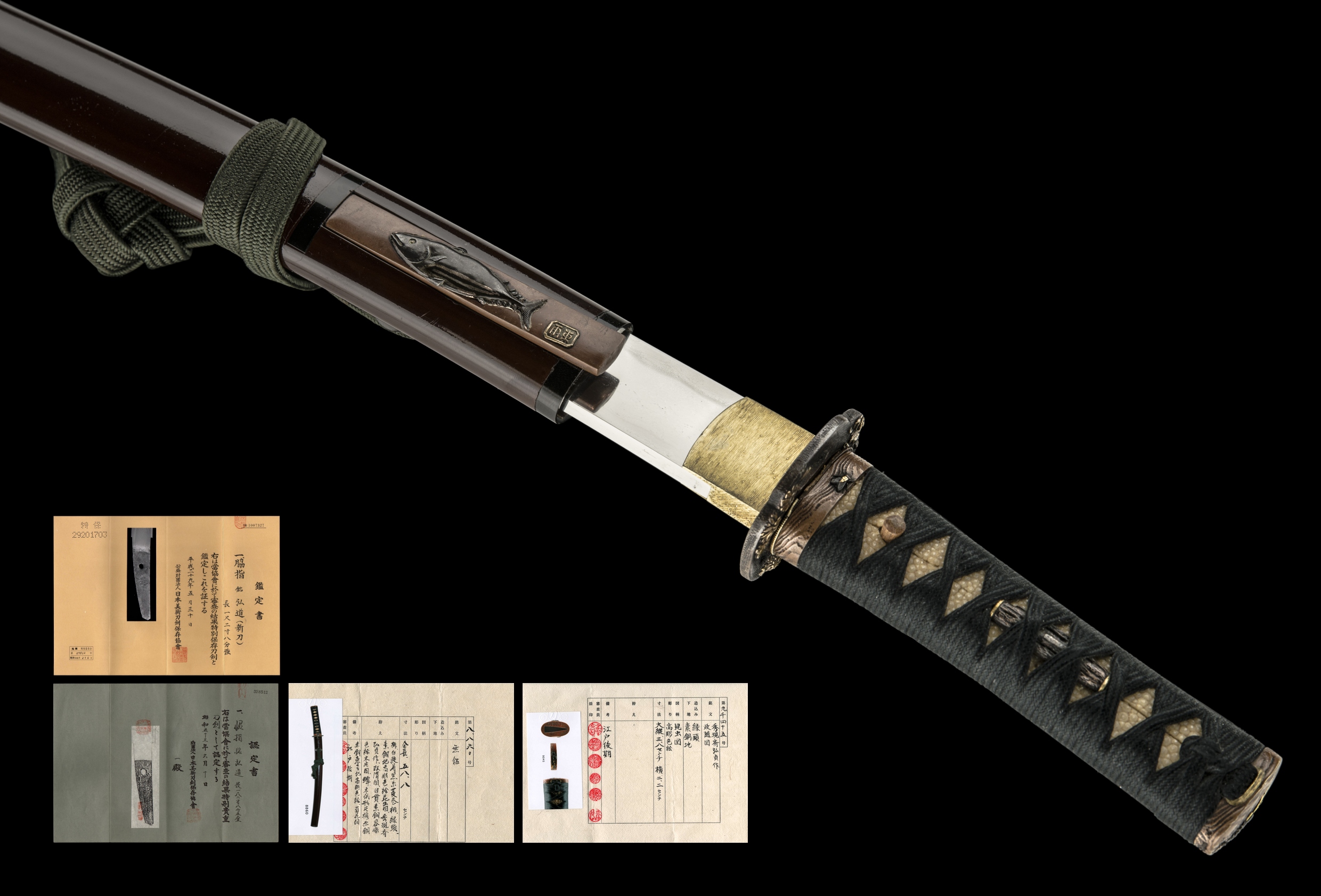
This spirited hirazukuri wakizashi was forged by Hiromichi, a student of Iga no Kami Kinmichi of the prestigious Yamashiro Mishina School in Kyoto, circa 1684. Working from Iwami province (Shimane), Hiromichi carried the Mishina tradition into the provinces with evident skill. The blade is signed simply 弘道 – “Hiro” (vast, wide) and “Michi” (path, way) – a confident two-character mei on a well-preserved ubu nakago with katte sagari yasurime.
The steel is densely packed with hataraki. The jihada combines itame and mokume with abundant chikei and ji-nie – the body of the blade alive with gleaming black lines threading through the ji. The hamon is a bold dai-gunome midare in nie-deki, surging along the edge with kinsuji, sunagashi, yô and tobiyaki flaring outward. This is a blade firmly rooted in the Kôtô-period Sôshû tradition – the same explosive energy that Masamune made famous, revived here in the Shintô era with remarkable conviction. The sword holds both NBTHK Tokubetsu Hozon and the older NBTHK Tokubetsu Kichô certificates, confirming its standing as a blade of particular quality and historical significance.
The accompanying Edo-period koshirae is a miniature celebration of the natural world, certified by NTHK-NPO to the late Edo period (1780-1867). A shakudo nanako tsuba blazes with gold chrysanthemums – the kiku-mon of the Imperial family, which the Mishina School was honoured to bear on its blades. The copper fuchi carries a fly and spider on opposing faces, while the kashira – crafted by Shugensai Hirosada of the Uchikoshi school, inspired by the Hamano school’s founder Shozui – bears a centipede in relief. The menuki are cleverly fashioned as small logs of wood. The saya is lacquered in a rich dark brown, fitted with a signed kozuka featuring what appears to be buri (yellowtail fish), with a kojiri (end cap) adorned with gold dragonflies and bees. A kurigata with gold-highlighted butterflies completes a set that rewards extended study.
| Item Number | UJWA229 |
| Sword Type | Wakizashi (hirazukuri) |
| Swordsmith | Hiromichi |
| Swordsmith (JP) | 弘道 |
| Signature | Hiromichi |
| School | Mishina School (Yamashiro) |
| Province | Iwami (Shimane) |
| Period | Shintô – Early Edo period (Jokyô era: 1684-1688) |
| Nagasa | 39.0 cm |
| Sori | 0.8 cm |
| Moto-haba | 3.4 cm |
| Weight | 415 g |
| Nakago | Ubu, 13.3 cm, katte sagari yasurime, 1 mekugi-ana |
| Jihada | Itame and mokume hada with chikei and ji-nie |
| Hamon | Dai-gunome midare with kinsuji, sunagashi, yô, tobiyaki in nie-deki |
| Certificates | NBTHK Tokubetsu Hozon (Heisei 29, 2017); NBTHK Tokubetsu Kichô (Showa 53, 1978); NTHK-NPO Kanteishô (koshirae and fuchi-kashira) |
| Koshirae | Edo-period koshirae, certified late Edo (1780-1867) by NTHK-NPO; dark brown lacquered saya with kozuka |
| Tsuba | Shakudo nanako, chrysanthemum (kiku-mon) theme in gold |
| Fuchi-kashira | Copper; fuchi with fly and spider; kashira by Shugensai Hirosada (Uchikoshi school, Mito/Hitachi), centipede motif, after Hamano school founder Shozui – NTHK-NPO certified |
| Menuki | Wood log motif |
| Tsuka | Black braid over same, with butterfly kurigata |
| Catalogue | Catalogue 32 |
| Status | Sold |
| Includes | Shirasaya, Edo koshirae, bags, stand, kit, DVD, booklet, printed description |