
Please access our latest offering of antique Japanese swords that are available for ownership. Be sure to send us questions on available swords through our contact page. If a sword is listed ON HOLD, you can still inquire in case the sword does come available. Swords marked IN STUDIO are already with us in Japan, being photographed and documented, with the full PDF description to follow. Enquire to place one on hold. Looking for a sword that has already found a home? Visit Recently Sold.
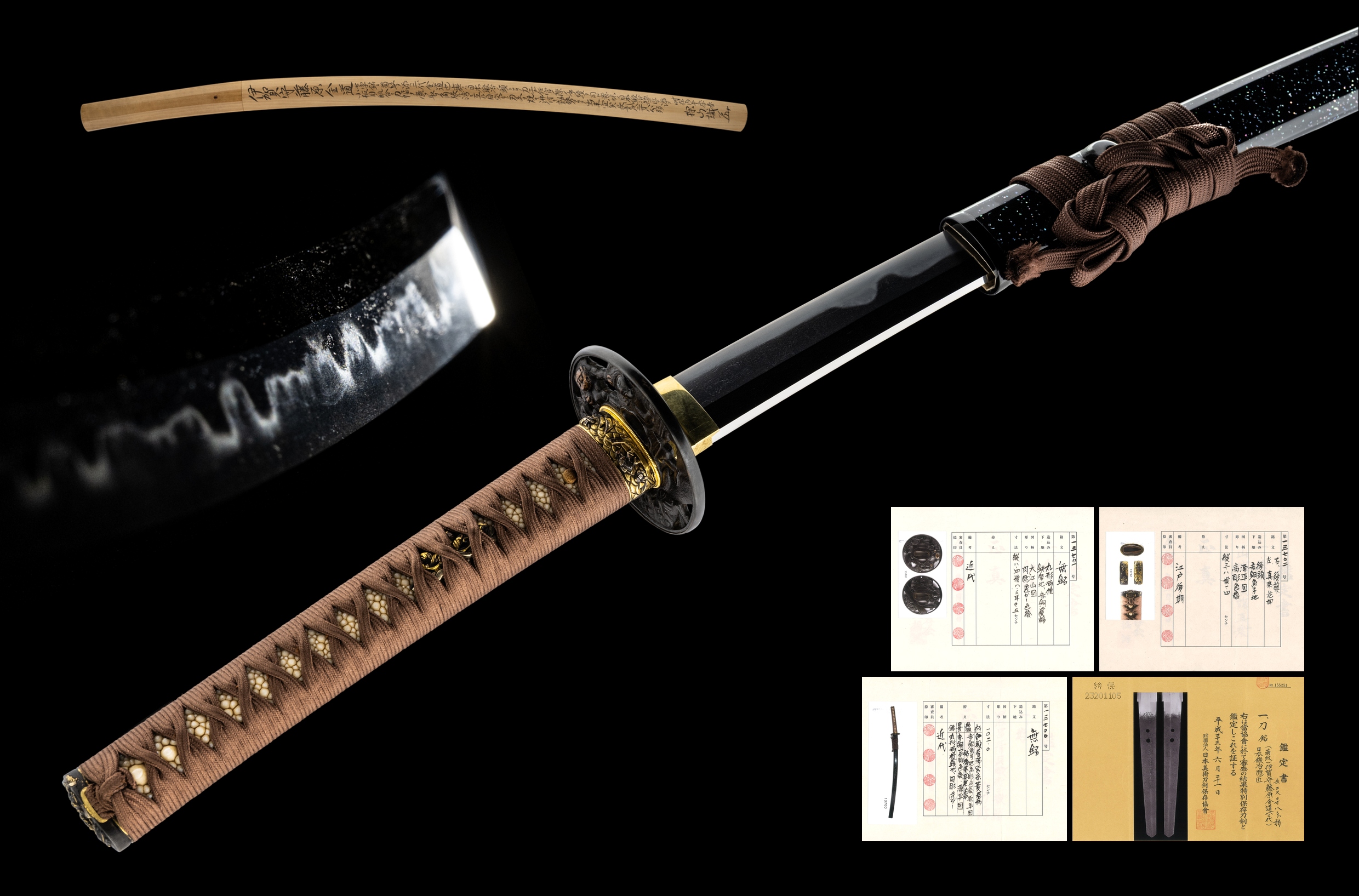
Shintô · Edo period (Manji era: 1658~1661)
A Nidai Kinmichi Katana (伊賀守藤原金道)
This confident shintô katana was forged by the second generation Kinmichi, head of the Mishina school of Kyôto and holder of the title Nihon Kaji Sôshô, who signed it beside a sixteen petal kiku-mon. A wazamono maker, he forged a wide gunome-midare mixed with hako-midare, rich in nie with kinsuji, sunagashi and even yahazu-ba, and closed it with the family’s trademark Mishina-bôshi. Tanobe-sensei’s sayagaki praises its strong sense of movement, and the sparkling aogai-mijin-nuri koshirae carries a Genpei War motif and Minamoto Yorimitsu subduing the ogre Shuten-dôji. A samurai sword worthy of the family that famously armed the Tokugawa clan at the Siege of Ôsaka.
🔒 Email List exclusive
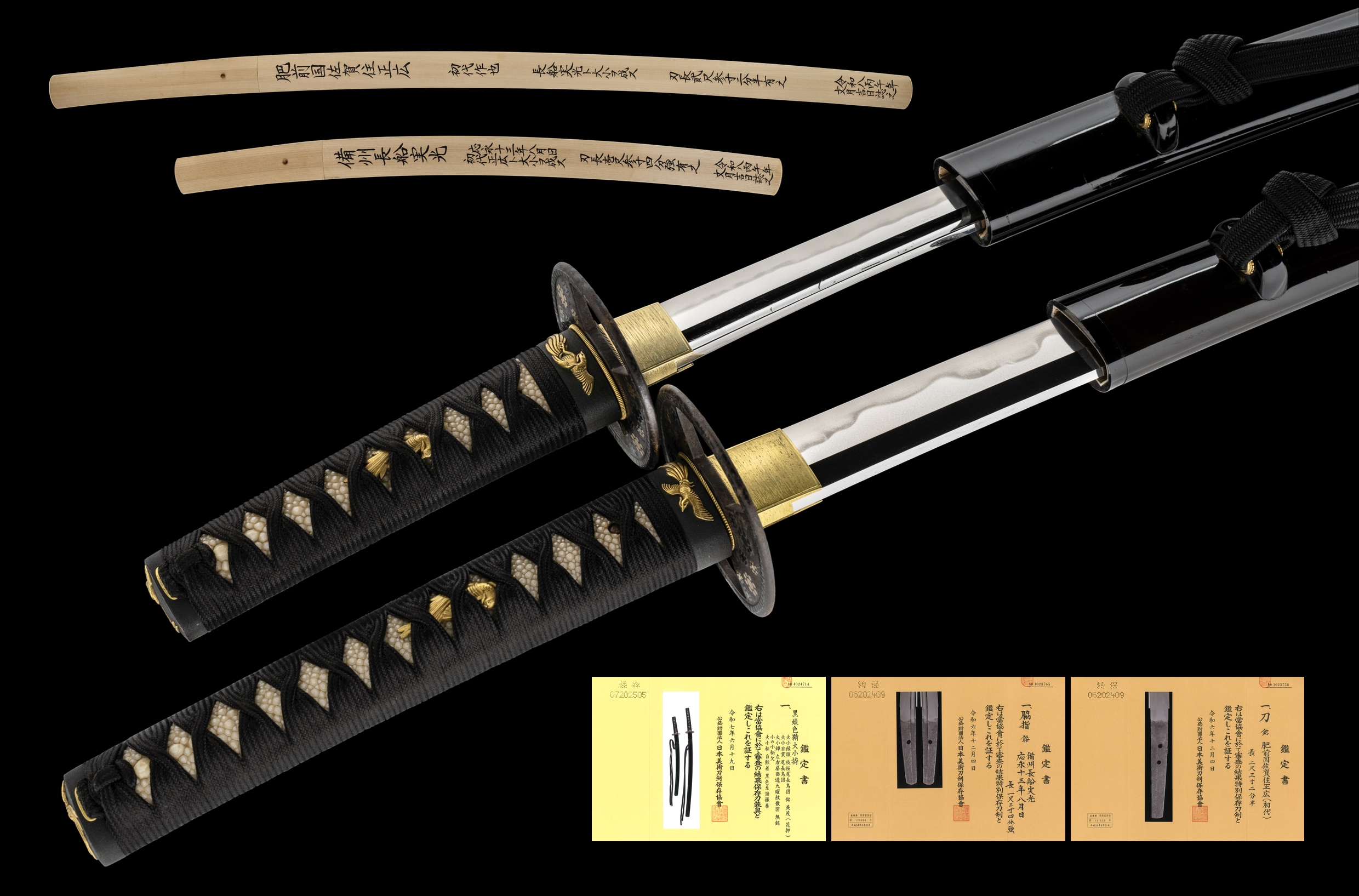
Kotô & Shintô · Ôei 13 (1406) & Kan’ei era (1624-1644)
A Masahiro / Sanemitsu Daishô (肥前國佐賀住正廣・備州長船實光)
This exceptional daishô couples a shintô period katana by shodai Masahiro with a wakizashi by Osafune Sanemitsu, dated to August 1406 during the Ôei era. Among the Waki-Hizen smiths, Masahiro was especially known for his chôji-midare hamon, which is on glorious display on the katana. Sanemitsu belongs to the famed Ôei-Bizen lineage that drew on styles from the earlier Ko-Bizen masters and smiths such as Mitsutada. The NBTHK Hozon certified daishô koshirae is highly classical, tuxedo-like in its formality, with stunning depictions of onagadori birds and iron Higo tsuba bearing a kuyô-mon, a nine star crest hinting at a connection to a daimyô. This is a wonderful opportunity to proudly own and display a tasteful, authentic samurai daishô from the Edo period.
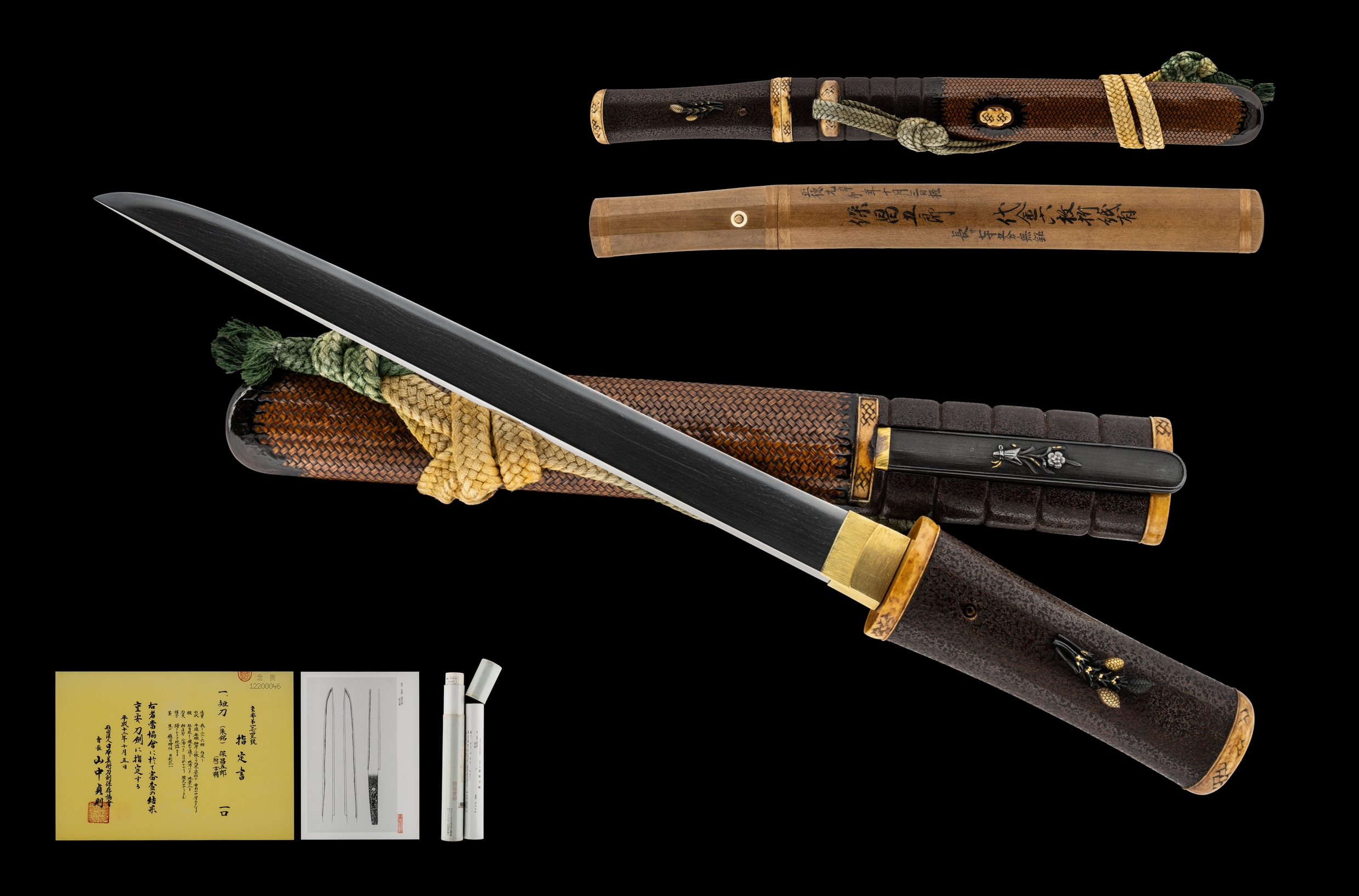
Kotô · Late Kamakura ~ Nanbokuchô
A Hôshô Gorô Tantô (保昌五郎)
An exceptional jûyô tôken tantô from the Hôshô school, the most distinctive of the five schools of Yamato, designated at the 46th jûyô shinsa in 2000 and signed in red lacquer Hôshô Gorô. It shows truly gorgeous masame-hada and a hoso-suguha with fine hotsure, and its old shirasaya records an origami by Hon’ami Kôchû in 1711, valuing the blade at six mai. The aikuchi koshirae is every bit as special and could potentially be submitted to the NBTHK. In our studio in Japan now, and the final price will reflect extras such as koshirae submission or sayagaki with Tanobe-sensei. View the sword, then enquire to place it on hold.
🔒 Email List exclusive
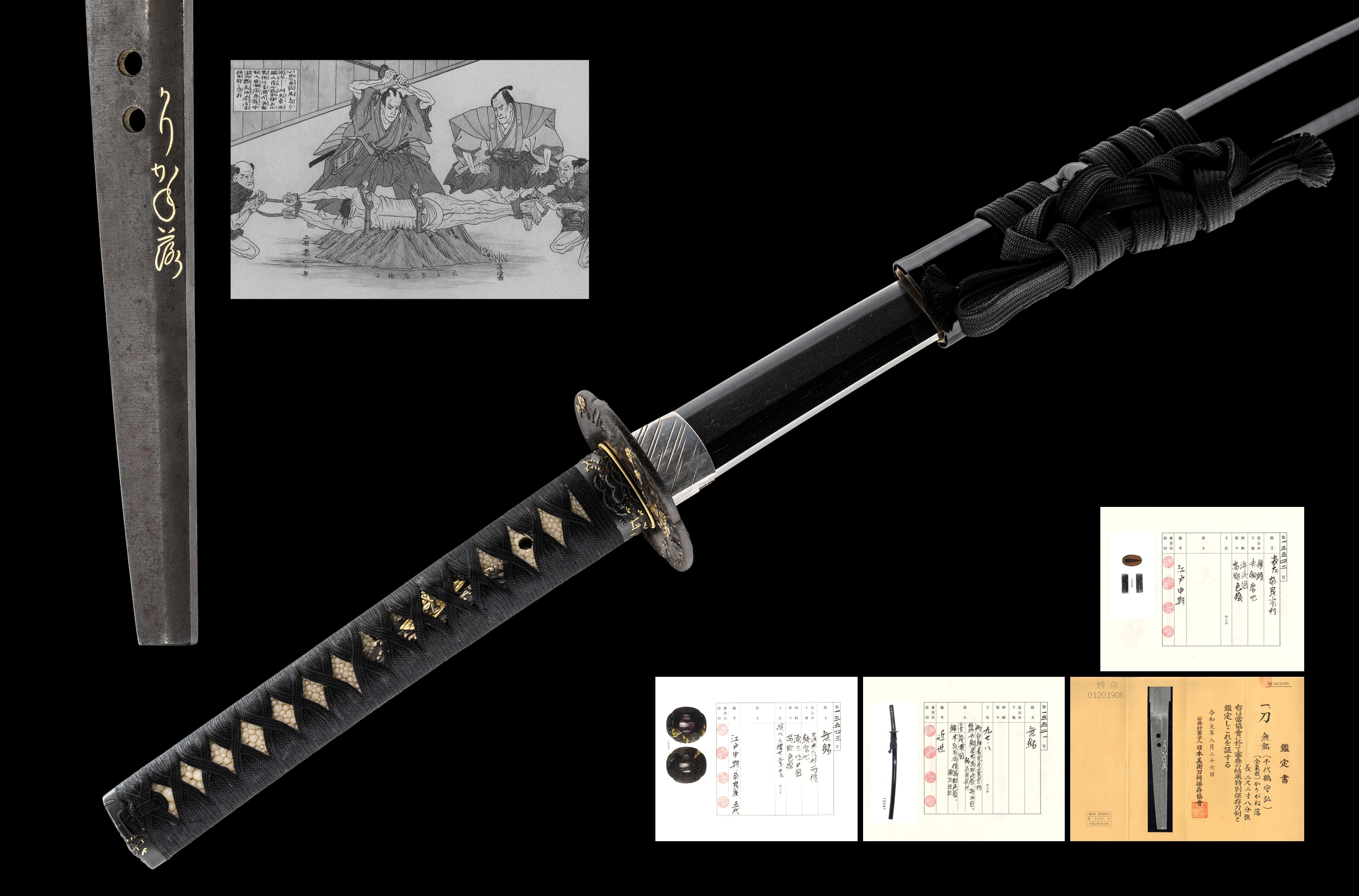
Kotô · Late Nanbokuchô (c. 1390–1394)
A Morihiro ‘Tameshigiri’ Katana (千代鶴守弘)
This powerful and extra sharp katana has been attributed to Chiyozuru Morihiro, a talented swordsmith who worked in Echizen during the late Nambokuchô period and into the Oei era of the Muromachi period. The blade displays a fine koshi-zori curvature and rich, dark jigane with abundant chikei and flows with itame and mokume-hada. Its bright hamon is based on suguha mixed with ko-midare, abundant ashi, sunagashi, kinsuji, and areas of nijuba. Kinzogan-mei on the nakago confirms this blade severed a human body through the armpit region during a tameshigiri cutting test. Kotô period swords with cutting tests are exceptionally rare to collect. The handsome koshirae features a striped senden-nuri saya and a tsuba depicting the heroic Minamoto Yorimasa, plus splendid fuchi-kashira of the open sea – both crafted by Munetoshi of the famed Nara school.
Shintô · Early Edo period (Meireki to Enpô eras: 1655-1677)
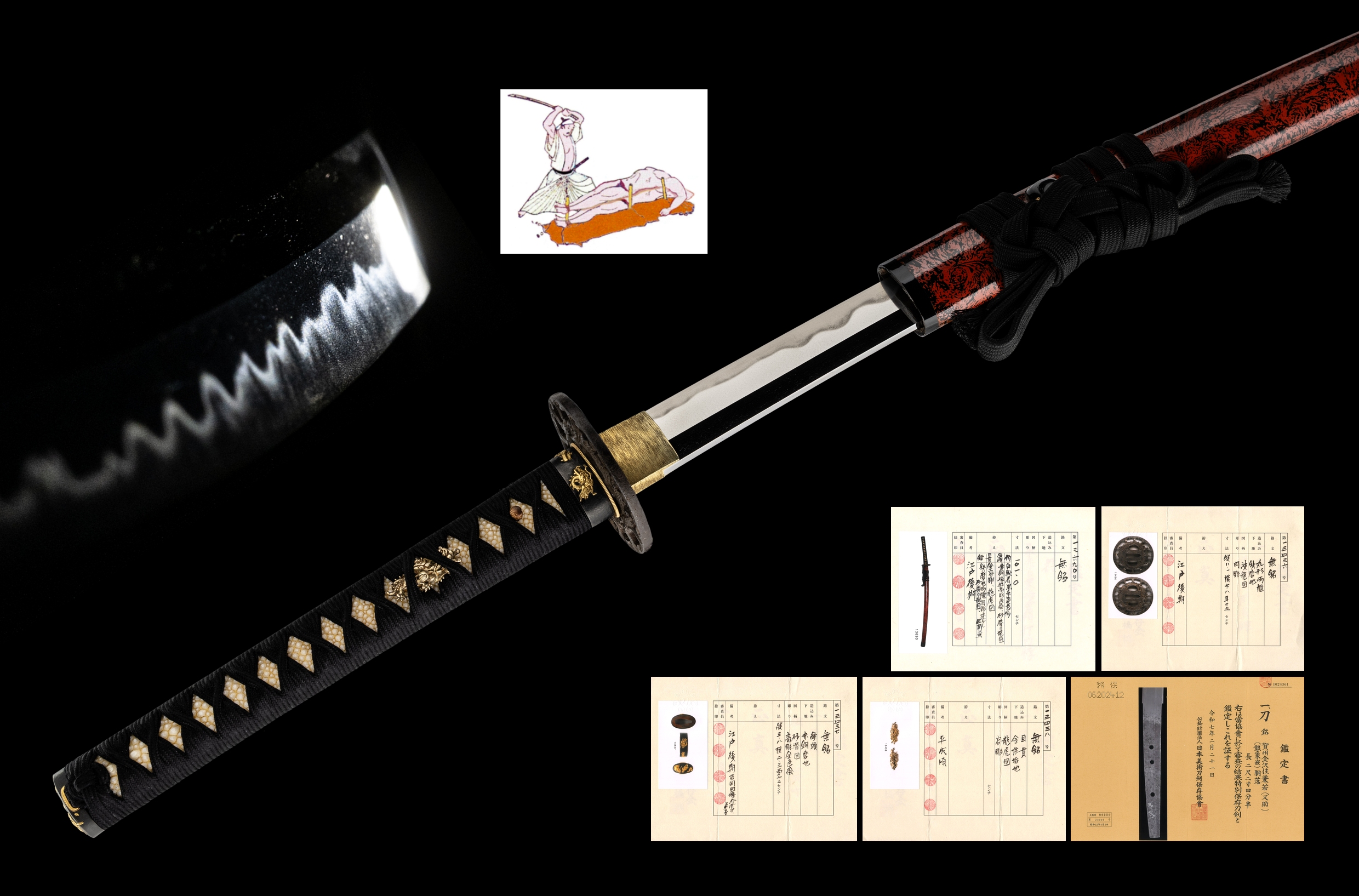
A Kanewaka ‘Tameshigiri’ Katana (賀州金沢住兼若)
This superb katana is by Nidai Kanewaka (Tsujimura Matasuke) of Kanazawa in Kaga province, third son of the first Kanewaka and a jô-saku, wazamono ranked smith. The hamon is a striking gunome-midare mixed with hako-midare that is synonymous with the Kanewaka school. A silver-inlay inscription on the nakago records that the blade severed through one body in a tameshigiri cutting test. Dragon aficionados will appreciate the stunning late Edo period dragon-themed koshirae. In our studio in Japan now, with full photography to follow, and the final price will reflect any extras such as sayagaki. Enquire to place it on hold.

Shintô · Early Edo period (Kanbun era: 1664-1673)
A Shodai Yukihiro Katana (肥前国出羽守行広)
Yukihiro was born in 1617 into the heart of the Hizen tradition, receiving his coveted Dewa no Kami title in 1663. This katana dates from his mature period – always the most desirable work of any Hizen smith. The blade presents the ko-itame jihada that defines the finest Hizen output, with a gunome midare hamon of lovely clove-blossom character, long ashi and sunagashi adding life across the steel. We sold this sword many years ago and it has now returned to us. A custom Unique Japan koshirae accompanies the sword, and photos of the project are available on request. The sword is currently in transit to our studio in Japan for a “spa treatment”, including a shirasaya and koshirae check and new photography. Enquire now to be first in line.