
Jûyô Tôken and Tokubetsu Jûyô Tôken are the two highest designations awarded by the NBTHK – Japan’s foremost authority on the Japanese sword. These are not simply exceptional blades. They are national cultural assets in all but name: works by the greatest smiths in history, examined and elevated by the finest scholars of each generation. Every sword in this gallery has passed through Unique Japan and found a home with one of our clients – a collector who understood what they were holding. If you have ever considered owning a blade at this level, this is where that conversation begins. We would be honoured to help you find yours.
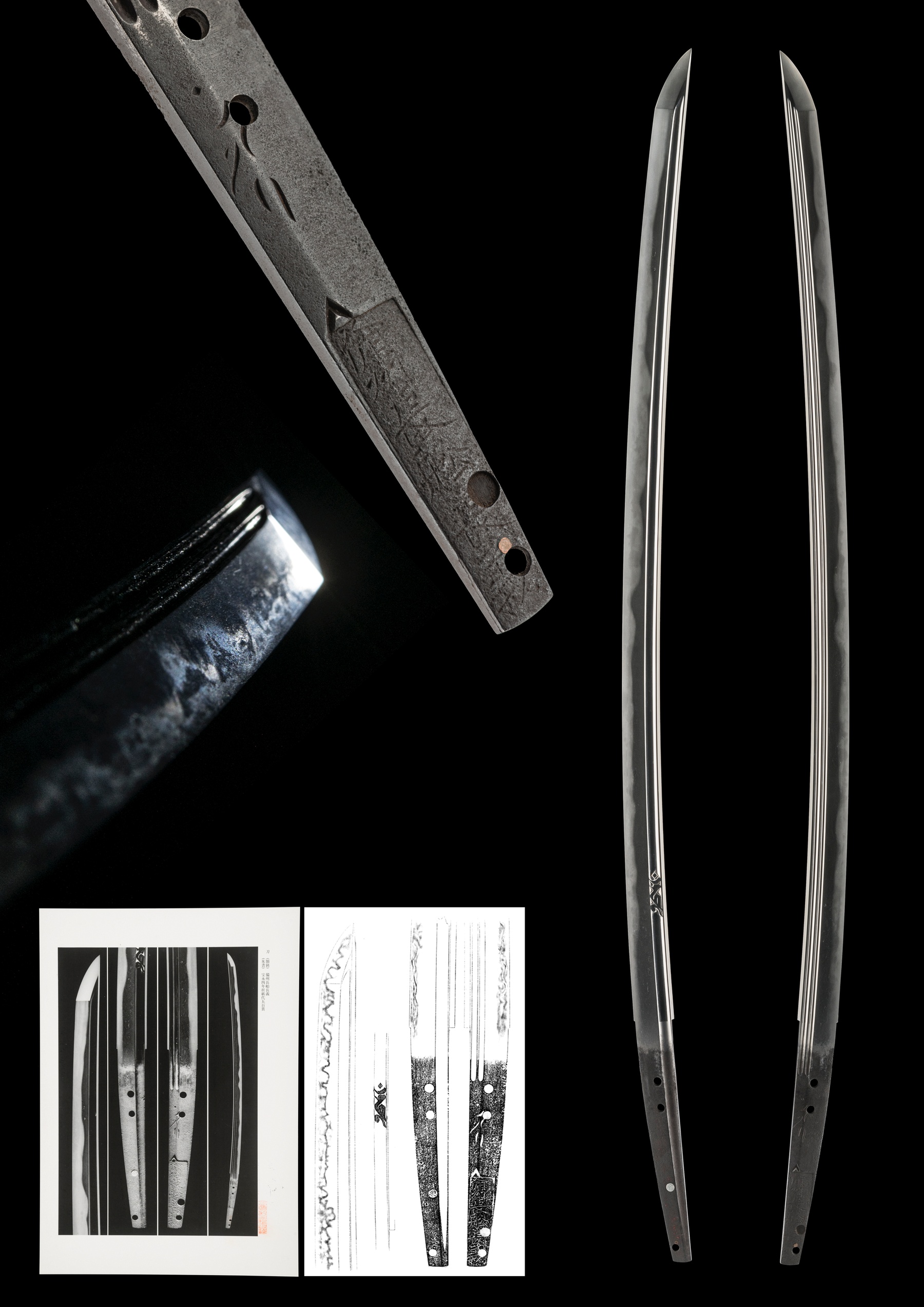
Kotô · Nambokuchô period (14th century)
A Chôgi Katana (長船長義)
A gaku-mei masterpiece by the Sôden Bizen grandmaster of the 14th century. One of the most important Chôgi blades in private hands, awarded the prestigious 15th Tokubetsu Jûyô Tôken designation by the NBTHK.
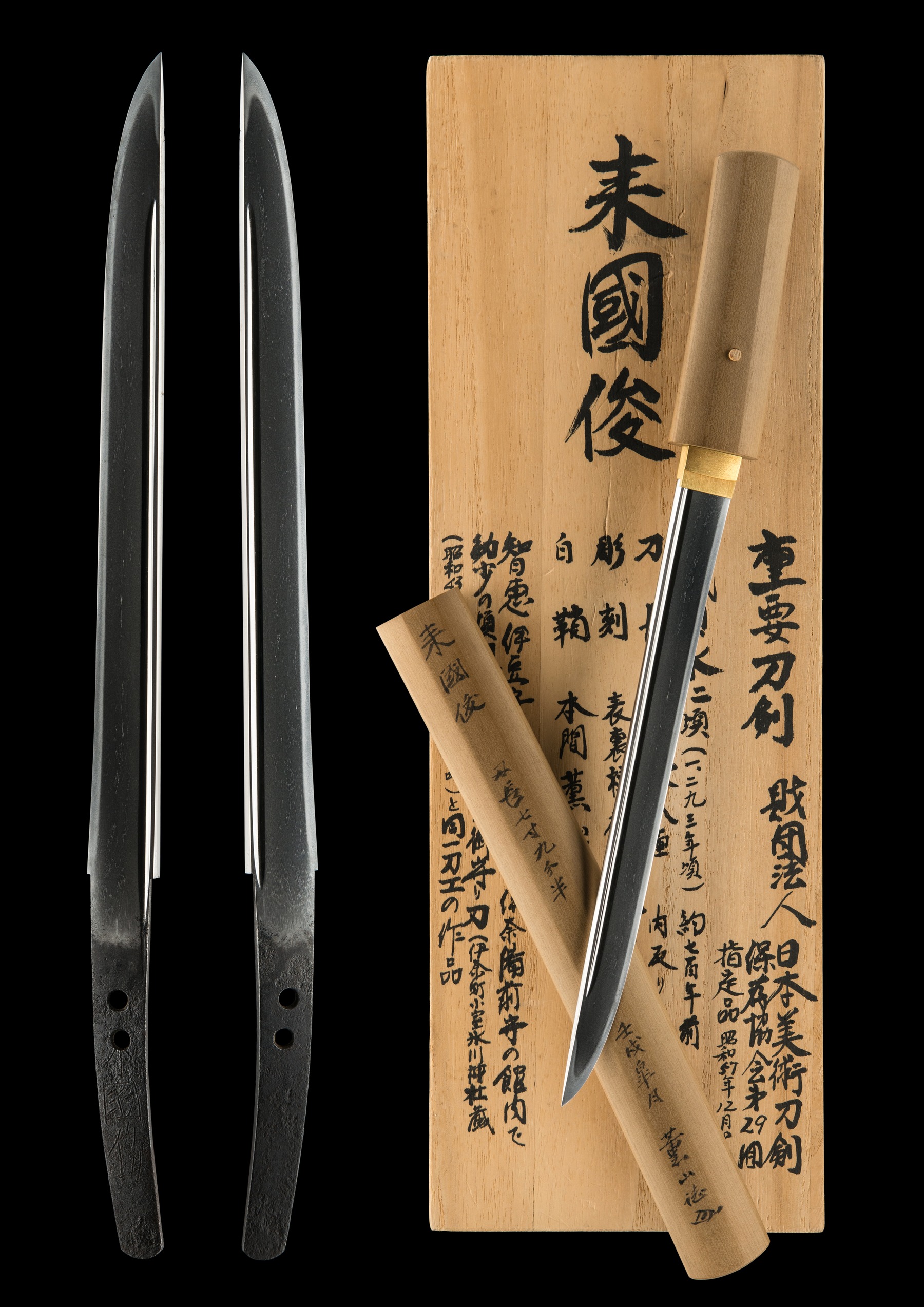
Kotô · Kamakura period (13th century)
A Rai Kunitoshi Tantô (来国俊)
This is an ubu signed tantô by Rai Kunitoshi. It is with the uchizori and its standard tantô dimensions of a highly elegant shape. The kitae is an itame that is mixed with nagare and that features a nie-utsuri and the hamon is a suguha in ko-nie-deki with a very tight and bright nioiguchi.
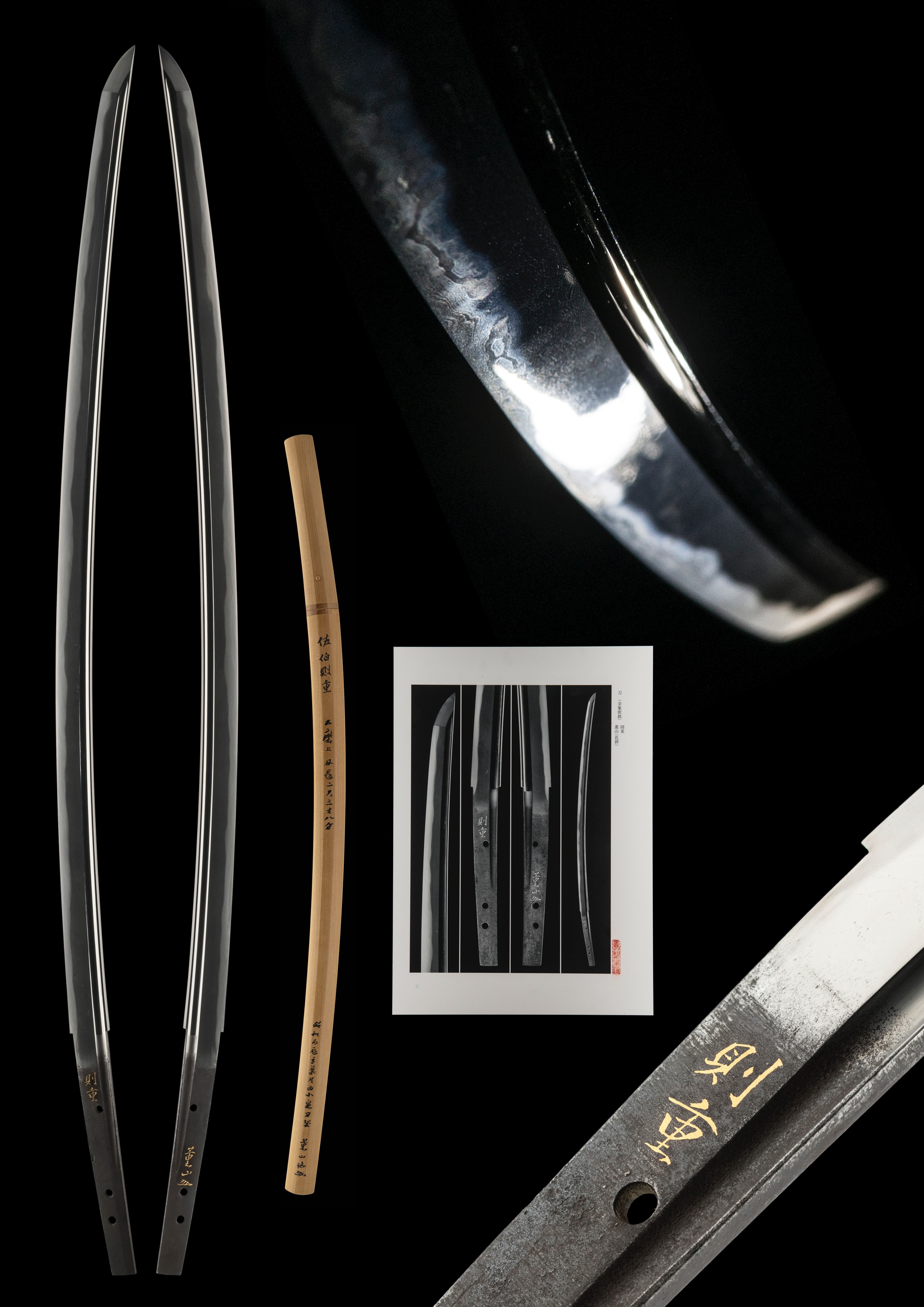
Kotô · Late Kamakura period (Genkô era, c. 1321-1323)
A Norishige Katana (則重)
Kinzôgan attribution by Living National Treasure Gassan Sadaichi, sayagaki by Honma Kunzan – Saeki Norishige of Etchû, Kôtô Saijôsaku, the most individual of the early great Sôshû masters. The hallmark matsukawa-hada stands prominently with abundant thick chikei and blackish steel; the nie-laden ko-notare hamon is alive with kinsuji, nie-suji and infinite nie activity. The NBTHK ranks this outstanding deki among all works attributed to Norishige – kenzen, with gold-foil double habaki.
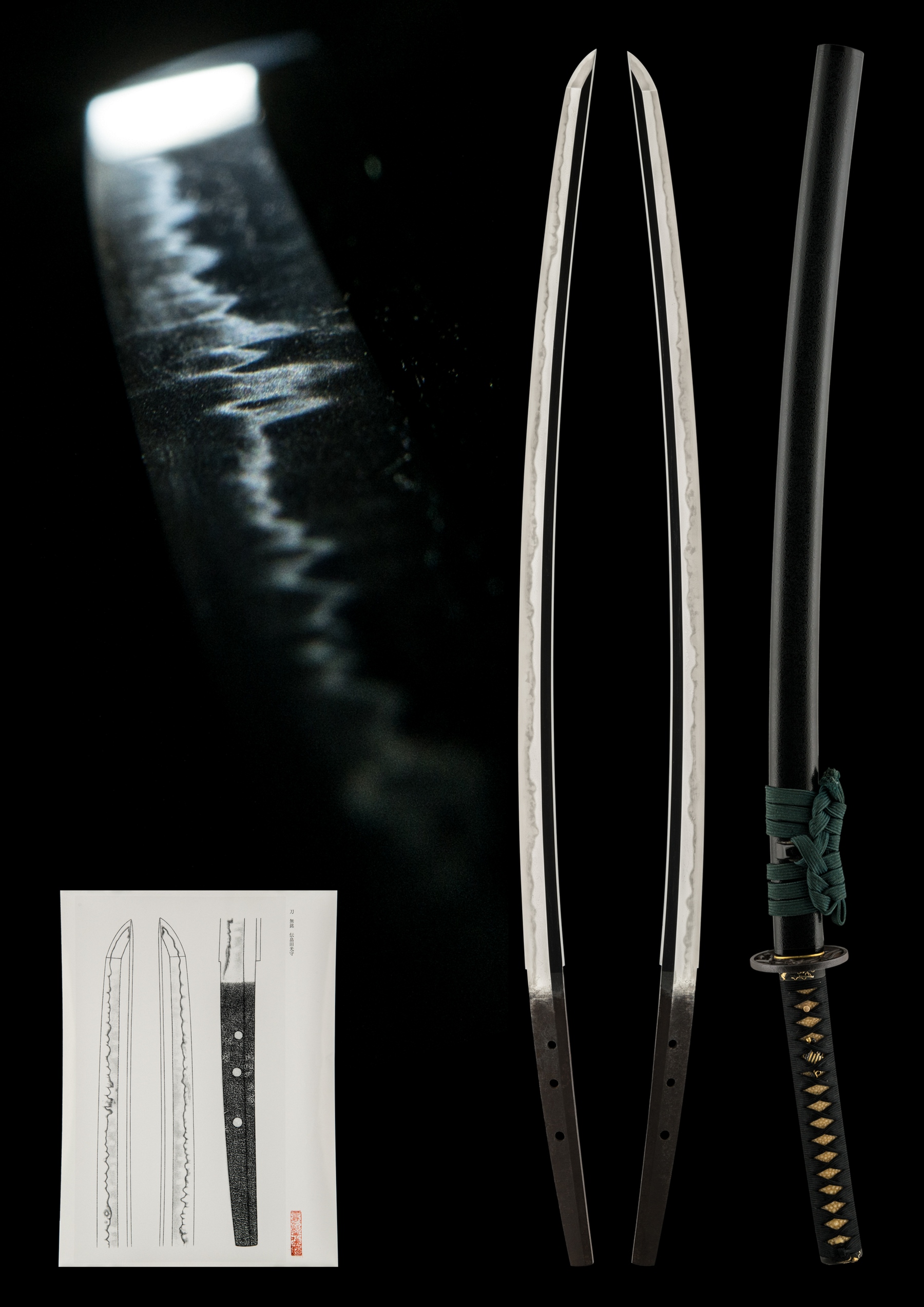
Kotô · Nanbokuchô period
A Hatakeda Mitsumori Katana (畠田光守)
Attributed to Hatakeda Mitsumori of the Hatakeda school, Bizen province. Unsigned (mumei) with ô-suriage nakago. Magnificent chôji-midare hamon rich in nie, kinsuji, sunagashi and tobiyaki – the yaki reminds us of the signed masterworks of the Hatakeda family.
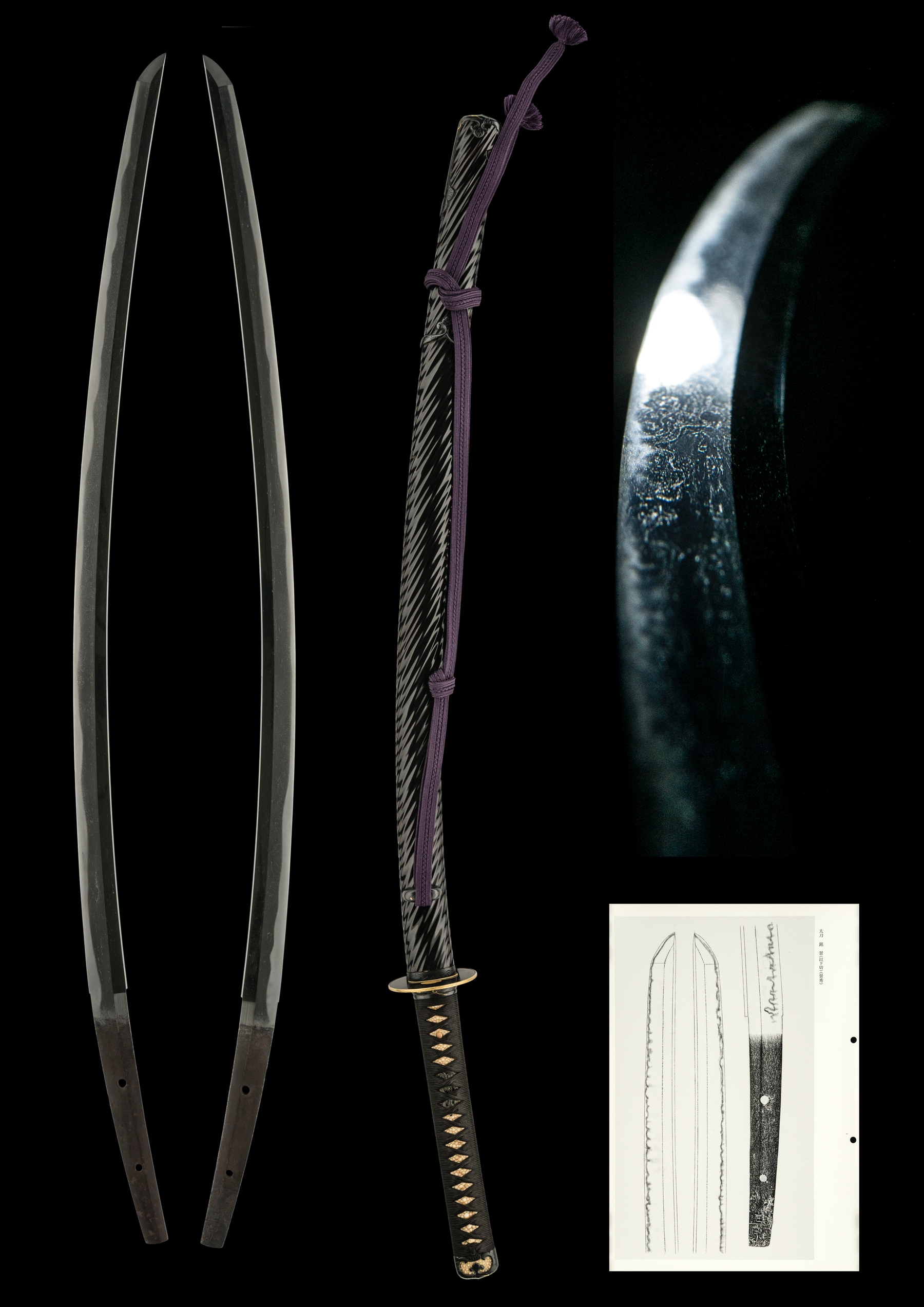
Kotô · Kamakura period (13th century)
A Kagehide Tachi (景秀)
This tachi displays the character “Kage” and parts of a second stroke of the mei are extant, with the latter being without doubt “hide”. Thus, this blade is regarded as a zaimei work of this smith, very rare, and an important reference for the understanding of the workmanship of this smith.
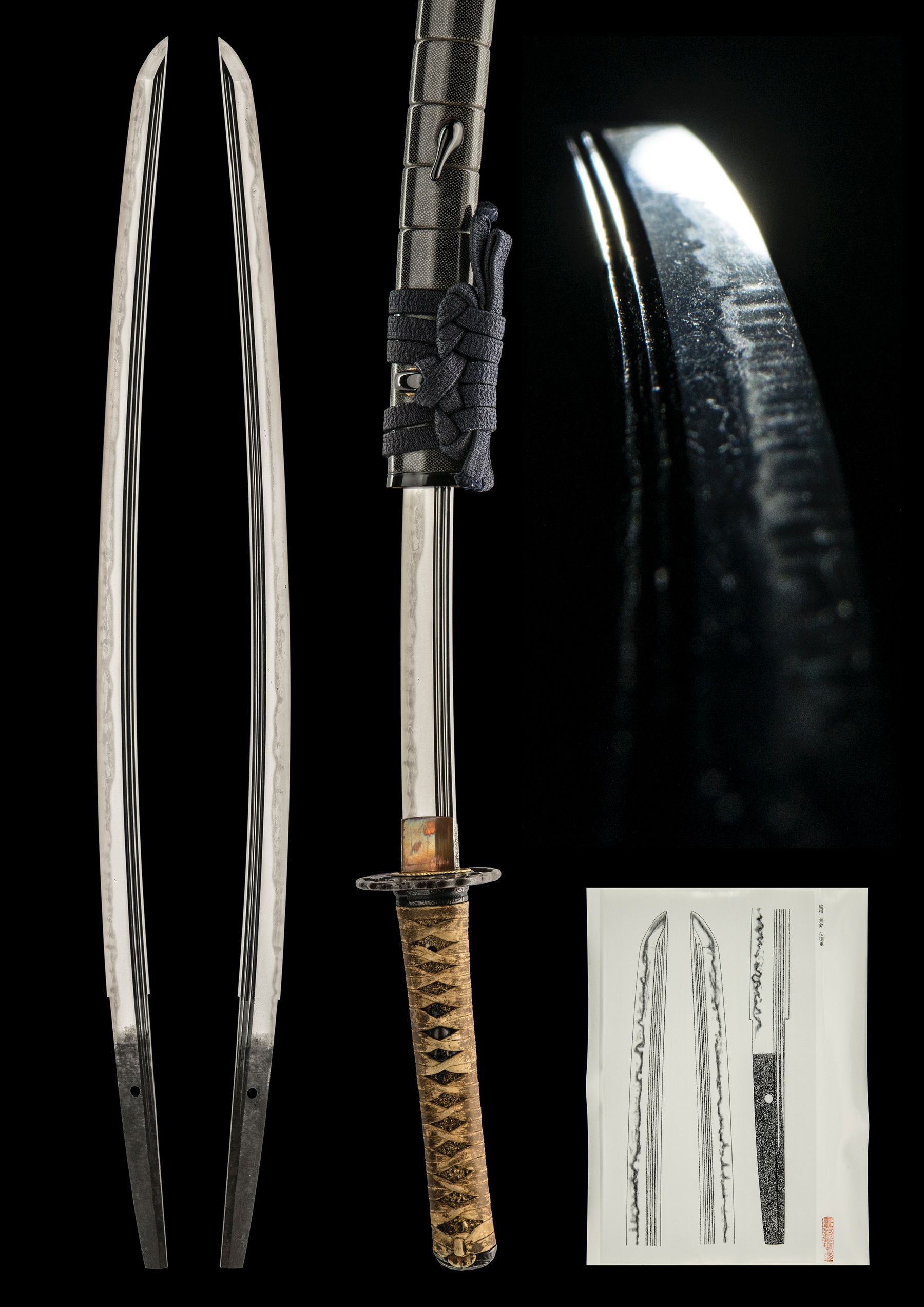
Kotô · Kamakura period (13th century)
A Norishige Kodachi (則重)
This wakizashi (kodachi) shows a jigane in standing-out itame that is mixed with mokume and nagare and that features plenty of ji-nie, many thick chikei, some jifu, appearing overall as a matsukawa-hada characteristic features of Norishige.
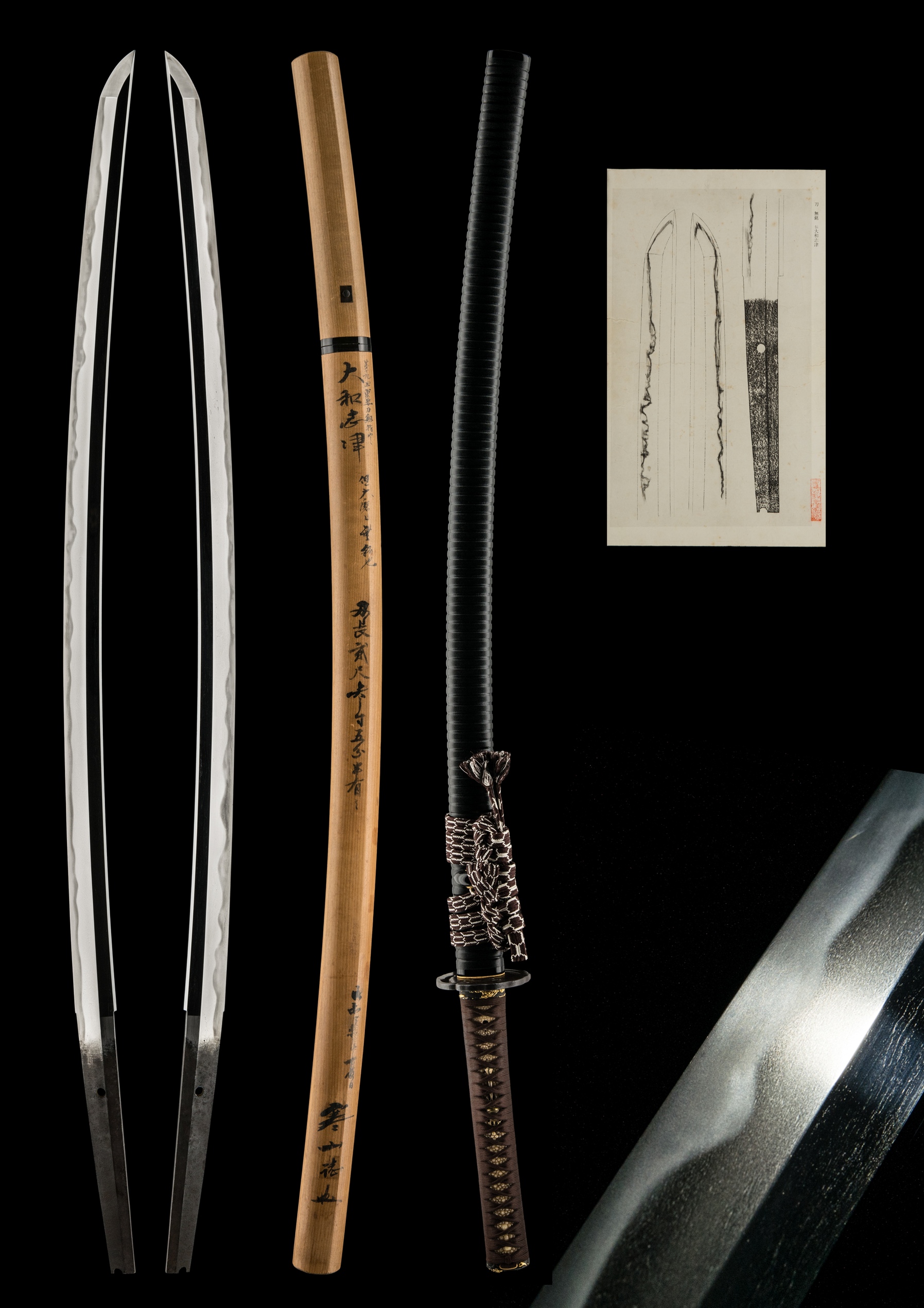
Kotô · Nanbokuchô period
A Yamato Shizu Katana (大和志津)
Attributed to Yamato Shizu – the name given to Shizu Saburô Kaneuji’s early work before his studies under Sôshû Masamune. Ō-suriage mumei, broad mihaba, notare-gunome hamon rich in sunagashi. The vivid hamon bridges the Yamato and Sôshû traditions – a defining characteristic of this rare early attribution.
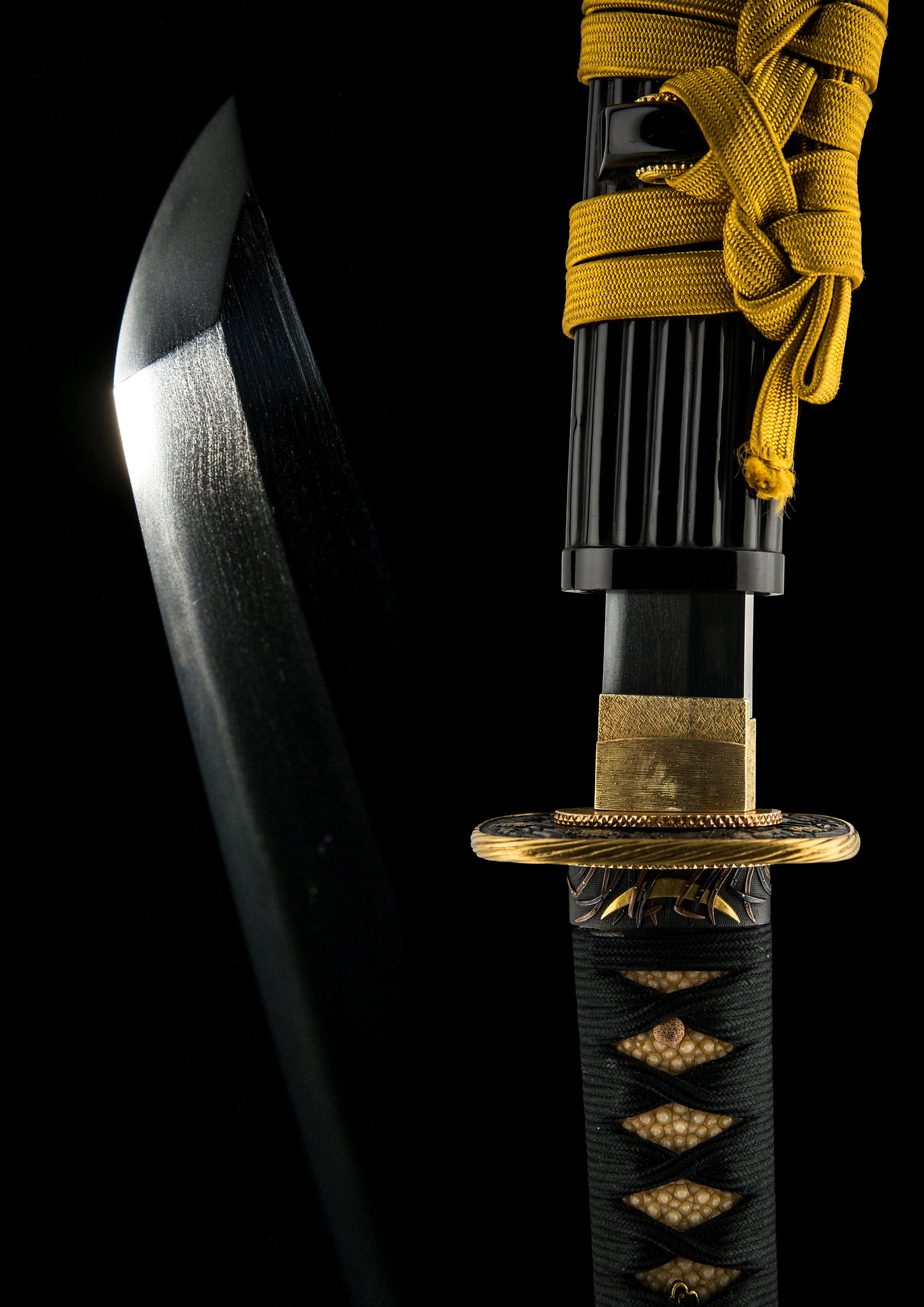
Kotô · Kamakura period (14th century)
A Hôshô Katana (保昌)
This katana exudes an old traditional atmosphere and is in a healthy state. This pure masame-hada katana is an extraordinary work that even surpasses other great swords from the Hôshô School. Housed in a wonderful kizami-saya koshirae.
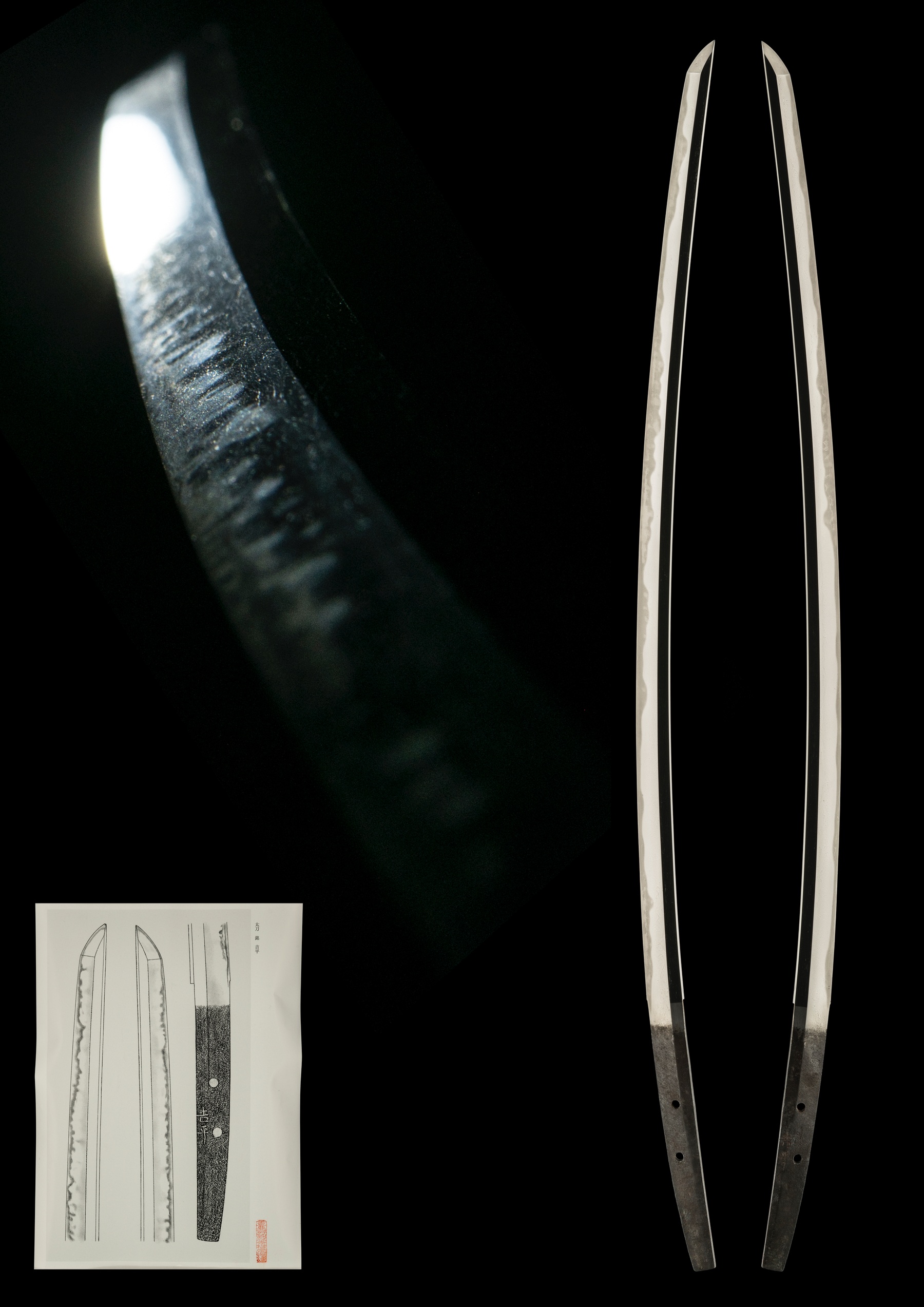
Kotô · Kamakura period (13th century)
A Fukuoka-Ichimonji Yoshihira Tachi (福岡一文字吉平)
This blade has a long nagasa and is with the deep sori of a magnificent shape. The jigane is a rather standing-out itame, mixed with mokume, nagare and midare-utsuri. The hamon features kawazu no ko-chôji, fukuro-chôji, kinsuji, and sunagashi – a masterwork by Fukuoka-Ichimonji Yoshihira with its own distinct character.
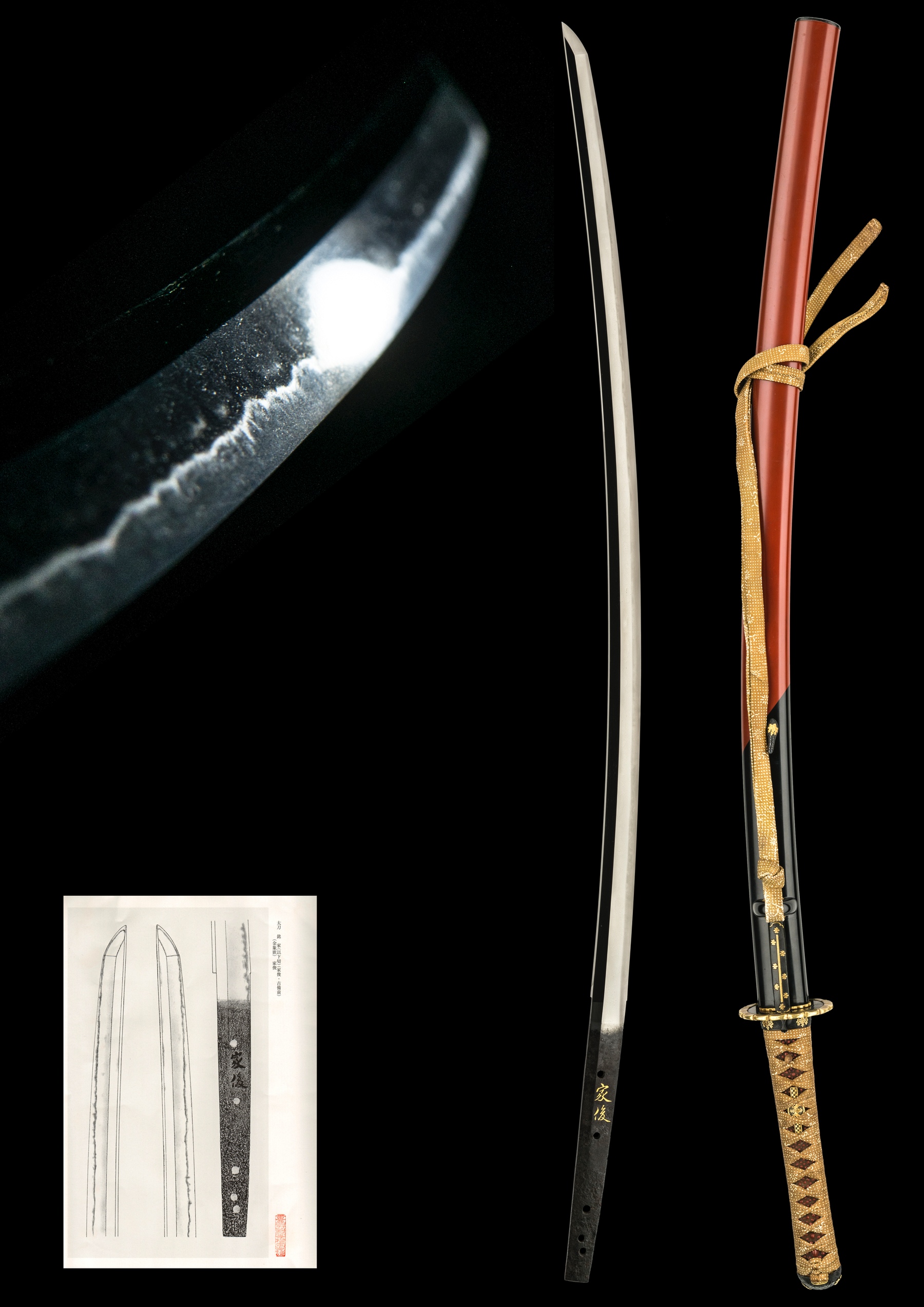
Kotô · Kamakura period (13th century)
A Ko-Bizen Ietoshi Tachi (古備前家俊)
This tachi was crafted by Ko-Bizen Ietoshi [circa 1247-1249]. The hamon is a ko-nie-laden suguha-chô that is mixed with ko-gunome, ko-midare, many ashi and yô, particularly gorgeous are the kinsuji that appear within the ha towards the base of the blade and also very enjoyable is the vivid midare-utsuri that appears along the kitae. Housed in a stunning uchigatana-koshirae.
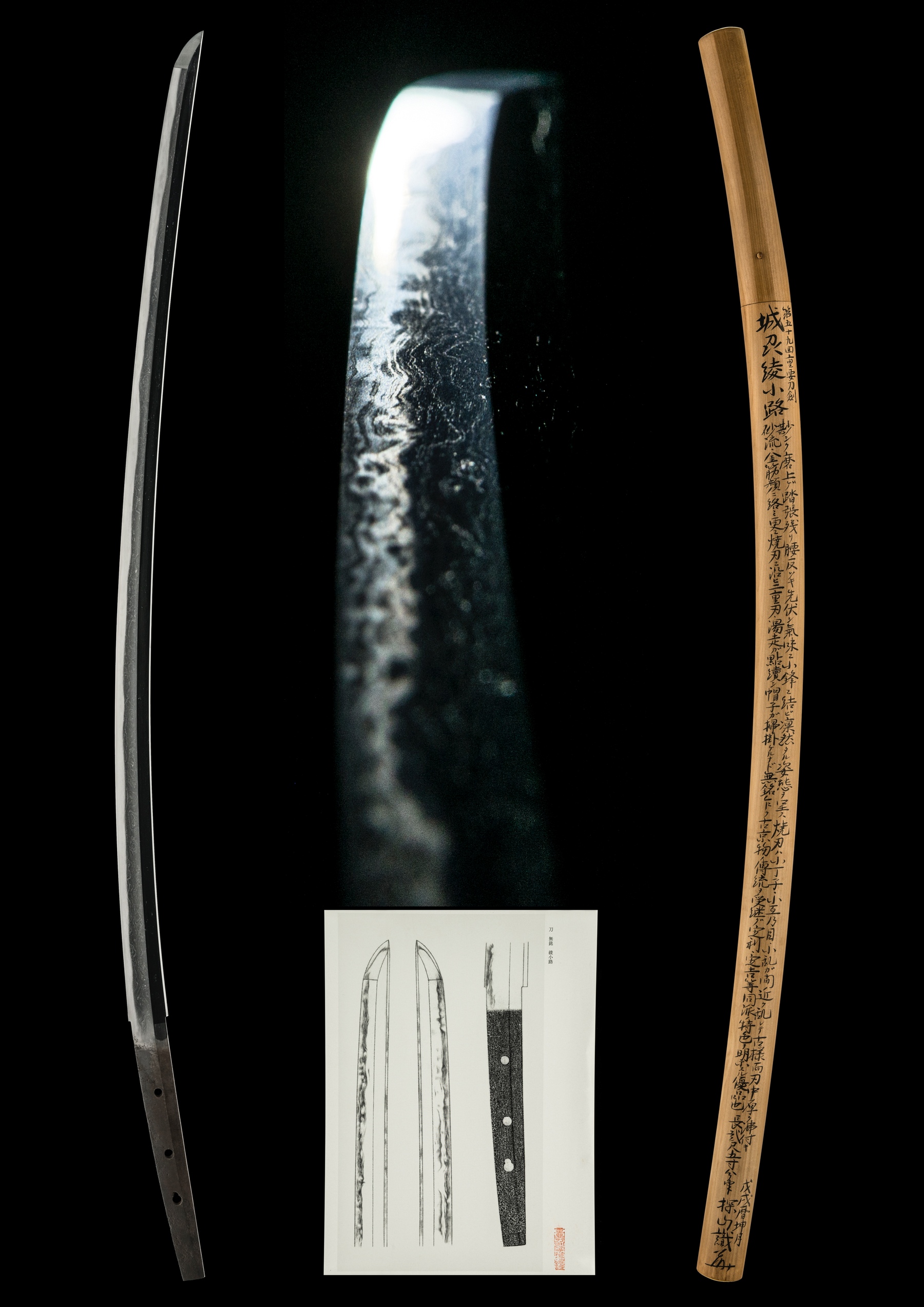
Kotô · Kamakura period (13th century)
An Ayanokoji Katana (綾小路)
This blade tapers noticeably, has a thick kasane, funbari, and a deep koshizori which bends down towards the tip. That is, it is of an elegant tachi-sugata that is close to being ubu. The hamon is a complex mix of small-dimensioned midare elements like ko-chôji, ko-gunome, togariba, and ko-midare. We clearly recognize the typical characteristics of the Ayanokôji School and we are in agreement with the period attribution to this school.
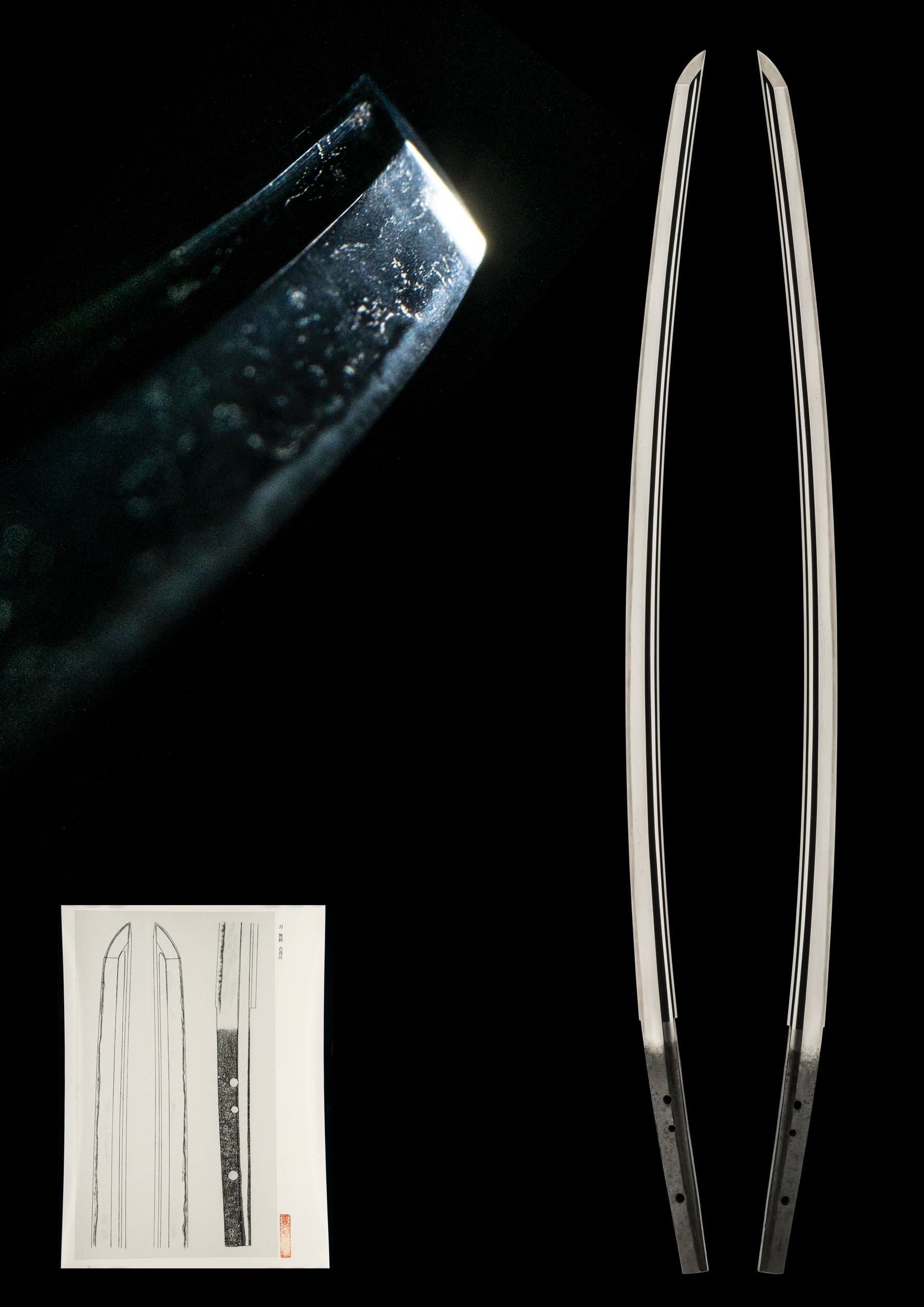
Kotô · Kamakura period (13th century)
A Ko-Aoe Katana (古青江)
This blade shows a kitae in dense itame that features fine ji-nie, chikei, and a faint utsuri. The hamon is a ko-nie-laden suguha-chô that is mixed with ko-midare, ko-chôji, many ashi and yô, and kinsuji and sunagashi. We have here a work that is outstanding in terms of quality among all blades attributed to the Ko-Aoe School.
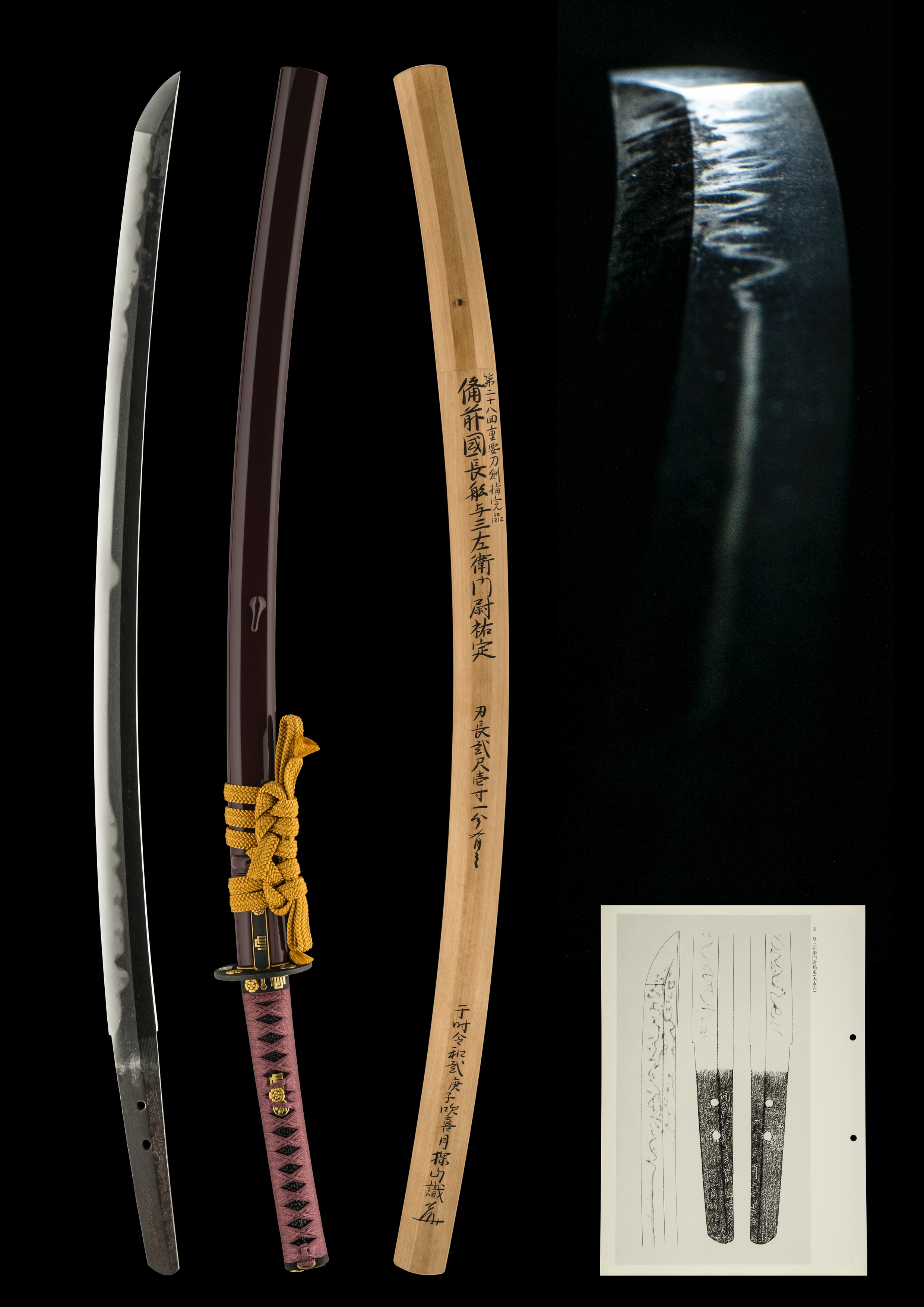
Sue-Kotô · Late Muromachi (dated Daiei 6, 1526)
A Yosôzaemon Sukesada Katana (長船与三左衛門尉祐定)
A signed and dated work of first-generation Yosôzaemon no Jô Sukesada, Bizen province, made for Minamoto Sadatoshi – a rare personalised commission inscription. Dense itame with ji-nie and a distinctive double gunome-midare connected via hirosuguha, a hamon arrangement the NBTHK notes as rare for Sue-Bizen. Kenzen condition, with custom koshirae produced by Unique Japan.
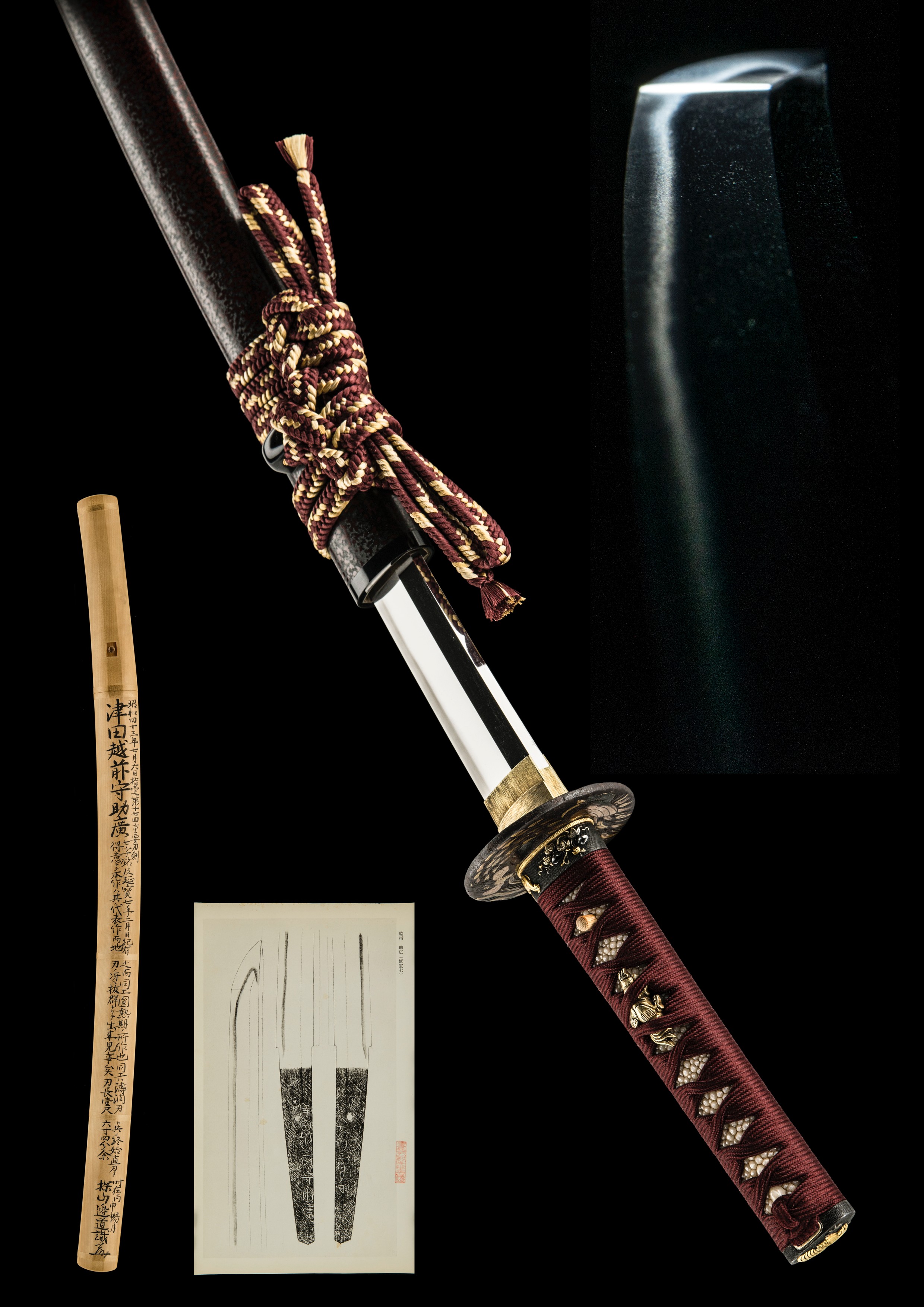
Shintô · Early Edo period (Enpô 7, 1679)
A Tsuda Sukehiro Wakizashi (津田越前守助広)
Signed and dated work of Tsuda Echizen no Kami Sukehiro, Settsu province, dated Enpô 7 (1679). Pioneer of the iconic tôranba hamon, Sukehiro shows here his equally masterful suguha – deeply nioi-laden with sunagashi and a brilliantly sharp nioiguchi, singled out by the NBTHK as exemplary of his work in this style. Custom koshirae produced by Unique Japan.
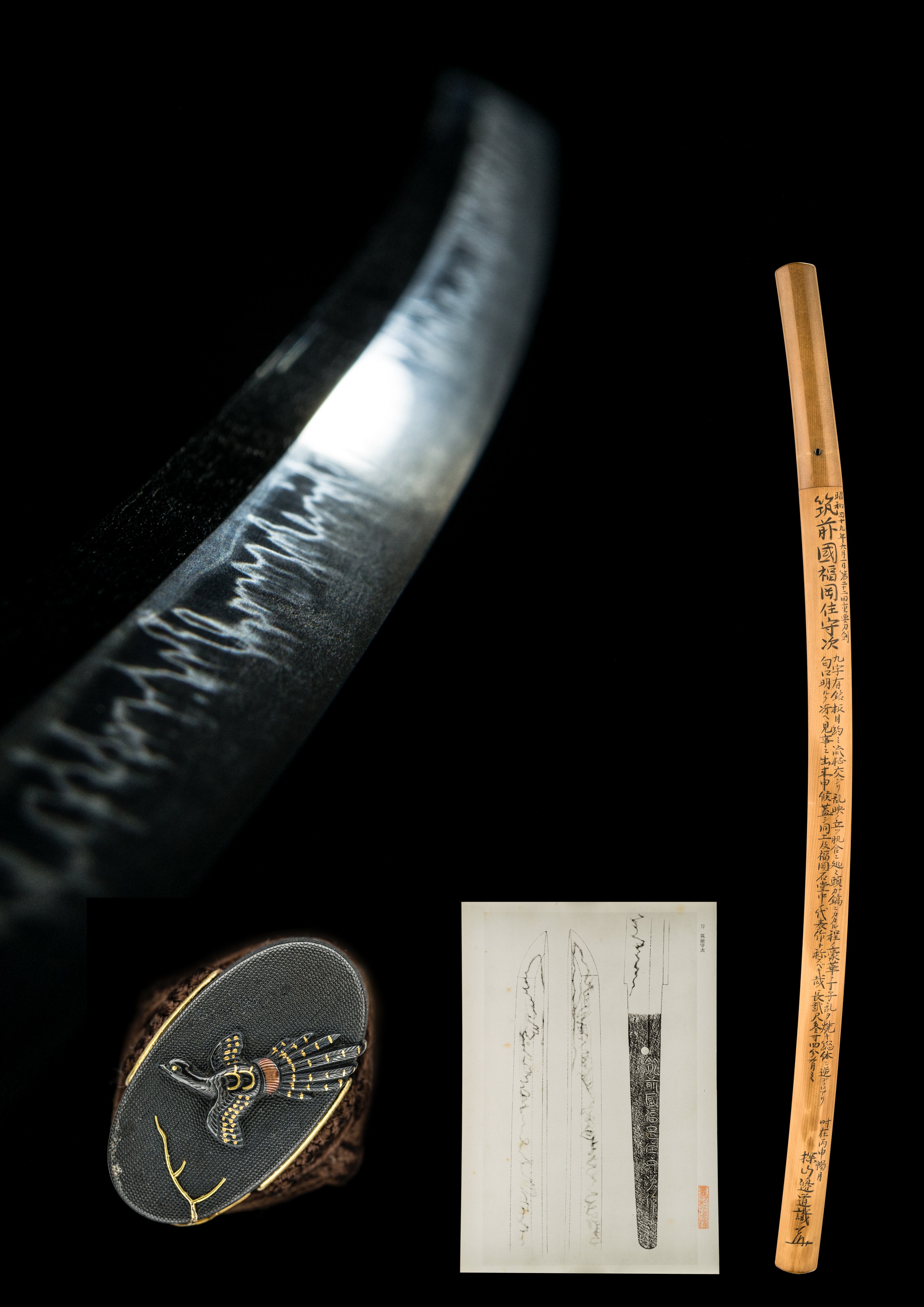
Shintô · Early Edo period
A Moritsugu Katana (守次)
Signed work of Fukuoka Ishido school master Moritsugu, Chikuzen province. His chôji-midare carries the distinctive squid-head pattern that sets his work apart from his Edo Ishido contemporaries – the NBTHK describes this blade as typical and representative of Moritsugu at his finest. Custom koshirae produced by Unique Japan.
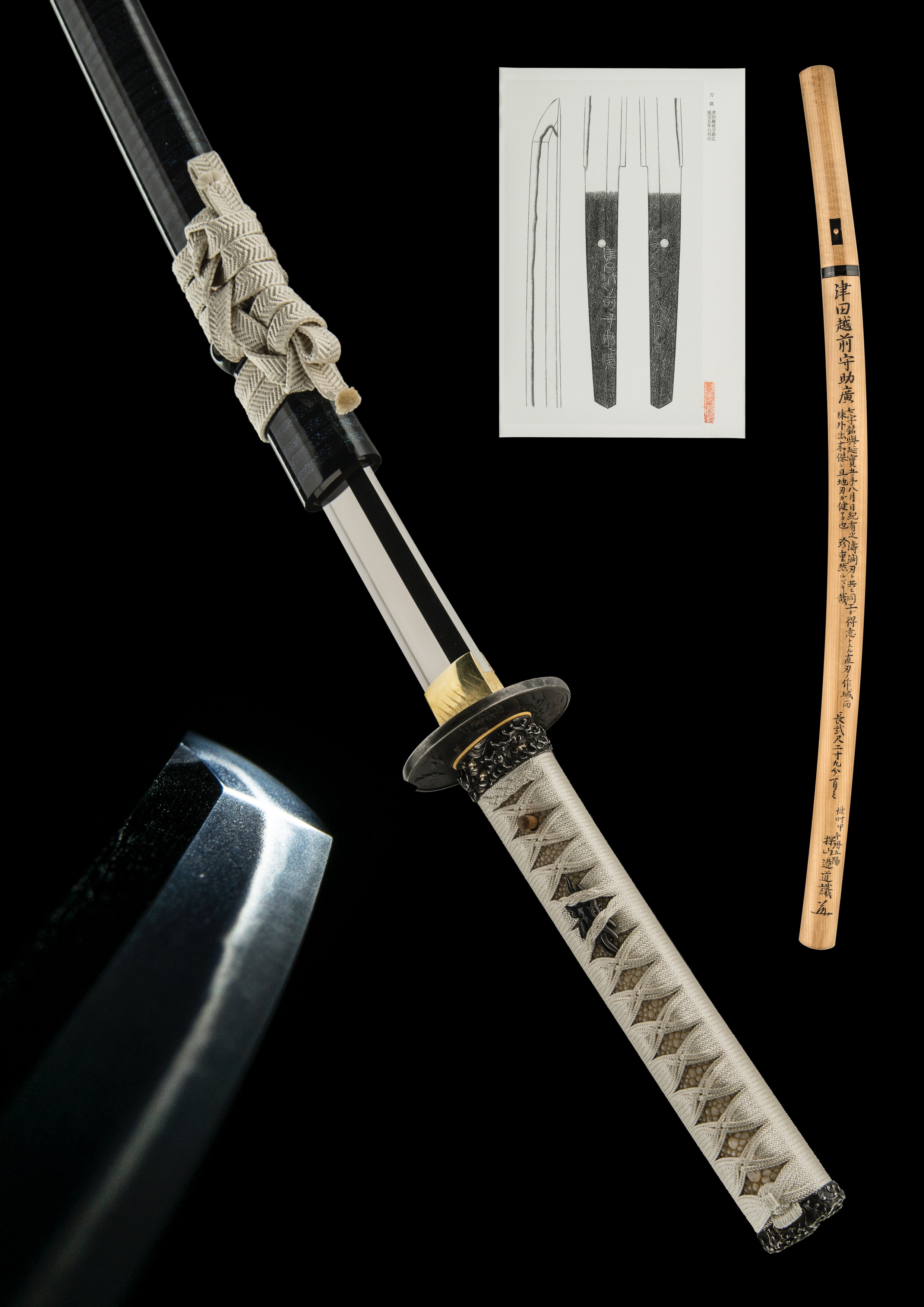
Shintô · Early Edo period (Enpô 5, 1677)
A Tsuda Sukehiro Katana (津田越前守助広)
Signed and dated katana by Tsuda Echizen no Kami Sukehiro, Settsu province, dated the eighth month of Enpô 5 (1677). A masterful suguha with kuichigai-ba at the monouchi – the yakihaba widens toward the tip with deep nioi and a brilliantly sharp nioiguchi, often compared to Inoue Shinkai. Featured in the Sukehiro Taikan; custom koshirae by Unique Japan.
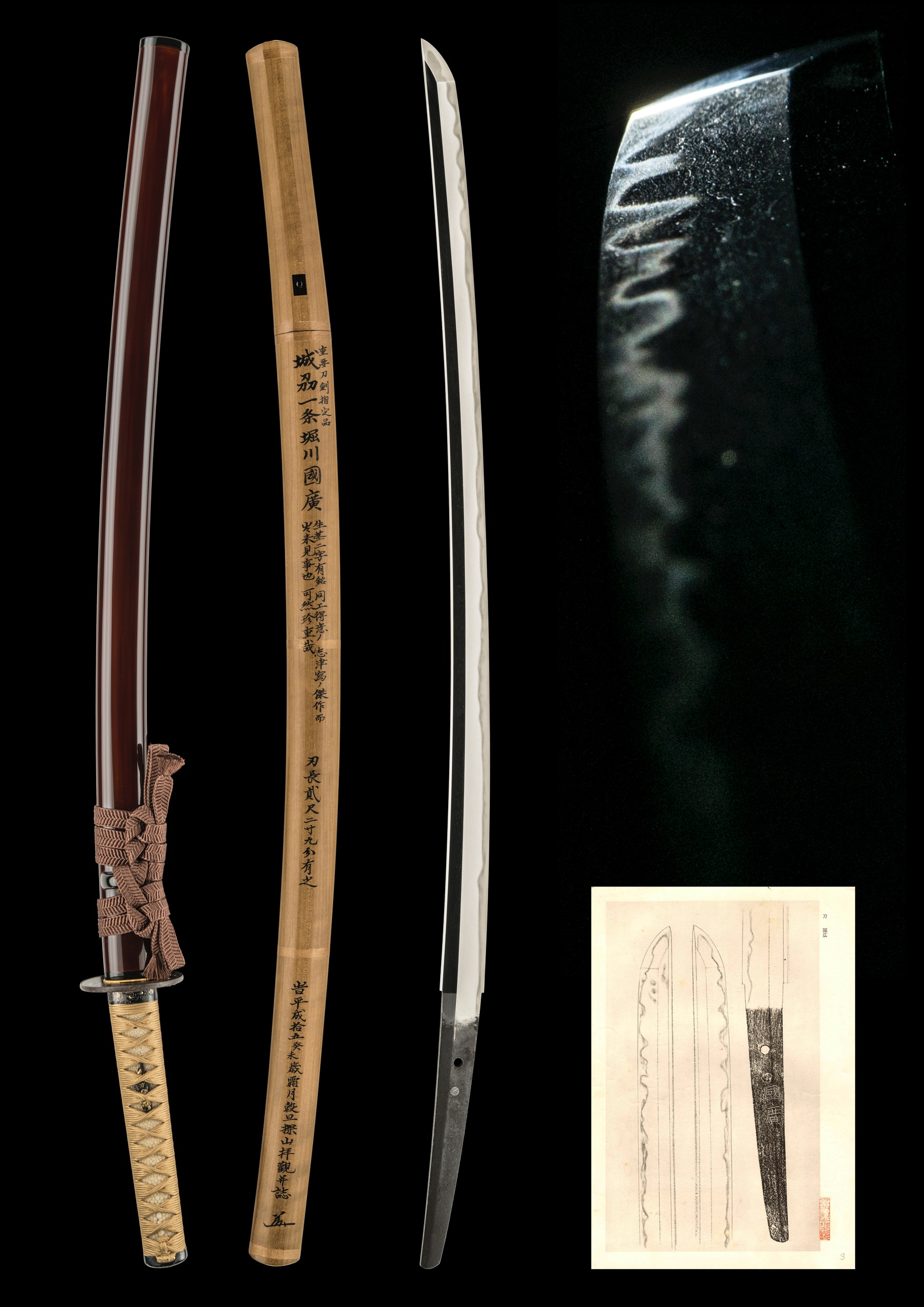
Shintô · Early Edo period (Keichô era, c. 1604)
A Kunihiro Katana (堀川国広)
Signed with Horikawa Kunihiro’s characteristic niji-mei, dated by the NBTHK to around Keichô 9 (1604) – a prime work of the founder of the Horikawa school. Nie-laden notare-gunome hamon that widens dramatically at the monouchi, with tobiyaki on the omote; ubu nakago in original shape. Tanzan-sensei and Kashima sayagaki; custom koshirae by Unique Japan.
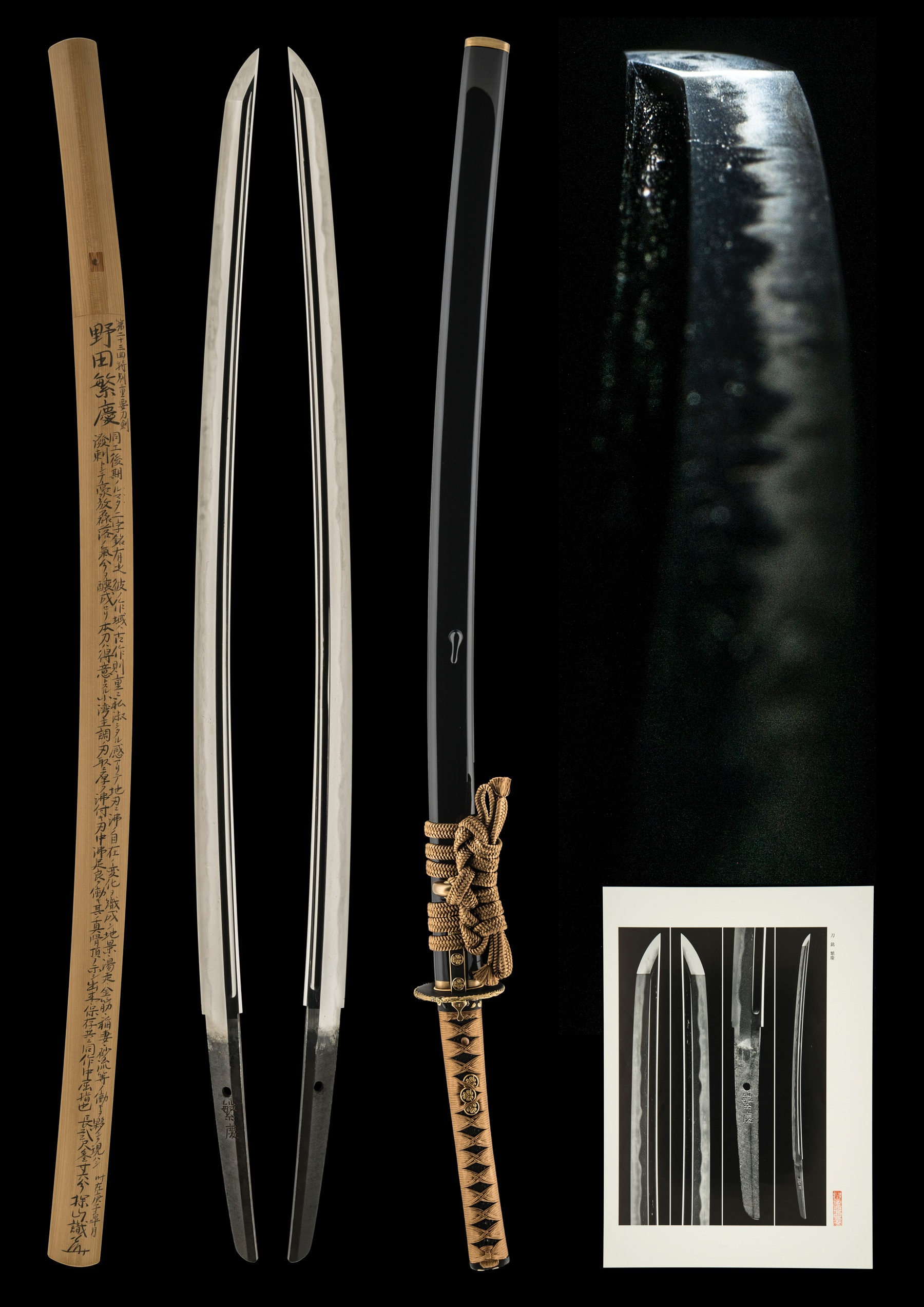
Shintô · Momoyama period (Keichô era, c. 1596-1615)
A Hankei Katana (野田繁慶)
Signed with Hankei’s powerful ru-mata niji-mei, this magnificent 71.5cm katana reaches Tokubetsu Jûyô – a level the NBTHK places on par with designation by the Agency for Cultural Affairs. The NBTHK notes Hankei was aiming here specifically at Norishige rather than Masamune: strongly standing-out ô-itame with hijiki-hada, abundant kinsuji, nie-suji and sunagashi in a wide nie-laden notare. Rare Tokugawa-mon themed custom koshirae by Unique Japan.
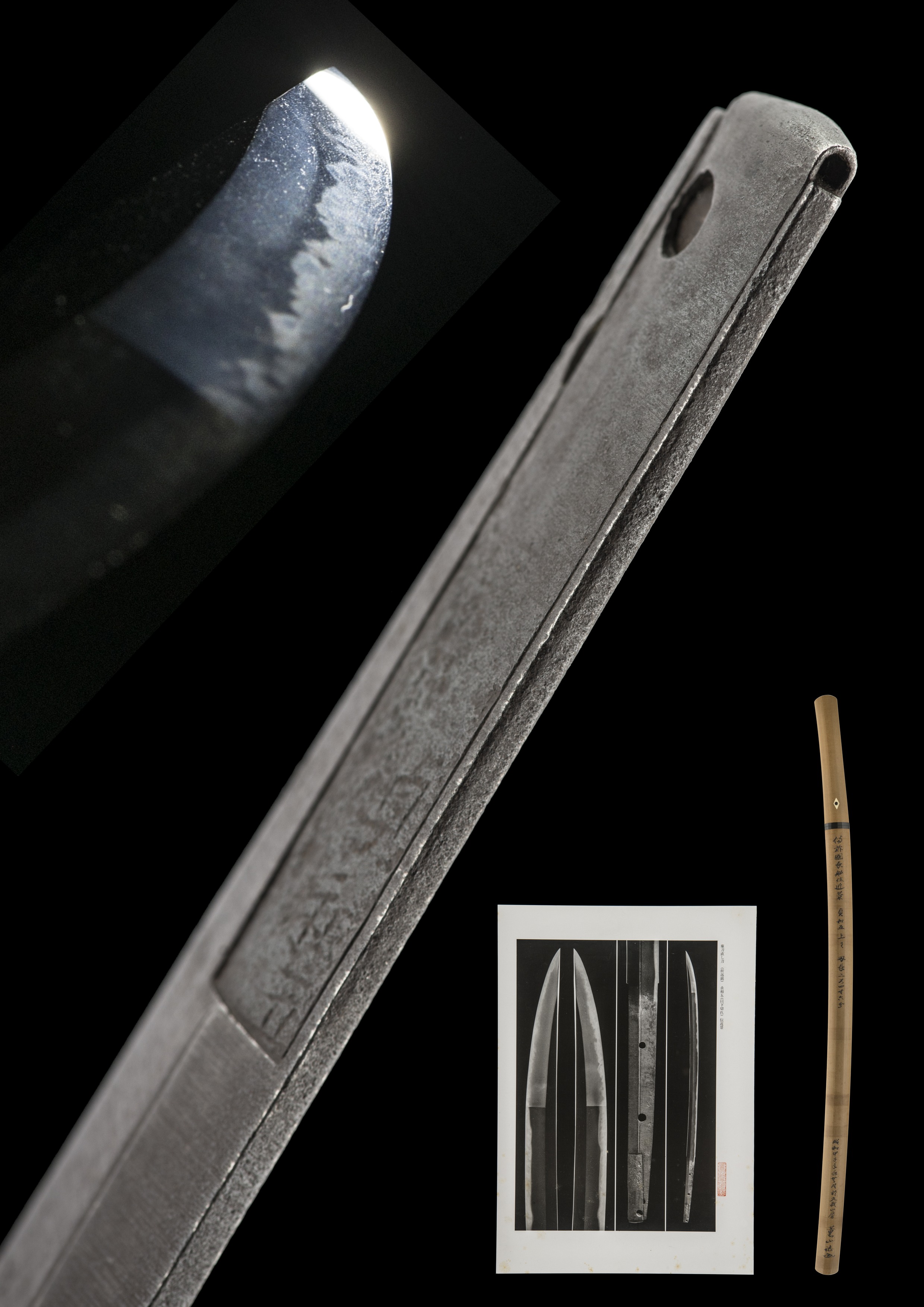
Kotô · Early Nanbokuchô period (Jôwa era, 1349)
A Chikakage Naginata-naoshi Katana (近景)
A naginata-naoshi of Den Chikakage, converted from a Nanbokuchô-period naginata and bearing a rare orikaeshi-mei preserving the date Jôwa 5 (1349). The 15.2cm ô-kissaki, wide mihaba and powerful sugata retain the unmistakable silhouette of the original naginata form. Itame with midare-utsuri, ko-gunome hamon rich in ashi, yô and kinsuji – ji and ha described by the NBTHK as strikingly healthy (kenzen).
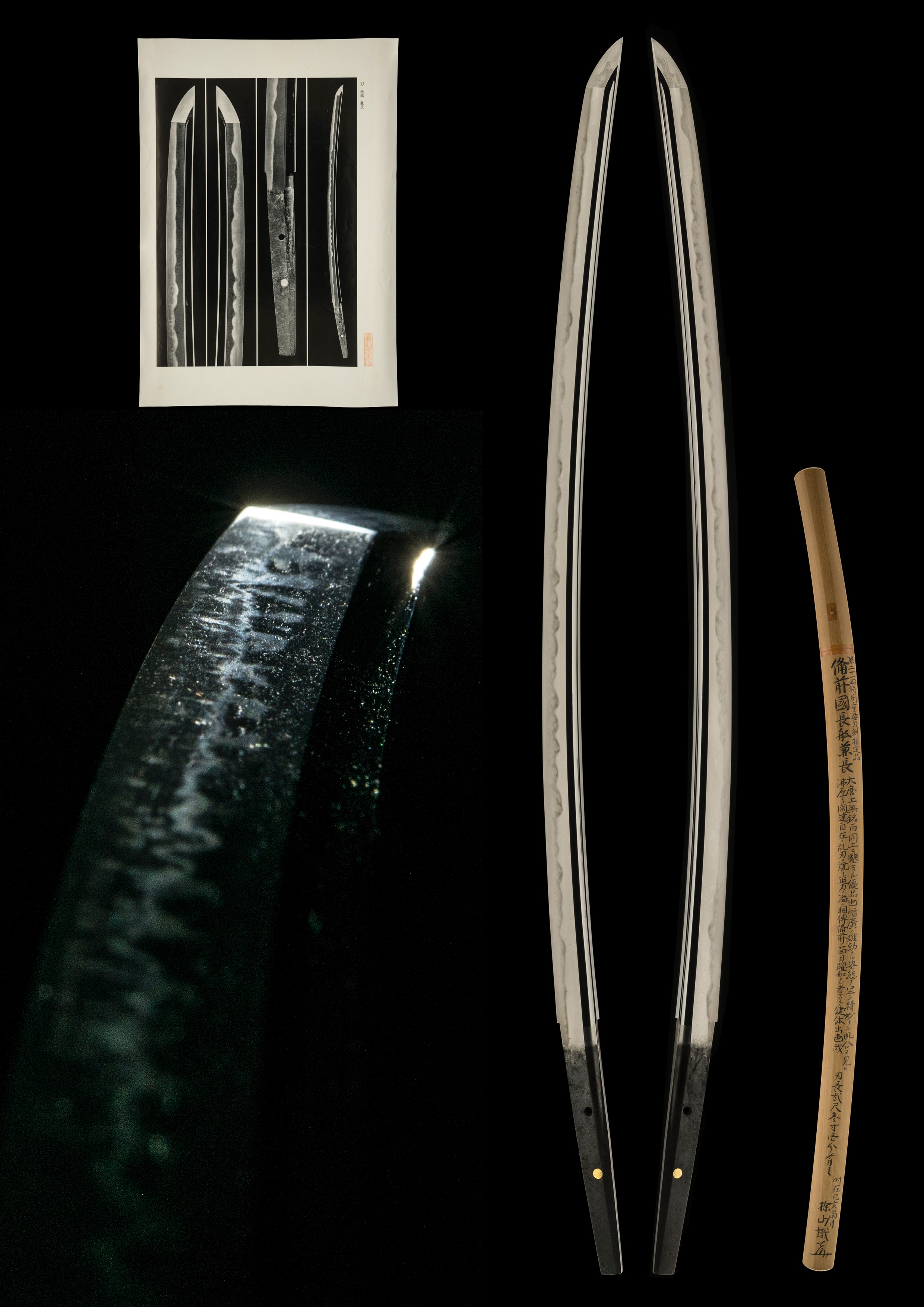
Kotô · Nanbokuchô period
A Kanenaga Katana (兼長)
Attributed to Osafune Kanenaga (also read Kenchô), student of the legendary Chôgi – a Sôden-Bizen master whose katana are almost always unsigned. The nie-laden gunome hamon is a complex explosion of ô-gunome, chôji, shimaba, tobiyaki, kinsuji and sunagashi, crowned by a powerful kaen-tending bôshi with hakikake. The NBTHK calls this a masterwork that stands out among all blades attributed to this smith – kenzen in both ji and ha.
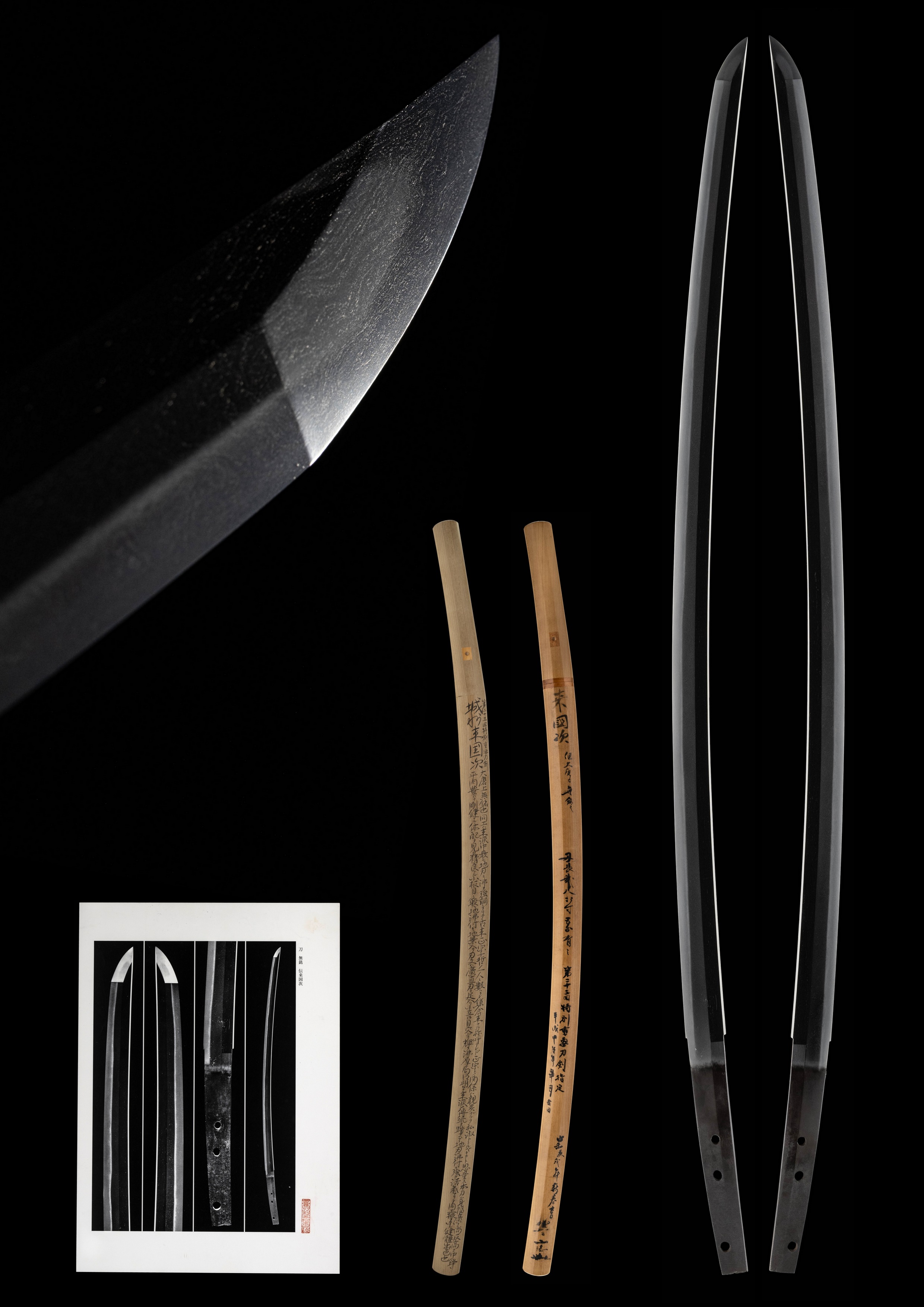
Kotô · Late Kamakura period
A Rai Kunitsugu Katana (来国次)
Mumei ô-suriage attributed to Rai Kunitsugu – Kamakura-Rai, the most nie-emphasising master of the Rai School and one of the Ten Students of Masamune. Fine ko-itame with ji-nie, chikei and a faint nie-utsuri; elegant hiro-suguha with a bright nioiguchi alive with kinsuji, sunagashi and sparkling nie throughout. Two sayagaki: Kanzan (Nakamiya Keiô, 1970) and Tanobe Michihiro (Tanzan-sensei, 2025) – kenzen in both ji and ha.
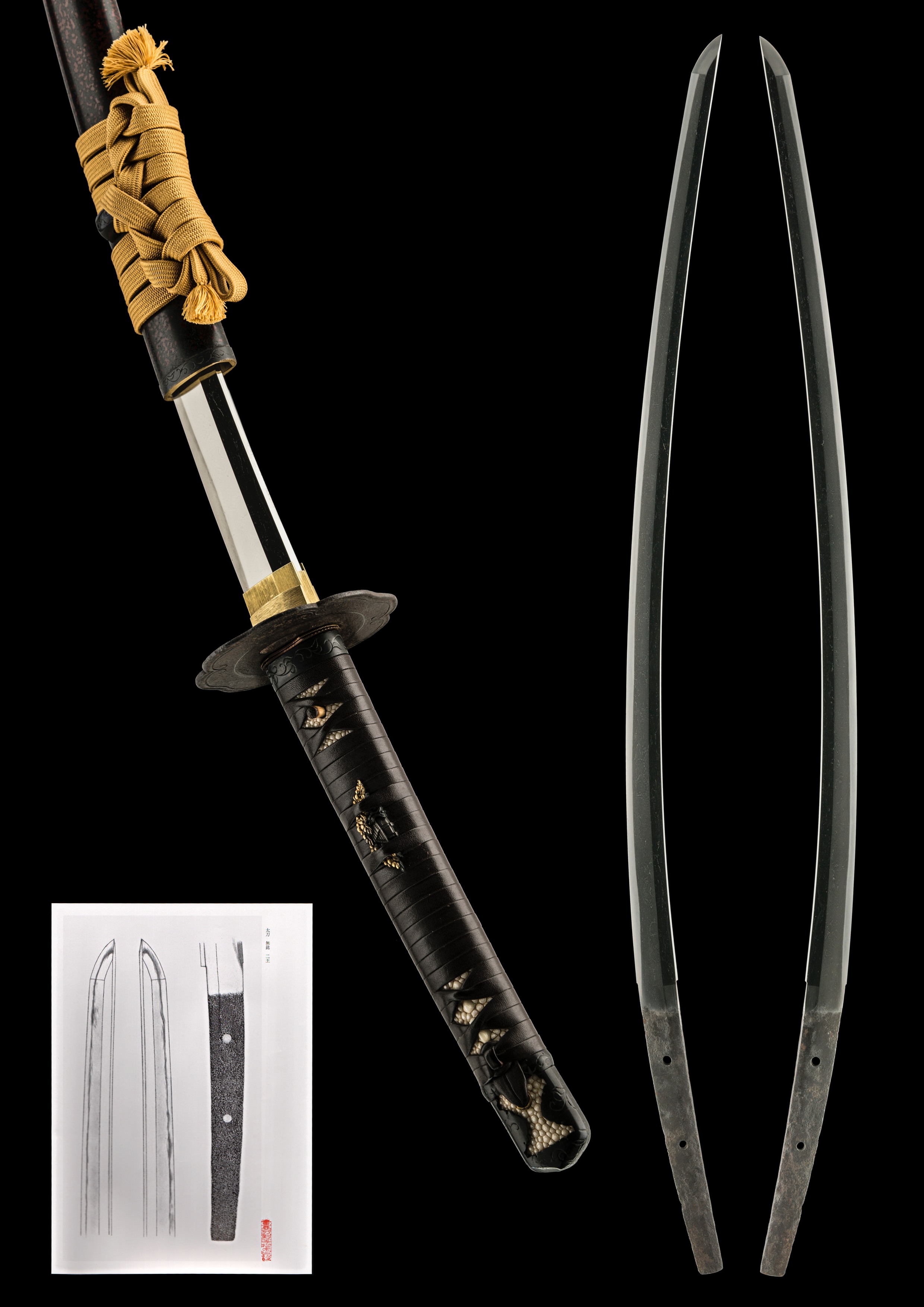
Kotô · Kamakura period
A Nio School Tachi (二王)
Mumei ô-suriage tachi attributed to the Nio School of Suo province – a rare school forging in the Yamato tradition but distinguished by its shirake utsuri and the characteristically wet, dreamy nioiguchi found nowhere else. Deep koshizori of 2.6cm and grand 71.2cm nagasa; naka-suguha with ko-gunome, niju-ba at the monouchi and shirake throughout. Presented in a fabulous handachi koshirae.
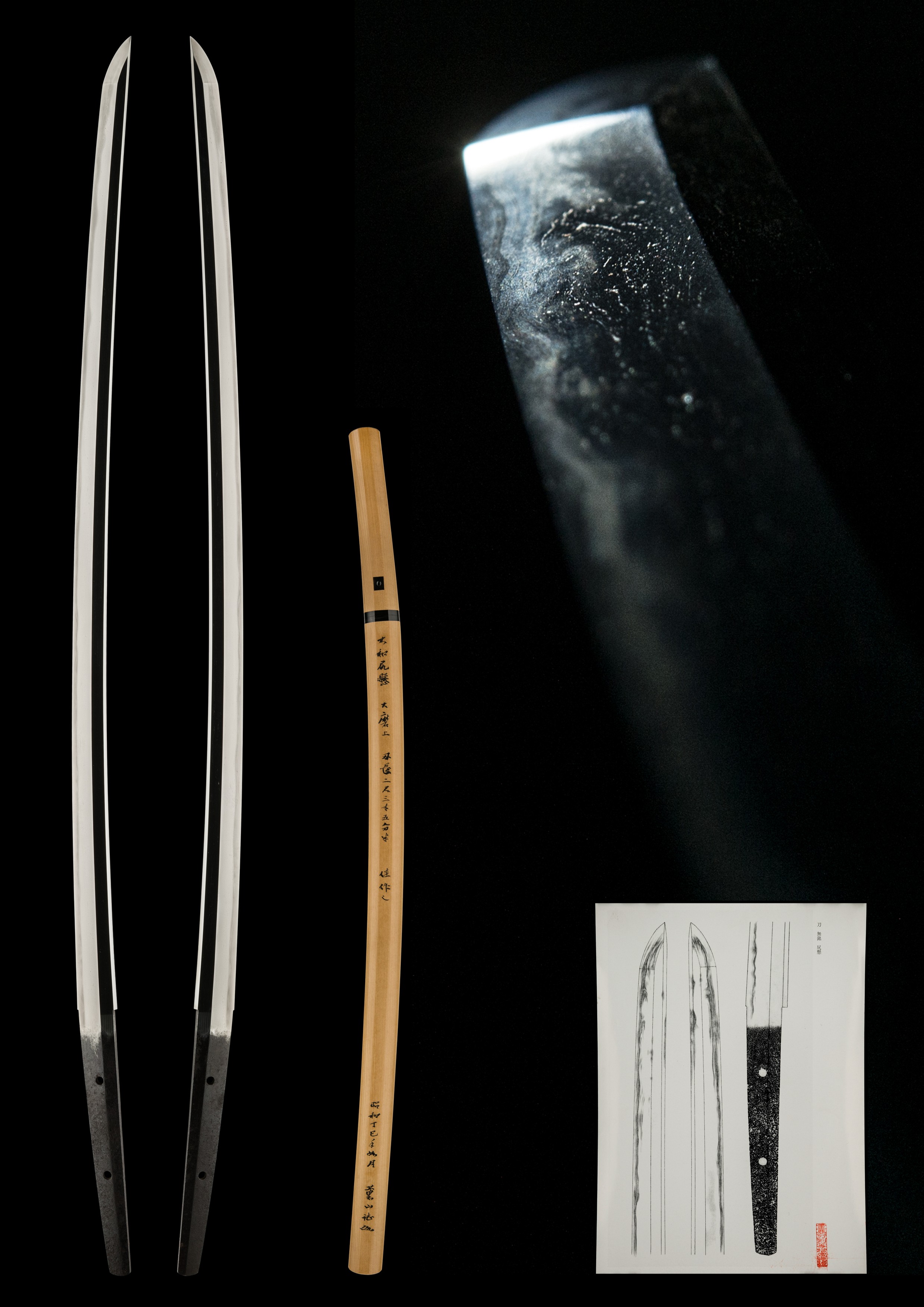
Kotô · Nanbokuchô period
A Shikkake Katana (尻懸)
A thick, meaty mumei ô-suriage katana of the Shikkake school – one of the five great Yamato traditions, characterised by high shinogi, wide shinogi-ji and the suguha-with-ko-gunome hamon unique to this school. The yaki widens dramatically at the monouchi into niju-ba, sanju-ba and uchi-noke, with a deeply brushed yakizume bôshi – powerful Yamato-den at its most direct. Sayagaki by Honma Kunzan; healthy jiba throughout.
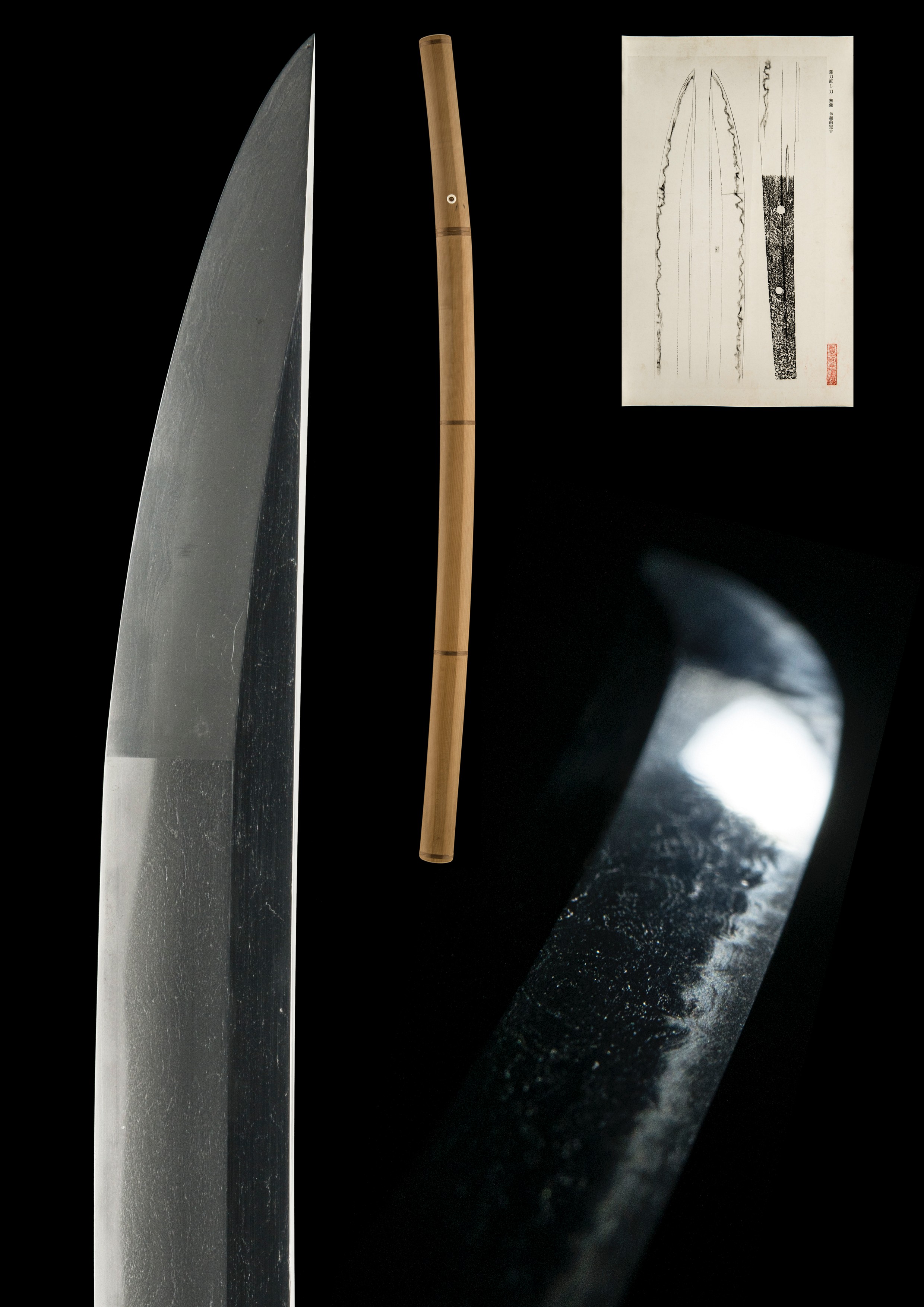
Kotô · Nanbokuchô period
A Sadayoshi Naginata-naoshi Katana (越前定吉)
A powerful mumei ô-suriage naginata-naoshi attributed to Chiyozuru Sadayoshi of Echizen province – a Nanbokuchô-period smith not listed in the sword reference books, yet whose work the NBTHK found compelling enough to pass at the 19th session. Kanmuri-otoshi zukuri with a commanding 10.25cm ô-kissaki; ô-itame with shirake utsuri and a ko-notare gunome-midare hamon with kinsuji and sunagashi. Tight yakizume bôshi – Nanbokuchô naginata power preserved in katana form.
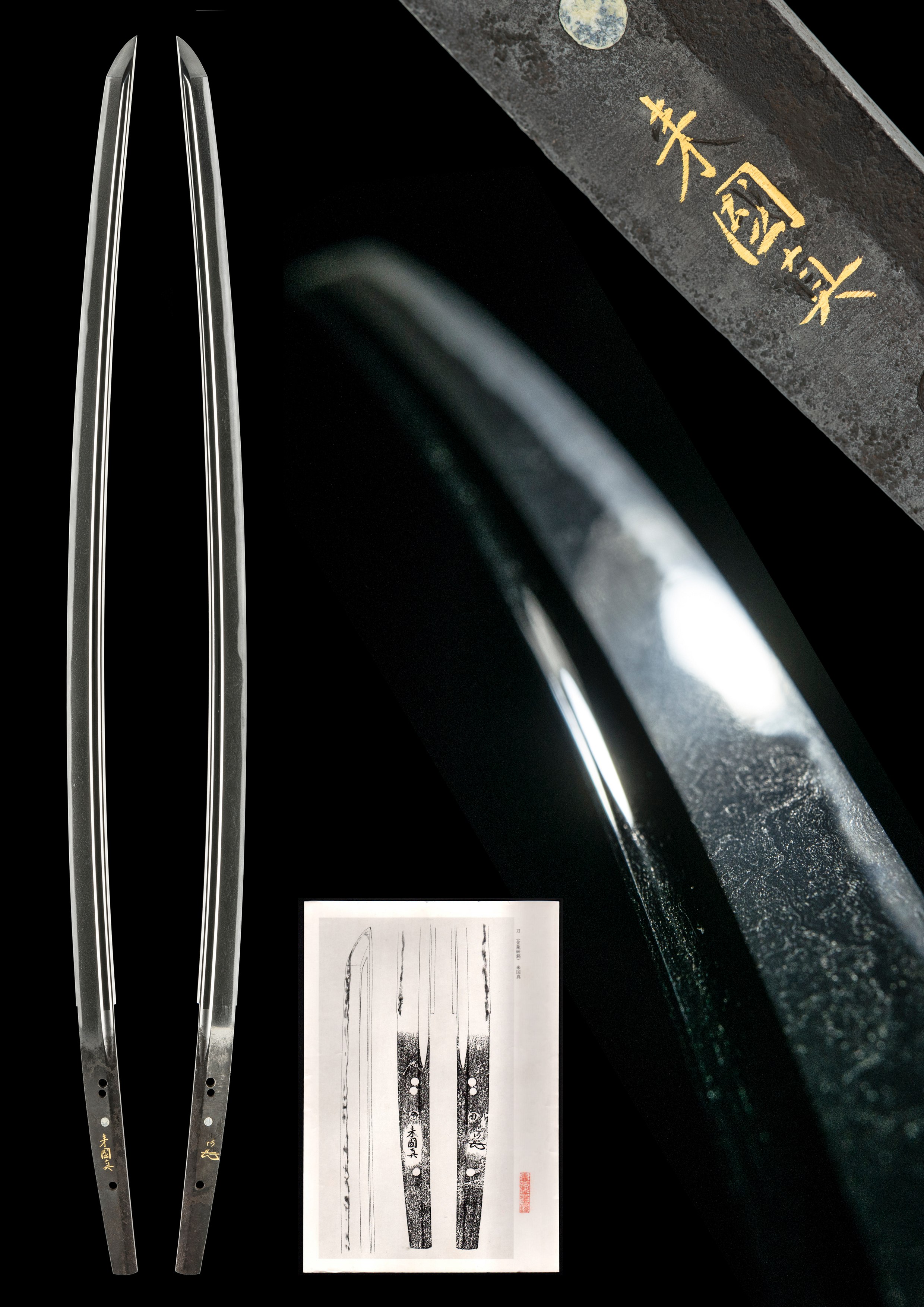
Kotô · Late Kamakura period
A Rai Kunizane Katana (来国真)
Gold kinzôgan attribution by Honami Mitsuichi to Rai Kunizane – son of the great Rai Kunitoshi and sibling to Kunimitsu – a master of the Rai school’s cool, luminous aesthetic. Itame and mokume with hadatachi and plentiful ji-nie; elegant suguha-chô hamon with chôji, gunome and fine chikei throughout. Bôhi on both sides; ô-suriage in classic Rai proportions.
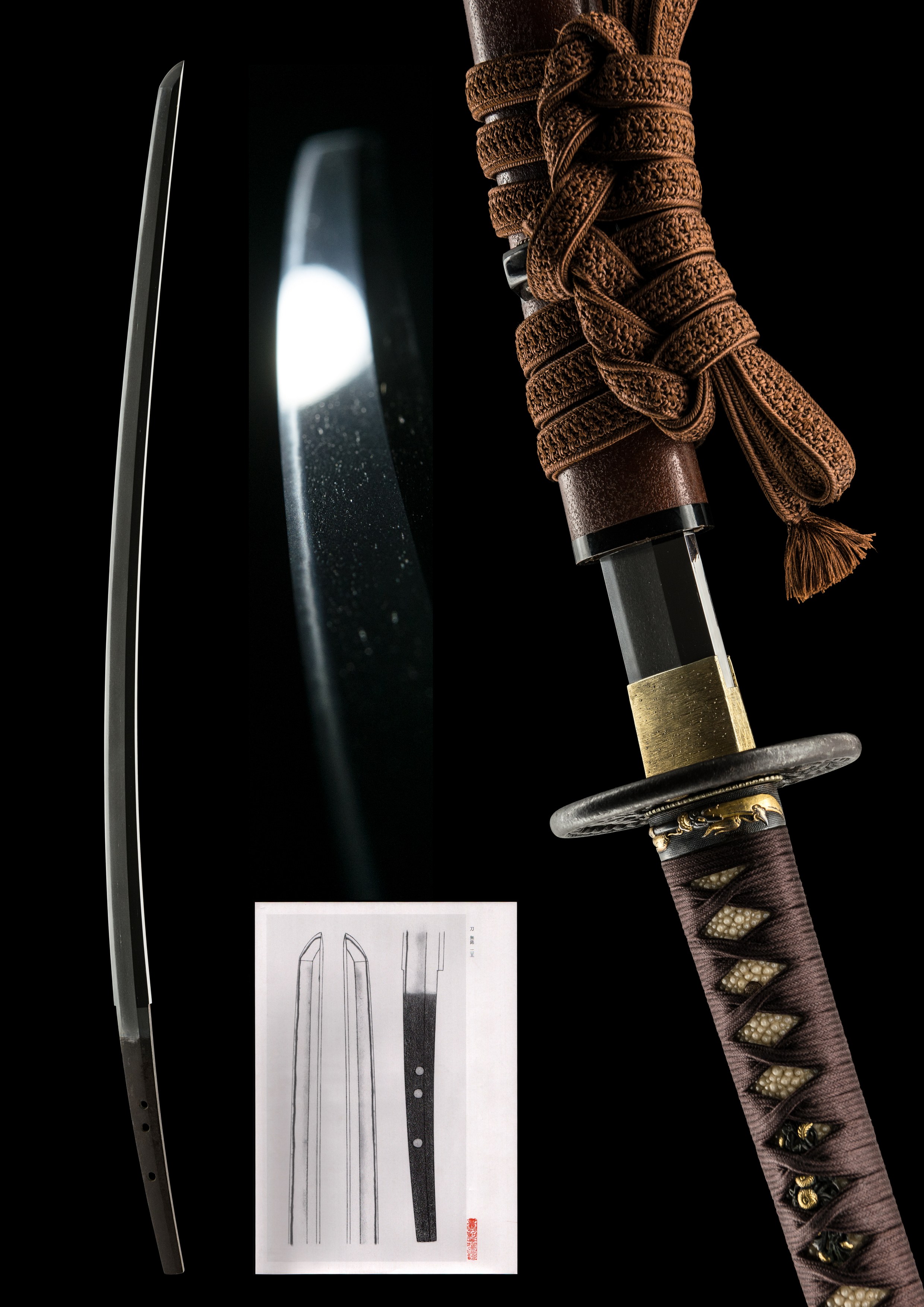
Kotô · Late Kamakura period
A Niô Katana (二王)
Niô School attribution from Suô province – the Yamato-rooted school whose blades are set apart by their characteristic shirake jigane and deeply subdued, atmospheric suguha. Slender mihaba with noticeable taper and deep sori; standing-out itame tending to nagare; narrow hoso-suguha-chô in ko-nie-deki with subdued nioiguchi and bôshi tending to yakitsume. Accompanied by a superb late Edo uchigatana-koshirae with NTHK-certified Nanban-style tsuba and Kyô Gôtô fuchi-kashira.
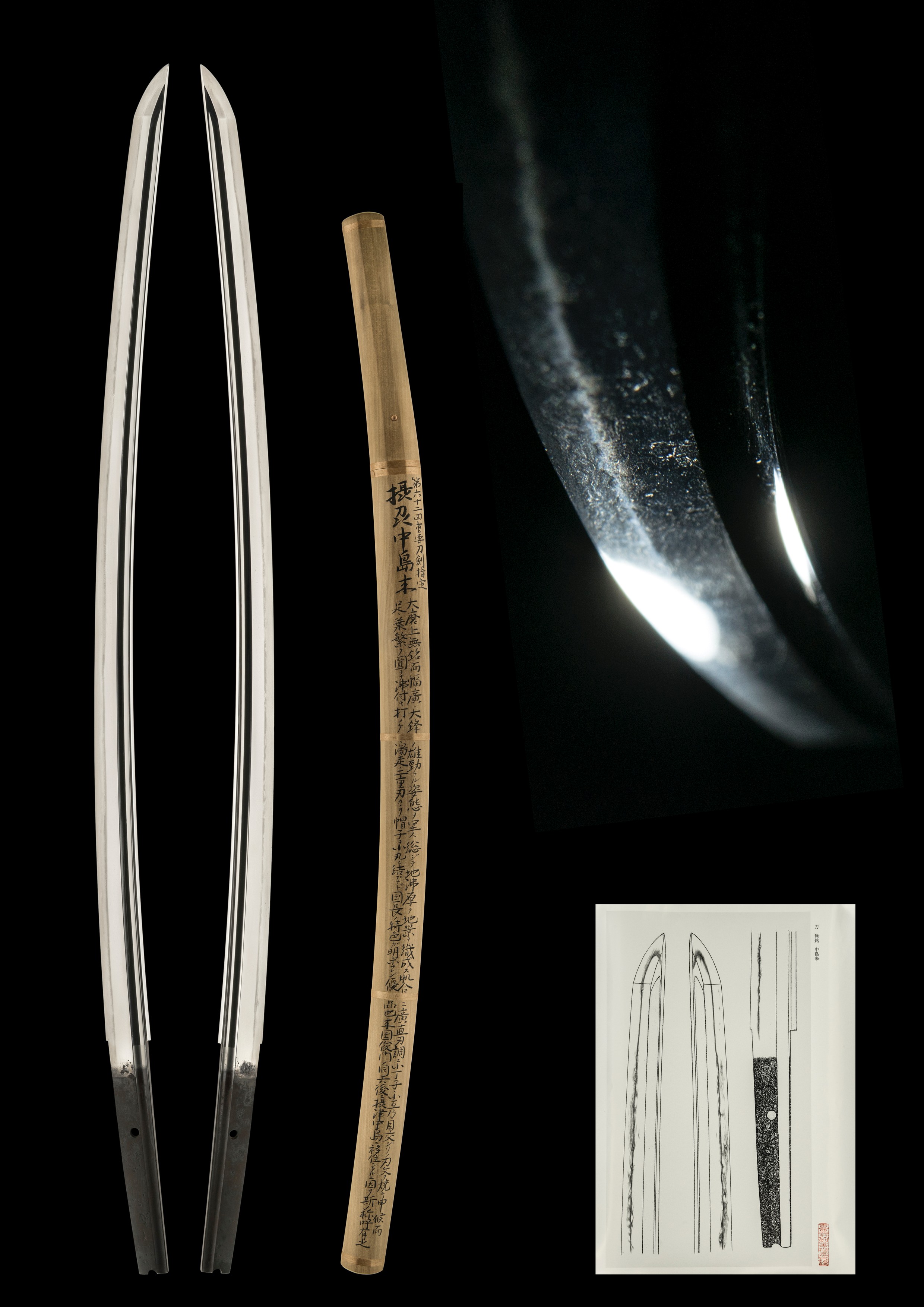
Kotô · Early-mid Nanbokuchô period
A Nakajima-Rai Katana (中島来)
Nakajima-Rai attribution to Rai Kuninaga – founder of the Settsu branch of the Rai school and pupil of the great Rai Kunitoshi – originally forged as a nodachi and later ô-suriage to its present commanding Nanbokuchô proportions. Vivid itame with nagare, ji-nie and abundant chikei; bright suguha-chô with ko-chôji, ko-gunome, kinsuji and sunagashi; powerful ô-kissaki and bôhi retaining rare traces of original vermilion lacquer. Fujishiro Jô-saku; gold-wrapped Edo-period ni-jû habaki.
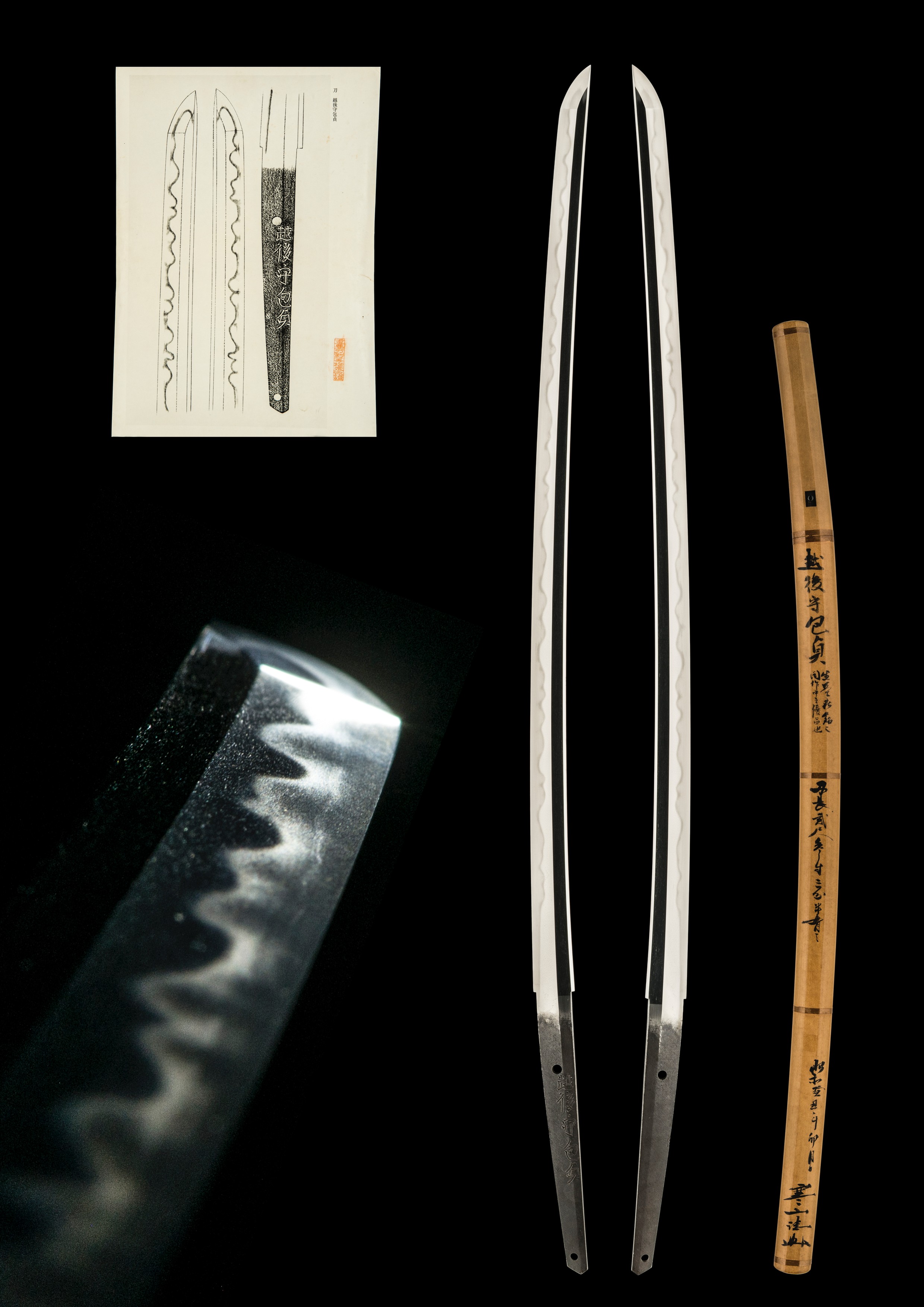
Shintô · Early Edo period (Enpô era: 1673–1681)
A Nidai Kanesada Katana (越後守包貞)
Echigo no Kami Kanesada II – among the supreme masters of Ôsaka-shintô – at the height of his powers, signed with the full court title in flowing goji-mei on an ubu nakago. Spectacular tôran-ba in dense ko-nie with long ashi and sunagashi; exquisite ko-itame with ji-nie and chikei throughout; both ji and ha kenzen. Fujishiro jôjô-saku and ô-wazamono; Dr. Satô Kanzan sayagaki declaring it a masterwork among all works of this smith.
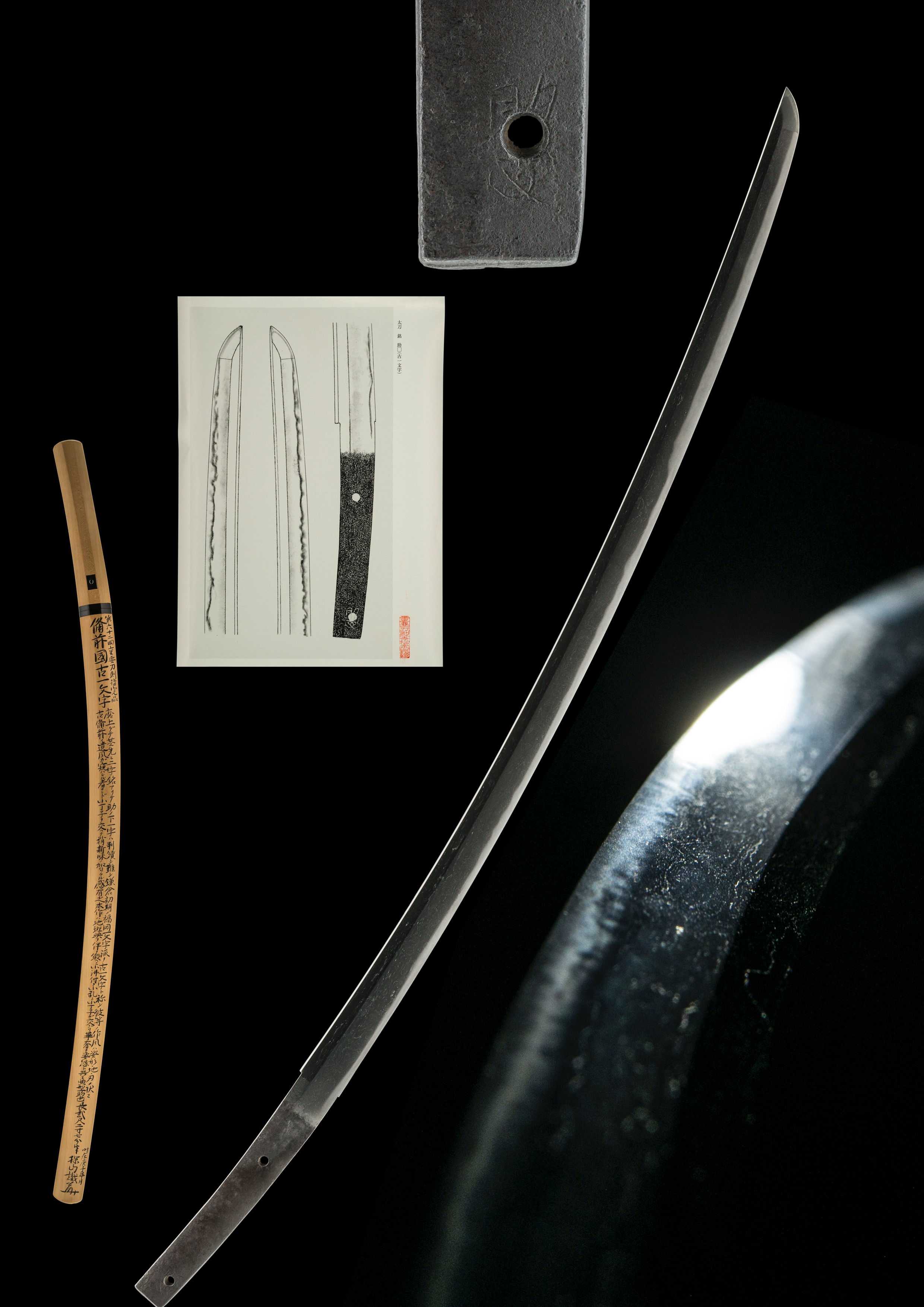
Kotô · Early Kamakura period (1184–1222)
A Ko-Ichimonji Sukeyasu Tachi (古一文字助安)
A signed Ko-Ichimonji tachi from the opening years of the Kamakura period – bearing the two-character mei Suke[yasu] on the suriage nakago, possibly the only surviving work of this smith, associated with Ko-Ichimonji Sukenari. Beautifully active itame with mokume and nagare; deep jifu-utsuri lending an icy-blue quality to the ji; nie-laden ko-midare-chô with ko-chôji, kinsuji and sunagashi; graceful koshi-zori flowing into the original nakago. Tanobe Michihiro sayagaki; 800 years old and in remarkable health.
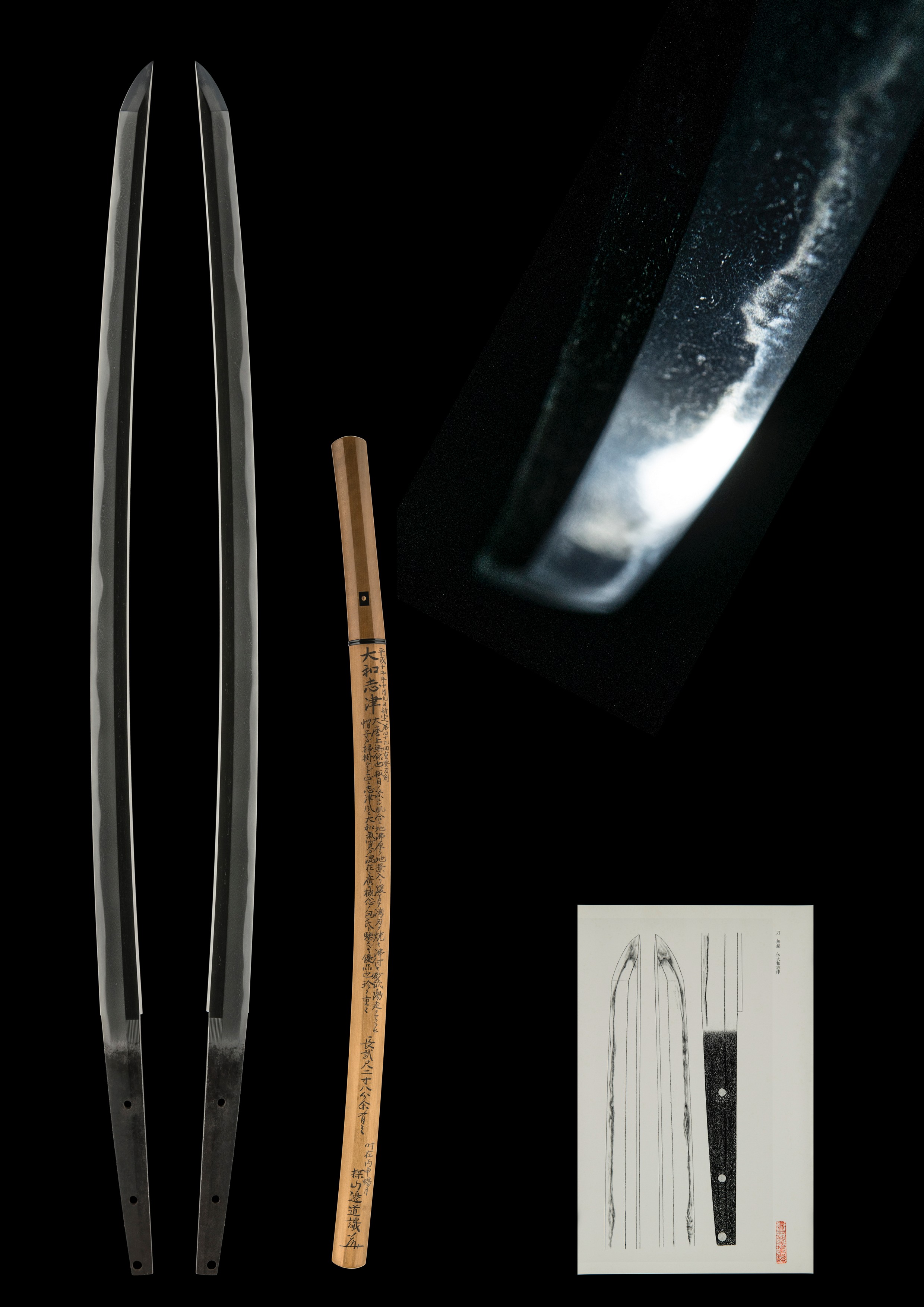
Kotô · Late Kamakura period (circa 1319)
A Yamato Shizu Katana (大和志津)
Yamato Shizu attribution to Kaneuji – the Masamune student who blended Yamato and Sôshû traditions into something entirely his own, and who became the founder of the Mino tradition. Itame mixed with mokume and nagare; ji-nie and chikei; shallow notare with gunome, kuichigai-ba, nijûba, kinsuji and sunagashi; vigorous hakikake bôshi tending to kaen. Tanobe Michihiro sayagaki declaring it “rare and important, should be called Kaneuji”; 67th NBTHK Polishing Award.
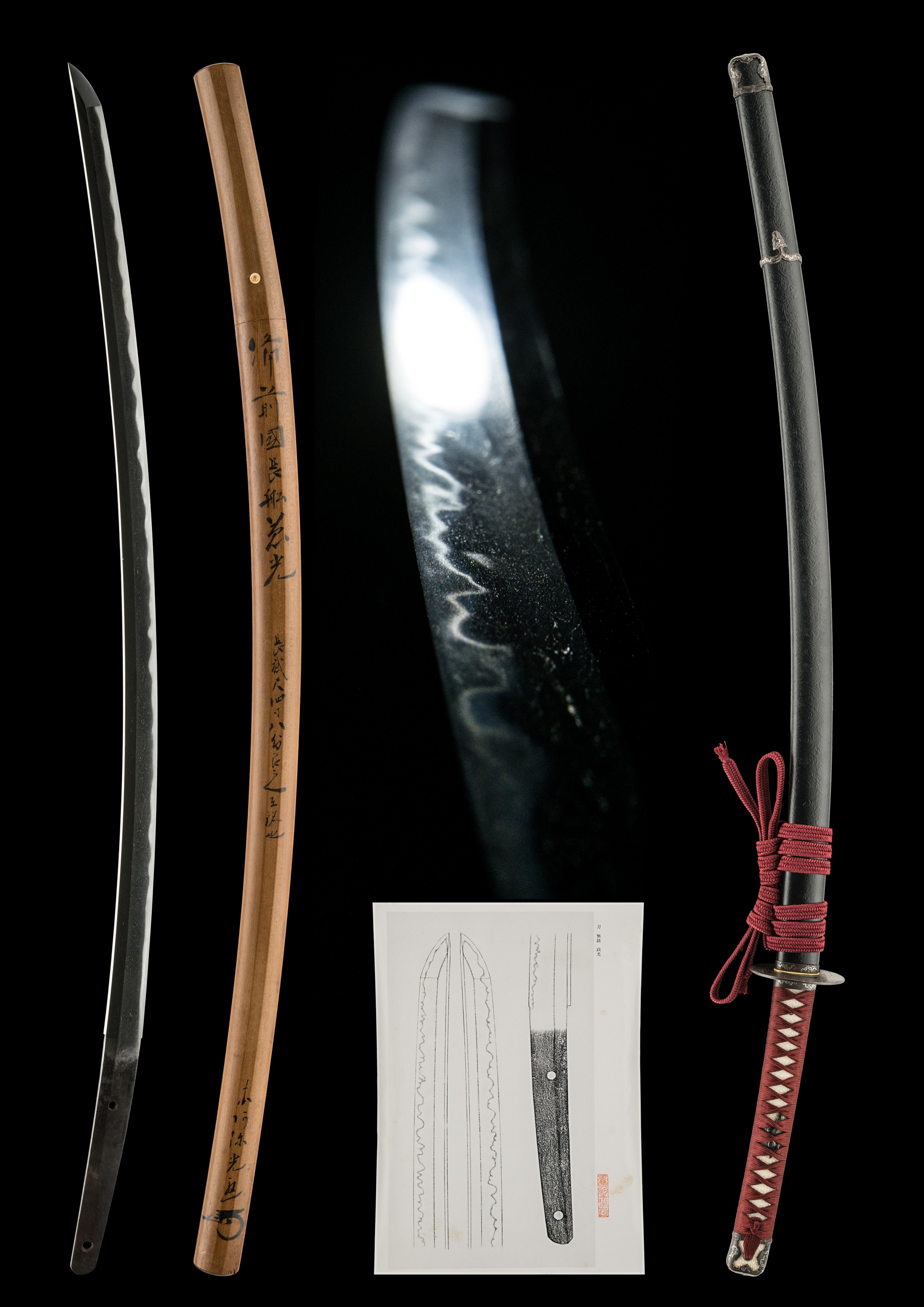
Kotô · Late Nambokuchô period (14th century)
A Masamitsu Katana (備州長船政光)
An o-suriage former tachi attributed to the Bishû Osafune master Masamitsu, student of Kanemitsu. The shirasaya carries a Hon’ami Koson sayagaki attributing the blade to Kanemitsu himself, while the NBTHK papered it to the student. Awarded the 37th Jûyô Tôken in 1991.
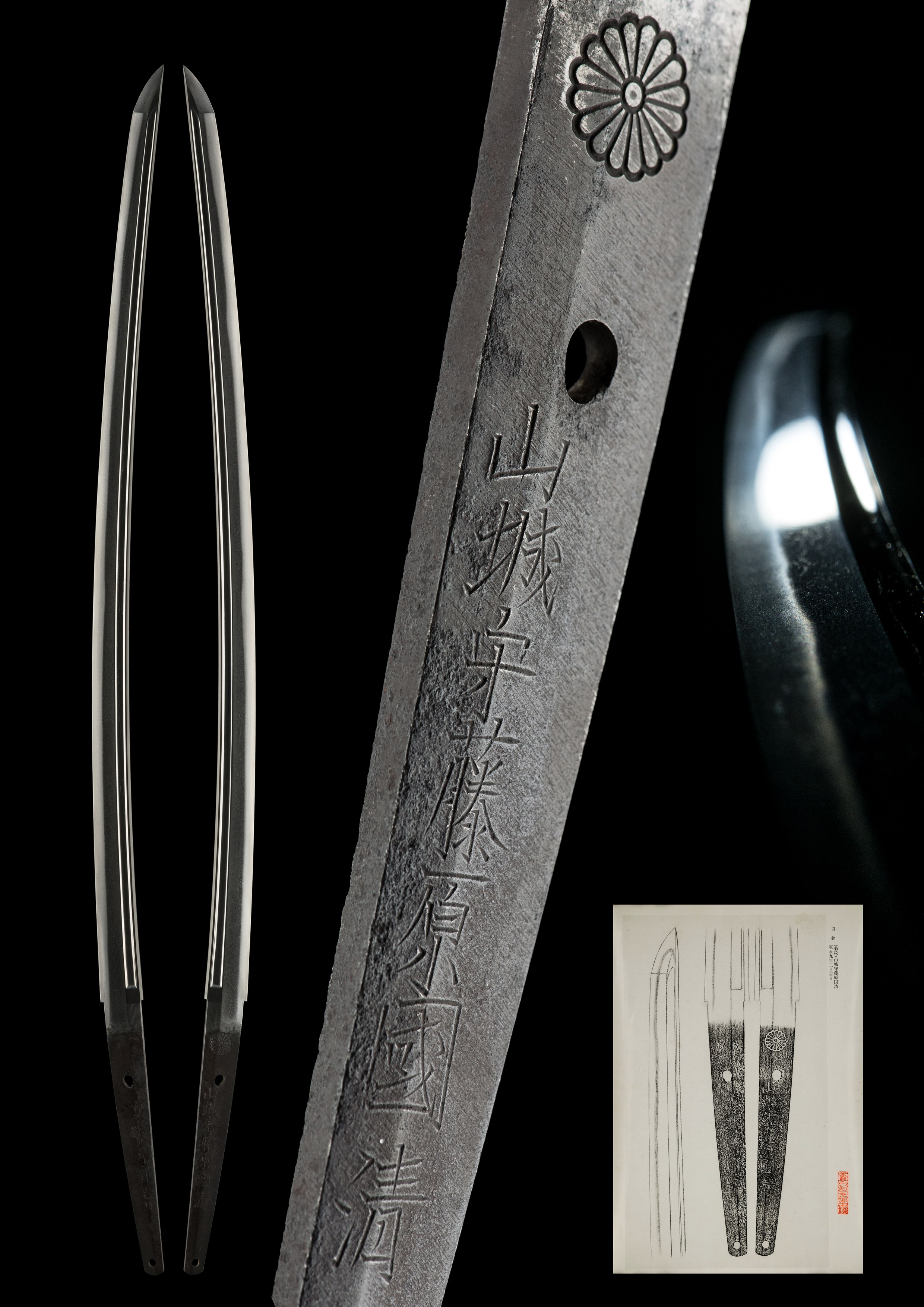
Kan’ei era (1624-1644) · Shintô, early Edo period
A Shodai Kunikiyo Katana (山城守藤原国清)
Signed and dated Kan’ei 9 (1632) by the first-generation Kunikiyo, who signed with his Yamashiro no Kami title while working in Echizen. One of the few Shintô smiths granted the imperial chrysanthemum, his signature suguha is threaded with fine kinsuji and sunagashi. Designated NBTHK Jûyô Tôken at the 35th session in 1989.