
These swords have recently found new homes. Each remains here, with its full description and PDF, until it is placed in an upcoming Sword Catalogue, where it is kept for posterity and enjoyment alongside most of the swords that have passed through Unique Japan. In rare cases a sold sword does come available again, so if one of these catches your eye, please send us an inquiry through our contact page. We are also always acquiring similar pieces for our collectors.
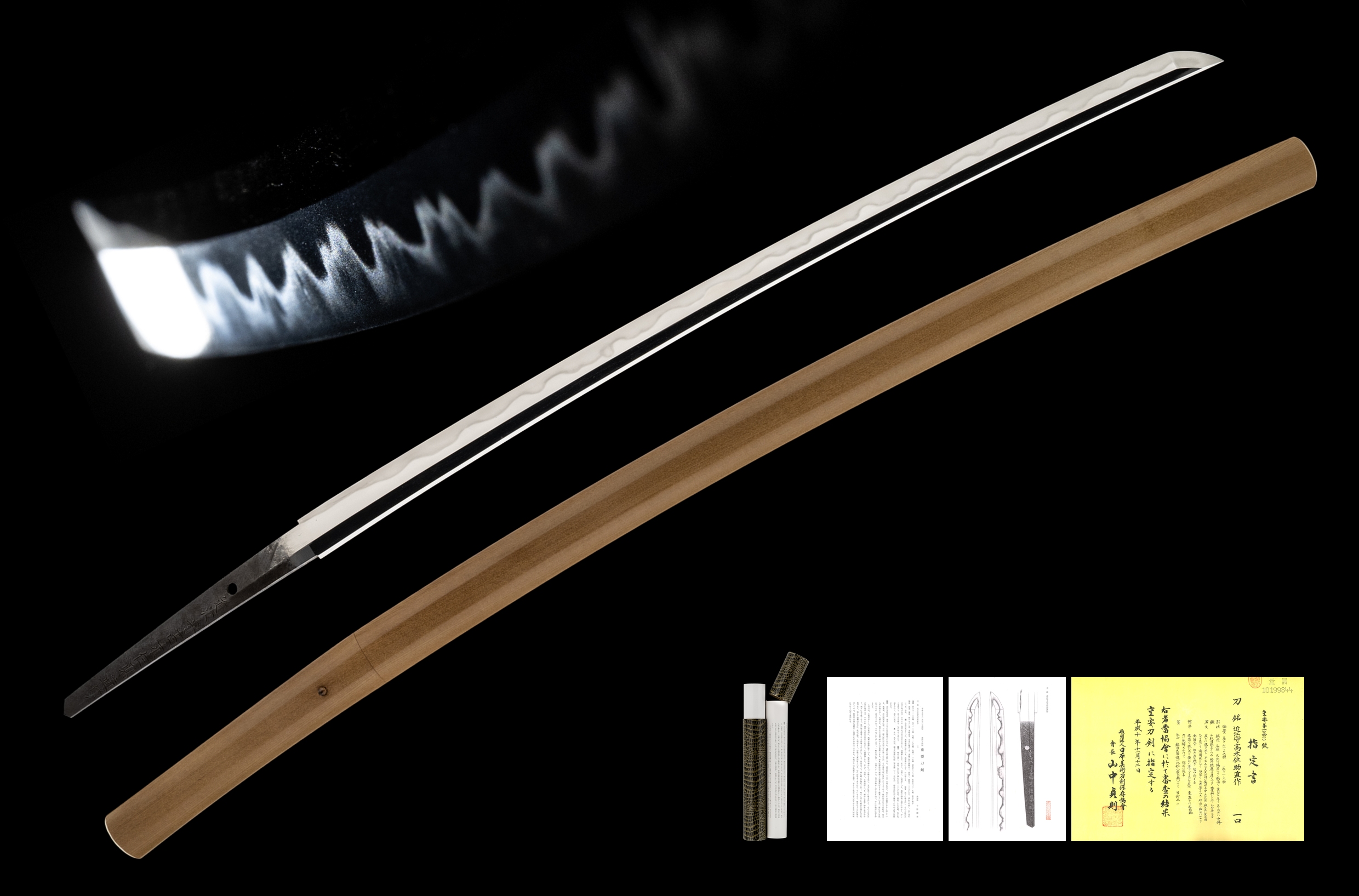
Shintô · Enpô era (1675-1677)
A Sukenao Katana (近江守高木住助直作)
It gives Unique Japan great pleasure to introduce this spectacular jûyô tôken katana by Ômi no Kami Sukenao, who trained under the grandmaster Echizen no Kami Sukehiro. Sukenao is ranked jôjô-saku by Fujishiro, with 59 blades having reached jûyô and a further 4 attaining tokubetsu jûyô, placing him firmly among the leading names of Ôsaka shintô. This marvellous sword carries the majestic tôranba hamon, the iconic surging waves that Sukehiro first originated and that continue to inspire and amaze collectors to this day. It is an absolutely thrilling blade with plenty of activity, one that the NBTHK called “especially outstanding”, stating plainly that “this is a masterwork in which Sukenao’s true ability is fully and unreservedly expressed.” If you were to own only one shintô period blade in a collection, there is a strong case for it being this sword. As the katana is in shirasaya only, this would be more than an ideal candidate for a custom koshirae project, wave fittings anyone?
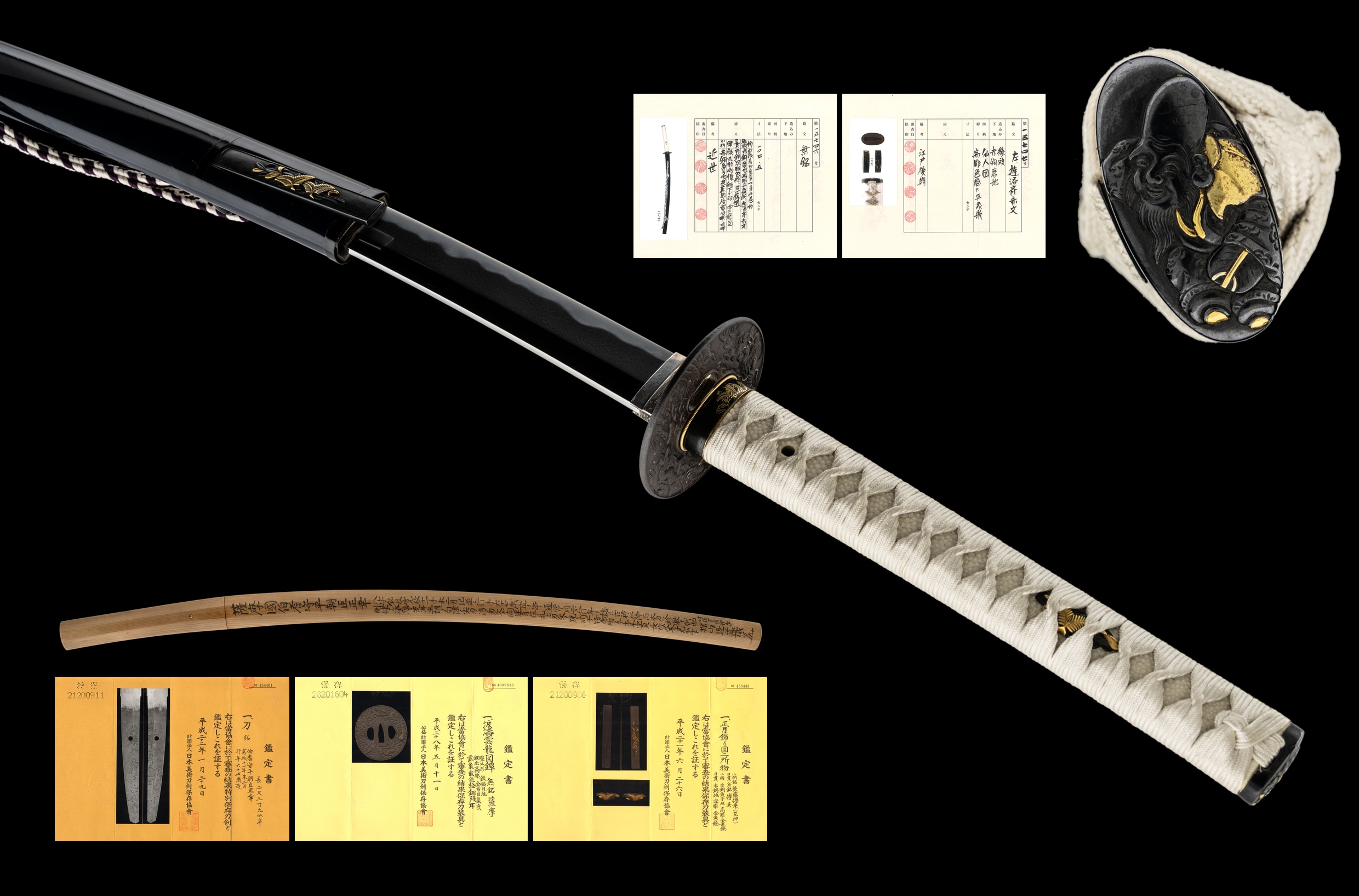
Shinshintô · Kansei era (Feb 1799)
A Masayuki Katana (伯耆守正幸)
Masayuki succeeded as the third generation Masayoshi, received the honorary title Hôki no Kami in 1789 at which point he took the name Masayuki. He stands alongside Motohira as one of the two pillars of Satsuma Shinshintô smithing. This brilliant katana is dated to February 1799, bold and imposing with a wide mihaba, glorious curvature and a flowing ayasugi pattern with rich nie and chikei. The hamon is a wonderful mix of wavy notare and togariba with a bright, deep nioiguchi and thick ice-like ara-nie. The koshirae is lacquered in a dark navy blue with a wave pattern with a dragon tsuba radiating a martial ethos while the futatokoromono set and fuchi-kashira bring warmth and good fortune. This is an inspiring samurai collectible from a true great of the Shinshintô era.
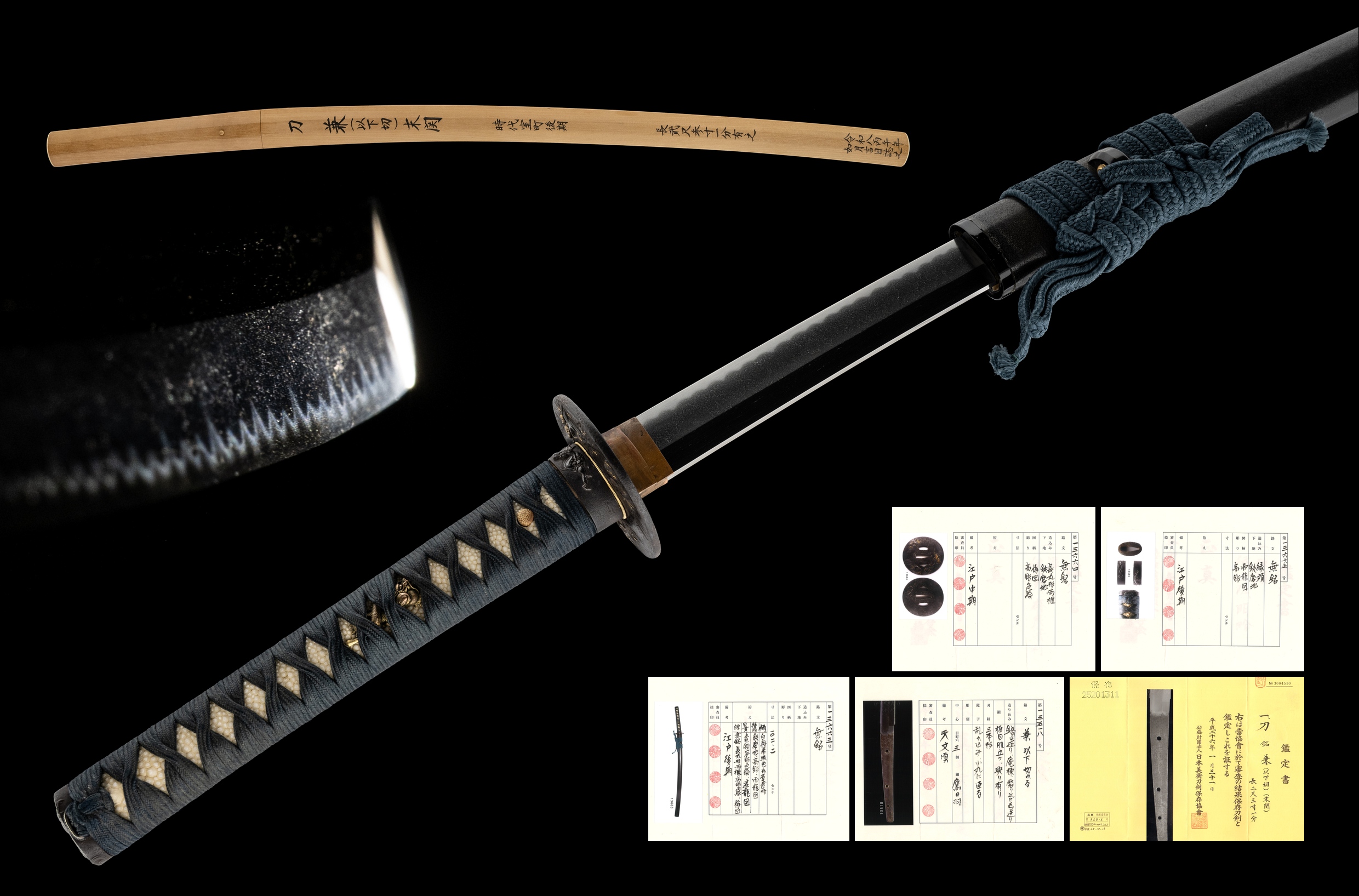
Sue-Kotô · Late Muromachi (Tenbun era: 1532-1555)
A ‘Kane’ Katana (兼), 以下切 (末関)
The Seki smiths of Mino province were active in the latter part of the Muromachi period, particularly after the Ônin War, and are known collectively as Sue-Seki. Responding to surging wartime demand, this group forged for reliability under real combat conditions, sharp, resilient, and unlikely to fail at the moment it mattered most. This blade has been shortened from an original cutting edge of over 80cm, and as a result only the first character of the signature, “Kane” survives. The hamon is a textbook example of sanbonsugi, a togari pattern that “jumps” every third pass like a heartbeat. The handsome set of koshirae features a hawk on the tsuba staring down from among plum blossoms and on the fuchi-kashira, a young rain dragon caught mid-motion, growing into its full power. For anyone taking their first step into Japanese swords, this is a great place to start. A Sengoku-era katana with an eye-catching hamon and koshirae with a story worth recounting.
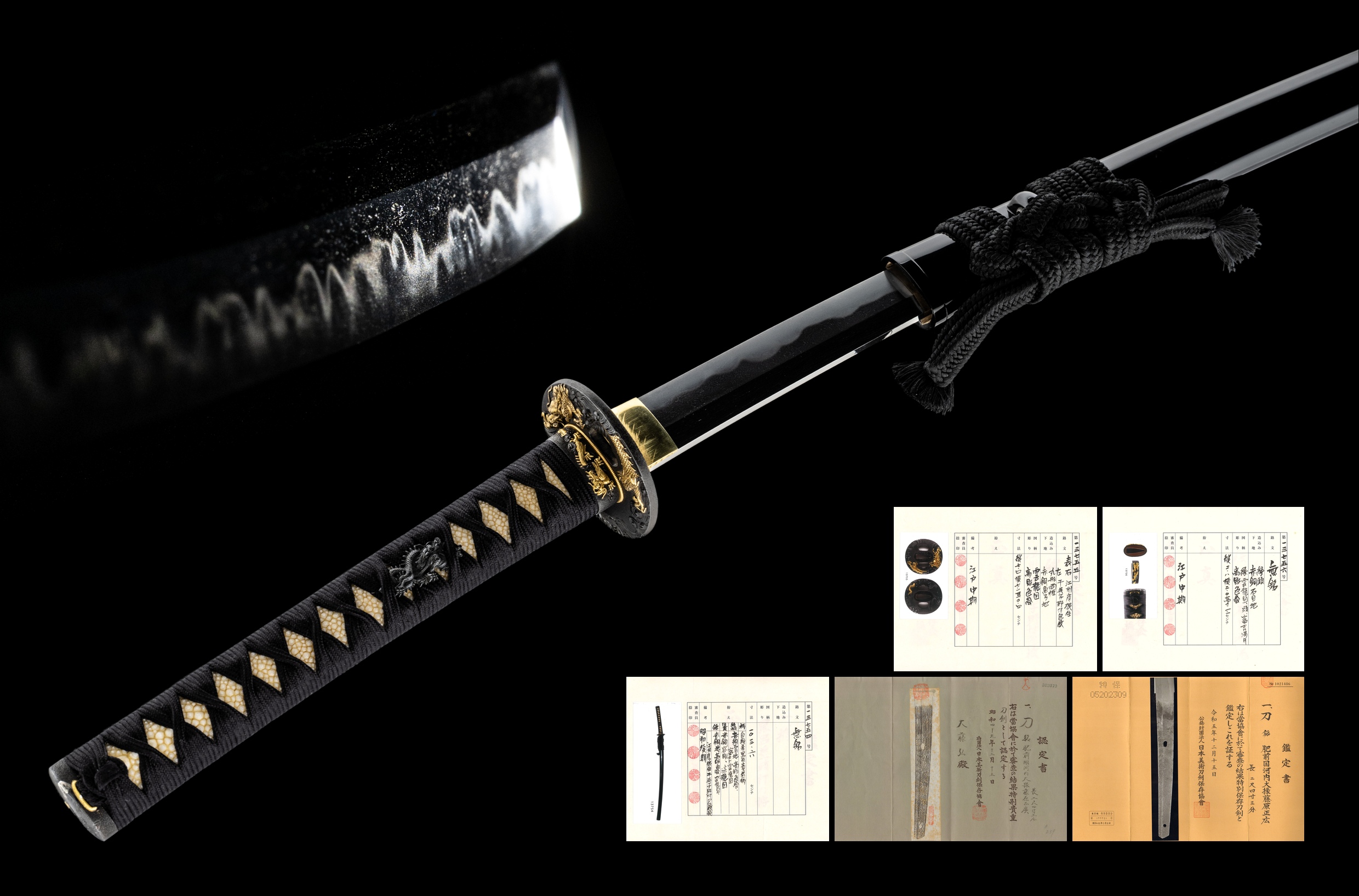
Shintô · Early Edo (Kan’ei era: 1624-1644)
A Shodai Masahiro Katana (肥前国河内大掾藤原正広)
Maestro Hizen swordsmith Shodai Masahiro was the son of Yoshinobu who, in turn, was the adopted son of the saijô-saku grandmaster Shodai Tadayoshi. This long katana with elegant curvature is tightly forged with ko-mokume hada and is blessed with light utsuri. A vivid gunome chôji midare hamon clusters into jûka chôji with yô and textbook sunagashi. Its beautiful set of koshirae oozes class with a signed tsuba by Sen’eishi Kanenori, showcasing an awesome cloud dragon that’s ready to strike. The Nara Toshimitsu fuchi-kashira, depicts a glorious full moon resting beside Mount Fuji beneath a cloud dragon. From blade to koshirae, this is an inspiring samurai sword built around a single, coherent idea, that the journey of life rewards being in the present.
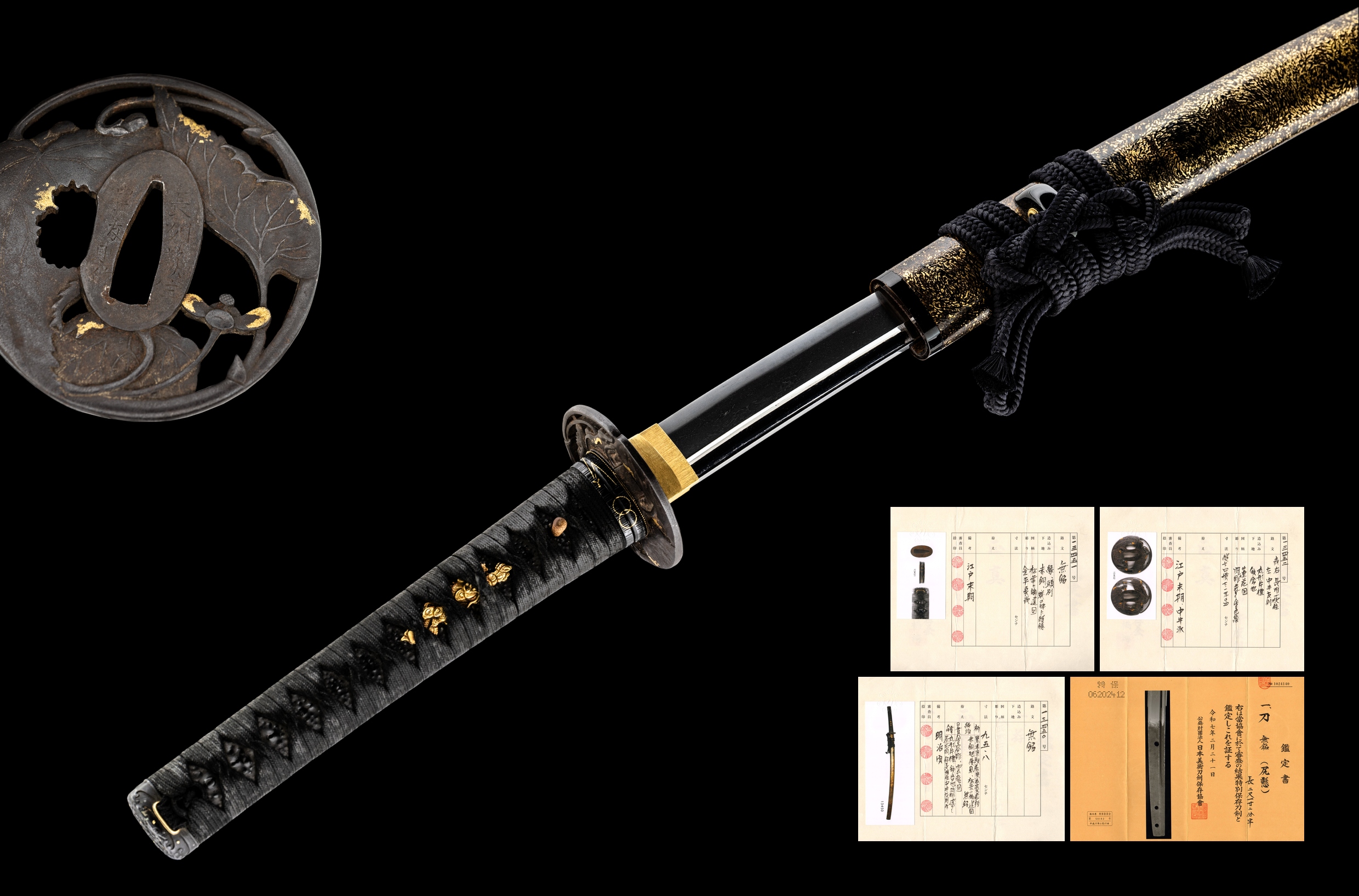
Chû-Kotô · Late Kamakura ~ early Nanbokuchô (1288–1342)
A Shikkake Katana (尻懸)
The Shikkake school, one of the five classic traditions of Yamato-den, was based in the Shikkake area behind Tôdai-ji temple in Nara. The school produced fine swords primarily for temple protection and are identifiable by their skilled, distinctive workmanship. This katana is an ô-suriage blade that retains a clean, graceful presence. The jihada is a glorious example of shikkake-hada combining mokume-hada with clear straight-lined masame-hada in the yakiba. The hamon is bright and wavy ko-gunome interwoven with ashi, sunagashi, kinsuji and tobiyaki. A beautiful set of koshirae centres around a gorgeous saya featuring luxurious mokume-style black and gold lacquer work that was inspired by the jihada of the sword. The tsuba is signed by Chôshu Tomonori and takes the form of a meaningful lotus flower and evokes a spiritual impermanence. Powerful gold cloud-dragon menuki embody both ferocity and protection, qualities revered by samurai warriors throughout Japan’s history.
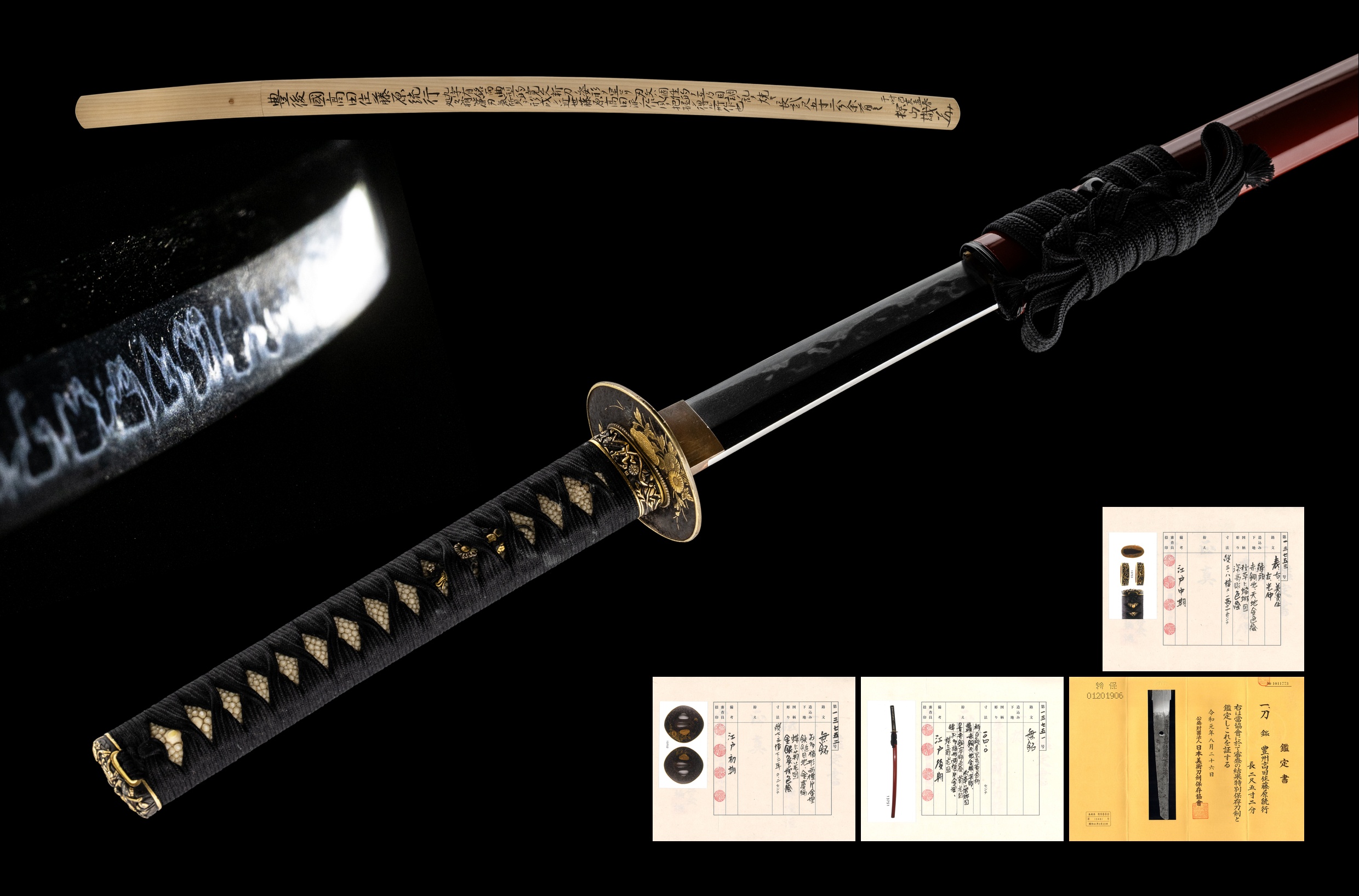
Shintô · Edo period (Kanbun era: 1661–1673)
A Muneyuki Katana (豊州高田住藤原統行)
Takada Muneyuki was a talented swordsmith of the Bungo Takada school, one of the great provincial traditions of Kyûshû that had a reputation for dependable swords on the battlefield stretching back to the kotô period. This blade measures a whopping 76.5 cm with a jihada of ko-itame with ko-mokume, areas of nagare-hada and loads of chikei. Then you look at the hamon and the blade erupts with activity: sections of sudare-ba, scattered tobiyaki, sunagashi sweeping through, solar flares that seem to move as the light moves. There is hako-midare, yahazuba, kinsuji, and more. The sword comes with a handsome late Edo period koshirae lacquered in vermilion, tempered by a black tsuka and sageo that balance its fire. The fuchi-kashira depicts a praying mantis, a symbol of resilience and courageous defiance, of standing your ground. This is a katana meant for someone with a fiery spirit and the resilience to stand firm when the inevitable cart comes rolling down the road.
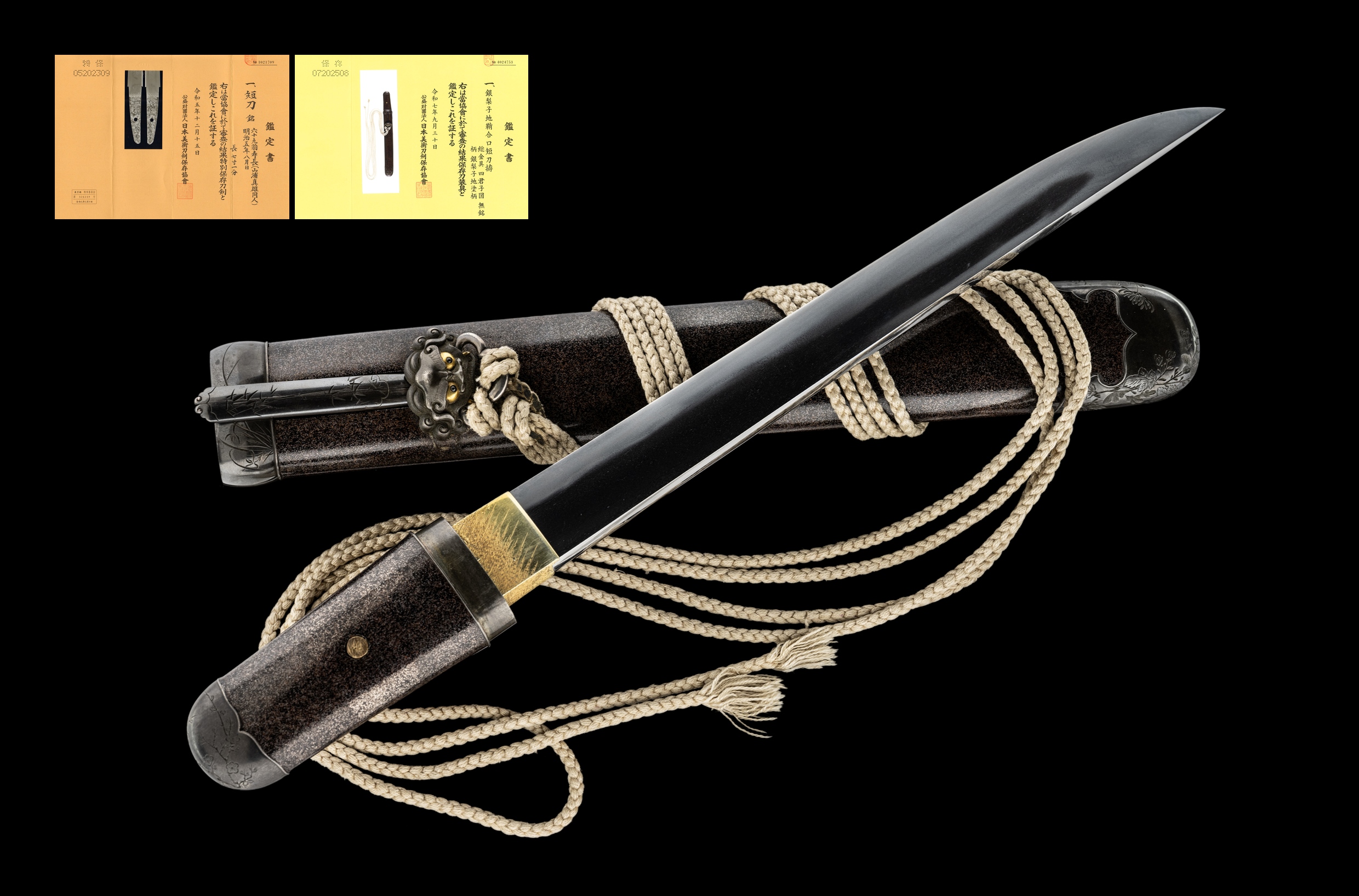
Shinshintô · Meiji era (Aug 1872)
A Toshinaga Tantô (六十九翁寿長)
Toshinaga, the final name of the celebrated Yamaura Saneo, was a jôjô-saku swordsmith of the shinshintô period and elder brother of the legendary Kiyomaro. This exceptional tantô, dated August 1872 in his sixty-ninth year, is one of his last works, forged at the very twilight of the samurai age. The jihada is a tightly grained ko-itame with pronounced nagare with a wildly electric gunome-notare-midare hamon in the Sôshû tradition – a delicious cocktail of brushed sunagashi, with slices of kinsuji, hakikake bôshi and a thunderstorm of inazuma. The stunning silver nashiji-nuri koshirae, certainly original to the tantô, is unified in matching Four Gentlemen soroi-kanagu fittings with a remarkable shishi kurikata in katachibori with gilded eyes. Two brothers, one forge, a shared devotion to the Japanese sword. This is a blade bursting with activity, a koshirae of quiet luxury, and a story that could not be more compelling. A marvellous collectible from the early years of the Meiji period.
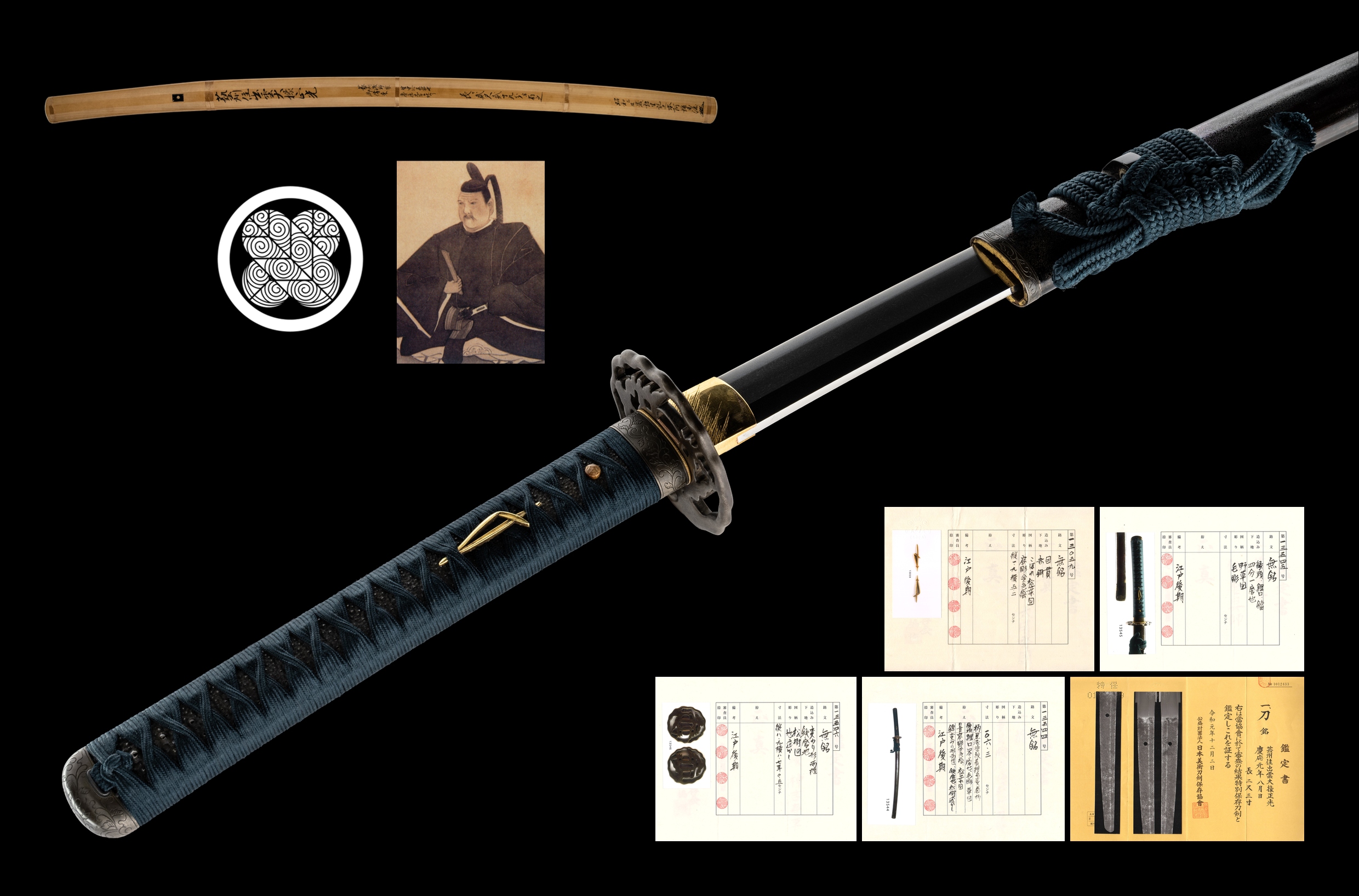
Shinshintô · Keiô era (Aug 1865)
A Masamitsu Katana (出雲大掾正光)
This assured katana by Izumo Daijô Masamitsu was forged in August 1865, at the very peak of bakumatsu turmoil (closing years of the shogunate), when the Asano clan of Hiroshima was arming itself between the pressures of the shogunate and the rising tide of revolution. This exceptionally sharp battle-ready katana is tightly forged and features a chû-suguha hamon with a poetic mistiness. Its elegant late Edo period koshirae with a mother-of-pearl aogai-mijin saya is surely original to the sword with striking gold pine-needle menuki by Ôtsuki Hidekuni. The shirasaya comes with rare sayagaki by Living National Treasure Hon’ami Nisshû, recording the blade’s passage within the Asano family. Some swords are made for display. This beauty was made to be carried.
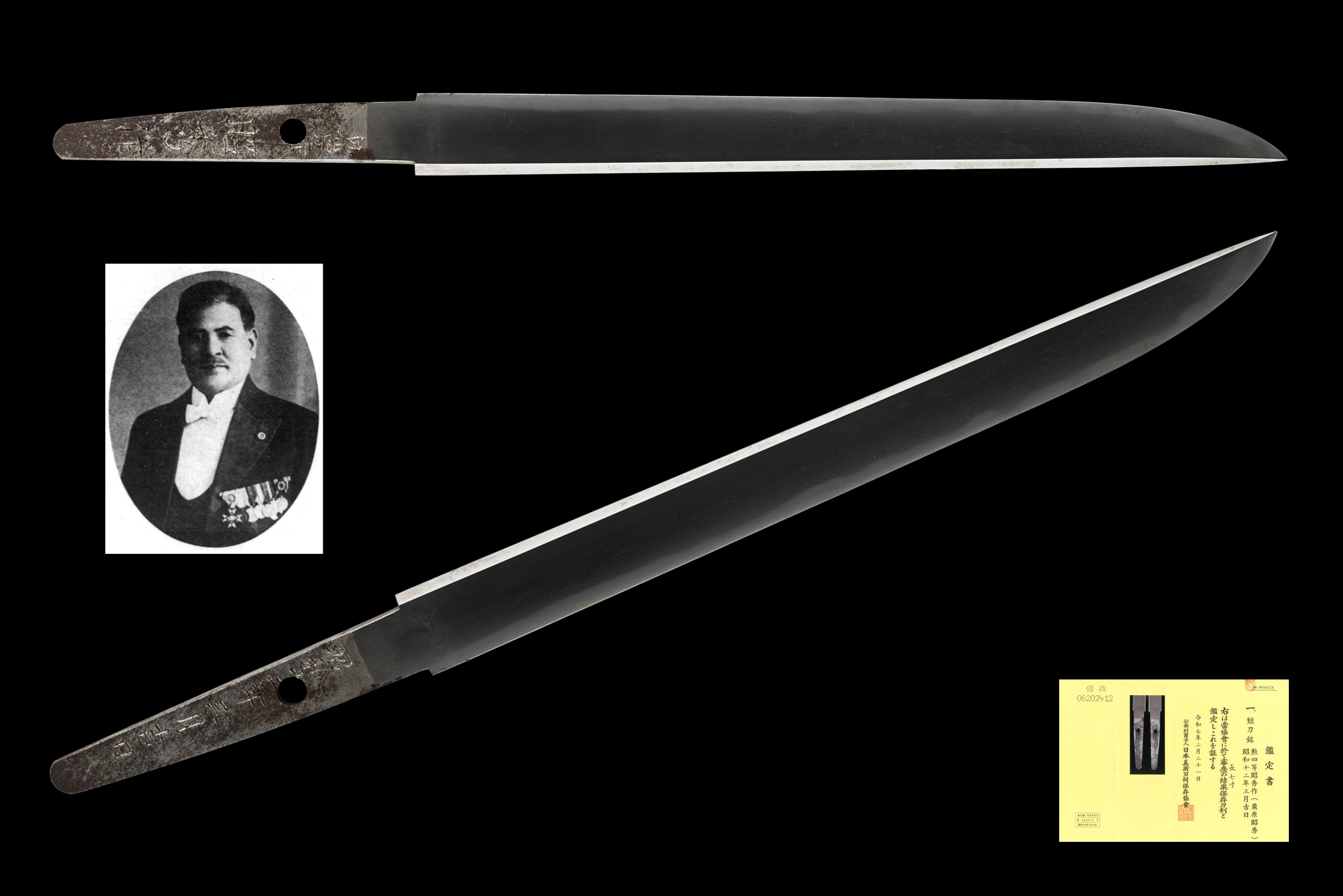
Gendaitô · Shôwa era (March 1937)
A Kurihara Akihide Tantô (栗原昭秀)
Kurihara Akihide was an extraordinary figure that mentored exemplary craftsmen such as Miyairi Yukihira and Amata Akitsugu. This delightful tantô was crafted by Akihide himself, and it carries a deeply personal history. It was presented as an omamori-tantô, a talismanic gift, to celebrate the birth of his granddaughter. The blade features a beautifully forged itame-hada, and the hamon is a flowing notare alive with kinsuji and sunagashi, ko-ashi and thick nie throughout. But a sword like this is much more than what can be seen in the steel. Following Akihide’s passing, his disciple Amata Akitsugu, himself destined to become a Living National Treasure, continued to visit Akihide’s granddaughter and personally maintained this blade each time he came. This is a tantô that deserves to be gifted again. Perhaps to celebrate a birth, as it once was. Whatever the occasion, let this tantô carry its story forward into a new home.
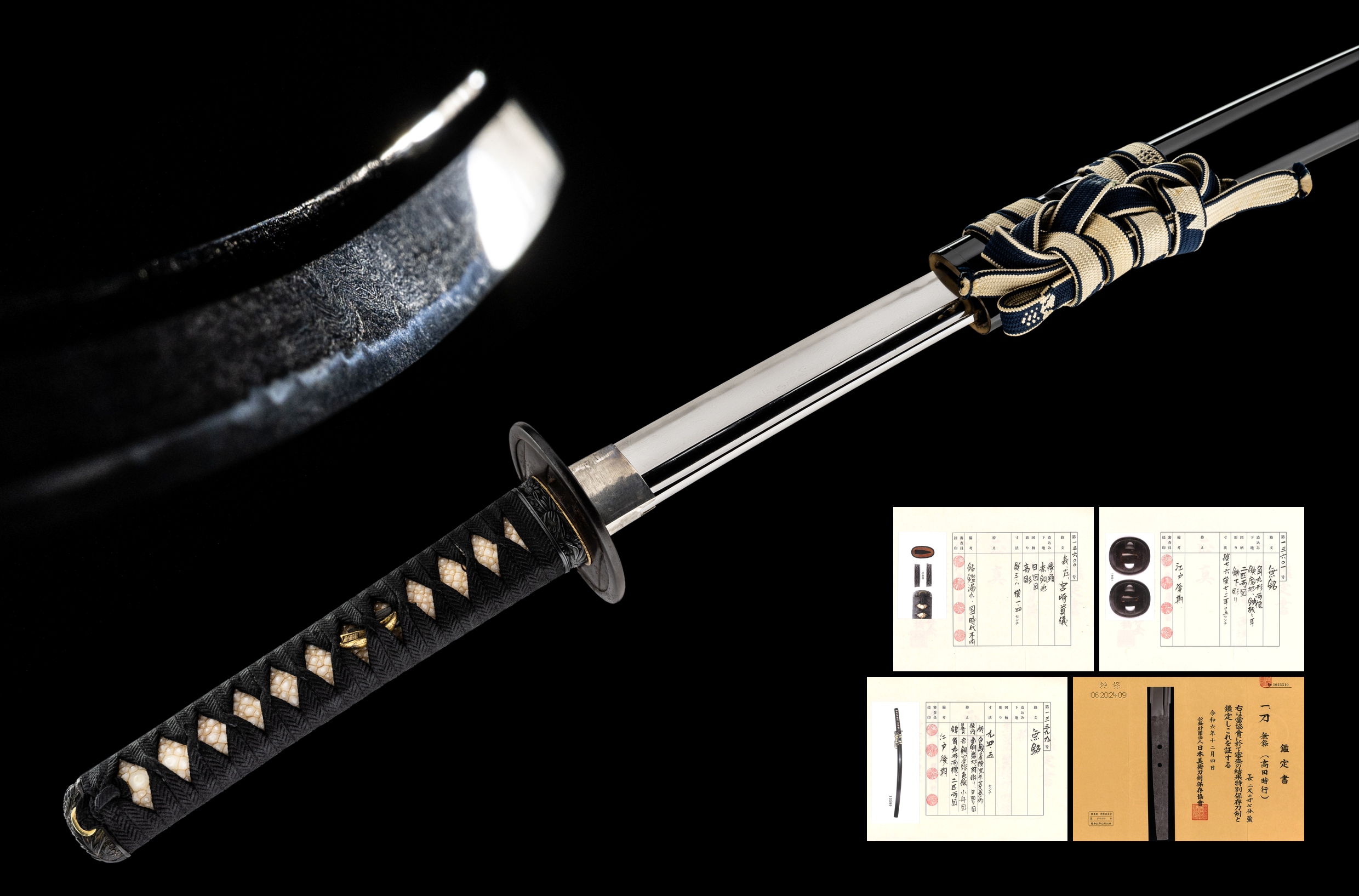
Nanbokuchô · Ôan era (1368–1375)
A Takada Tokiyuki Katana (高田時行)
This superb katana by Tokiyuki from the Ko-Takada school will appeal to the collector that wants a true samurai sword, one that has been through the thick of it. Tokiyuki was the son of Tomoyuki, founder of the school, and rumoured disciple of the legendary Samonji. This weighty katana was crafted during the warring Nanbokuchô period, some 650 years ago. It has a confident presence with healthy steel that features a jihada with flowing nagare-hada alive with deep chikei, ji-nie, and shirake utsuri. Its kirikomi (battle scar) says it all really. The sword is further housed in a superb Edo period samurai koshirae with Nishigaki iron tsuba, signed Miyazaki Sukenori shakudô fuchi-kashira, and toma-bune menuki still carrying traces of original gold. This is a katana with stories to tell.
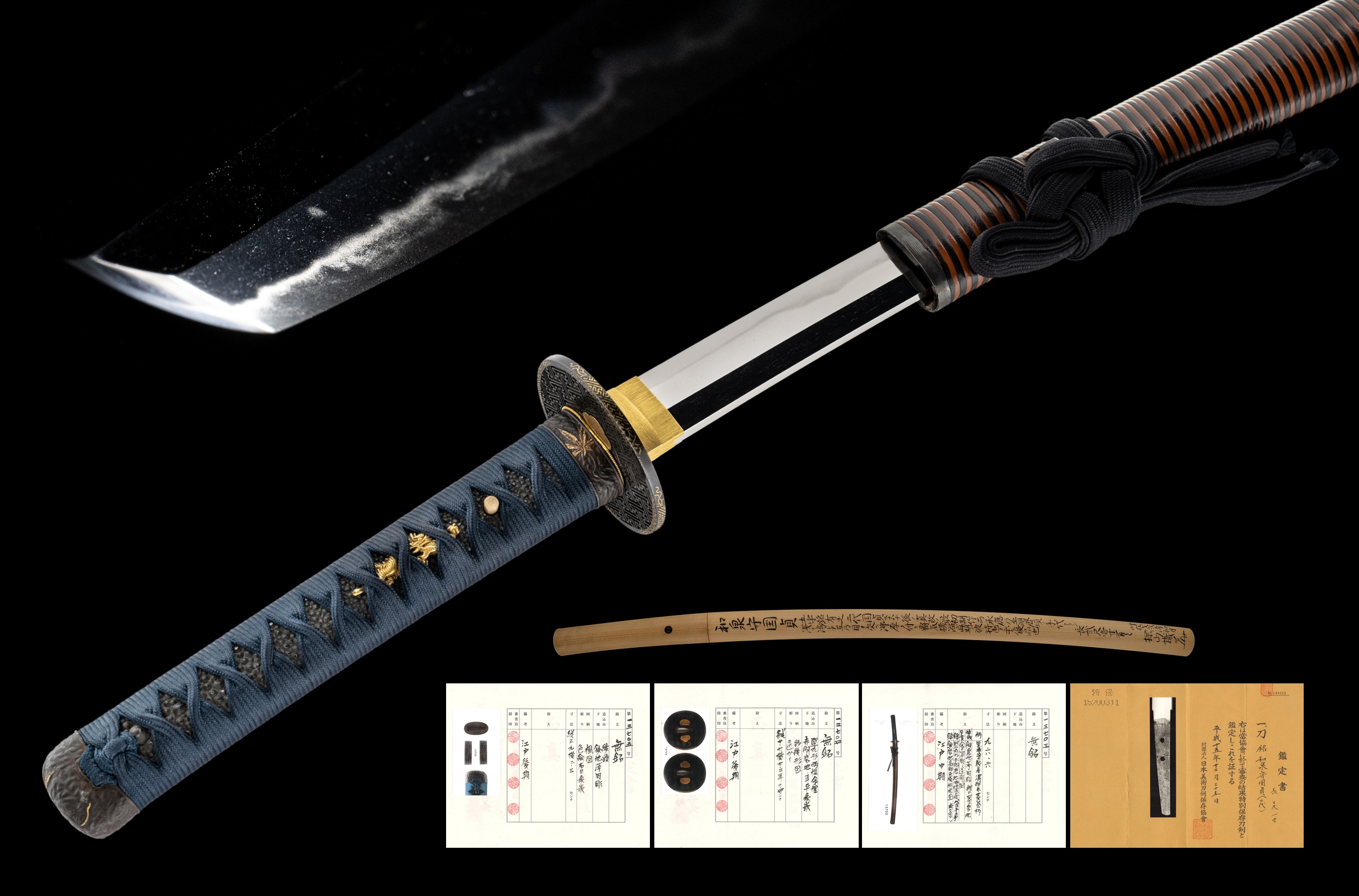
Shintô · Early Edo period (Jôô to Meireki era: 1652–1658)
A Nidai Kunisada Katana (和泉守国貞)
This is an early work by the smith the world would come to know as Inoue Shinkai, the Masamune of Ôsaka, saijô-saku grandmaster, and one of just nine swordsmiths of the entire Shintô period to reach that rank. Tanzan-sensei’s sayagaki places it in the Jôô to Meireki era (1652~1658), the formative years before Shinkai’s full genius had declared itself, and describes it as ‘overflowing with a sense of spirit’. The jihada is a beautifully refined ko-itame alive with rich chikei and sparkling ji-nie; the hamon features a thunderstorm of activity that includes kinsuji, inazuma, tama, tobiyaki, ashi and sunagashi. Its mid-Edo koshirae features a fabulously unique sendan-kizumi rattan saya wound in alternating vermilion and black, a gorgeous Kyô-Shôami shakudô tsuba in sayagata sukashi with gold rim, and an Akao school fuchi-kashira with wabi-sabi inspired golden maple leaves. There is something motivational in this katana, the energy of a young master at the very beginning of his ascent. Nidai Kunisada would go on to become the Masamune of Ôsaka, but this blade captures him earlier, in his 20s, hungry and brilliant, with everything still ahead of him. To own it is to carry that champion mindset forward.
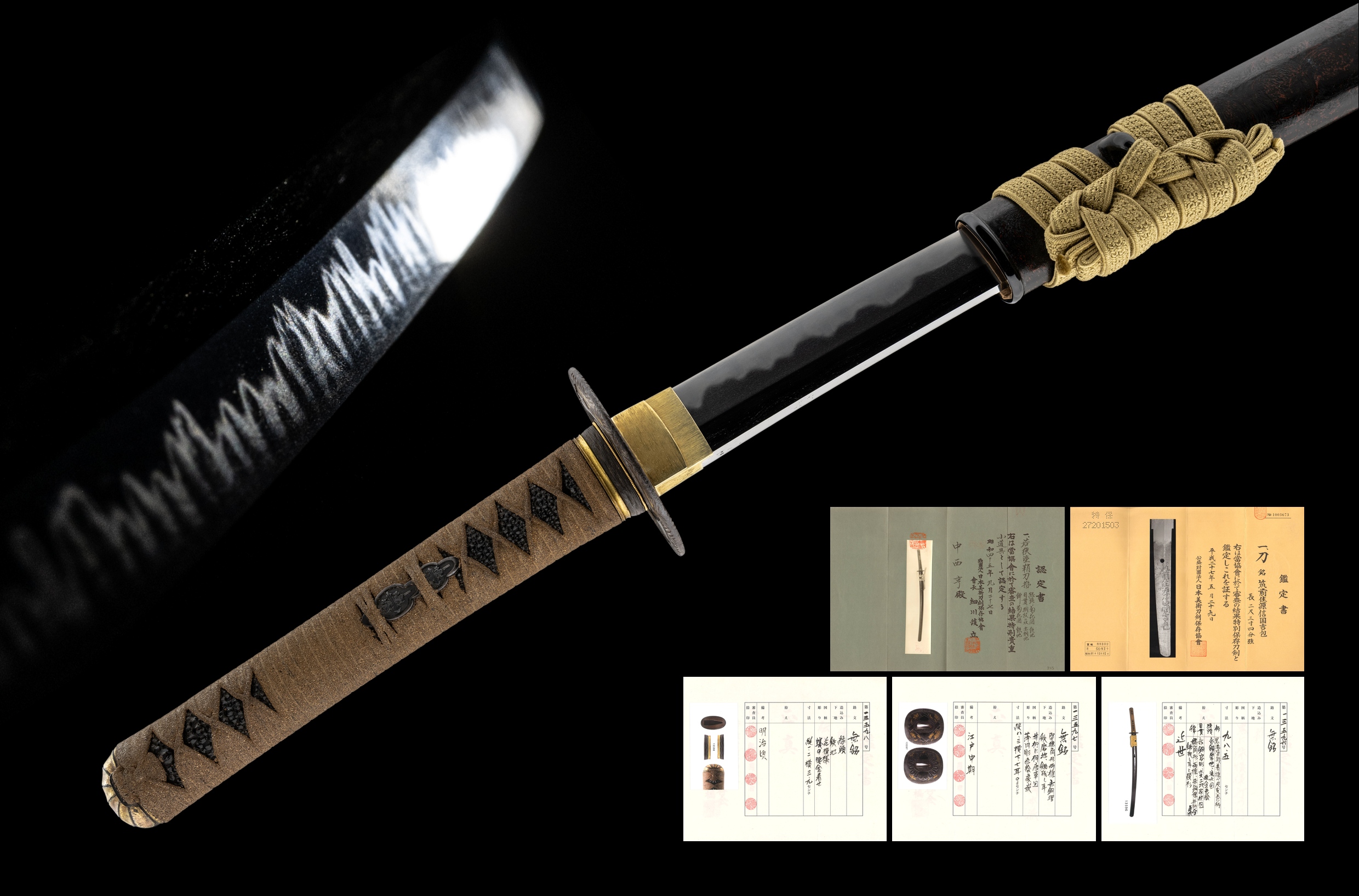
Shintô · Early Edo period (Enpô era: 1673-1681)
A Yoshikane Katana (筑前住源信国吉包)
This spectacular katana was forged by Nobukuni Yoshikane, a central figure in the Chikuzen Nobukuni school, and retained smith of the Kuroda family. The hamon is a dazzling gunome-chôji-midare with brushed sunagashi that lights up the blade in the most fabulous way. The Higo-inspired koshirae was crafted as a unified whole – the harmony between the chrysanthemum tsuba and the cross-hatched petals on the kashira is pure class. Tanobe-sensei’s sayagaki described the sword as a healthy, superior masterpiece that demonstrates Yoshikane’s skill at the very height of his powers.
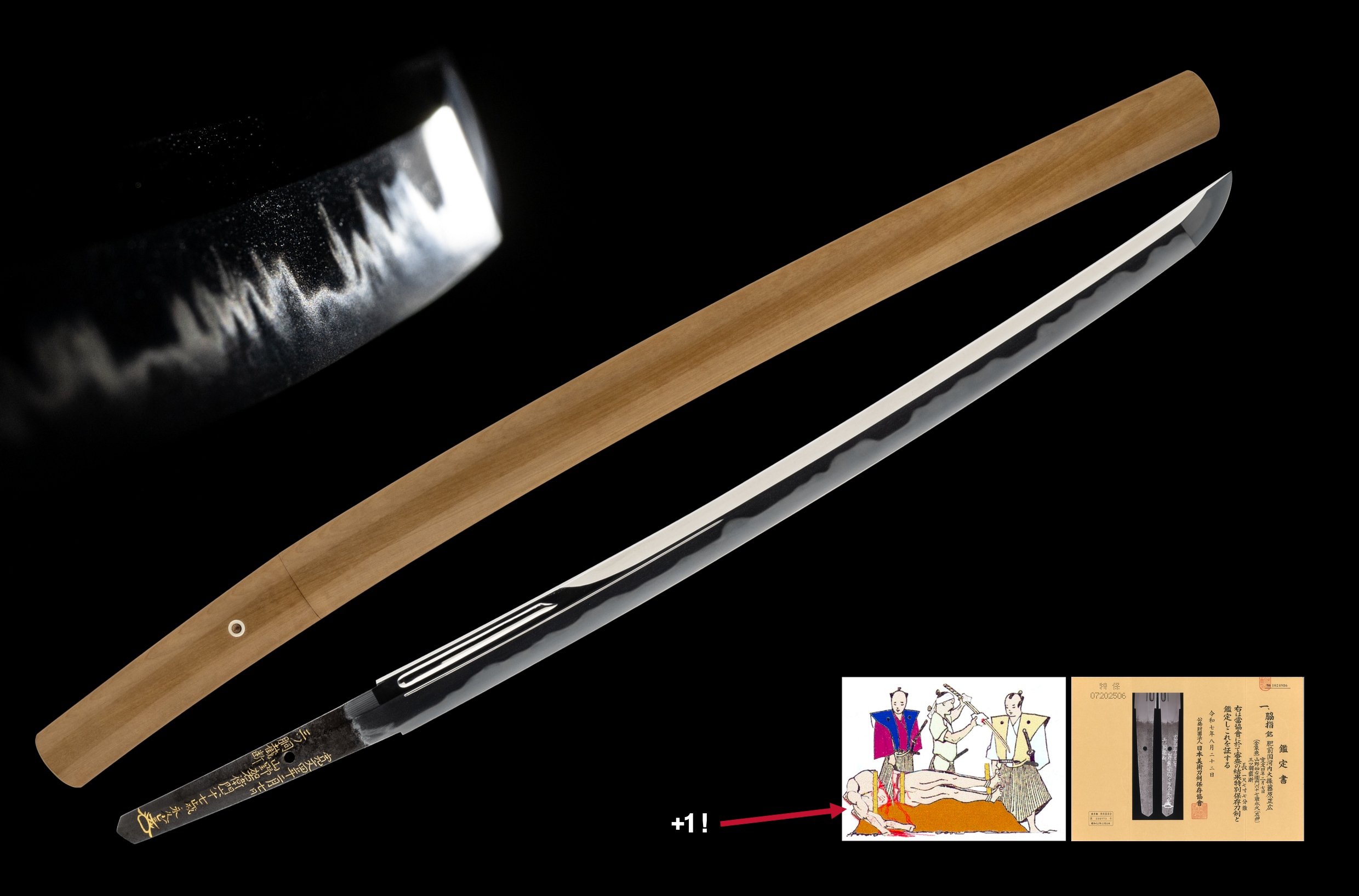
Shintô · Early Edo period (Kan’ei era: 1624-1644)
A Shodai Masahiro ‘3-Body Tameshigiri’ Wakizashi (肥前国河内大掾藤原正廣)
At first glance, something very special announces itself about this long wakizashi by Maestro Hizen swordsmith Shodai Masahiro. The rare unokubi-zukuri configuration (Masahiro rarely made wakizashi let alone unokubi-zukuri) is immediately striking, and the explosive gunome-midare hamon fills the blade with energy. A kinzôgan gold-inlay inscription records a tameshigiri test performed on February 7th, 1664 by the renowned tester Yamano Ka’emon no Jô Nagahisa, in which he severed three bodies in a single stroke using this very blade. All at the age of 67, one of the last tested swords in his storied life. This spectacular wakizashi is an ideal sword to build a custom koshirae for (or enjoy in shirasaya only) and also a prime candidate for Tanobe-sensei sayagaki if his schedule permits.
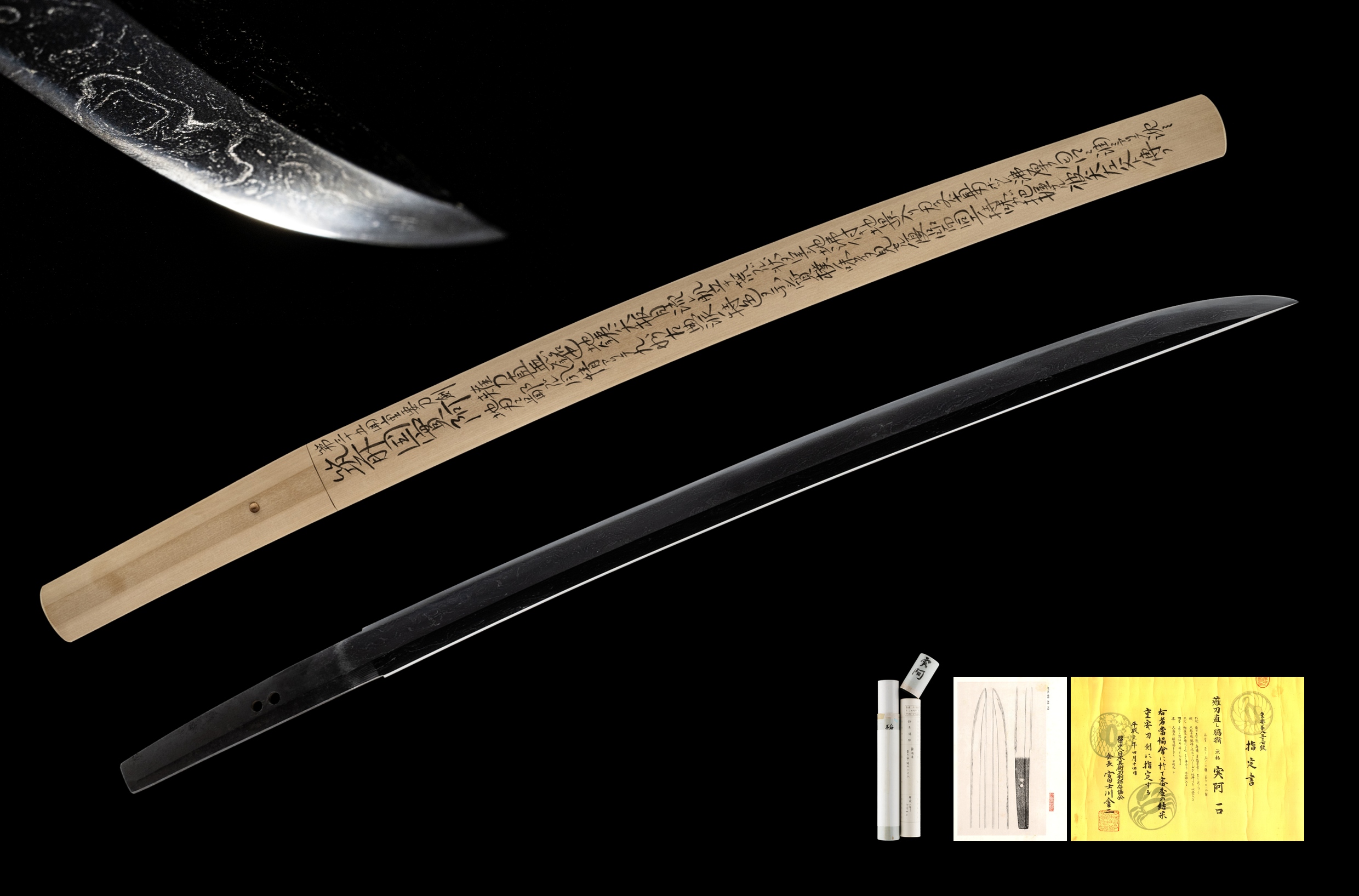
Kotô · Late Kamakura (Karyaku era: 1326–1329)
A Jitsu'a Naginata-naoshi Wakizashi (実阿)
This stunning wakizashi from the very end of the Kamakura period is a naginata-naoshi by Jitsu’a, a superior swordsmith from Chikuzen province and the son of Sairen Kuniyoshi, who worked at the Hakata Dangisho – the institution established following the Mongol invasions to reinforce the defences of northern Kyûshû. While Jitsua’s son, the celebrated Samonji, would go on to embrace Sôshû methods, Jitsu’a himself remained faithful to classical Yamato-den interpretations. This wonderful blade features an eye-catching jihada with glorious pools of ô-itame-hada mixed with flowing nagare-hada. The hamon is a suguha rich in nie, with prominent kinsuji. This sword was awarded Jûyô Tôken certification in 1989 and comes with sayagaki by Tanobe-sensei that described the sword as a “superior work of simple, honest beauty that fully captures the smith’s unique style.”
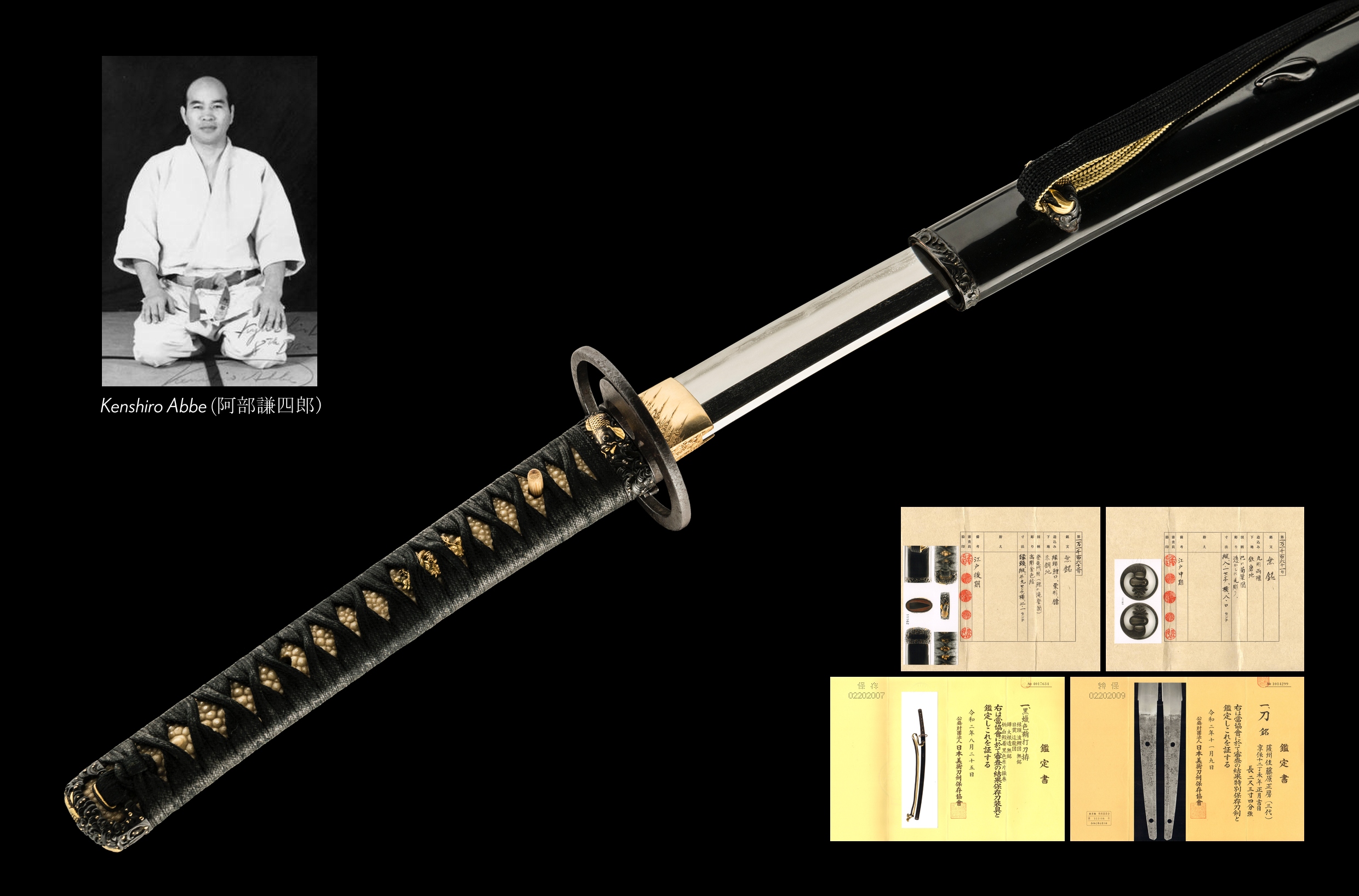
Shintô · Mid Edo period (Kyôhô era: 1716-1736)
A Masafusa Katana (薩州住藤原正房)
This exceptional katana was forged by 3rd gen Masafusa of Satsuma province – a leading figure of Satsuma-Shintô school that combined the prowess of Mino-den with the intensity of Sôshû-den. This sword was crafted in 1727, deep into the mid-Edo period, and was once the property of Kenshiro Abbe, one of the foremost martial artists of the twentieth century. A man who, in fact, introduced aikido to the United Kingdom in 1955. Its brilliant set of Edo-period koshirae was built in the spirit of Satsuma warriors; decorated with carp amid waves from the famed Ômori school and dragon menuki make reference to the Dragon Gate legend, an emblem of perseverance, and of higher status.
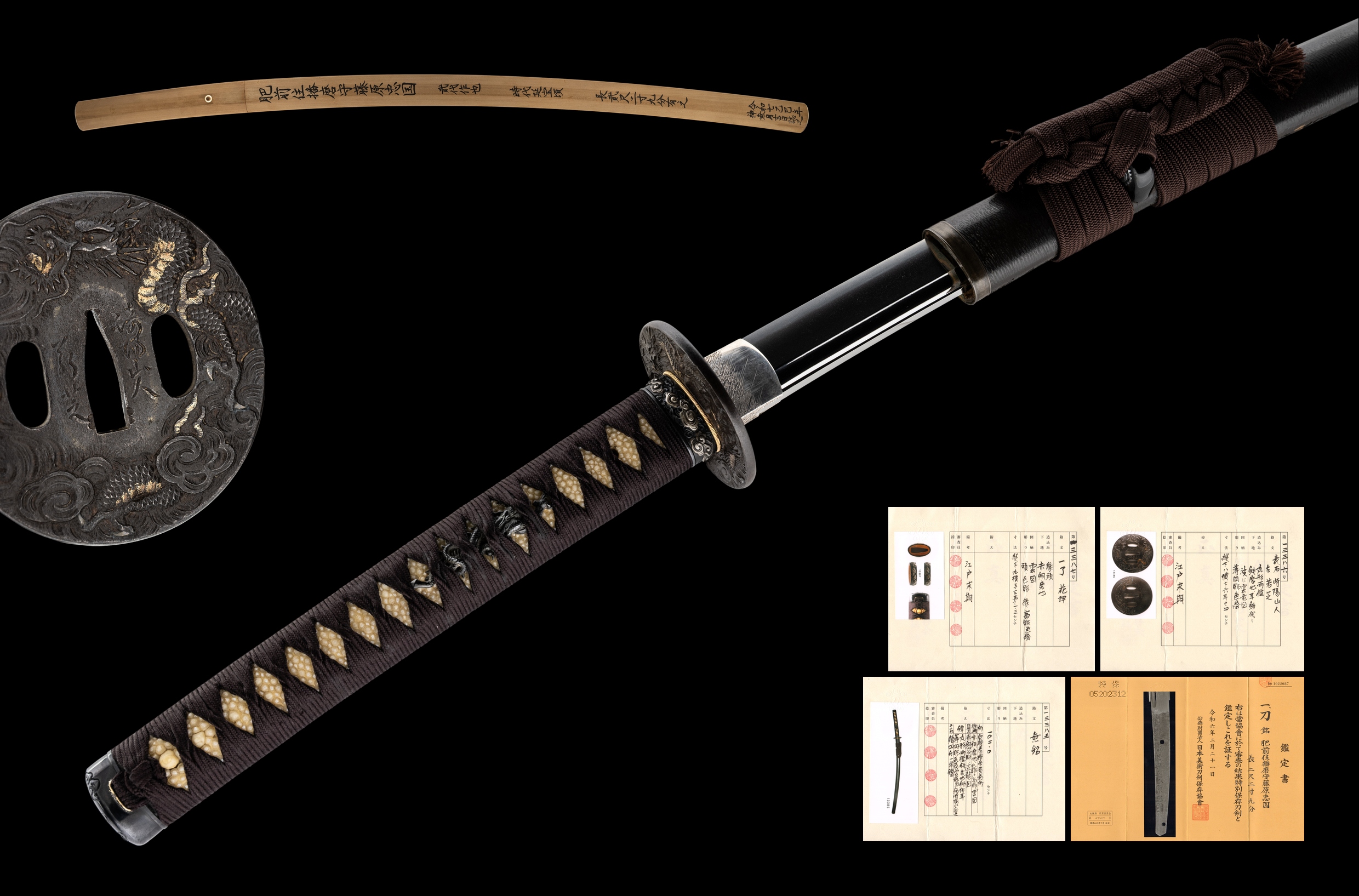
Shintô · Edo Period (Enpô Era: 1673~1681)
A Nidai Tadakuni Katana (肥前住播磨守藤原忠国)
This is a terrific katana by second generation Tadakuni, a jô-saku and wazamono ranked swordsmith that simply made quality swords for the samurai class. The blade features gorgeous, well-forged Hizen konuka-hada, a bright beautiful suguha hamon and everything is housed in a handsome late Edo-period dragon-themed koshirae. The Enpô era has a reputation for having had some of the finest swords crafted within this time frame and this blade is no exception. Other notable smiths from Enpô include Sukehiro and Kotetsu. If you have not started a Japanese sword collection yet, this curvy katana with loads of certificates is an ideal piece to kick start your nihontô journey.