
ITEM# UJKA499 – Sold
A Muneyuki Katana (豊州高田住藤原統行)
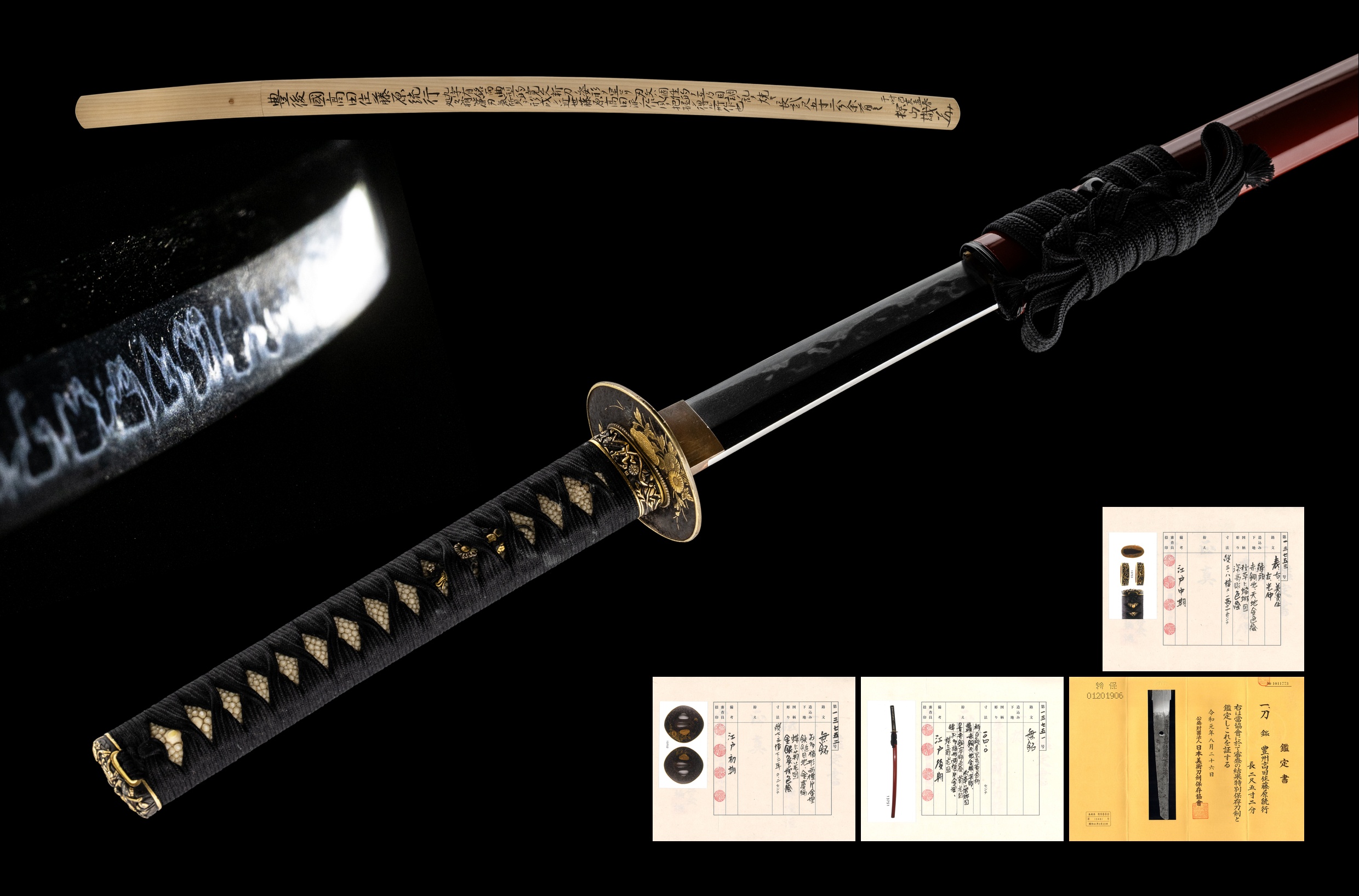
Muneyuki was one of the leading names of the Bungo Takada school, a provincial tradition of Kyûshû with roots stretching back to the kotô period and a long-standing reputation for producing dependable, battle-ready blades. The name was carried by successive generations of smiths, and while that makes precise attribution a challenge, the proportions and configuration of this particular blade point clearly to the third generation, active during the Kanbun era (1661-1673).
Takada blades were built for use rather than display, and this one measures a substantial 76.5cm, noticeably longer than most Kanbun-era shintô swords. The jihada is a well-forged ko-itame with ko-mokume, threaded through with areas of nagare-hada and generous chikei. The hamon is where the sword truly comes alive: a gunome-midare base erupts into sections of sudare-ba, scattered tobiyaki, sweeping sunagashi, hako-midare, yahazuba and bright kinsuji – a hamon with more going on than almost anything else from the period.
The blade is fitted in a handsome late Edo koshirae lacquered in vermilion, its fire tempered by a black tsuka wrapped in a formal hishi-maki style over white samegawa. The tsuba, signed by Nakai Tomotsune of Chôshû, is an otafuku-shaped iron guard whose restrained use of negative space sets off delicate gold floral inlay. The fuchi-kashira, signed by Mitsunaka of Mino province, depicts a praying mantis and bell cricket among autumn grasses – the mantis a well-known symbol of courageous defiance, of standing one’s ground when the smart choice would be to step aside. This is a katana for a collector drawn to that same spirit.
| Item Number | UJKA499 |
| Sword Type | Katana |
| Swordsmith | Hôshû Takada-jû Fujiwara Muneyuki |
| Swordsmith (JP) | 豊州高田住藤原統行 |
| Signature | Hôshû Takada-jû Fujiwara Muneyuki |
| School | Bungo Takada |
| Province | Bungo |
| Period | Shintô – Edo period (Kanbun era: 1661-1673) |
| Nagasa | 76.5cm (ubu) |
| Sori | 0.8cm |
| Moto-haba | 2.91cm |
| Weight | 730g |
| Nakago | Ubu (original, unaltered), katte-sagari-yasurime file marks, 1 mekugi-ana, 18.5cm |
| Jihada | Well-forged ko-itame with ko-mokume, areas of nagare-hada, ji-nie and plentiful chikei |
| Hamon | Fiery gunome-midare with sudare-ba, hako-midare, yahazuba, sunagashi, tobiyaki and kinsuji |
| Certificates | NBTHK Tokubetsu Hozon (blade); NTHK-NPO Kanteishô (koshirae, fuchi-kashira and tsuba – Authentic) |
| Sayagaki | Tanzan-sensei (Tanobe Michihiro) – confirms Hôshû Takada-jû Fujiwara Muneyuki, dated early spring, Year of the Earth Boar (2019) |
| Koshirae | Late Edo period uchigatana-koshirae, saya lacquered in vermilion (shu-urushi-nuri), NTHK-NPO Kanteishô certified Authentic |
| Tsuba | Signed Nakai Tomotsune, Chôshû, early Edo period – iron otafuku form with gold chrysanthemum inlay, NTHK-NPO Kanteishô certified Authentic |
| Fuchi-kashira | Signed Mitsunaka, Mino province, mid-Edo period – praying mantis and bell cricket amid autumn grasses, NTHK-NPO Kanteishô certified Authentic |
| Menuki | Chrysanthemum blossoms in gold |
| Tsuka | Black silk ito in hishi-maki wrap over white samegawa |
| Habaki | Antique copper habaki |
| Status | Sold |
| Includes | Shirasaya, Edo koshirae, fabric bags, kit, printed description |
The PDF contains full photography, detailed blade analysis, and all certification documentation.