
ITEM# UJWA228 – Catalogue 30 – Sold
A Nobuyoshi Sunnobi Tanto (山城国住藤原信吉)
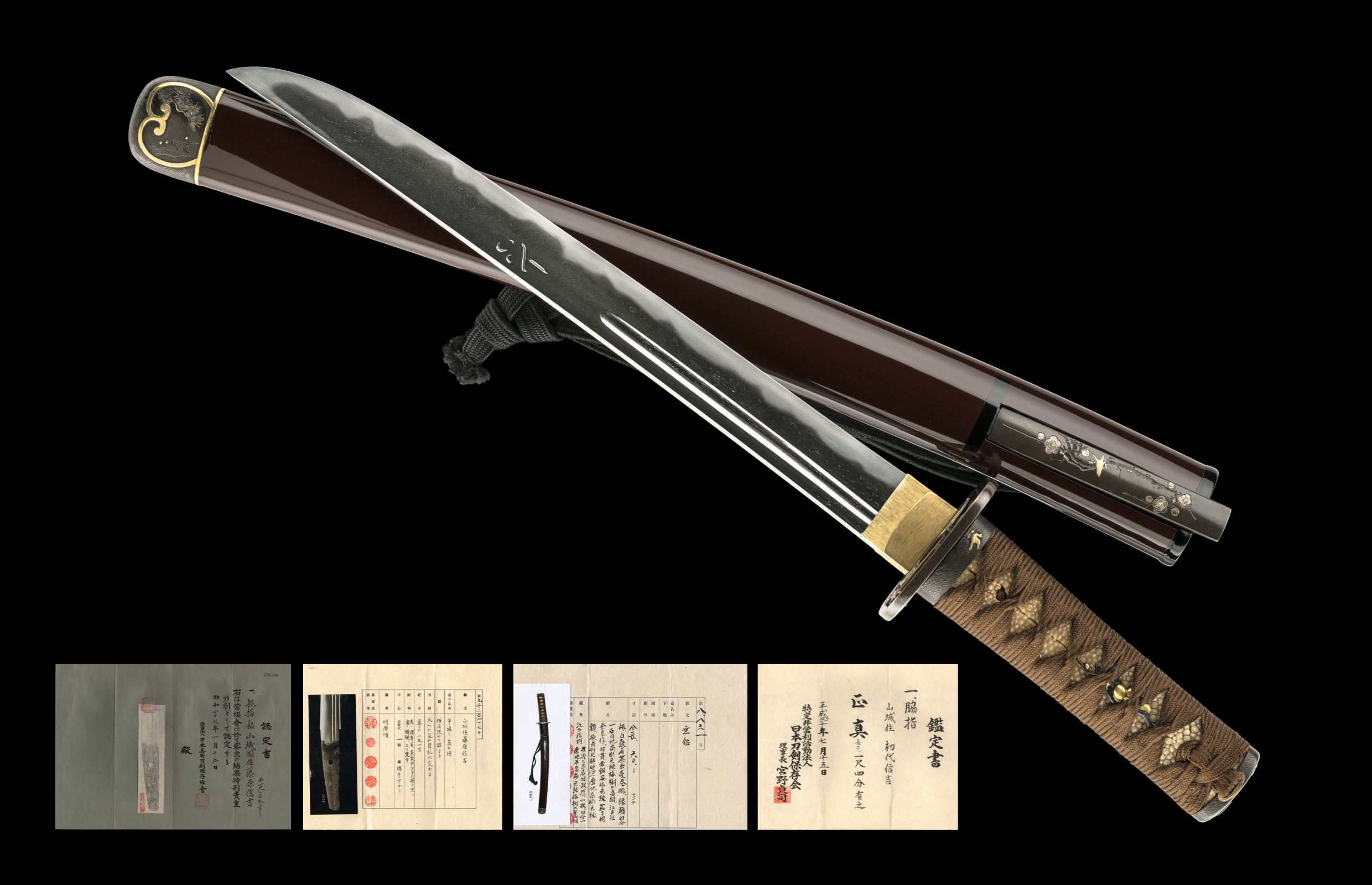
Technically registered as a wakizashi, this is a sunnobi tanto – a long tanto just nudging past one shaku (30.3cm) in cutting edge. The blade is in hirazukuri (flat) shape and carries a koshi-bi groove alongside double goma-bashi – the paired parallel grooves associated with Buddhist ritual – and a finely carved Sanskrit bonji character for spiritual protection. The overall shape is elegant and restrained, with a shallow sori and a three-sided mitsumune spine that roots this blade firmly in the Yamashiro tradition.
Nobuyoshi’s real name was Takai Kinzaburo, and he worked within the highly regarded Mishina school in Yamashiro (Kyoto) during the mid-1600s. He first signed using the clan name Fujiwara and later changed to Minamoto. Dated works place his active period from the Shoho era (1644-1648), and the NTHK-NPO certificate dates this blade to the Meireki era (1655-1658). A chu-josaku smith rated wazamono for the keenness of his blades, Nobuyoshi produced work of consistent quality, and this tanto demonstrates exactly why that reputation was earned. The nagare-hada flows with dense, quiet energy beneath a lively gunome-midare hamon that oscillates between large and small waves, with long ashi reaching to the cutting edge and sweeping sunagashi harmonising beautifully with the grain.
The Edo period koshirae is a remarkable ensemble, its nature theme running consistently across every fitting. The iron tsuba depicts the famous Kami-iso no Torii gate standing in the sea off the Oarai coast in Ibaraki, waves lapping its base in relief with gold-inlaid sea grasses. A shibu-ichi fuchi-kashira by the Nara school of Edo presents nightingale and plum blossom on a chirimen ground, authenticated by the NTHK-NPO. The menuki take the form of nasu (eggplants), invoking the auspicious hatsuyume dream tradition of the early Edo period. A kozuka with matching bird-and-plum decoration is mounted in the brown-lacquer saya, and the kojiri end-cap carries a masterfully carved pine branch over a flowing stream. The niju habaki is gold-wrapped over copper with a kiri straight file pattern. Rare to find a tanto koshirae where the thematic unity holds from tsuba to kojiri – this one does.
| Item Number | UJWA228 |
| Sword Type | Sunnobi tanto (registered wakizashi) |
| Swordsmith | Nobuyoshi (first generation) |
| Swordsmith (JP) | 山城国住藤原信吉 |
| Signature | Yamashiro no Kuni ju Fujiwara Nobuyoshi |
| School | Mishina |
| Province | Yamashiro |
| Period | Shintô – Early Edo (Keian era: 1648-1652) |
| Nagasa | 31.4cm |
| Sori | 0.2cm |
| Moto-haba | 3.0cm |
| Weight | 280g |
| Nakago | Ubu, 11.9cm |
| Jihada | Densely forged nagare-hada with chikei |
| Hamon | Mix of small and large gunome-midare with long ashi and sunagashi |
| Boshi | Mitsumune |
| Certificates | NBTHK Tokubetsu Kicho; NTHK-NPO Kanteisho (sword, koshirae and fuchi-kashira) |
| Fujishiro Rank | Chu-Josaku |
| Sharpness Rating | Wazamono |
| Koshirae | Cha-urushinuri-saya chiisagatana-koshirae (brown-lacquer small katana koshirae, Late Edo c.1800-1868) |
| Tsuba | Iron, Kami-iso no Torii design with waves and gold-inlaid sea grasses |
| Fuchi-kashira | Shibu-ichi, Nara school (Edo ju), nightingale and plum blossom on chirimen ground; NTHK-NPO authenticated |
| Menuki | Nasu (eggplant), hatsuyume theme |
| Habaki | Niju habaki, gold wrapped over copper, kiri straight file pattern |
| Catalogue | Catalogue 30 |
| Status | Sold |
| Includes | Shirasaya, Edo koshirae, bags, stand, kit, DVD, printed description |