
ITEM# UJTA062 – Catalogue 43 – Sold
A Nobukatsu Tantô (延寿宣勝作)
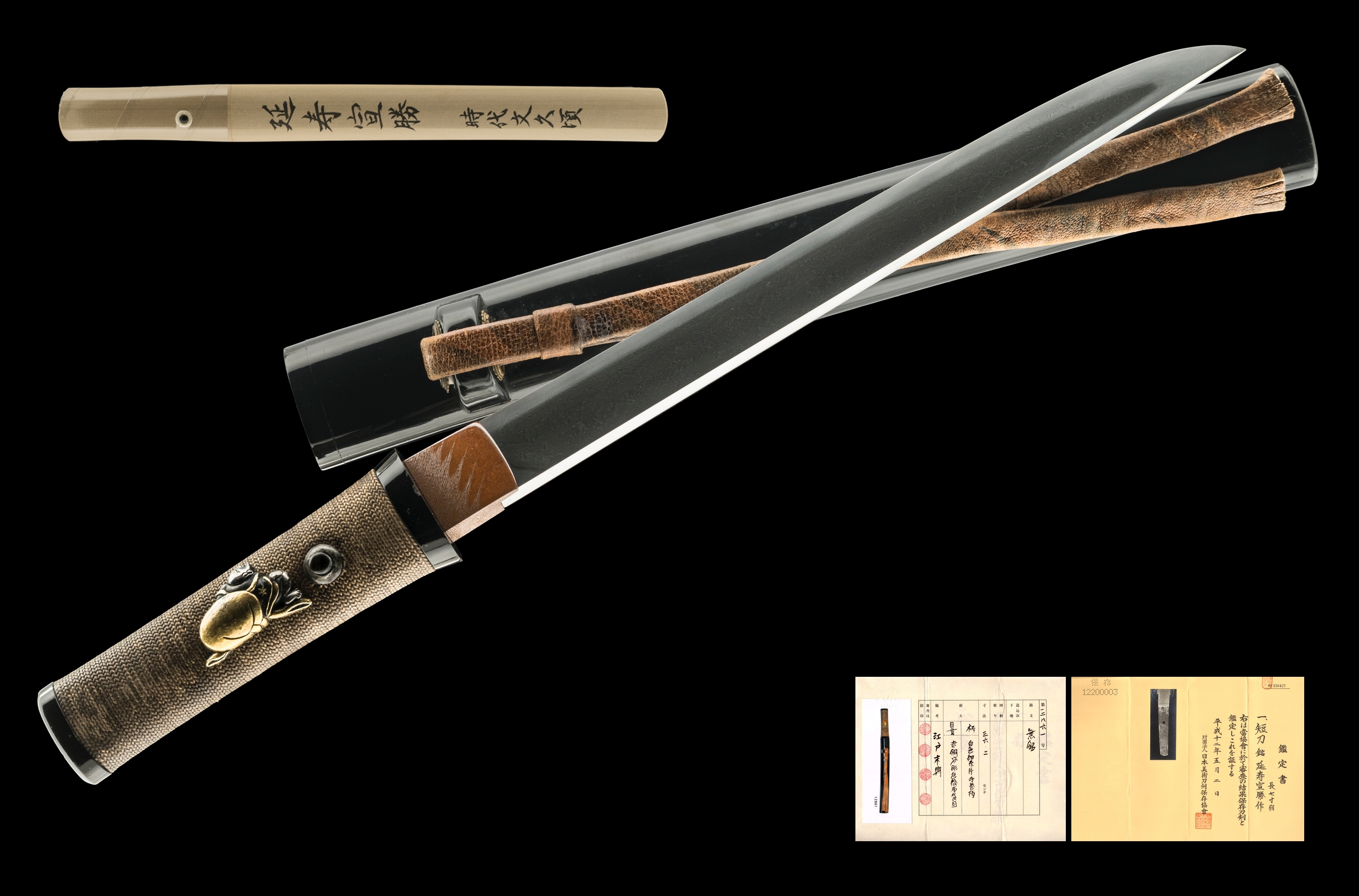
The Enju school traces its roots to the Kikuchi area of Higo province in Kyûshû, rising to prominence from the late Kamakura through the Nanbokuchô period under its founder Rai Kunimura (来国村), reportedly a grandson of the celebrated Yamashiro smith Rai Kuniyuki (来国行). Centuries later, Nobukatsu – born Takenaga Kizaemon (武永喜三右衛門) – carried that lineage into the Shinshintô era. He trained first under Mimasaka‘s Tada Masatoshi (多田正利), before his domain commissioned him to study in Edo under Hosokawa Masayoshi (細川正義) of Tsuyama. Active from 1844 to 1867, he became particularly celebrated for his yari (spears), and passed away in 1871 at the age of 75.
This delightful tanto carries the hallmarks of the classic Enju tradition: a wonderfully active ayasugi-hada with rich ji-nie and impressive dark channels of chikei coursing through the body of the blade. The hamon is a bright, lively suguha that periodically splits into niju-ba in the manner of Yamato-den, and spectacular rivers of kinsuji flow through the temper line most impressively. The boshi turns in a long, round ko-maru kaeri. The ubu nakago retains its original kiri-yasurime file marks and bears the clear five-character signature Enju Nobukatsu saku.
The accompanying aikuchi-tanto-koshirae is lacquered in glossy black (kuro-ronuri) and is certified to the Late Edo period (1780-1868) by NTHK-NPO Kanteisho. The oversized menuki depicting Hotei – the Japanese god of contentment and happiness, the Laughing Buddha, guardian of children – are cast in shakudô and gold, and bring a cheerful, auspicious energy to an already excellent package. The tsuka is wrapped in katate-maki style, and the saya retains its antique leather sageo. A sword that carries genuine positive energy, and which also holds strong promise for NBTHK Tokubetsu Hozon at the next shinsa.
| Item Number | UJTA062 |
| Sword Type | Tantô |
| Swordsmith | Enju Nobukatsu (shodai, 1st gen.) |
| Swordsmith (JP) | 延寿宣勝 |
| Signature | Enju Nobukatsu saku |
| School | Enju |
| Province | Higo |
| Period | Shinshintô – Late Edo period (Bunkyû era: 1861-1864) |
| Nagasa | 20.9cm |
| Sori | 0.0cm |
| Moto-haba | 1.96cm |
| Weight | 130g |
| Nakago | Ubu (original, unaltered); kiri-yasurime (horizontal file marks); ha agari kurijiri nakago-jiri |
| Jihada | Ayasugi-hada with ji-nie and chikei |
| Hamon | Bright suguha with niju-ba and kinsuji |
| Boshi | Suguha-chô with long ko-maru kaeri |
| Certificates | NBTHK Hozon (No. 356427, issued Heisei 12 / 2000) |
| Fujishiro Rank | Chûjô-saku |
| Sayagaki | Nozomi-san (shodô artist) – inscribed in the 10th month, Reiwa 6 (October 2024) |
| Koshirae | Aikuchi-tanto-koshirae, kuro-ronuri saya (glossy black lacquer), Late Edo period (1780-1868); NTHK-NPO Kanteisho certificate |
| Menuki | Shakudô and gold; Hotei (the Laughing Buddha) depicted reclining against his treasure bag |
| Tsuka | Katate-maki style wrap |
| Habaki | Copper with rainfall file marks |
| Catalogue | Catalogue 43 |
| Status | Sold |
| Includes | Shirasaya, Edo-koshirae, fabric bags, stand, kit, printed description |