
ITEM# UJTA054 – Catalogue 38 – Sold
A Shodai Nobukuni Tantô (信国)
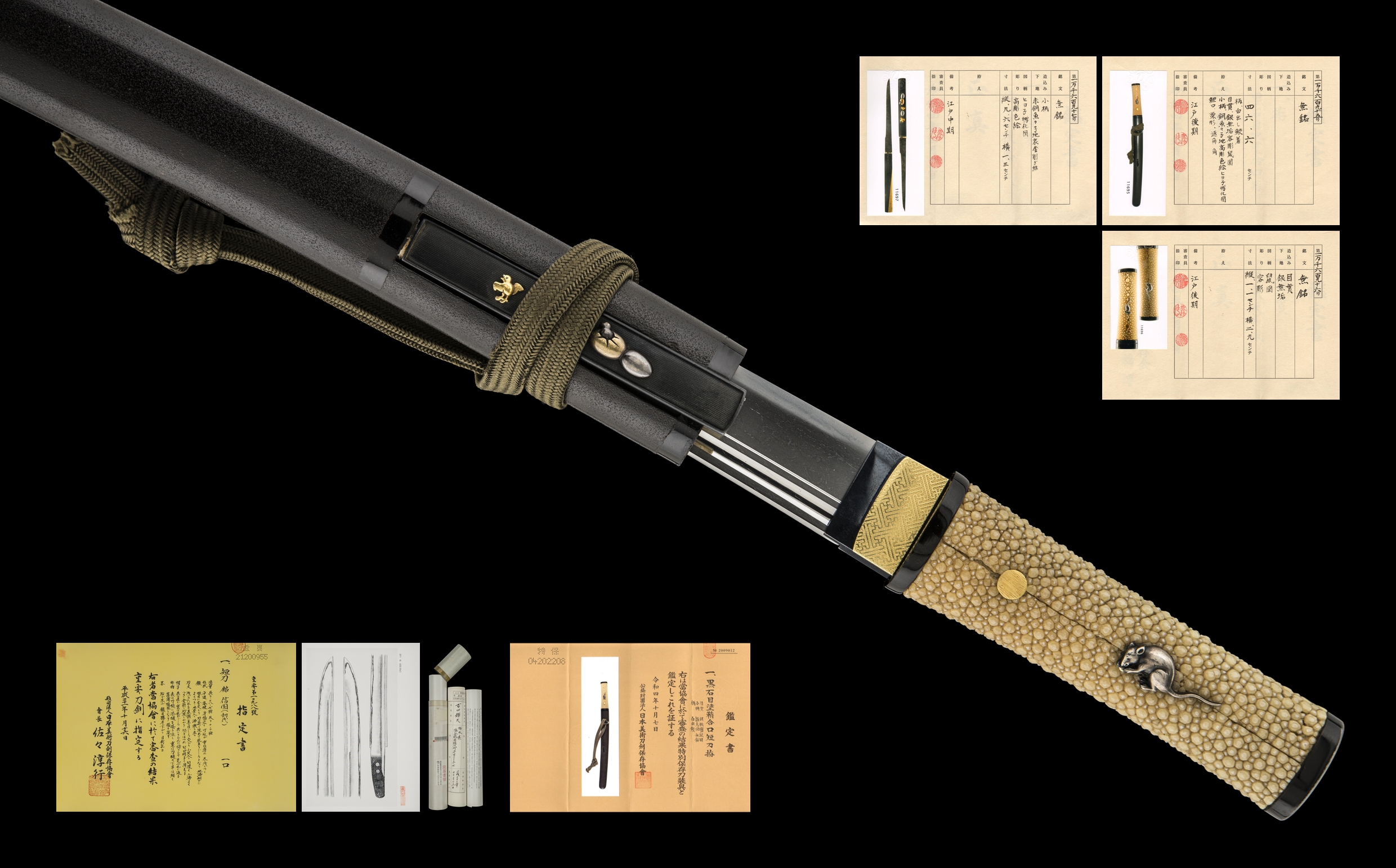
Shodai (first generation) Nobukuni stands apart as one of the supreme swordsmiths of the Nambokuchô period, a figure who bridged the refined *itame* traditions of the *Rai* school with the dynamic energy of Sôshû. Descended from the *Ryôkai* lineage – by some accounts son, grandson, or great-grandson of that celebrated smith – Nobukuni worked from Kyôto and is counted among the “Three Students of Sadamune,” himself the adopted son of the great Masamune. Rated *jôjô-saku* by Fujishiro, his works have been designated *Juyô Bunkazai* (Important Cultural Property), placing him just one level below *kokuhô* (National Treasure) status.
This *tanto* is a masterwork that unifies everything the Nambokuchô period stands for: a wide, commanding *hira-zukuri* shape in the classic *Enbun-Jôji* style with *iori-mune*, deep *mihaba*, *sunnobi* proportions, and thin *kasane*. The *kitae* is a fine *itame* mixed with *mokume* that tends toward a standing-out *nagare* along the *ha* – the direct stylistic fingerprint connecting Nobukuni to the *Ryôkai* lineage – and features abundant fine *ji-nie*, *chikei*, and a striking *nie-utsuri*. The *hamon* is a *ko-nie*-laden, gently undulating *notare-chô* with a wide, bright, and clear *nioiguchi* mixed with *gunome*, *ko-ashi*, many *kinsuji* and *sunagashi*, and *hotsure* in places – the unmistakable Sôshû influence channelled through his sensei Sadamune.
The *horimono* (engraving) is equally distinguished: on the *ômote*, a *katana-hi* with *soe-bi* that runs as *kaki-nagashi* into the tang; on the *ura*, a *katana-hi* with a *shôbu-hi*-like element – Nobukuni was celebrated as a master engraver, and this blade demonstrates why. The *aikuchi koshirae* dates to the late Edo period and is lacquered black with a stone-like *kuro-ishime-ji-nuri* finish. The *menuki* are exquisite pure silver mice (*nezumi*) from the *Kyô-Ôtsuki* school, circa 1780-1867 – *nezumi* is the first of the twelve zodiac animals, just as Shodai Nobukuni was the first generation of his school. The *kozuka*, attributed to the famed Gotô school in Kyôto, depicts hatching chicks symbolising new life and new beginnings. The *torokusho* (registration card), numbered just 814, dates to 1951 – the very first year swords were formally registered in Japan – suggesting this blade was once held by a prominent former Daimyo family.
| Item Number | UJTA054 |
| Sword Type | Tantô |
| Swordsmith | Shodai Nobukuni |
| Swordsmith (JP) | 信国(初代) |
| Signature | Nobukuni (信国) |
| School | Nobukuni school (Rai / Sôshû tradition, Yamashiro) |
| Province | Yamashiro (Kyôto) |
| Period | Kôtô – Nambokuchô period (circa Enbun~Jôji eras: 1356~1368) |
| Nagasa | 28.7 cm |
| Sori | 0.2 cm |
| Moto-haba | 2.75 cm (spec sheet: 2.8 cm) |
| Weight | 170 g |
| Nakago | Almost ubu, katte-sagari yasurime, two mekugi-ana (8.94 cm) |
| Jihada | Itame mixed with mokume, standing-out nagare-hada, ji-nie, chikei, and nie-utsuri |
| Hamon | Ko-nie-laden and gently undulating notare-chô with a wide, bright, and clear nioiguchi mixed with gunome, ko-ashi, many kinsuji and sunagashi, with hotsure in places |
| Boshi | Omote: sugu; ura: with some midare; both sides with much hakikake and ko-maru-kaeri |
| Certificates | NBTHK Jûyô Tôken (55th session, Certificate No. 12988); NTHK-NPO Kanteisho (koshirae, kozuka, and menuki designated as Authentic) |
| Fujishiro Rank | Jôjô-saku |
| Koshirae | Late Edo period kuro-ishime-ji-nuri aikuchi koshirae (黒石目地塗合口拵え), circa 1780-1867 |
| Kozuka | Hatching chicks motif; attributed to the Gotô school, Kyôto (NTHK-NPO Kanteisho) |
| Menuki | Pure silver nezumi (mice); Kyô-Ôtsuki school, Kyôto, circa 1780-1867 (NTHK-NPO Kanteisho) |
| Habaki | Gold and shakudô with connected sayagata decor |
| Catalogue | Catalogue 38 |
| Status | Sold |
| Includes | Shirasaya, late Edo period aikuchi koshirae, fabric bags, stand, maintenance kit, printed description |