
ITEM# UJTA052 – Catalogue 37 – Sold
A Shôdai Kanemitsu Tantô (備州長船兼光)
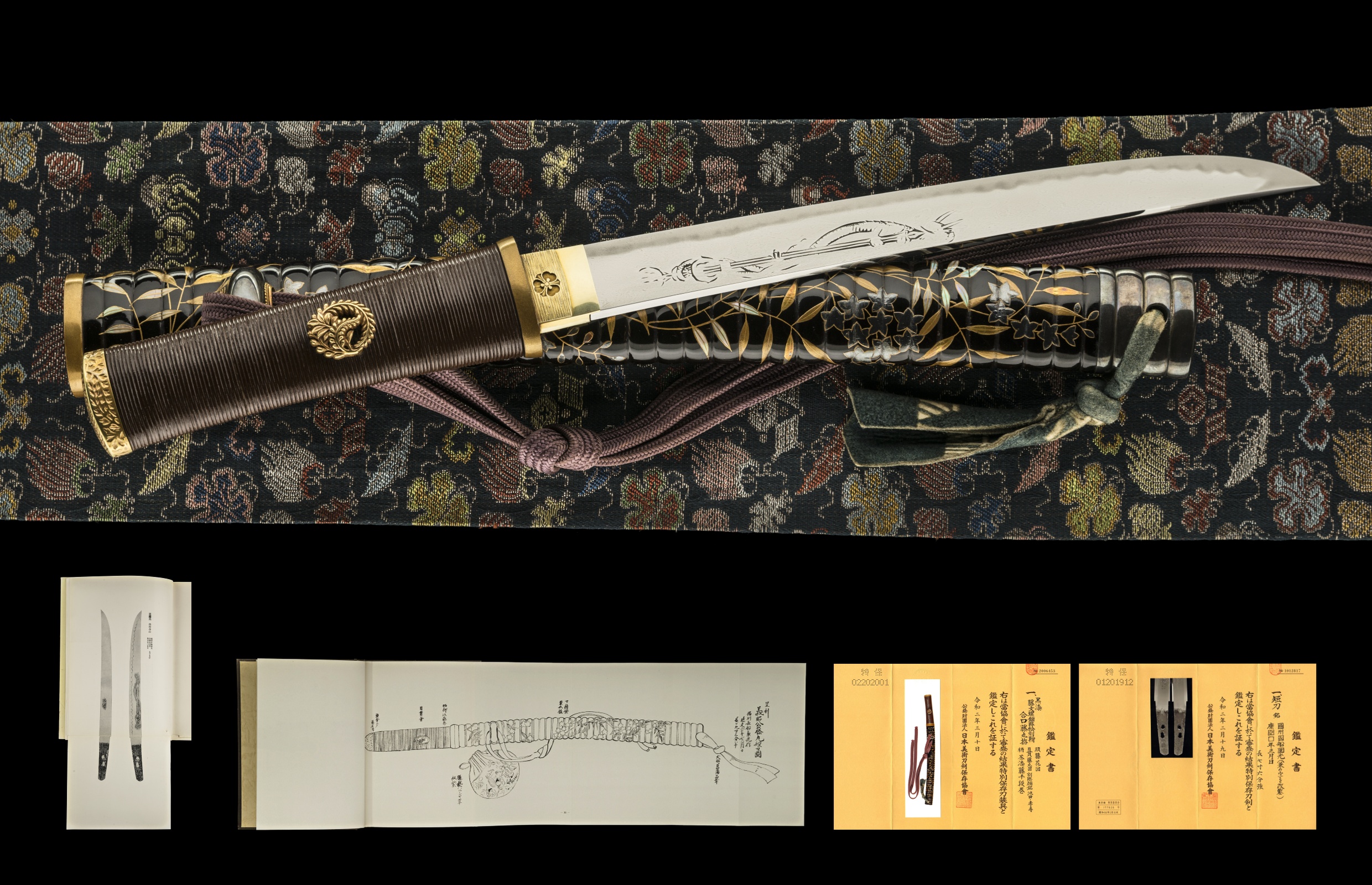
Born in 1278, grandmaster swordsmith Kanemitsu was the son of Osafune Kagemitsu and is counted among the legendary Ten Students of Masamune. He founded the Bizen Kanemitsu school, working in both Bizen and Sôshû traditions, and his dated works span from Genkô 2 (1322) to Ôan 7 (1374) – a career of roughly 42 years. This tanto was forged during the Kôan era, late in Kanemitsu’s illustrious career, and is dated to a day in the third month – March 1361 or 1362. As dated work, it carries significant historical importance.
The blade is a textbook example of late Kanemitsu at his finest. The jihada is a beautifully forged ko-itame and ko-mokume with plentiful chikei, appearing soft and almost wet to the eye – the hallmark quality that earned Kanemitsu his grandmaster status. The hamon is a subdued kataochi-gunome with ko-gunome, characteristic of his final working years, where a less bright nioguchi blends seamlessly into the jigane. The bôshi is a pointed midare-komi of the rôsoku (candle) type. Adding exceptional rarity, the blade carries Kanemitsu’s trademark horimono – a Kenmaki-ryû engraving of the dragon Kurikara winding around a sword, together with a bonji of Fudô-Myôô, both said to have been cut by Kanemitsu himself.
Lifting this tanto to extraordinary heights is its stunning late Edo aikuchi koshirae commissioned by the Tamura daimyô family circa the early 1800s from master kinkô artist Ikeda Takatoshi – sensei to arguably the greatest goldsmith of the late Edo period, Kanô Natsuo. The koshirae is a faithful recreation of the aikuchi once carried by shôgun Ashikaga Yoshiaki for a Kanemitsu tanto dated July 1357. The ribbed saya is lacquered in black with cascading wisteria in raden-makie lacquerwork; the pure gold kashira bears a wisteria design; the gold menuki carry the split signature of Ikeda Takatoshi; and the signed gold habakiwith oxalis crest – itself a rarity – completes one of the finest tanto presentations in the Unique Japan archive. This tanto is catalogued in the book of Tamura Family Treasures (1936), included with the sale.
| Item Number | UJTA052 |
| Sword Type | Tantô |
| Swordsmith | Osafune Kanemitsu (first generation) |
| Swordsmith (JP) | 長船兼光 (初代) |
| Signature | Bishû Osafune Kanemitsu (Kane no ji o kaizan) |
| Date | Kôan nen sangatsu hi – a day in the third month of Kôan era (March 1361 or 1362) |
| School | Bizen Kanemitsu |
| Province | Bisshû (Bizen) |
| Period | Kotô – Nambokuchô (Kôan era: 1361-1362) |
| Nagasa | 23.3cm (ubu) |
| Sori | 0.50cm |
| Moto-haba | 2.21cm |
| Weight | 115g |
| Nakago | Ubu, katte-sagari-yasurime (right slanting file marks), 2 mekugi-ana, nakago length 8.1cm, moto-kasane 5.1mm |
| Jihada | Ko-itame and ko-mokume, plentiful chikei, soft in appearance |
| Hamon | Kataochi-gunome, ko-gunome |
| Boshi | Pointed midare-komi (rôsoku / candle bôshi) |
| Certificates | NBTHK Tokubetsu Hozon (sword) · NBTHK Tokubetsu Hozon (koshirae) |
| Fujishiro Rank | Saijô-saku (grandmaster & jûyô bunkazai swordsmith) |
| Koshirae | Edo aikuchi-fujimaru-koshirae – kuro-urushi fujimon raden-makie kizami-saya; commissioned by the Tamura daimyô family circa early 1800s from master kinkô artist Ikeda Takatoshi; faithful recreation of the aikuchi carried by shôgun Ashikaga Yoshiaki |
| Fuchi-kashira | Pure gold kashira, stone-surface ground with wisteria design (Ikeda Takatoshi) |
| Menuki | Gold, fujimaru (wisteria circle) design, signed Ikeda Takatoshi on the edge |
| Tsuka | Wrapped in thin fujimaki style (rattan, lacquered for preservation) |
| Habaki | Gold, signed by Ikeda Takatoshi (孝寿彫之), with oxalis crest and horizontal file marks |
| Catalogue | Catalogue 37 |
| Status | Sold |
| Includes | Shirasaya, Edo aikuchi koshirae, fabric bags, stand, kit, booklet, description, Tamura Family Treasures book, Tantô Koshirae Ezu book |