
ITEM# UJKA429 – Catalogue 42 – Sold
A Shodai Masahiro Katana (肥前国河内大掾藤原正広)
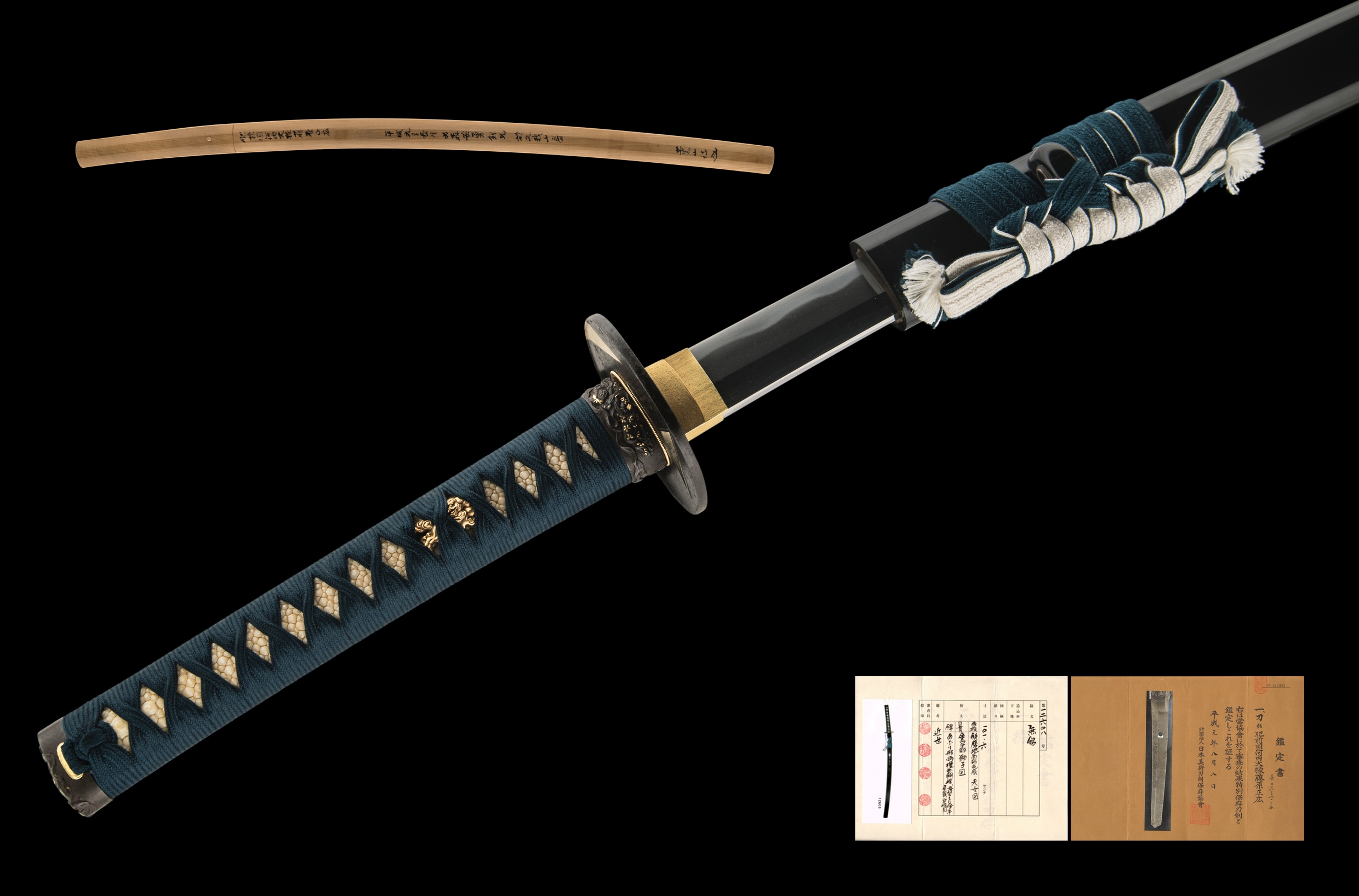
Kawachi Masahiro was born Sadenjiro in 1607 and died at only 59 in 1665. The son of Yoshinobu – himself the adopted son of the great shodai Tadayoshi – Masahiro began his career signing as Masanaga and served as dai-mei for Shodai Tadayoshi when that master fell ill. Recognising his exceptional talent, Lord Nabeshima Katsushige suggested he change his name to Masahiro, and so shodai Masahiro was born. Rated jô-saku by Fujishiro and wazamonô for sharpness, he is among the finest smiths the Hizen tradition produced.
This katana is a masterclass in what made Hizen swords so celebrated. The foundation is a tightly forged konuka-hada – the signature rice-grain texture of the school – beginning as ko-mokume before resolving into that incomparably fine surface. Over this the gunome-chôji-midare hamon erupts with extraordinary life: kinsuji, sunagashi, yô, long ashi, and even tama – jewel-like balls floating high in the ji. A wide nioguchi frames it all, the bright billowing pattern testament to the genius of shodai Masahiro at full power.
The shirasaya carries sayagaki by Dr. Honma Junji (1904-1991), known as Kunzan, former director of the NBTHK – written in September of Heisei 1st (1989) at his Kugayama workshop for his sword friend Moriyasu Isao. A magnificent uchigatana-koshirae accompanies the blade, its saya lacquered in glossy black with a refined kage-makie theme of dragonflies among garden foliage. The tombo (dragonfly) was revered by the samurai as a symbol of bravery and forward resolve. The polished iron tsuba features striking gold-inlay obtuse triangles, while the iron fuchi-kashira depicts Tennyo, the heavenly celestial woman of the Noh play Hagoromo. Gold shishi lion menuki guard the teal-wrapped handle. A spiritual ensemble of the highest order.
| Item Number | UJKA429 |
| Sword Type | Katana |
| Swordsmith | Shodai Masahiro |
| Swordsmith (JP) | 肥前国河内大掾藤原正広 |
| Signature | Hizen no Kuni Kawachi Daijô Fujiwara Masahiro |
| School | Hizen |
| Province | Hizen |
| Period | Shintô – Early Edo period (Kan’ei era: 1624-1644) |
| Nagasa | 70.6cm |
| Sori | 1.5cm |
| Moto-haba | 2.94cm |
| Weight | 690g |
| Nakago | Ubu, sujikai-yasurime, kengyô nakago-jiri, 1 mekugi-ana (gold-filled) |
| Jihada | Ko-mokume leading to Hizen konuka-hada, thick nie-deki and ji-nie |
| Hamon | Gunome chôji-midare with kinsuji, sunagashi, yô, ashi, tama; wide nioguchi |
| Boshi | Midare-komi |
| Certificates | NBTHK Tokubetsu Hozon (issued Heisei 1st / 1989, August 8th) |
| Fujishiro Rank | Jô-saku |
| Sharpness Rating | Wazamonô |
| Sayagaki | Kunzan (Dr. Honma Junji) – Hizen no Kuni Kawachi Daijô Fujiwara Masahiro, dated Heisei gannen Nagatsuki (September 1989), for sword friend Moriyasu Isao, at the Kugayama workshop |
| Koshirae | Uchigatana-koshirae (kuro-ro kage-makie-nuri saya), Modern period; koshirae bag included |
| Tsuba | Polished iron, round, openwork with gold-inlay obtuse triangle design; hitsu-ana filled with shakudô |
| Fuchi-kashira | Polished iron with relief and colour accents, depicting Tennyo (heavenly celestial woman) |
| Menuki | Gold shishi (lion) in relief |
| Tsuka | Teal silk braid over same (ray skin) |
| Habaki | Gold ni-ju habaki with crisp file marks |
| Catalogue | Catalogue 42 |
| Status | Sold |
| Includes | Shirasaya, dragonfly uchigatana-koshirae, koshirae bag, stand, kit, booklet, printed description |