
ITEM# UJKA337 – Catalogue 35 – Sold
A Kawachi no Kami Sukesada Katana (一河内守祐定)
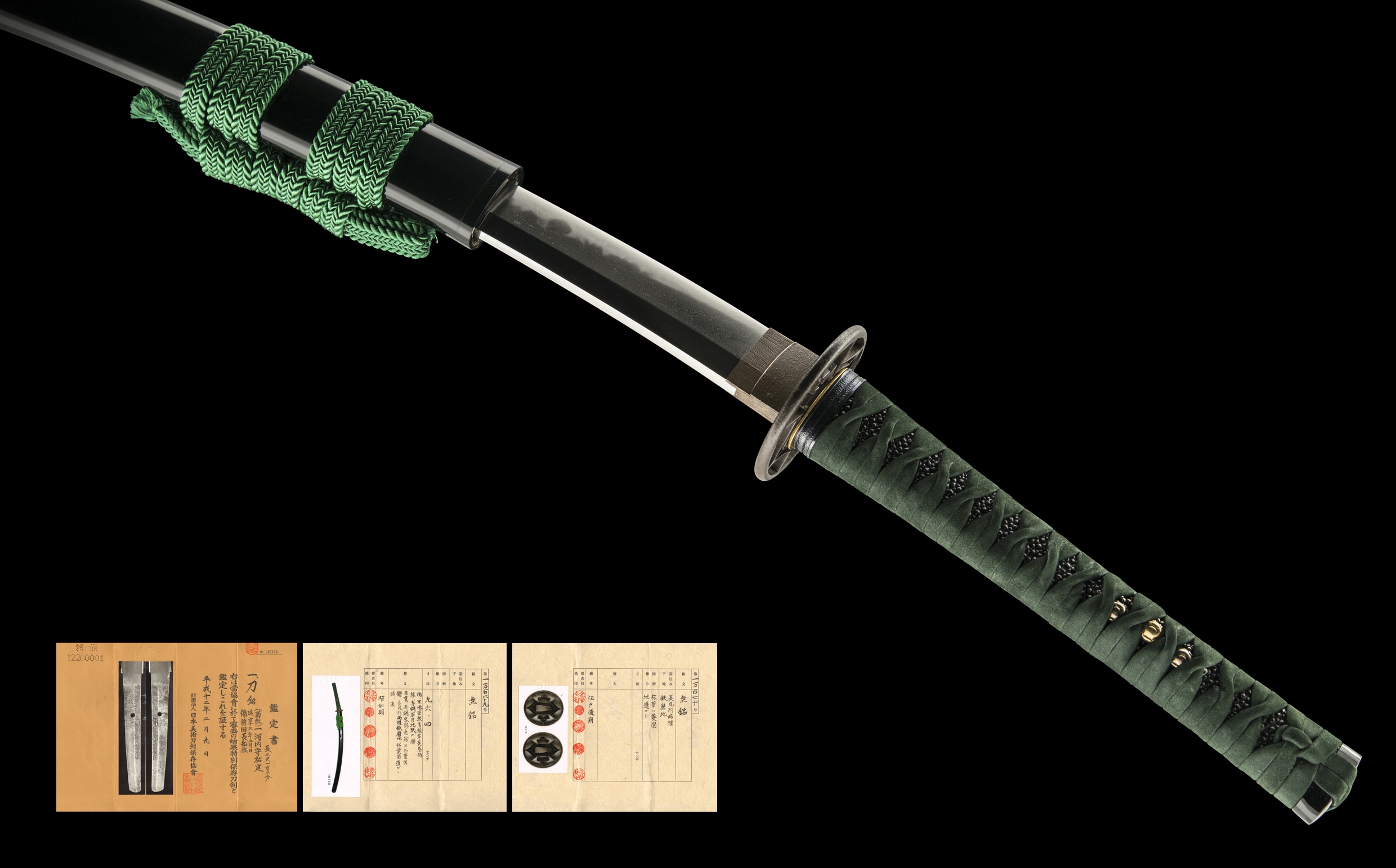
Born Yokoyama Nizaemon, Kawachi no Kami Sukesada was the son of the first-generation Sôzaemon Sukesada and a swordsmith of genuine ambition. He lived in Bizen province, dedicated to re-establishing the centuries-old sword-making traditions that had been shattered by the catastrophic flooding of the Yoshii river in 1590. In recognition of his achievements, he received the honorary title Kawachi no Kami in May 1701 and added the imperial 16-petal chrysanthemum crest – the kikumon – along with the character Ichi to his nakago, a deliberate homage to the great Ichimonji-school smiths of the Kamakura golden age. He worked in both Settsu province (Osaka) and Mimasaka (Okayama) during his career, and died on December 19th, 1777.
This strong and broadly curved katana, dated to February 1746, was evidently inspired by the powerful katate-uchi (one-handed katana) masterpieces of the mid-1500s during the turbulent late Muromachi period. At 865g with a sori of 3.2cm, it is a weighty, muscular piece with real presence in the hand – and it has remained essentially unchanged after nearly 300 years. The jihada is a well-forged ko-mokume with chikei and tobiyaki, while the hamon is a vivid and complex gunome-chôji midare alive with kinsuji, sunagashi, yô (leaves), and the distinctive kanitsune (crab claw) formations that percolate energetically toward the shinogi ridge line.
The longevity-themed koshirae is one of the finest aspects of this piece. The late-generation polished iron Akasaka tsuba carries a geometric pine needle and diamond design – pine being a symbol of longevity, good fortune, and steadfastness – certified NTHK-NPO authentic to the late-Edo period. The olive-green leather-wrapped tsuka is fitted with six crab menuki, a clever echo of the kanitsune in the blade’s hamon. The kashira is a lacquered makikake no kashira, and both the sageo and tsuka cords are in complementary shades of green, drawing the whole composition together.
| Item Number | UJKA337 |
| Sword Type | Katana |
| Swordsmith | Kawachi no Kami Sukesada (second generation) |
| Swordsmith (JP) | 河内守祐定 |
| Signature | (Kikumon) Ichi Kawachi no Kami Sukesada / Enkyô sannen nigatsu bi / Bizen no Kuni Osafune-jû |
| Date | Enkyô 3 (February 1746) |
| Province | Bizen |
| Period | Edo – Mid Edo (Enkyô era: 1744-1748) |
| Nagasa | 64.2cm |
| Sori | 3.2cm |
| Moto-haba | 2.9cm |
| Weight | 865g |
| Nakago | Ubu (original, unaltered tang), 17.5cm |
| Jihada | Ko-mokume hada with chikei and tobiyaki |
| Hamon | Wide gunome-midare with kanitsune, kinsuji, sunagashi and yô (leaves) |
| Certificates | NBTHK Tokubetsu Hozon (No. 145224, issued Heisei 12 / 2000); NTHK-NPO Kanteisho (koshirae and tsuba, authenticated) |
| Fujishiro Rank | Chûjô-saku |
| Koshirae | Kuro-ro-iro-nuri saya uchigatana-koshirae; glossy black lacquered saya, Shôwa period (1926-1989) |
| Tsuba | Late-generation polished iron Akasaka-school tsuba; geometric pine needle and diamond design; late-Edo period (circa 1780-1867); NTHK-NPO Kanteisho certified |
| Fuchi-kashira | Lacquered makikake no kashira |
| Menuki | Six crabs (two sets of three) in silver and gilt; echoing the kanitsune of the hamon |
| Tsuka | Olive green leather-wrapped; green sageo and tsuka-ito |
| Habaki | Copper habaki with straight file marks |
| Catalogue | Catalogue 35 |
| Status | Sold |
| Includes | Shirasaya, longevity koshirae, stand, maintenance kit, DVD, booklet, printed description |