
ITEM# UJKA334 – Catalogue 32 – Sold
A Rai Kunizane Katana (来国真)
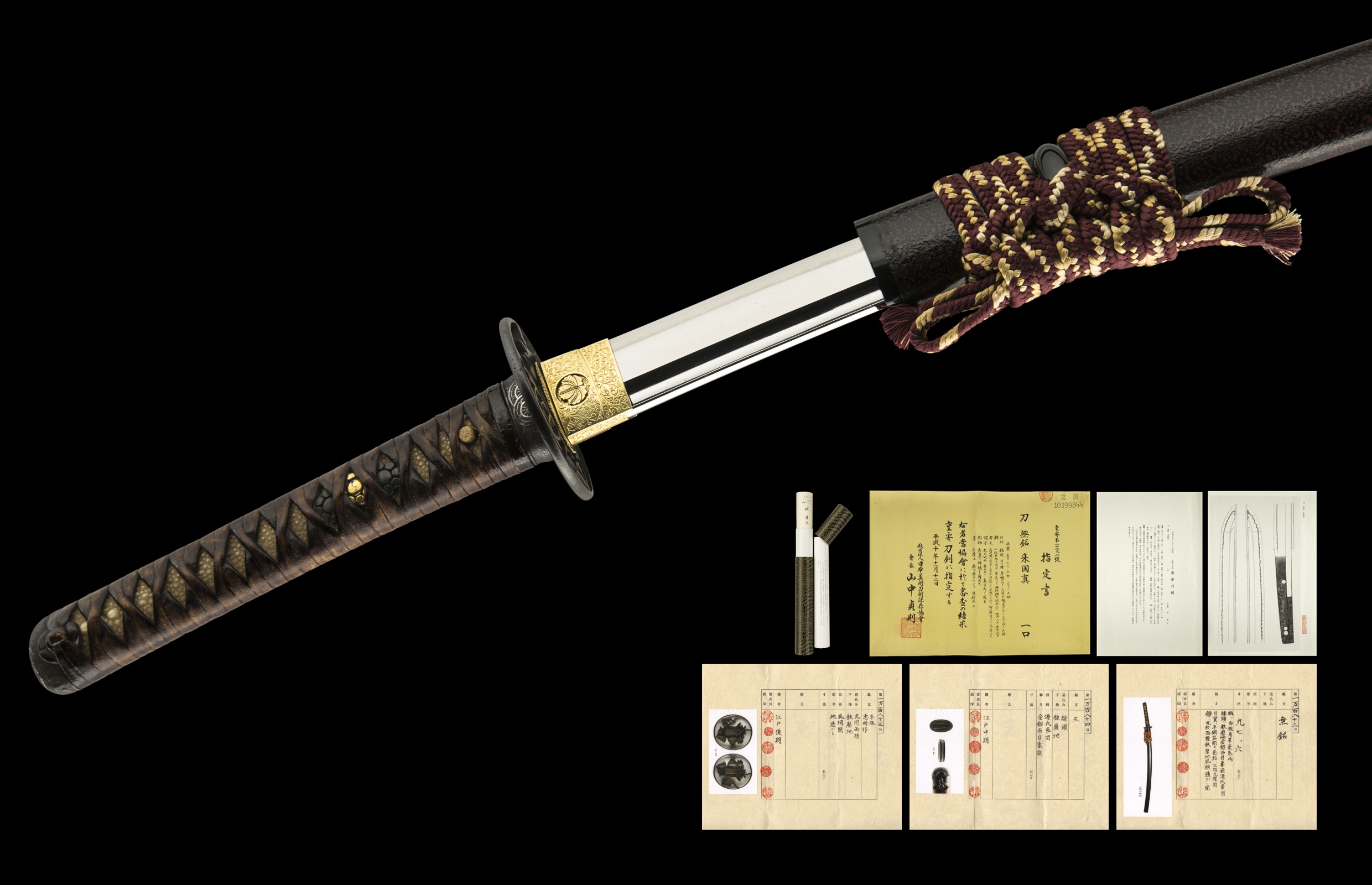
Rai Kunizane is considered the son – or close student – of grandmaster Rai Kunitoshi, one of the most celebrated smiths in Japanese sword history. His older brother was the national treasure swordsmith Rai Kunimitsu, and his younger brother Rai Tomokuni. Kunizane flourished in Yamashiro (Kyoto) during the late Kamakura period, likely continuing into the turbulent Nambokucho era from circa 1333. The Rai school is synonymous with refined elegance, and Kunizane ranks among its finest representatives.
This wide, muscular katana carries a grand torii-zori shape – the curvature centred in the middle of the blade. The original cutting edge would have measured around 80cm; the blade has since been shortened to 68.5cm via o-suriage, with the new nakago formed from what was originally part of the blade itself. The mitsu-mune (three-surface spine) construction is a relatively rare feature associated with smiths of the Yamashiro school and the Sôshû tradition. The densely forged ko-itame-hada, mixed with mokume, nagare and patches of jifu, is alive with generous ji-nie and dark swirling chikei. The hamon is a bright suguha-chô in ko-nie-deki with a tight nioiguchi, peppered with ko-chôji, ko-gunome and many fine ashi – classic Rai character in every detail.
The Edo period uchigatana-koshirae is a fitting complement. The saya is lacquered in striking vermilion with dry lacquer powder (shuiro-kanshitsu-nuri). The tsuba is a polished iron sukashi (openwork) piece by Tadatoki (忠時), 6th generation master of the Akasaka school, signed and accompanied by an NTHK-NPO Kanteishô certificate. The menuki carry the Kuyô-mon (nine-planet crest) of the Hosokawa clan, beneath lacquered leather wrapping. The fuchi-kashira are attributed to the Misumi school of Higo province (1700s), decorated with a Genji guruma motif – wheels of the oxcart that carried nobility. A spectacular solid gold ni-ju habaki (two-piece blade collar), engraved with kiri-mon and arabesques, completes the ensemble.
| Item Number | UJKA334 |
| Sword Type | Katana |
| Attribution | Attributed to Rai Kunizane (o-suriage mumei) |
| School | Rai school |
| Province | Yamashiro |
| Period | Kôtô – Late Kamakura period (Shôwa era: 1312~1317) |
| Nagasa | 68.5 cm |
| Sori | 1.9 cm |
| Moto-haba | 3.24 cm |
| Weight | 715 g |
| Nakago | O-suriage, katte-sagari yasurime, three mekugi-ana |
| Jihada | Ko-itame mixed with mokume, nagare and some jifu, plenty of ji-nie, and chikei |
| Hamon | Suguha-chô in ko-nie-deki with tight nioiguchi, ko-chôji, ko-gunome, many ashi |
| Boshi | Midare-komi with maru-kaeri on the omote and a pointed kaeri on the ura side |
| Certificates | NBTHK Jûyô Tôken (44th session) |
| Fujishiro Rank | Jo-saku |
| Koshirae | Edo period uchigatana-koshirae, vermilion dry-lacquer saya (shuiro-kanshitsu-nuri), saya re-lacquered 20th century |
| Tsuba | Polished iron sukashi tsuba by Tadatoki (忠時), 6th generation Akasaka school, Edo period circa 1780~1867; NTHK-NPO Kanteishô certificate |
| Fuchi-kashira | Attributed to the Misumi school, Higo province (1700s); Genji guruma (oxcart wheel) motif; NTHK-NPO Kanteishô certificate |
| Menuki | Hosokawa Kuyô-mon (nine-planet family crest), gilt |
| Tsuka | Leather-wrapped and lacquered, Edo period |
| Habaki | Solid gold ni-ju habaki (two-piece), kiri-mon and arabesque engraving |
| Catalogue | Catalogue 32 |
| Status | Sold |
| Includes | Shirasaya, Edo koshirae, fabric bags, stand, kit, DVD, booklet, description |