
ITEM# UJKA313 – Catalogue 32 – Sold
A Hojoji Masahiro Katana (近江守法城寺橘正弘)
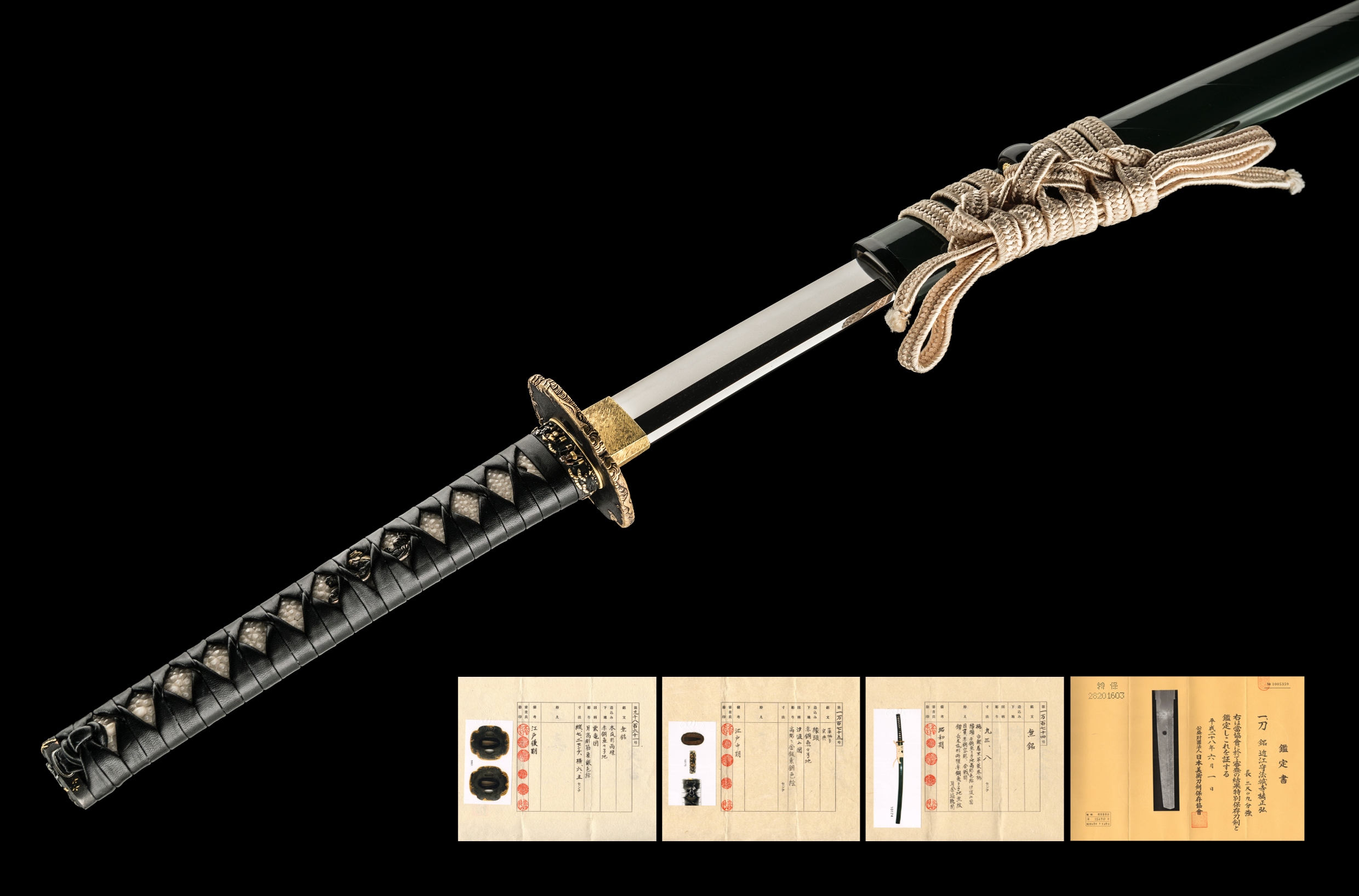
Shodai Masahiro was born Takigawa Saburôdayû and hailed from Hirohara in Tajima province, a descendant of the lineage of Hôjôji Kunimitsu – founder of the Hôjôji district school circa 1362. In the early 1650s he relocated to the capital Edo, established the Edo-Hôjôji school in Musashi province, and quickly earned a reputation for producing superior blades for the samurai class. Fujishiro’s ranking of Jo-saku and the Wazamono sharpness rating confirm his standing among the leading smiths of the early Edo period.
There is an authenticity to this katana that echoes the majime (serious) character of samurai living in Edo at the time. Its shorter nagasa of 63.3cm suggests it was custom-ordered by a fighting samurai who preferred a weapon suited to close-quarters use. The jihada is dense ko-itame with splendid masame-hada in the shinogi-ji, animated by chikei and shirake-utsuri ji-nie – a remarkably clear and well-forged jiba. The hamon is suguha mixed with wavy gunome-ashi and tobiyaki, with muneyaki on the spine – a characteristic feature of the Hôjôji school. Hon’ami Nisshû, late Living National Treasure, wrote in his sayagaki that the jiba is gorgeous.
The handsome koshirae is a Shôwa-period uchigatana-koshirae with a deep green spiral-lacquered saya. The tsuba is a brilliant shakudô nanako ground piece depicting a cloud-encircled dragon (unryû on zu) attributed to the Mino-Gotô school, dated to the late Edo period circa 1780-1867, with NTHK-NPO Kanteisho certification. The fuchi-kashira – signed by Mogarashi Nyûdo Sôten – depicts a charming shiokumi (brine carrier) farming scene with inlaid multi-metal figures, and carries its own NTHK-NPO Kanteisho certificate. The habakiis gold with diagonal file marks. A gold-lacquered shirasaya bearing the Hon’ami Nisshû sayagaki accompanies the blade.
| Item Number | UJKA313 |
| Sword Type | Katana |
| Swordsmith | Hôjôji Masahiro |
| Swordsmith (JP) | 近江守法城寺橘正弘 |
| Signature | Ômi no Kami Hôjôji Tachibana Masahiro |
| School | Edo-Hôjôji |
| Province | Musashi |
| Period | Shintô – Early Edo period (Manji era: 1658-1661) |
| Nagasa | 63.3cm |
| Sori | 1.3cm |
| Moto-haba | 2.94cm |
| Weight | 755g |
| Nakago | Ubu, kengyo nakago-jiri, katte sagari yasurime, 1 mekugi-ana |
| Jihada | Dense ko-itame with masame-hada in shinogi-ji, chikei, shirake-utsuri ji-nie |
| Hamon | Suguha mixed with wavy gunome-ashi with tobiyaki; muneyaki on spine |
| Certificates | NBTHK Tokubetsu Hozon (sword); NTHK-NPO Kanteisho (koshirae, tsuba, fuchi-kashira) |
| Fujishiro Rank | Jo-saku |
| Sharpness Rating | Wazamono |
| Sayagaki | Hon’ami Nisshû — Ômi no Kami Hôjôji Tachibana Masahiro, jiba tomo migoto nari (the jiba is gorgeous), dated Shôwa kinoto midoshi (1965) |
| Koshirae | Uchigatana-koshirae, Shôwa period (1926-1989); midoriiro-hirumaki-nuri saya (green spiral-lacquered scabbard) |
| Tsuba | Shakudô nanako ground, unryû on zu (cloud dragon motif), Mino-Gotô school attribution, late Edo period circa 1780-1867; NTHK-NPO Kanteisho |
| Fuchi-kashira | Shiokumi (brine carriers) scene with multi-metal inlay; signed Mogarashi Nyûdo Sôten; NTHK-NPO Kanteisho |
| Habaki | Gold, diagonal file marks |
| Catalogue | Catalogue 32 |
| Status | Sold |
| Includes | Shirasaya with Hon’ami Nisshû sayagaki, koshirae, bags, stand, kit, DVD, booklet, printed description |