
ITEM# UJKA304 – Catalogue 30 – Sold
A Kunitsuna Tameshigiri Katana (越前住相模守藤原国綱)
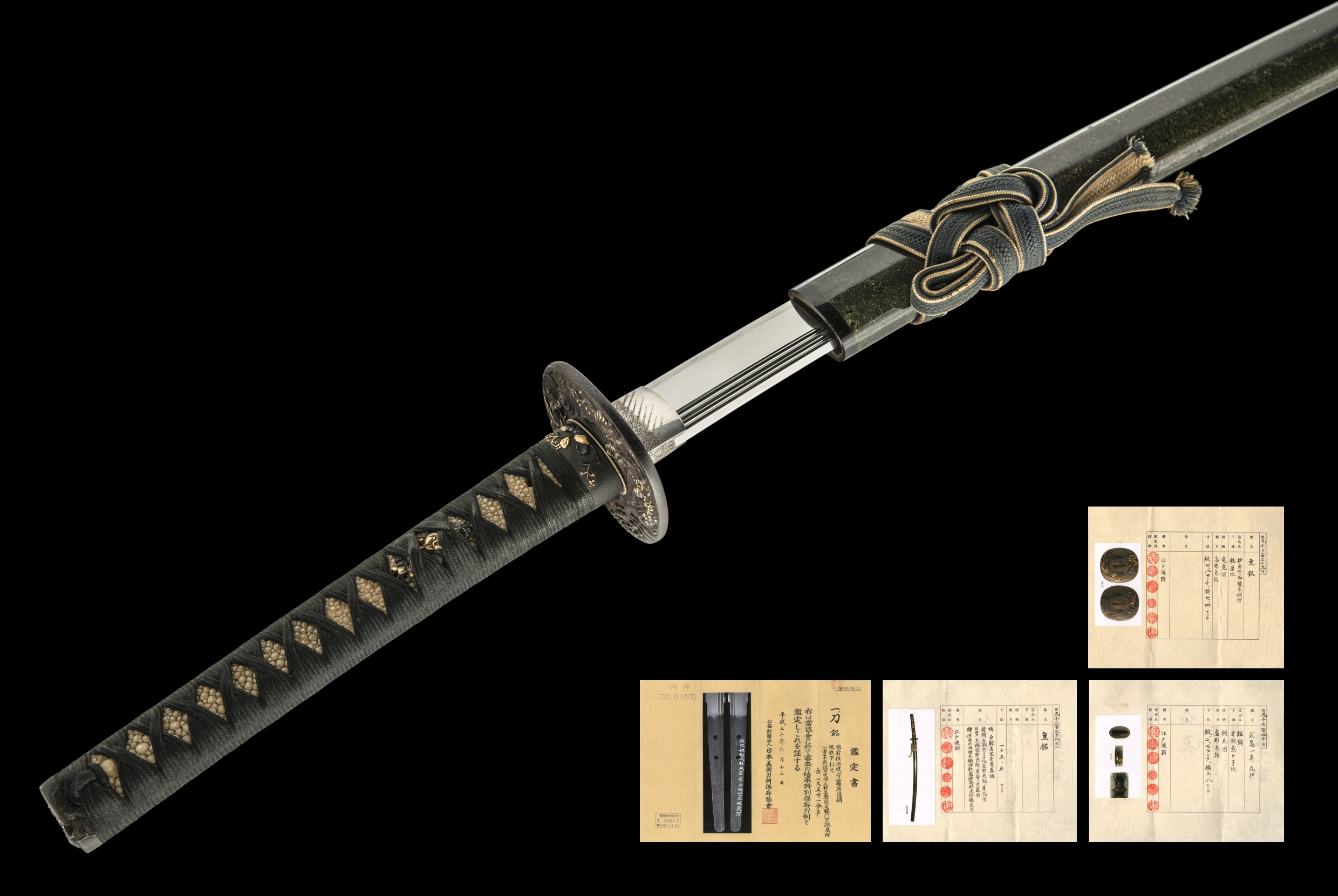
This is one of the most historically charged katana to pass through Unique Japan. Forged by the first generation Kunitsuna of the Echizen-Shimosaka school during the Keian era (1648-1652) – the height of his artistic output – the blade carries a gold-inlaid kinzogan-mei documenting a live cutting test of exceptional rarity. The inscription records that a tester named Sen’a severed through the standing body of a convicted criminal via the tachi-kesa cut (diagonally across the body), followed by the wakige cut (horizontally across the upper torso) – both in single strokes. That such a test is recorded in gold on the nakago speaks to the profound confidence both smith and owner placed in this blade.
Kunitsuna also had the sword’s steel noted directly on the nakago: the inscription jigane oroshi kore o utsu declares that the blade was forged from oroshigane – steel prepared by the swordsmith himself in a small-scale tatara, blending pieces of tamahagane and other steels to precise specification. This was a mark of pride and mastery rarely proclaimed so openly. The blade is long and generously curved, characteristic of work from the Keian era before the flatter Kanbun shape took hold, with twin full-length parallel grooves (futatsuji-bi) adding both visual distinction and structural lightness. The dark jigane is typical of Echizen work, with a mixed itame-hada and masame-hada grain and shirake utsuri visible in areas of the blade. The hamon is based on suguha with weaving notare and ko-gunome, with tooth-like ashi extending into the temper line.
The koshirae is a Late Edo uchigatana-koshirae with a saya lacquered in the rare Tsugaru-nuri technique – a charismatic green-on-black lacquer originating from Aomori prefecture in the 17th century. The iron tsuba is attributed to Edo Tsuchiya Masachika and depicts a roaring tiger and snarling dragon in gold-inlaid relief, with the reverse showing powerful curling waves. The shakudo fuchi is signed by Takeshima Ichiju of the Goto School with his kao, and decorated with elegant paulownia flowers. Menuki depict the auspicious motif of squirrels amongst grapes. Both the tsuba and fuchi-kashira carry NTHK-NPO Kanteisho certificates of authenticity, as does the full koshirae. A silver yujo-habaki with strong slanted file marks completes the mounting. The original torokusho registration card, dated Showa 26 (March 31, 1951) – the very first year swords were formally registered in Japan – suggests this blade was once held by a prominent former daimyo family.
| Item Number | UJKA304 |
| Sword Type | Katana |
| Swordsmith | Kunitsuna (1st generation, Echizen-Shimosaka school) |
| Swordsmith (JP) | 越前住相模守藤原国綱 |
| Signature | Echizen Ju Sagami no Kami Fujiwara Kunitsuna |
| School | Echizen-Shimosaka |
| Province | Echizen |
| Period | Shintô – Early Edo (Keian era: 1648-1652) |
| Nagasa | 76.2cm (ubu) |
| Sori | 1.97cm |
| Moto-haba | 3.0cm |
| Weight | 770g |
| Nakago | Ubu, 20.2cm, 2 mekugi-ana |
| Jihada | Dark jigane with a mix of itame-hada and masame-hada, shirake utsuri |
| Hamon | Notare and ko-gunome based on suguha with teeth-like ashi |
| Certificates | NBTHK Tokubetsu Hozon (issued Heisei 30, June 13, 2018); NTHK-NPO Kanteisho (tsuba, fuchi-kashira and koshirae) |
| Fujishiro Rank | Chu-saku |
| Tameshigiri (JP) | 試刃吹刑人斬人立袈裟及脇□不滅泉阿 |
| Koshirae | Late Edo uchigatana-koshirae (midori-iro Tsugaru-nuri-saya, c. 1780-1868) |
| Tsuba | Iron, tiger and dragon motif with gold inlay, attributed to Edo Tsuchiya Masachika; NTHK-NPO Kanteisho |
| Fuchi-kashira | Shakudo, paulownia flower motif, signed Takeshima Ichiju (Goto School) with kao; NTHK-NPO Kanteisho |
| Menuki | Squirrels amongst grapes motif |
| Tsuka | Black braid over same, with green cord wrap |
| Habaki | Silver yujo-habaki with slanted file marks |
| Catalogue | Catalogue 30 |
| Status | Sold |
| Includes | Shirasaya, Edo koshirae, bags, stand, kit, DVD, printed description |