
ITEM# UJKA495 – Sold
A Sukesada Katana (備前国住長船祐定作)
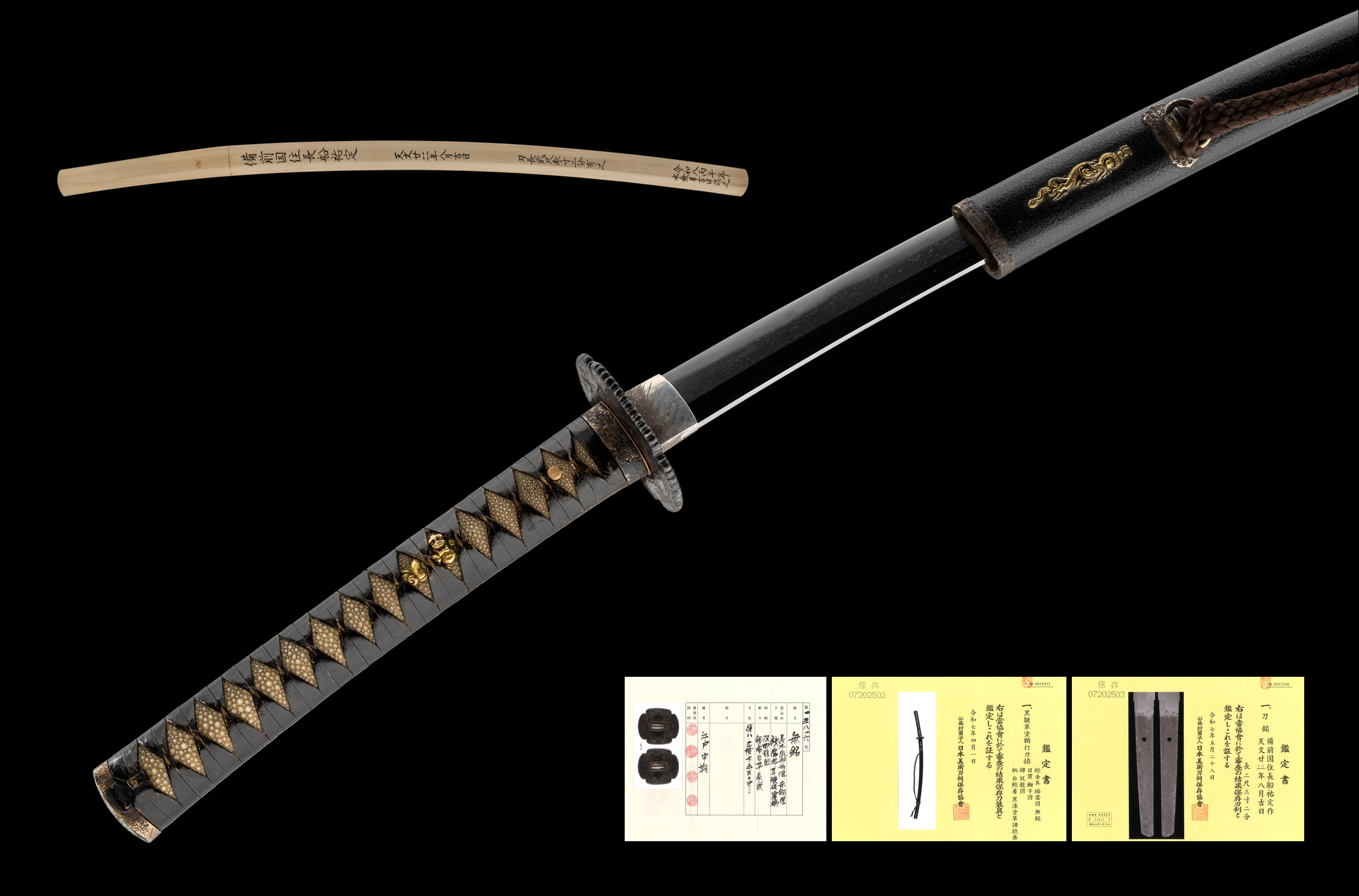
This katana was forged by Osafune Sukesada, one of the most celebrated names in the Bizen tradition and among the most recognised signatures in all of Japanese swordsmithing. Sukesada hailed from Bizen province, a region renowned since ancient times as a kingdom of the sword, blessed with abundant iron and a tradition of forging that produced more fine blades than anywhere else in Japan. As much as seventy percent of surviving masterwork blades are said to originate from Bizen, and among its schools Osafune was held in such regard that the term “Osafune-mono” became synonymous with quality. It is worth noting that “Sukesada” functioned less as the name of a single individual than as a prestigious brand passed down within the school, with as many as sixty different smiths signing their work with it across the generations.
This blade is dated to August 1555, toward the end of the Muromachi period and well into the turmoil of the Sengoku jidai. That same month saw the Battle of Miyajima, in which Môri Motonari defeated Sue Harukata at Itsukushima, a turning point that reshaped the balance of power across the Chûgoku region. With daimyô across the country locked in constant struggle for supremacy, demand for battle-ready swords had reached unprecedented heights, and it was against this backdrop that the Sukesada name came into full command. Though a kotô blade, this katana retains its ubu-nakago and a length exceeding 70cm, with deep sori tending toward koshi-zori and a chû-kissaki carrying a slightly elongated point.
The forging is a vigorous itame with pronounced flowing grain, mixed with clear mokume-hada and showing midare-utsuri throughout. The hamon is a gunome-chôji-midare with sections of gunome-midare and suguha, a bright nioiguchi, accompanied throughout by sunagashi, kinsuji and falling leaves of yô. The Edo-period koshirae is lacquered in black with a lovely ‘wrinkled’ shibo-gawa finish, fitted throughout with a matching set of fittings in a zuiun auspicious-clouds motif that pairs beautifully with the twin dragons adorning the saya. The tsuba, a Nanban-tsuba bearing a rain dragon in silver nunome zôgan, carries the weathered charm of true age, while the menuki depict a pair of shishi beneath a tsuka wrapped in black-lacquered leather over white samekawa. A sayagaki by Nozomi-san, inscribed in the sixth month of Reiwa 8 (June 2026), records the blade’s signature and length. Nearing its 500th birthday, this is a fine samurai sword with an honest, well-preserved presentation throughout.
| Item Number | UJKA495 |
| Sword Type | Katana |
| Swordsmith | Osafune Sukesada |
| Swordsmith (JP) | 備前国住長船祐定作 |
| Signature | Bizen no kuni jû Osafune Sukesada saku |
| Date | Tenbun 24 (August 1555) |
| School | Osafune |
| Province | Bizen |
| Period | Sue-Kotô · Late Muromachi (Tenbun era: 1532-1555) |
| Nagasa | 70.3cm |
| Sori | 2.0cm |
| Moto-haba | 3.01cm |
| Weight | 800g |
| Nakago | Ubu, katte-sagari-yasurime, 1 mekugi-ana, ha-agari kurijiri |
| Jihada | Well-forged itame-hada with mokume-hada, midare-utsuri and chikei |
| Hamon | Gunome-chôji-midare with sections of gunome-midare and suguha, sunagashi, kinsuji and yô |
| Certificates | NBTHK Hozon (sword), NBTHK Hozon (koshirae), NTHK-NPO Kanteishô (koshirae and tsuba, Authentic) |
| Sayagaki | Nozomi-san (shodô artist) – inscribed in the 6th month, Reiwa 8 (June 2026) |
| Koshirae | Edo-period kuro-shibokawa-nuri saya uchigatana-koshirae |
| Tsuba | Nanban-tsuba, iron with silver nunome zôgan, rain dragon design, unsigned |
| Fuchi-kashira | Matching set, zuiun (auspicious clouds) motif, unsigned |
| Menuki | Shishi, gold |
| Tsuka | White samekawa wrapped with black-lacquered leather, morohineri-maki style |
| Habaki | Silver, diagonal file marks depicting falling rain |
| Status | Sold |
| Includes | Shirasaya, Edo koshirae, fabric bags, kit, printed description |