
ITEM# UJKA352 – Catalogue 35 – Sold
A Miyoshi Nagamichi Katana (陸奥大掾三善長道)
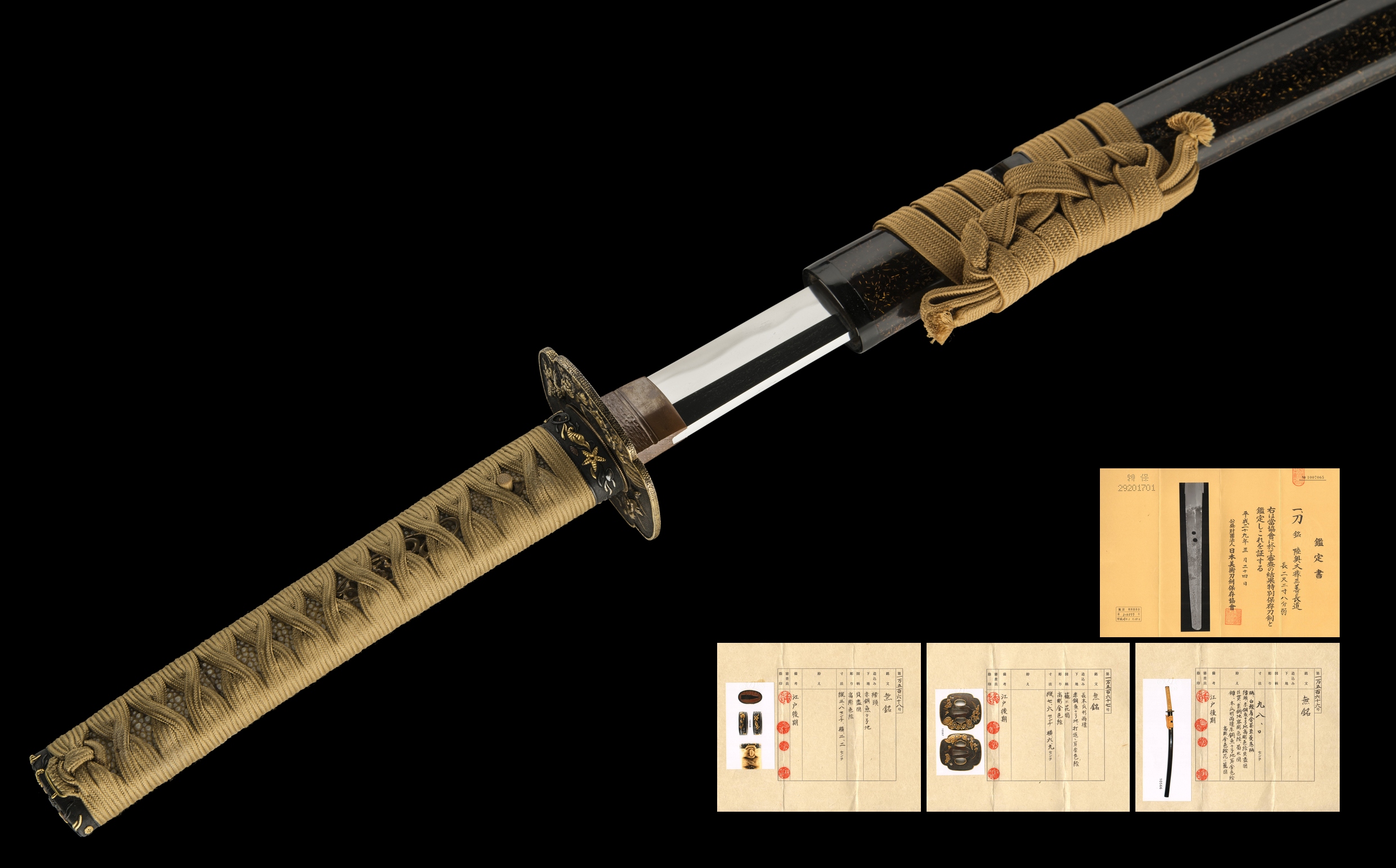
Shodai (first generation) Miyoshi Nagamichi was born Miyoshi Toshiro in Iwashiro province, modern-day Fukushima. His father Masanaga was retained by Daimyo Lord Kato Yoshiaki, and Nagamichi originally signed his blades as Michinaga before changing to Nagamichi in 1659 upon receiving his title of Mutsu Daijô. He stands among the finest smiths of the 17th century – ranked saijô-owazamono by Fujishiro, the highest possible sharpness rating, and earned the nickname Aizu-Kotetsu because his finest works were considered rivals to grandmaster Kotetsu himself.
This katana was freshly polished in 2020 to bring out the classic Nagamichi qualities in full. The jihada is an expertly forged blend of itame and nagare-hada with vivid chikei activity and a delightful shirake-utsuri – that ghostly reflection of the hamon inside the body of the blade, especially visible across the shinogi-ji. The gunome-midare hamon is bright and energetic, its long ashi extending toward the cutting edge like the snow-capped peaks and valleys of Mutsu province itself. The hamon curls magnificently into the boshi. A second mekugi-ana (peg hole) was added at some point in the sword’s life to fit a particular hilt – a common, purely practical occurrence that in no way diminishes the blade, as confirmed by its NBTHK Tokubetsu Hozon certification.
The sword is housed in a handsome late Edo period uchigatana-koshirae with a distinctive shuroge-nuri lacquered saya – black lacquer embedded with fragments of palm fibre that catch the light like scattered pine needles. The mokkô-gata tsuba is shakudô with a fine nanako ground and bountiful gold-accented flowers overflowing from a basket, attributed to the Mino school. The fuchi-kashira depicts seashells and sea life in gold and shakudô with extraordinary detail and are in pristine condition. A new shirasaya and copper habakiwith wood-grain file marks have also been crafted to best preserve the katana for decades to come.
| Item Number | UJKA352 |
| Sword Type | Katana |
| Swordsmith | Shodai Miyoshi Nagamichi |
| Swordsmith (JP) | 三善長道 (初代) |
| Signature | Mutsu Daijô Miyoshi Nagamichi |
| School | Miyoshi (Aizu) |
| Province | Mutsu (Aizu, modern-day Fukushima) |
| Period | Shintô – Early Edo period (Kanbun era: 1661-1673) |
| Nagasa | 69.1cm |
| Sori | 1.70cm |
| Moto-haba | 2.77cm |
| Weight | 665g |
| Nakago | Ubu, kiri-yasurime, 2 mekugi-ana |
| Jihada | Itame-hada and nagare-hada with chikei and shirake-utsuri |
| Hamon | Gunome-midare with long ashi |
| Boshi | Hamon curls into the boshi |
| Certificates | NBTHK Tokubetsu Hozon (issued Heisei 29 / 2017); NTHK-NPO Kanteisho (koshirae, tsuba, and fuchi-kashira) |
| Fujishiro Rank | Jô-saku |
| Sharpness Rating | Saijô-owazamono |
| Koshirae | Late Edo period uchigatana-koshirae (shuroge-nuri saya, c. 1780-1867) |
| Tsuba | Shakudô mokkô-gata with nanako ground, gold-accented flowers-in-basket design; attributed to Mino school, late Edo period – NTHK-NPO Kanteisho |
| Fuchi-kashira | Shakudô with gold and mixed-metal sea life and seashell design; attributed to Mino school, late Edo period – NTHK-NPO Kanteisho |
| Menuki | Kikusui (chrysanthemums floating on water) theme |
| Tsuka | Tan ito-maki, white same |
| Habaki | New copper habaki with wood-grain file marks |
| Catalogue | Catalogue 35 |
| Status | Sold |
| Includes | Shirasaya, Edo koshirae, stand, kit, DVD, booklet, printed description |