
ITEM# UJKA388 – Catalogue 37 – Sold
A Shodai Ippô Katana (一峯)
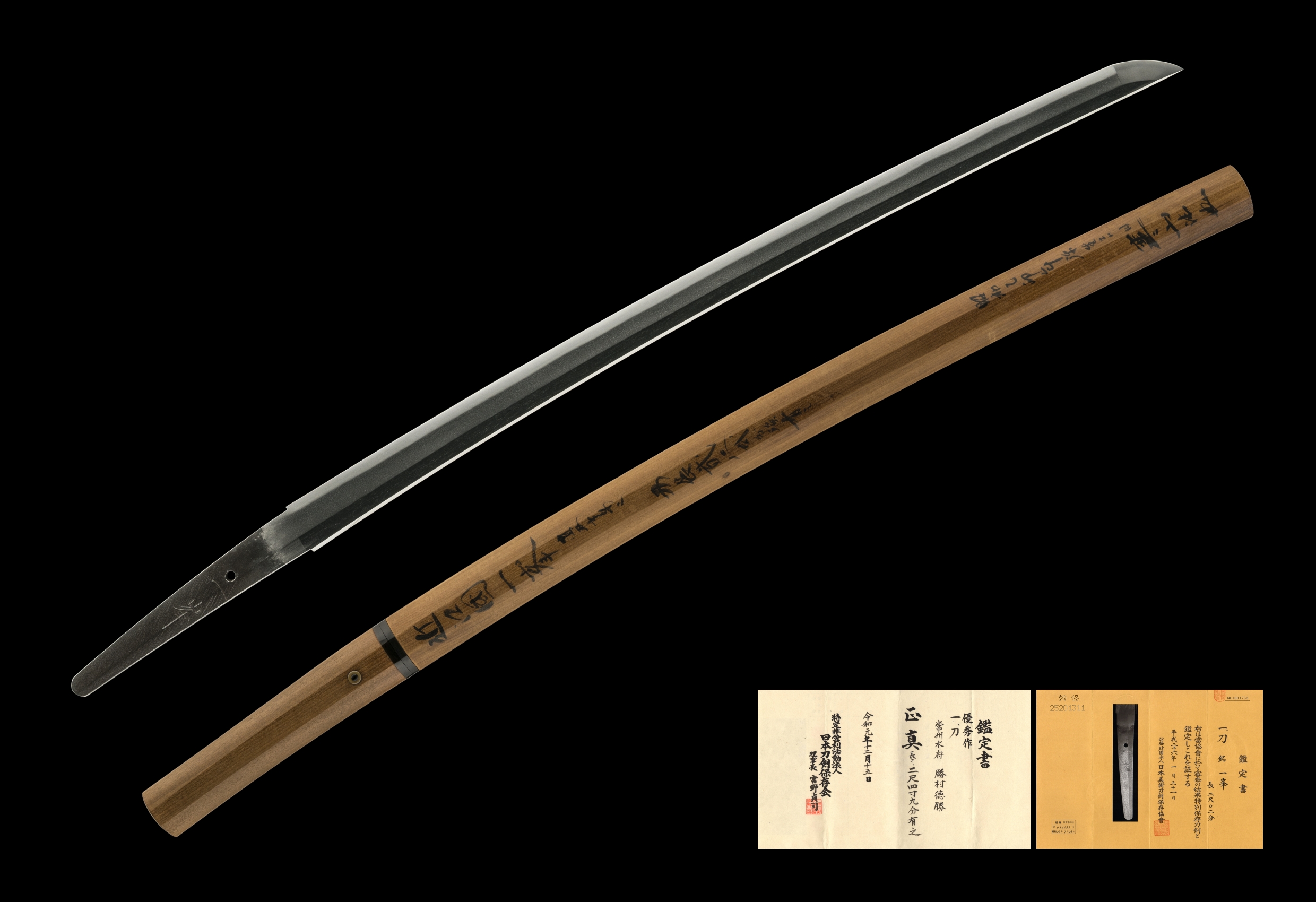
Shôdai (first generation) Ippô was the founder of the Ômi branch of the Ishidô school, working in what is now Shiga Prefecture at the start of the Kan’ei period. The Ishidô school originated at the Sekidô temple in Ômi Province and from there spread across Japan, with smiths establishing branches in Kii Province, Ôsaka, and Edo. While the school became best known for working in the Bizen tradition of the Ichimonji school, this blade takes a markedly different path – it is firmly in the Yamato tradition, which makes it a rare and important reference piece. Swords by Shodai Ippô are considerably scarcer than those of his son Sasaki Ippô, adding further weight to this piece’s collectibility.
The jihada is beautifully forged itame-hada mixed with masame-hada, worked with outstanding consistency throughout the blade. Plentiful chikei animate the steel, confirming the quality of the forging. The hamon is a bright, luminous suguha with ko-midare, ko-ashi, kinsuji, and sunagashi – and, most distinctively, uchinoke: the rare crescent-moon formations of short secondary hamon lines that are a hallmark of the Yamato tradition over well-forged masame-hada. The nie-crystals are clearly visible in the nioguchi, and a faint blue shimmer comes off the blade – the mark of top-class work.
The condition is exceptional in every respect. The nakago is spectacular, showing none of the neglect so often seen on early Edo blades; this is a sword that has been carefully preserved from the beginning. It comes in shirasaya with a gold-wrapped habakibearing diagonal file marks, and includes a sayagaki by Dr. Sato Kanzan inscribed in February 1975. At 61.2cm – just over the baseline requirement for a katana – this is a compact, fighting-length blade of the kind favoured by capable swordsmen for its speed and manoeuvrability. An ideal candidate for a custom koshirae, or simply enjoyed in shirasaya as it stands.
| Item Number | UJKA388 |
| Sword Type | Katana |
| Swordsmith | Ippô (first generation) |
| Swordsmith (JP) | 一峯 (初代) |
| Signature | Ippô (一峯) |
| School | Ômi-Ishidô |
| Province | Ômi (modern-day Shiga Prefecture) |
| Period | Shintô – Early Edo period (Kan’ei era: 1624-1644) |
| Nagasa | 61.2 cm |
| Sori | 1.20 cm |
| Moto-haba | 3.11 cm |
| Weight | 710 g |
| Nakago | Ubu (original, unaltered), sujikai-yasurime (diagonal file marks), 1 mekugi-ana, 16.7 cm |
| Jihada | Itame-hada mixed with masame-hada, plentiful chikei |
| Hamon | Bright suguha mixed with ko-midare, ko-ashi, uchinoke, kinsuji and sunagashi |
| Boshi | Ko-maru |
| Certificates | NBTHK Tokubetsu Hozon / NTHK-NPO Yûshû-saku |
| Fujishiro Rank | Jô-saku |
| Sharpness Rating | Wazamono |
| Sayagaki | Dr. Sato Kanzan — Ômi no Kuni Ippô, suguha deki, dated Shôwa kinoto-udoshi yayoi kichijitsu (February 1975) |
| Habaki | Gold-wrapped with diagonal file marks |
| Catalogue | Catalogue 37 |
| Status | Sold |
| Includes | Shirasaya, bag, stand, kit, booklet, printed description |