
ITEM# UJKA400 – Catalogue 38 – Sold
A Nakajima-Rai Katana (中島来)
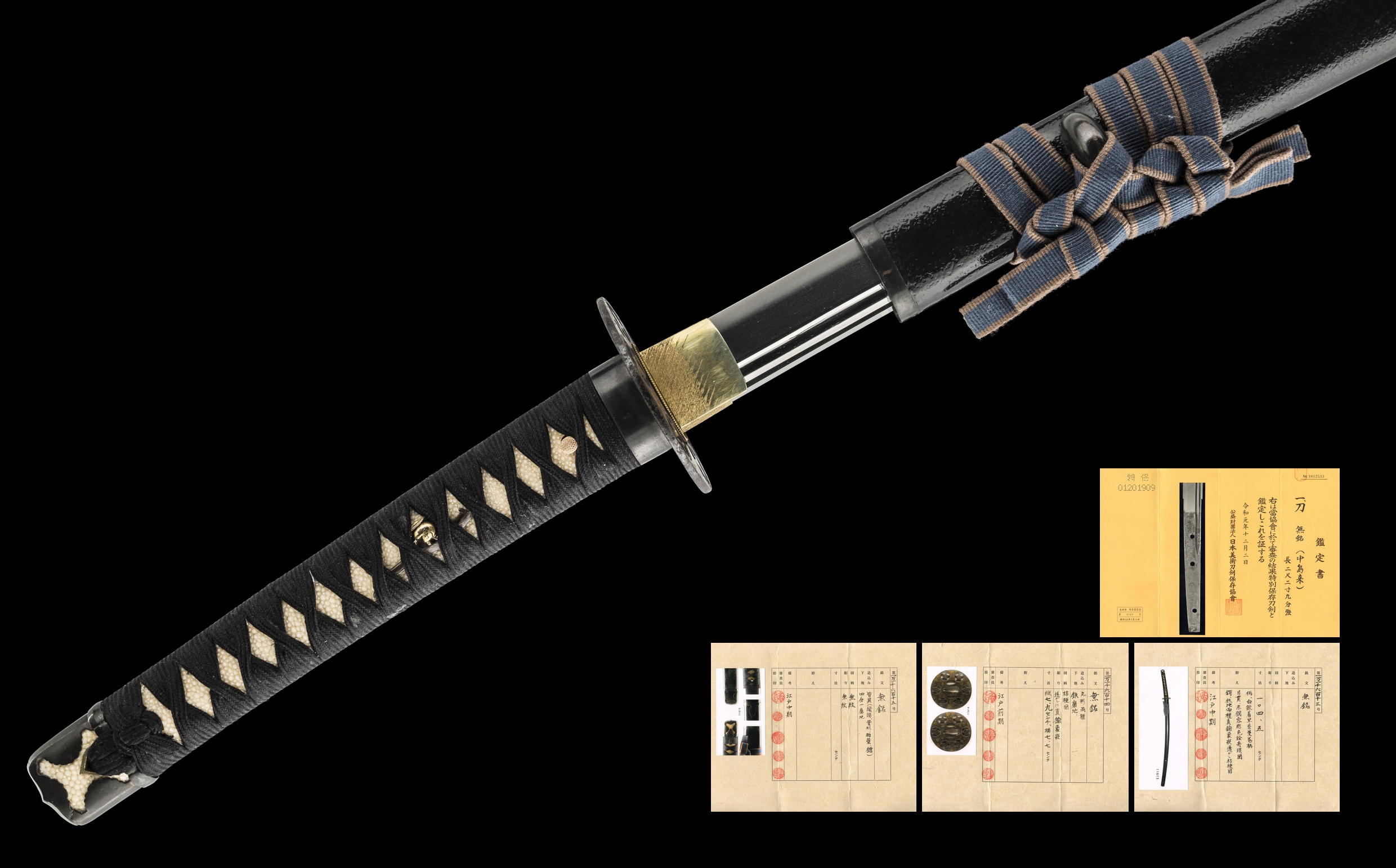
The Nakajima-Rai school is one of the most distinguished branches of the celebrated Rai tradition. Its founder, Rai Kuninaga, was a direct student of Rai Kunitoshi – a swordsmith whose work is designated a national treasure. During the Gentoku era (1329-1331), Kuninaga left Kyôto and relocated to the Nakajima district of Settsu province, earning the name “Nakajima-Rai.” He continued to forge in the refined, elegant manner of the Rai school, but with the broader, more robust proportions demanded by the turbulent age in which he lived.
This blade is an outstanding example of Nambokuchô-period workmanship. Originally forged as a long tachi, it has been shortened at least twice over the centuries – a nakago with three mekugi-ana and distinctly different patina zones tells the full story of each successive shortening, from early-mid Muromachi through to the early Edo period. The body is wide and powerful, and the jihada is a vivid mokume enriched by ji-nie and an abundance of flowing chikei. The hamon runs in a clean, bright suguha-chô with ko-nie-deki, varied with ko-gunome, active ashi and delicate yô. The bôshi is a smooth ko-maru with a line of kinsuji piercing through the tip – a refined and compelling detail. The bôhi on both sides carries into the nakago as kaki-nagashi, a feature consistent with the Nambokuchô attribution.
The sword comes in an elegant Edo-period handachi-koshirae with a complete matched set of shibuichi fittings certified authentic by the NTHK-NPO, and a polished iron tsuba attributed to the Yoshihiro school featuring brass-inlaid kikyô no zu (bellflower) openwork. Tanobe Michihiro (Tanzan-sensei) wrote the sayagaki on the shirasaya in the sixth month of the year of the boar (June 2019), describing the blade as a masterwork of Kuninaga and praising its exquisite steel and refined suguha hamon.
| Item Number | UJKA400 |
| Sword Type | Katana (o-suriage) |
| Attribution | Nakajima-Rai (o-suriage mumei) |
| School | Nakajima-Rai (branch of Rai school) |
| Province | Settsu |
| Period | Kôtô – Nambokuchô period (Shôhei era: 1346-1370) |
| Nagasa | 69.5cm |
| Sori | 1.2cm |
| Moto-haba | 2.90cm |
| Weight | 660g |
| Nakago | O-suriage, 3 mekugi-ana (one filled), kaki-nagashi hi |
| Jihada | Vivid mokume mixed with ji-nie and abundant chikei |
| Hamon | Suguha-chô in bright nioguchi, ko-nie-deki mixed with ko-gunome, ashi and yô |
| Boshi | Ko-maru with kinsuji |
| Certificates | NBTHK Tokubetsu Hozon; NTHK-NPO Kanteisho (tsuba, koshirae & fittings) |
| Fujishiro Rank | Jô-saku |
| Sayagaki | Tanobe Michihiro (Tanzan-sensei) – Nakajima-Rai, attributed to Kuninaga, dated June 2019 (year of the boar, Reiwa 1) |
| Koshirae | Edo-period handachi-koshirae, shibuichi-ji mumon-kaigu (matching plain shibuichi fittings), mid-Edo period (1700-1780), NTHK-NPO certified |
| Tsuba | Polished iron, attributed to Yoshihiro school (from Heianjo-zôgan school); brass-inlaid kikyô no zu (bellflower) openwork; early-Edo period (1603-1700); NTHK-NPO certified |
| Menuki | Gilt, man on a boat (fisherman motif) |
| Habaki | Gold-wrapped, rain-pattern file marks |
| Catalogue | Catalogue 38 |
| Status | Sold |
| Includes | Shirasaya, Edo handachi-koshirae, fabric bags, stand, kit, booklet, description |