
ITEM# UJKA413 – Catalogue 39 – Sold
A Naoe-Shizu Katana (直江志津)
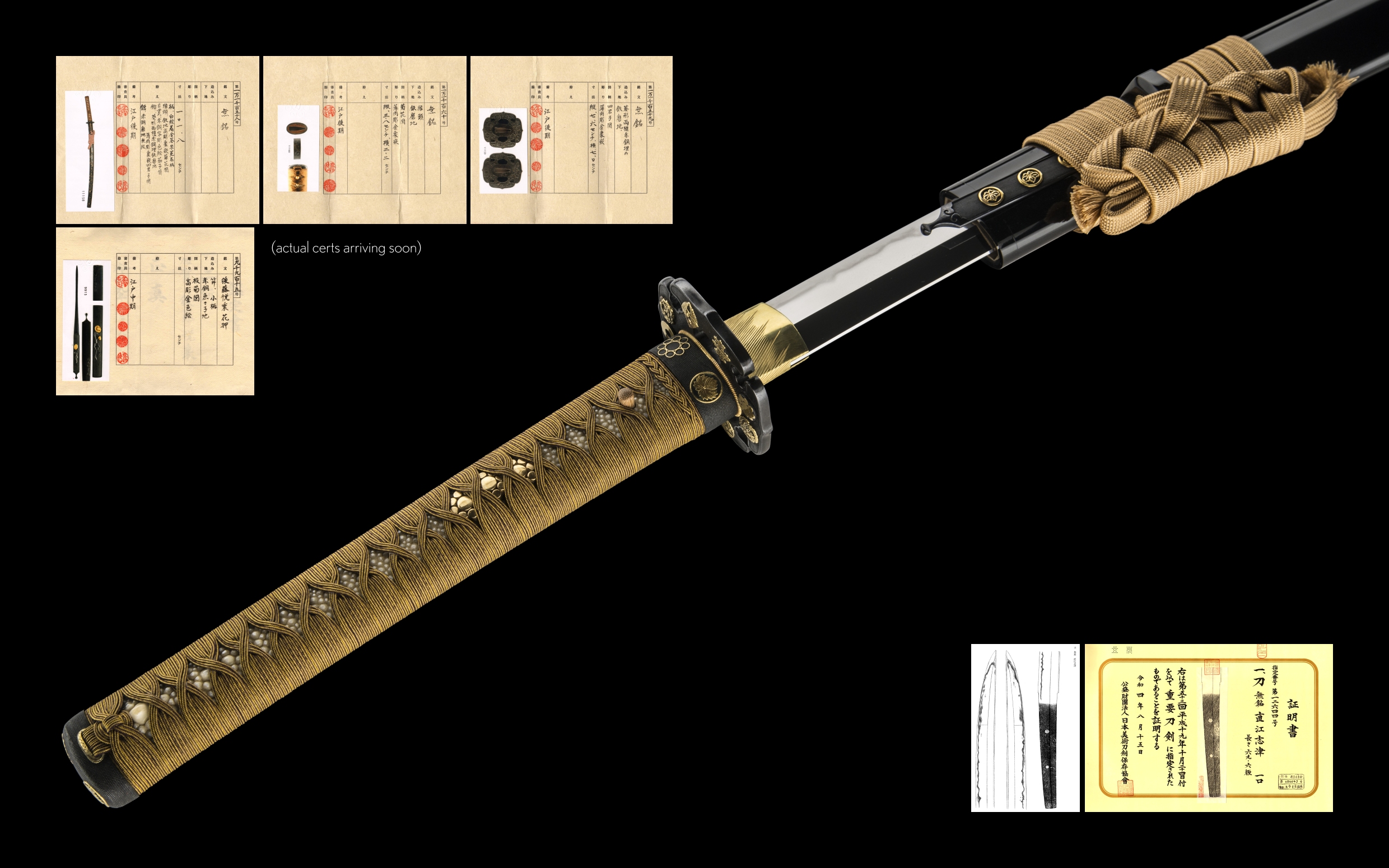
This is an imposing blade – the real thing. What began life as an *ôdachi* of perhaps 80cm or more has survived six and a half centuries in shortened form, and the passage of time has done nothing to diminish its authority. The *ô-kissaki* alone measures over 11.5cm, towering above the blade line in the manner that defines Nambokuchô grandeur. The *sugata* is everything the Naoe-Shizu school is known for: wide *mihaba*, dramatic tip, bold posture. Nagayama Kokan was not exaggerating when he wrote that these qualities lend themselves to a grand appearance.
The steel rewards close study. The *jihada* is a vivid mixture of *itame*, *mokume* and *nagare-hada*, animated throughout by deep rivers of *chikei* and generous *ji-nie*. The *hamon* runs in a gently undulating *notare* base that churns with *gunome*, *togari-gunome*, *ko-nie*, *tobiyaki*, *yô*, *sunagashi* and *kinsuji* – classic Naoe-Shizu energy, grounded in the Mino tradition’s hallmark *togari*. The NBTHK Jûyô judging panel noted the blade’s healthy *jiba* as central to its attribution. Designated at the 53rd session in 1997, the certificate was subsequently lost; the NBTHK conducted a fresh in-person examination in 2022 and issued a *shômeisho* confirming authenticity.
The koshirae is a statement piece in its own right. The *kuro-ro-nuri* lacquered scabbard is fitted with a spectacular iron *tsuba* bearing gold-inlaid *kamon* from numerous noble families – *kuyô-mon*, *botan*, *hôô*, *kiku*, *ageha-chô* and more – certified to a *tachi* metalsmith of the mid-Edo period. The *fuchi-kashira* continue the family crest theme with *kuyô-mon* and ivy rendered in gold. *Menuki* display the *kuyô-mon* of the Hosokawa daimyô clan. The *tsuba* was signed by the metalsmith Naoyoshi. Completing the ensemble: a gold-wrapped *habaki* with diagonal file marks and a shirasaya in fine *ho* wood.
| Item Number | UJKA413 |
| Sword Type | Katana (ô-suriage, shortened from ôdachi) |
| Attribution | Naoe-Shizu school (mumei, ô-suriage nakago) |
| School | Naoe-Shizu |
| Province | Mino |
| Period | Nambokuchô (circa 1338-1367) |
| Nagasa | 69.6 cm |
| Sori | 1.55 cm |
| Moto-haba | 2.83 cm (catalogue) / 2.88 cm (measured) |
| Weight | 735 g |
| Nakago | Ô-suriage mumei, 17.8 cm, 2 mekugi-ana |
| Jihada | Vivid itame-nagare tending to masame, with chikei and plentiful ji-nie |
| Hamon | Ko-nie-laden notare, wide nioiguchi, mixed with gunome, togari-gunome, ashi, tobiyaki, kinsuji and fine sunagashi |
| Boshi | Ô-kissaki, 11.62 cm |
| Certificates | NBTHK Jûyô Token (53rd session, 1997) – Shômeisho No. 12644 (reissued August 2022); NTHK-NPO Kanteisho (koshirae, tsuba, fitting, kogai) |
| Fujishiro Rank | Jo-saku |
| Koshirae | Kuro-ro-nuri uchigatana-koshirae (black lacquer), crafted during the Modern period |
| Tsuba | Iron, kamon-zukushi with gold-inlaid family crests (kuyô-mon, botan, hôô, kiku, ageha-chô and others); certified to a tachi metalsmith, mid-Edo period (1700-1780); signed Naoyoshi with kaô |
| Fuchi-kashira | Iron with shakudô nanako ground; gold kuyô-mon and ivy kamon inlay |
| Menuki | Gold kuyô-mon (Hosokawa clan crest) |
| Tsuka | Gold and brown silk braid (hishi-maki); same-gawa under wrap |
| Habaki | Gold-wrapped with diagonal file marks |
| Catalogue | Catalogue 39 |
| Status | Sold |
| Includes | Shirasaya, kamon koshirae, stand, kit, booklet, printed description |