
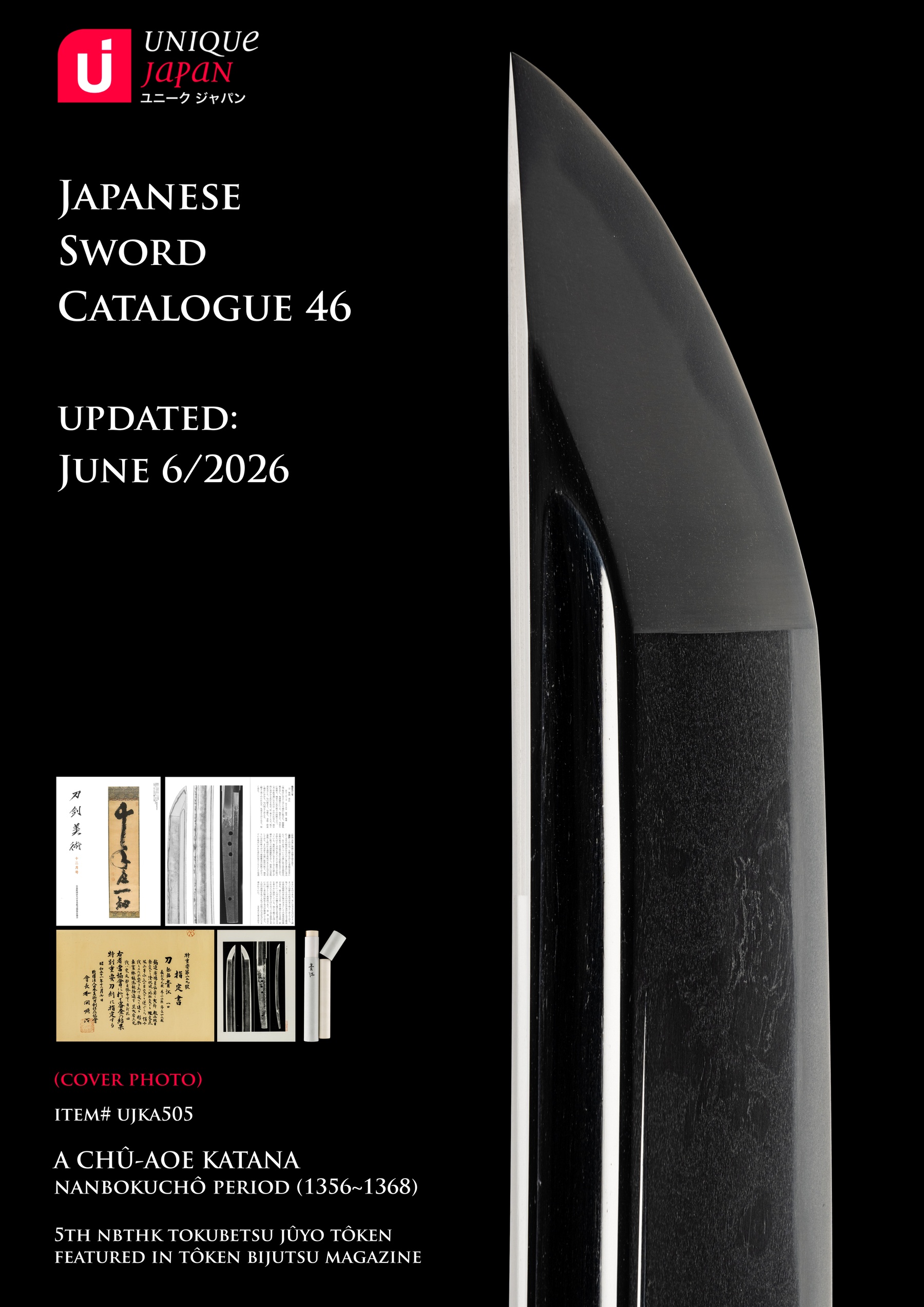
⇩ Download Catalogue 46 (220MB)
Free to download. Several swords in this catalogue remain available.
Index of Swords
Opening Remarks
Hi everyone, I hope your 2026 is off to a flying start. My son Lennon and I are still coming down from our December climb to the summit of Mount Kilimanjaro. It’s been just over a month, and I’m still processing the experience. Standing at 5,895 metres with my sixteen-year-old son beside me, watching the sun rise over Africa — both of us totally exhausted — that’s a memory forged in commitment and effort. It reminded me why we do hard things: not for the comfort, but for what they give us. I encourage you to forge your own memories this year, and make them count!
These ten swords in Catalogue 46 were forged the same way — through commitment, discipline, and an unwavering dedication to excellence. They have survived centuries because someone took responsibility for them. Now it’s our turn. I am tremendously proud of this catalogue and the efforts of our hard-working Unique Japan team that helped make it happen.
We open with an exceptionally long and near-ubu reference piece by prominent early Uda school smith Tomotsugu, at an impressive 81.6cm. This blade embodies the transition from Kamakura tachi to Muromachi katana — Yamato discipline meeting Sôshû influence in a blade that combines itame, mokume, and classic masame-hada with bright suguha and impactful hataraki. The Edo period koshirae features a stunning Muromachi Ko-Kinkô wave tsuba with crab fuchi-kashira and lobster menuki.
Next is a rare and dated blade by Mishina smith Jôshû Kunishige, forged during the tense months between pacification and rebellion under Tokugawa Iemitsu’s iron rule. Clear Shizu influence with dynamic $1, kinsuji, and togari. A late Edo handachi koshirae with exquisite nagashi-nuri saya echoes the wood-grain patterns within the blade. This sword was once owned by Dr. Katsumi Toriumi and was confiscated by U.S. Forces in November 1945. Now its journey continues — remarkable.
A weighty, powerful, extra sharp katana attributed to Chiyôzuru Morihiro follows, from the late Nambokuchô period in Echizen province. Rich dark jigane with abundant chikei, bright suguha mixed with ko-midare, saw-tooth ashi, and sunagashi. A kinzogan-mei confirms a tameshigiri test severing through the armpit — kôtô-tested blades are exceptionally rare. A handsome koshirae with striped senden-nuri saya, a tsuba depicting the heroic Minamoto Yorimasa, and a splendid Munetoshi fuchi-kashira complete the package. A sayagaki by Tanobe sensei is planned.
The centrepiece of the catalogue is a museum-quality Chû-Aoe katana awarded Tokubetsu Jûyô in December 1976 at only the fifth session — among an elite group of ten ô-suriage mumei Aoe blades to achieve Tokubetsu Jûyô on merit alone. This blade was also selected as an NBTHK study sword in November 2025, with nearly all examiners identifying it correctly. Wide mihaba, magnificent ô-kissaki, refined chirimen-hada with iconic sumihada, and precise suguha with saka-gunome — every Aoe characteristic in textbook execution. The definitive 14th-century Nambokuchô Aoe. This is nihôntô.
An exceptionally rare daishô follows — a katana and wakizashi both crafted by Kazusa no Suke Kaneshige, and both tameshigiri-tested, severing two bodies each, with results gold-inlaid by Yamano Kanjûrô Hisahide just fifteen months apart. The signature Kotetsu-like approach: tight itame with bright ji-nie, thick nioiguchi, and wavy $1 gleaming like fresh snow. A mismatched koshirae is available, or consider building a top-quality authentic daishô with Unique Japan. A sayagaki by Tanobe sensei will be arranged.
A superb katana by shodai Tadatsuna reflects precise Awataguchi forging skills with a mesmerising gunome-chôji-midare, impressively long kinsuji, and brushed sunagashi. The elegant Edo koshirae features a rich red lacquer saya, a marvellous gold-laden tsuba attributed to armourer Myôchin Munehisa, and terrific menuki in the form of lotus flowers. Signed with pride by a true Shintô leader of the Ôsaka-Shintô tradition — a terrific overall package to cherish.
An admirable blade from one of the five Yamato-den traditions follows — a Shikkake katana, based behind Tôdaiji temple. It retains a clean, graceful silhouette with glorious shikkake-hada that combines mokume with straight masame in the yakiba. Bright ko-gunome with ashi, sunagashi, kinsuji, and tobiyaki. A gorgeous koshirae features a luxurious mokume-style black and gold lacquer saya echoing the jihada, a signed Chôshû Tomonori lotus tsuba, and powerful cloud-dragon menuki embodying ferocity and protection. A sword that will look incredible in any home or office.
An elegant katana by Nidai Harima no Kami Tadakuni showcases the evolved Hizen aesthetic of the Enpô era. His signature konuka-hada with smooth ko-itame scattered with ji-nie shimmers like silk, and subtle midare-utsuri drifts across the surface. Chû-suguha mixed with ko-midare and thick clusters of nie. A brilliant koshirae features a cloud-inspired Ichiryô fuchi-kashira, a Jakushi dragon tsuba, and a stunning mother-of-pearl saya that catches the light like dragon scales.
A rare signed and dated tantô to December 1555 follows — crafted by a twenty-one-year-old Fujiwara Kanefusa, later known as Wakasa no Kami Ujifusa, one of Oda Nobunaga’s most distinguished smiths. Bold, dynamic $1 with huge tobiyaki islands and pointed Mino togari. An experimental spirit that is palpable under the light. Refined, understated koshirae: black ishime saya, gold kirimon on hamidashi tsuba and kozuka. Young fire in formal samurai attire.
We close with an imposing Shinshintô period katana by Koyama Munehira, father of maestro Koyama Munetsugu, inspired by powerful mid-1300s Nambokuchô blades. 71.0cm, 930g, lethal. A gorgeous sashikomi polish showcases the gunome-chôji-midare hamon, well-forged itame, and mokume-hada. As this sword is unsigned and in shirasaya only, it can be offered at a very reasonable price — a learning and inspiring piece with which to enter the world of Japanese swords.
This is a big anniversary year for Unique Japan — we launched in June 2006, twenty years ago. Where does the time go. I want to thank you for two decades of trust and support. Your enthusiasm means the world to me and the team. You’ll notice even more historical research in these pages. We are dedicated to constantly strengthening our catalogues and advancing the standard for how Japanese swords should be presented and understood. It’s a responsibility we take seriously. And if you find yourself travelling to Tokyo, be sure to book a private meeting with us.
We look forward to serving you.
Warm regards,
Pablo Kuntz
January 2026