
Resource Article – Written by Pablo Kuntz, Founder of Unique Japan
7 Points to Consider When Choosing Your Japanese Sword
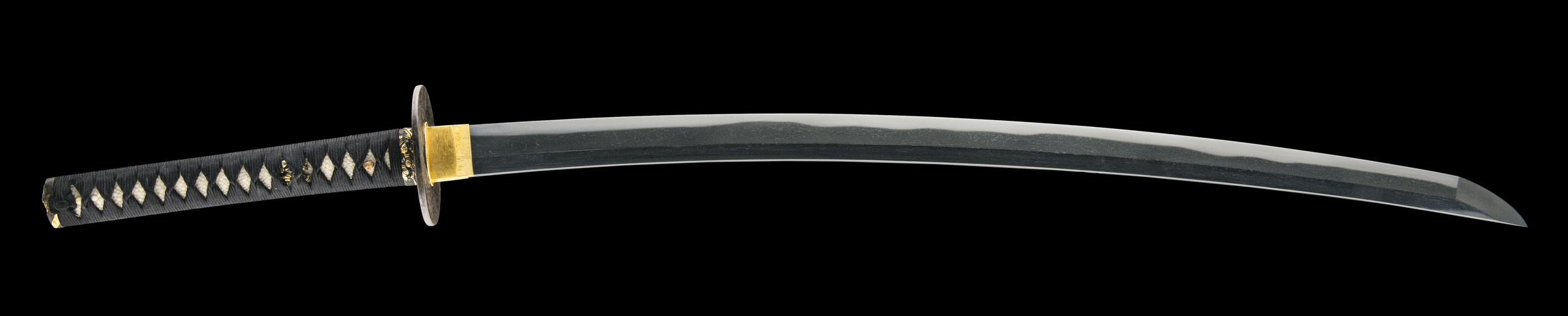
My name is Pablo, founder of Unique Japan. Welcome, and thank you for taking the time to read this.
I first arrived in Tokyo from Montreal in November 1993, and for nearly twenty years Japan was home. It was during those later years that I became a collector of Japanese swords – and honestly, I had no idea when I started that it was even possible to own a sword that was five or six hundred years old. But it is certainly possible, and the lasting impact these objects have had on my life – and on the lives of our clients – has been genuinely profound.
I wrote this article to share what I have learned from my late sensei (Osawa-san) and other sword experts in Japan, from fellow collectors, from books, and from the many remarkable clients who have put their trust in us over the years. Consider it a practical guide to the world of collecting Japanese swords, written with the collector in mind rather than the casual reader.
Below are seven points I’d encourage you to consider before embarking on the great journey of Japanese sword ownership.
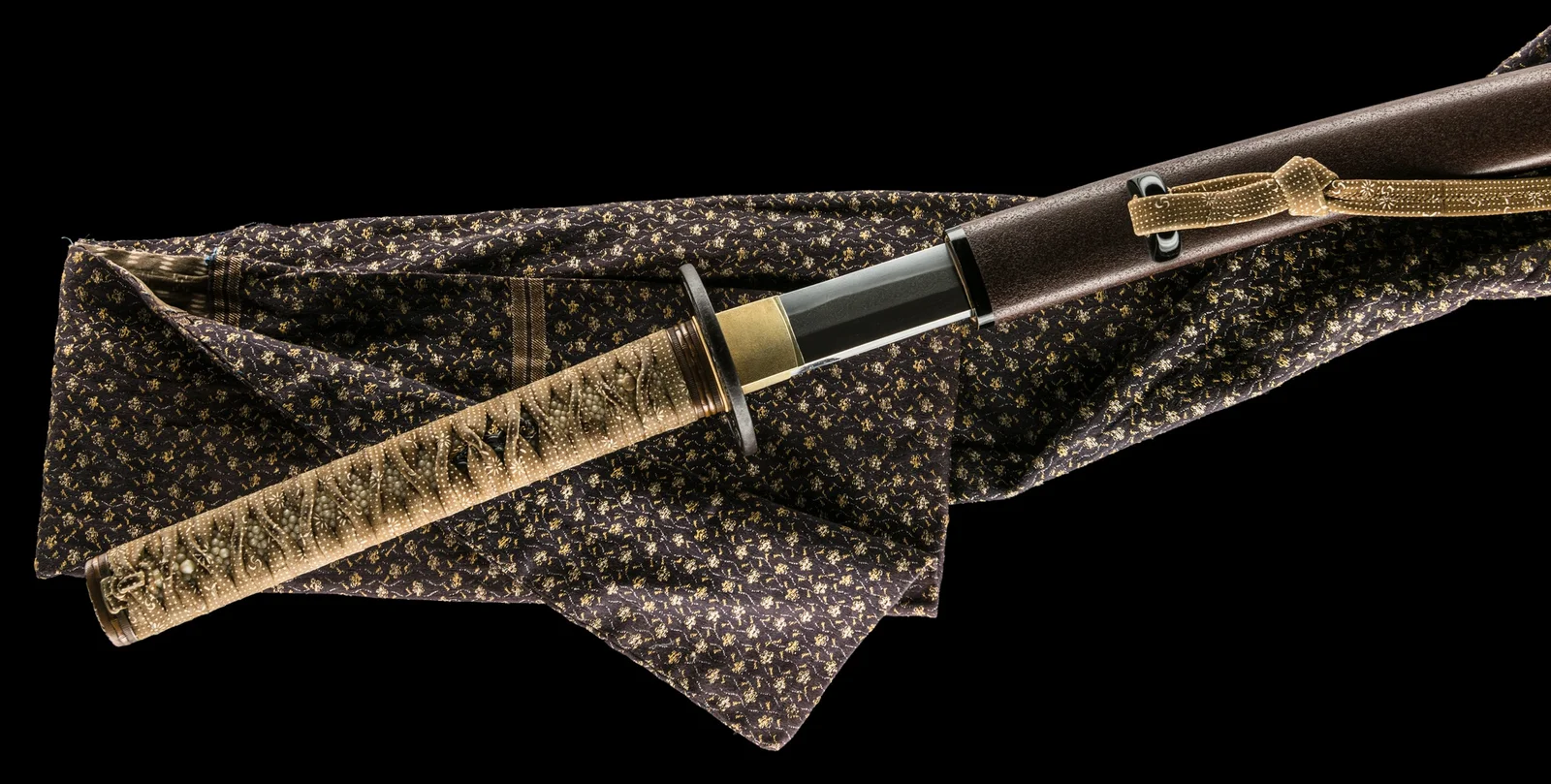
| Quick Navigation | |
| Point 1 | The Sword and What It Represents |
| Point 2 | Types of Swords |
| Point 3 | When It Was Made |
| Point 4 | Budget |
| Point 5 | The Steel and Its Structure |
| Point 6 | Sword Mountings (Koshirae) |
| Point 7 | Certificates of Authenticity |
Point 1: The Sword and What It Represents
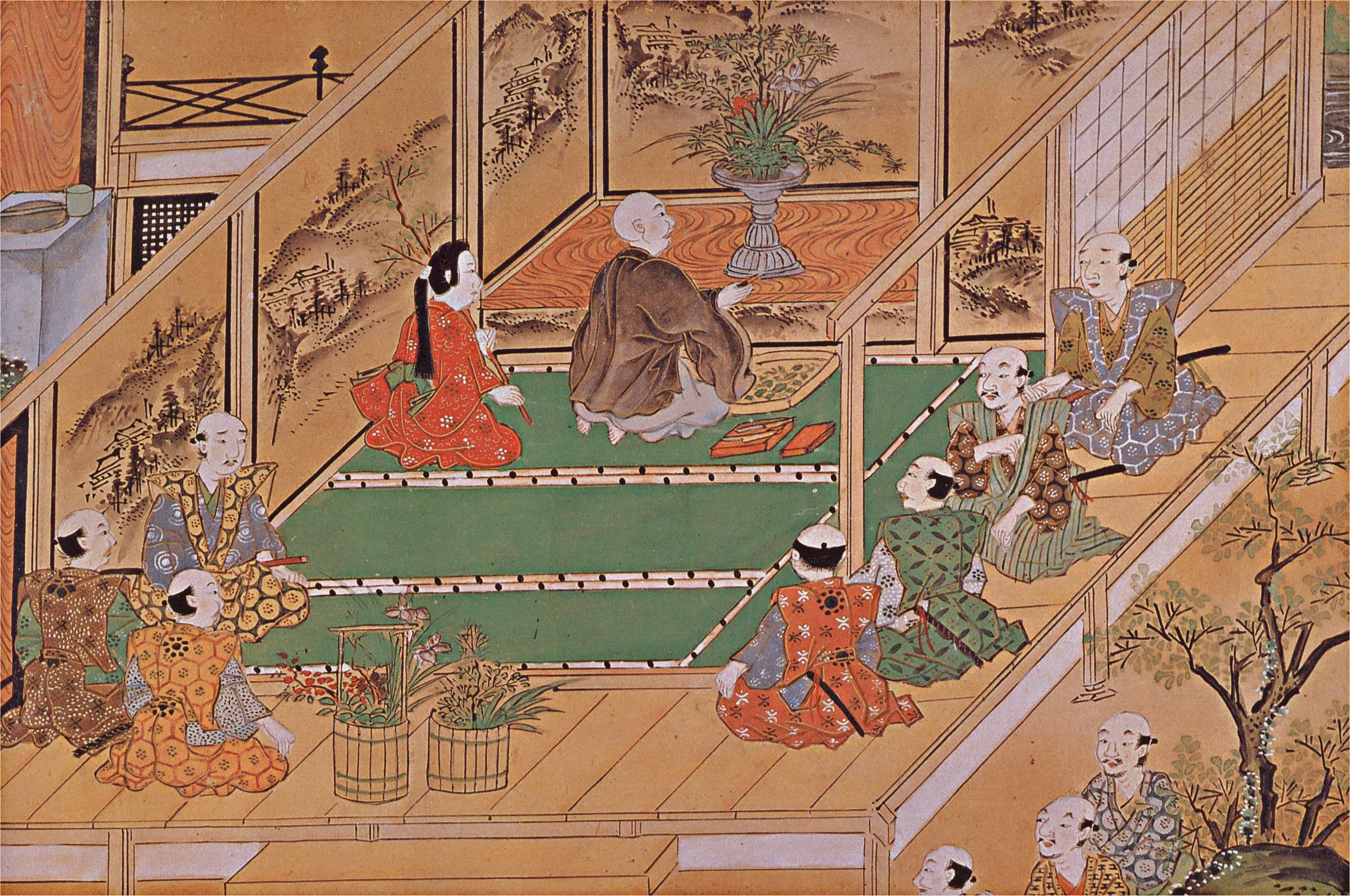
In no other culture has the sword been developed to such a level of technological excellence, and attained such a position of spiritual importance, as in Japan.
As Michihiro Tanobe (Tanzan-sensei or Tanobe-sensei), former Senior Managing Director of the NBTHK, and someone whom I visit regularly in Japan, once wrote:
“The Japanese people have traditionally expected objects to have artistic beauty in addition to practical excellence. Iron is a material with a shiny and cold quality, but the Japanese were able to give it life and make it bloom as an artistic object.”
That says it all, really. And yet what continues to astonish me is that the Japanese sword was essentially perfected around 1000 AD – that wasn’t a misprint. For over a thousand years, swordsmiths to this day measure their finest work against masterpieces forged during the Heian period (794-1185) and Kamakura period (1185-1333). In a world driven by the next upgrade, here is an art form that simply does not need to be improved. It needs to be cherished.
The samurai were the elite warrior class of Japanese feudal society (1185-1868), and their sword was the symbol of everything they stood for. They were guided by Bushidô – an unwritten code of honour, loyalty and personal discipline. Not merely fighters, the samurai were also men of culture: students of poetry, calligraphy, and the tea ceremony. In short: a class act.
Their sword embodied that commitment. As the first shogun of the Edo period Tokugawa Ieyasu famously said, “The sword is the soul of the samurai.”
No matter what your profession; be it a member of the Armed Forces, a medical doctor, a pilot, an entrepreneur, a police officer, a corporate executive, a solicitor, an investment banker, an actor, a musician, a computer programmer, a professional athlete – owning a samurai sword is a symbol of the modern-day warrior and his or her commitment to a life filled with COURAGE, PURPOSE and ADDING VALUE.
In Shinto belief, a sword can serve as a yorishiro – an object that by its nature attracts sacred energy. Many swords in Japan’s great shrines are venerated as objects of spiritual healing. That dimension never quite leaves a sword, no matter where it travels.
What I have come to understand over the years is that for most of our clients, the sword becomes a deeply personal symbol – of their relationship with Japan, of a chapter of their life, maybe a martial art they have practiced, of values they hold. It stands for something. And that matters.
Point 2: Types of Swords
The western world is generally familiar with the long katana seen in films and books. The samurai, however, had more types of swords at his disposal. Here are the key ones to know.
The Tachi
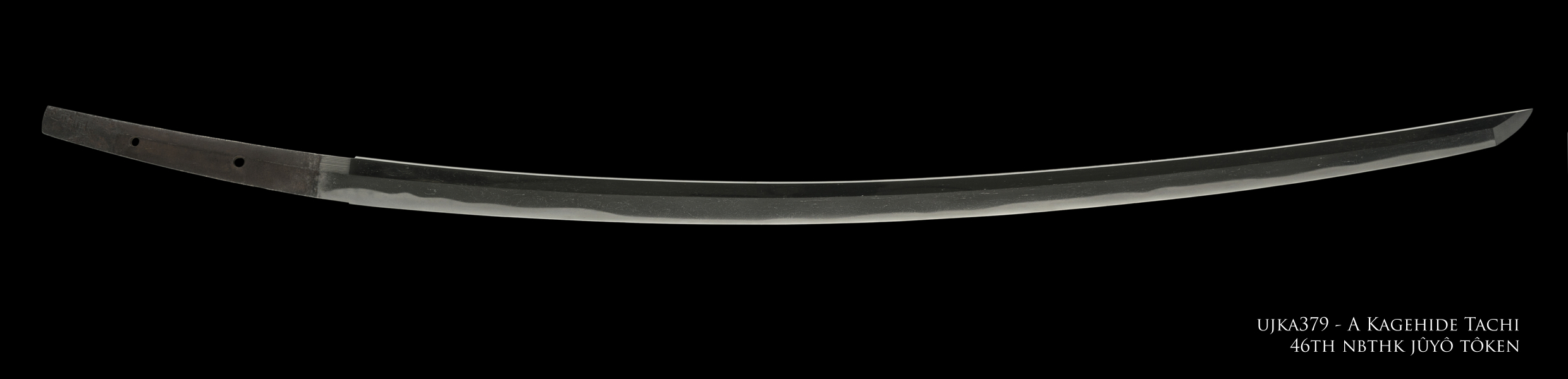
Tachi were long curved swords used by armoured samurai on horseback from the Heian period (794-1185) into the Kamakura period (1185-1333). Loosely suspended from the belt with the edge downward, they could be drawn efficiently for cutting down enemy foot soldiers – this is how many battles were fought, above the ground, on horseback.
It’s hard to put into words the magnificence of holding a tachi that is over 700 years old. They are graceful in shape while exuding a very real ruthlessness. For serious collectors, the finest tachi represent the pinnacle of this pursuit – in my opinion, the most majestic swords ever made. Certified NBTHK Jûyô Tôken and Tokubetsu Jûyô Tôken examples are swords to strive for if funds allow.
Tachi should be displayed with the blade facing downward – as if smiling. And you’ll be smiling too!
The Katana
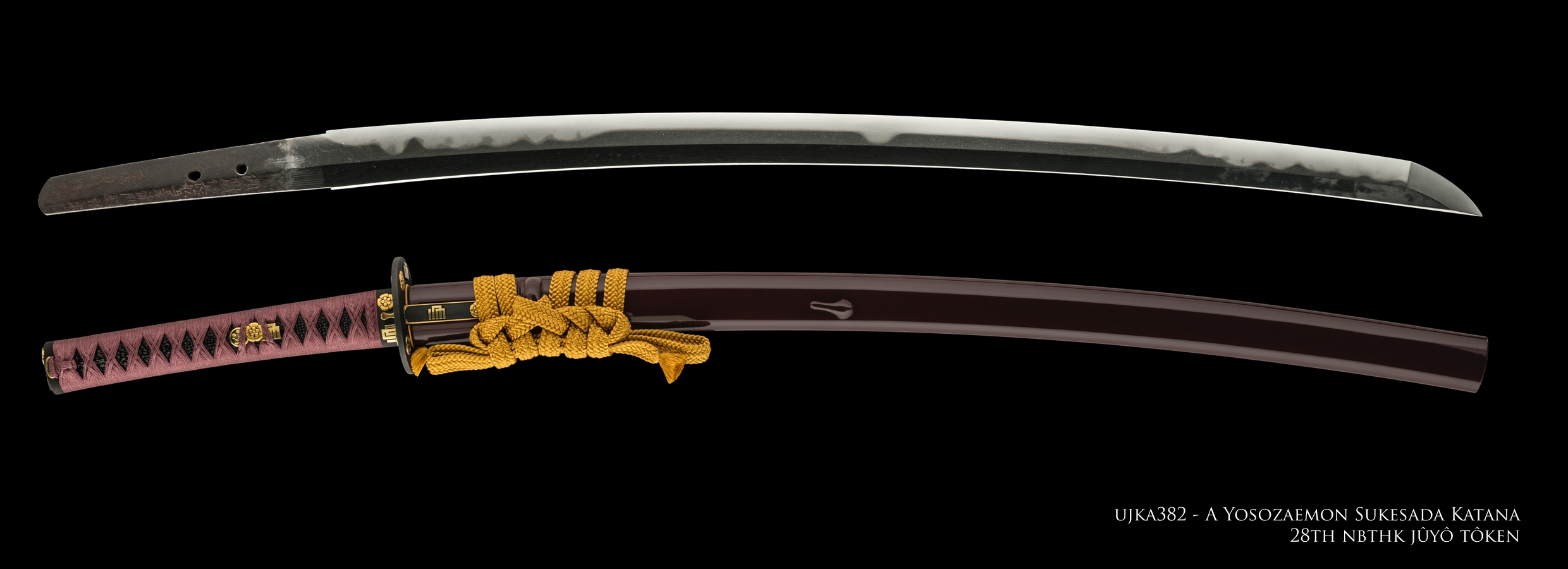
The katana emerged during the Muromachi period (1392-1573) as warfare shifted from mounted combat to large infantry engagements. Worn edge-upward through the belt, it could be drawn and cut in a single, fluid motion – in reality a samurai duel was most often over in an instant. A sword longer than two shaku (60.6cm) is classified as a katana.
From the Edo period onwards, katana became longer and somewhat heavier, with less curvature than their kôtô predecessors. Only the samurai class were permitted to carry the katana during the Edo period. This is the sword most people picture when they think of the samurai.
The Wakizashi
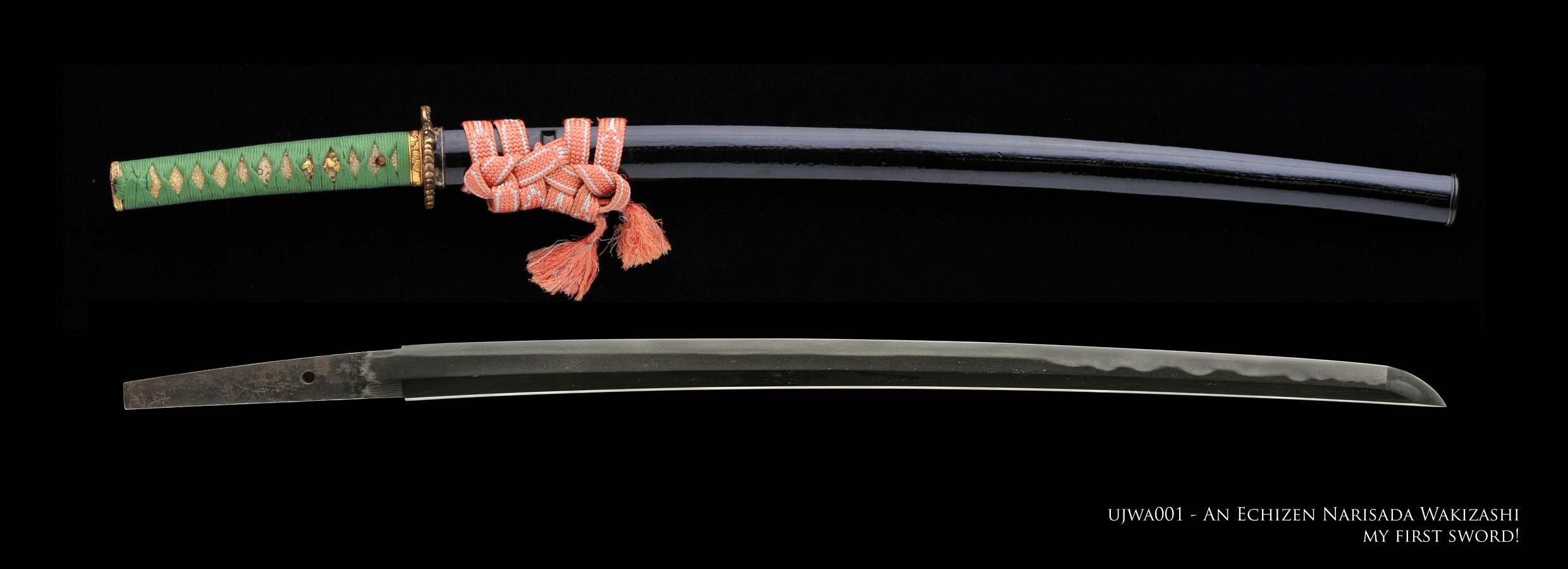
I am personally rather fond of the wakizashi, probably because it was the very first sword that I acquired! It was the sword the samurai carried at all times – including indoors, where the length of the katana was impractical. Between one and two shaku in length (30.3-60.6cm), it was always the closest sword to his body. One could argue it is more symbolic of his spirit than the katana. Together they formed the daishô – the paired swords that were the exclusive privilege of the samurai class.
The Daishô
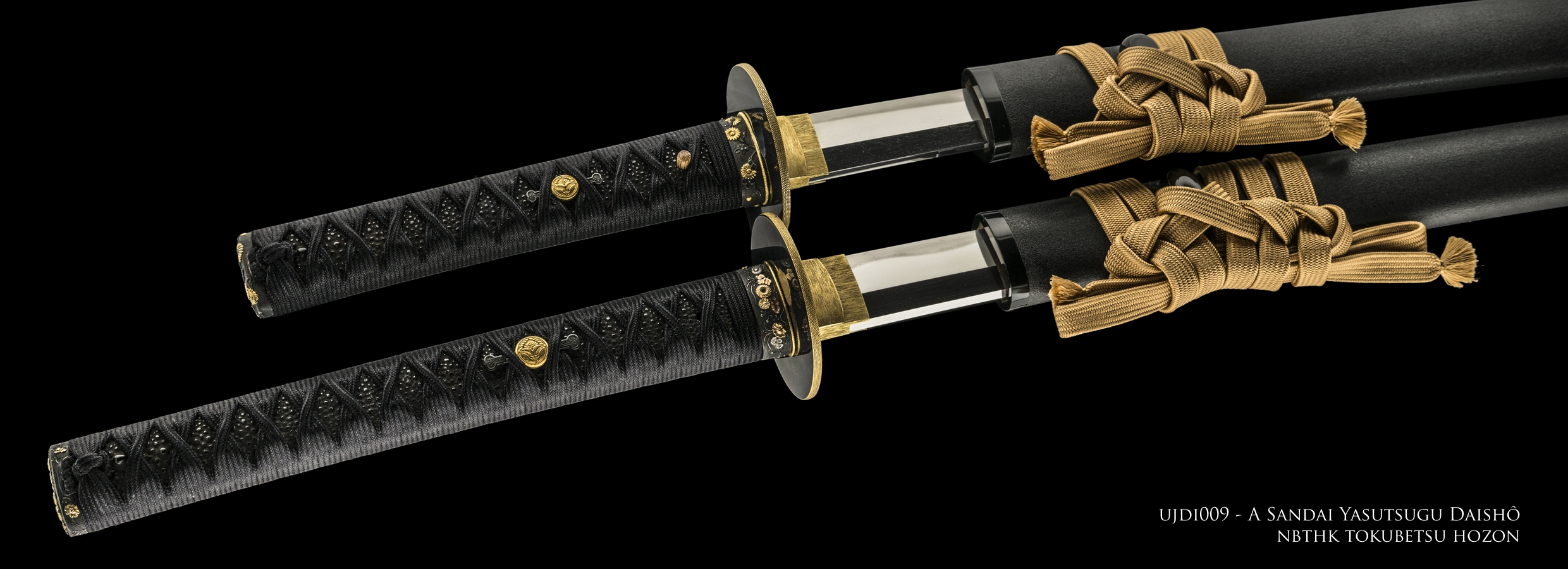
The daishô as a pair is something else entirely. When a katana and wakizashi are displayed together – matched in period, province or school, housed in complementary koshirae – the effect is genuinely incredible. Under the Buke Shohatto edict of 1629, samurai were required by law to wear the daishô on official duty. It was not merely a practical arrangement – it was a public declaration of rank, identity and responsibility. No other warrior class in history carried such a statement at their side. For the collector, owning a daishô is the ultimate expression of that tradition.
We have sold and built many custom daishô koshirae projects for clients over the years – matching antique Edo period fittings across both swords, unified by theme and lacquer – and the results, well, they never fail to impress. If the idea of a paired daishô appeals to you (actually, I know the answer to that question), it is something my team and I would love to help you realise. Every Japanese sword collector should aim have a daishô (including ME for that matter, I will soon rectify that!)
The Tantô
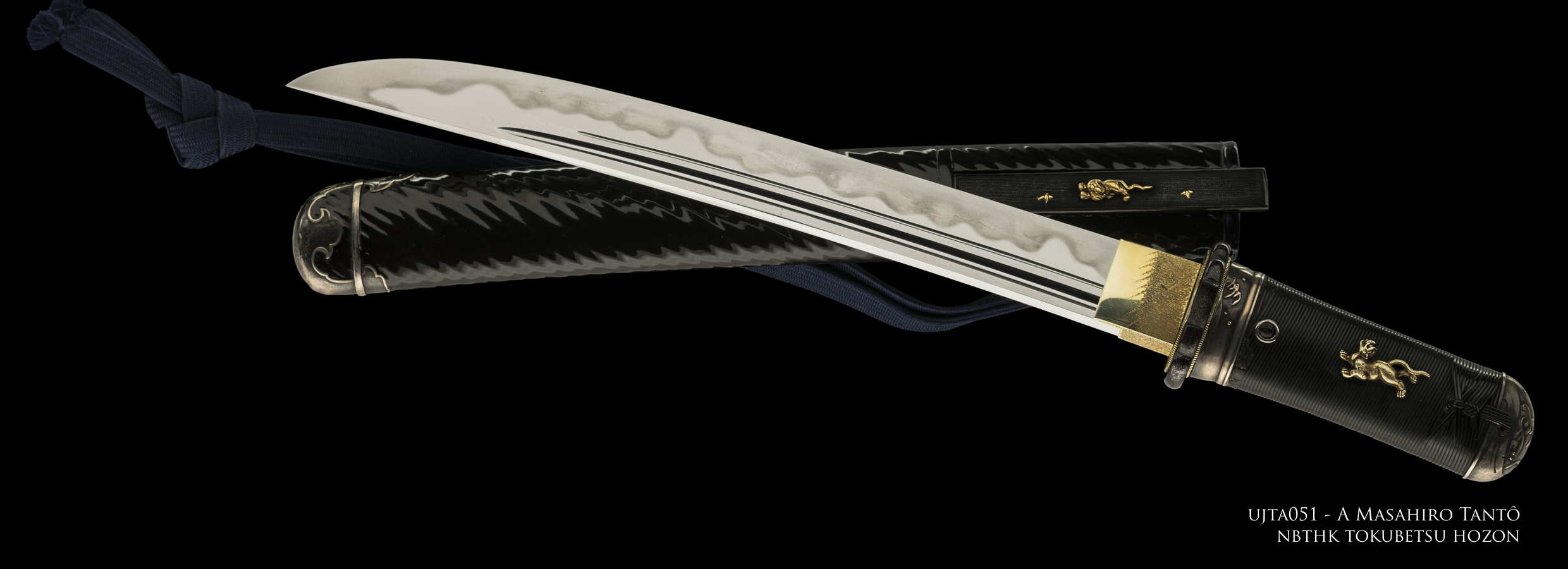
A dagger of no longer than one shaku (30.3cm), the tanto was designed to pierce armour and function effectively in close quarters. Do not underestimate them – the finest examples are masterpieces of the swordsmith’s art in miniature. Women of the samurai class carried tanto for protection, and they were traditionally presented to brides as part of the wedding ceremony. There is a definite appeal to owning a tanto. They are discreet, powerful and deeply significant as a personal amulet. I have come to learn over the years that older Japanese men who collect swords, absolutely LOVE tanto. As they get into their twilight years, they often sell off their longer katana and tachi and keep the shorter pieces – especially kotô period tanto as they are easier to handle (pun intended) and they are often signed as well. And now that I am firmly middle-aged, I definitely feel the magnetism of the tanto creeping on… Maybe UJ will eventually become ‘Unique Tantô’ when I’m 80, lol.
The Naginata
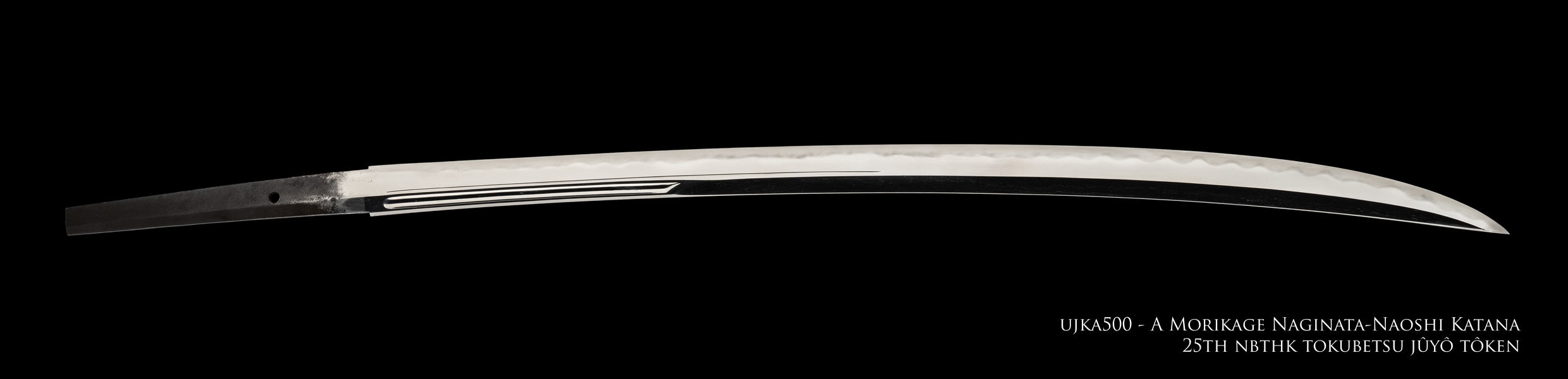
A curved, single-edged blade mounted on a long shaft, the naginata was a formidable weapon in open battle. Many naginata were later shortened and remounted as wakizashi or katana – formally known as a ‘Naginata-naoshi’. We have sold several Jûyô and Tokubetsu Jûyô Naginata-naoshi, they are such brilliant swords. As Markus Sesko once wrote in a research article for Unique Japan “naginata were mostly designed to be durable and highly effective cutters on the battlefield, their ‘efficacy’ remained unchanged when being shortened to wear them as a katana. Accordingly, the following saying developed among warriors: Naginata-naoshi ni namakura nashi (薙⼑直しに鈍⼑なし) – No sword made from a naginata is dull!”
Point 3: When It Was Made
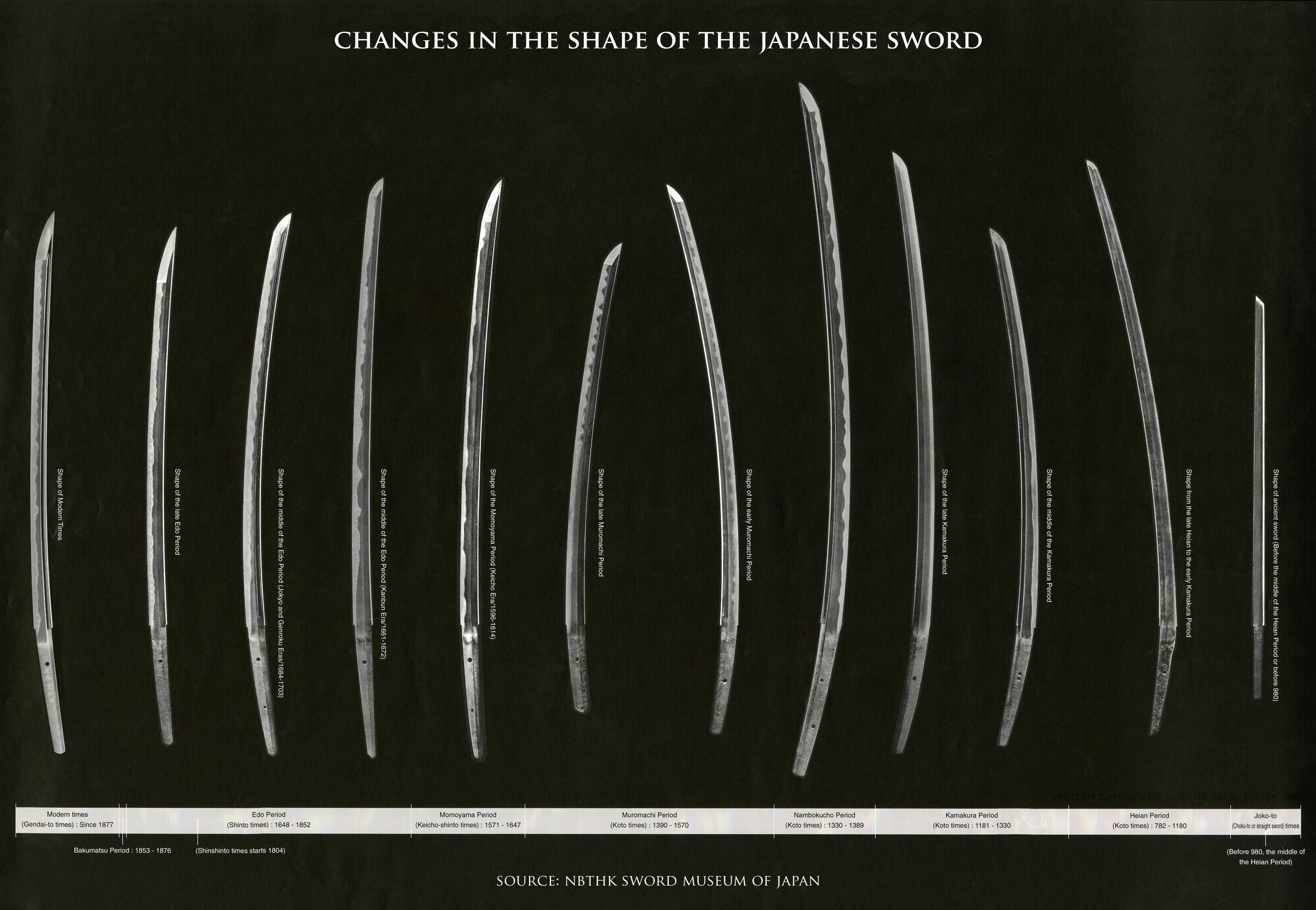
The period in which the sword was crafted shapes the character, rarity and value of a sword. By examining the overall shape and curvature of a blade alone, you can make a fairly accurate estimate of its age. Generally speaking (and this is a big generalization) Kotô period swords are curvier than swords made in the Edo period. The image above from the NBTHK that takes you through different time periods (eventually I want to make our own version of this chart with swords we have sold, but that massive Nambokucho period sword is tough to find!). Many of our more prolific collectors will aim to have a sword from these major periods, ie blades from the Heian and/or Kamakura periods, Nambokuchô, Muromachi, Shintô and Shinshintô.
Kôtô (Old Swords: circa 1000~1600)
The oldest category, and for most collectors the most sought after. Kôtô blades tend to be lighter, more gracefully curved and better balanced than later swords. The steel has a warmth and depth that is genuinely difficult to describe and impossible to replicate. In a word: magical. All Japanese sword collectors should aim to have at least one kotô period example in their collection.
Shintô (New Swords: 1600~1780)
Made during the early Edo period – a time of relative peace in Japan, which meant only the finest smiths were able to continue working, many of them retained by powerful daimyô families. Shintô swords tend to be heavier and straighter than kôtô, with greater artistic variation in the hamon. Some of the most technically accomplished swords ever made come from this period. Many collectible tameshigiri (cutting test swords) were crafted during the shintô period. One such famous smith was Yamato no Kami Yasusada. I brought a Yasusada wakizashi to (now deceased) master polisher Sasaki-sensei in this NHK documentary on Japanese swords and
Shinshintô (New-New Swords: 1781~1868)
Swordsmiths of this era consciously set out to revive the traditions of the kôtô masters. The results were often impressive – long, robust blades with shallow curvature, hard bright steel, and elaborately chiselled signatures, and many are dated. Koyama Munetsugu, whose work we have handled and admired, is a prime example of what this period produced at its very finest. Funny, when I was very first introduced to Japanese swords, I showed particular interest in this one rather beautiful-looking katana. The Japanese man said, ‘Ah! You like Munetsugu!’ Sure enough, he was spot on.
Gendaitô (Modern Swords: 1868-present)
Traditionally made swords by living smiths, using tamahagane (jewel steel) forged from black iron sand. Output is strictly regulated on these swords – no more than two katana or three wakizashi per smith per month are permitted. These swords can be commissioned with a family name engraved on the tang, which makes them a very personal acquisition. We don’t generally trade in modern swords very often, but when the right piece enters the picture, we’ll certainly offer to clients.
Point 4: Budget
Investment into a genuine antique Japanese sword is, for what it is, surprisingly accessible. At Unique Japan, prices generally begin at around $5,000~$10,000 for a decent, certified NBTHK Hozon piece. We offer many quality Tokubetsu Hozon swords (the next level up) between say $10,000 to $25,000. NBTHK Jûyô Tôken swords typically start at about $25,000 up to about $100,000. Tokubetsu Jûyô examples – representing the finest surviving swords in existence – can reach well into six figures. I know it may sound like a substantial amount of money, ie $150,000 – $500,000 for a top-class sword, and it is, but when one compares that price against European paintings that literally fetch millions, to me, there is no comparison. The Japanese sword is arguably the pinnacle of all crafts in Japan, let alone what it represents. When that fact truly sinks in, then owning the finest Japanese sword you can afford is truly a worthy goal. And I tell you, once you have a Japanese sword in your home, and take on stewardship of its well-being, it changes you and your living environment for the good. Your home will never want to be without a sword again.
In my opinion, it’s only a matter of time before more art collectors around the world discover Japanese swords. As such, prices for the finest pieces will rise accordingly as they have been doing recently.
Factors that most influence price are:
| Swordsmith rank/reputation | For example, saijô-saku (grandmaster), or ô-wazamono (maker of extremely sharp swords), etc. |
| Certification level | See Point 7 – higher certification directly affects long-term value |
| Period of manufacture | Generally, older kôtô period swords (especially if they are healthy) command a premium |
| Condition | A healthy blade holds better long-term value, ie. weighty, wide and wet-looking steel |
| Signature | Signed blades are generally more expensive, though not always |
| Koshirae | Good quality [antique] fittings add value |
| Provenance | Documented history adds both story and value |
| Tameshigiri | Swords that have performed a cutting test tend to be very popular, even if a bit macabre! |
The old advice about investing in antiques holds here: buy the best you can afford. One outstanding piece will always outperform several average ones, both in satisfaction and in long-term value. Our clients often tell me they just know in their heart when they see the right piece. There is a saying in samurai circles that ‘the sword always chooses its owner’. After many years of serving clients, there is a lot of truth to this statement.
On some of the more expensive pieces, especially when we create a custom koshirae for the sword, payments can be made in stages.
Point 5: The Steel and Its Structure
Sugata (shape)
The overall shape of a sword – its sugata – is the first thing you need to take in. Is the blade wide or narrow? Where does the curvature sit? A koshi-zori (curvature concentrated toward the base) is characteristic of older tachi from the Kamakura period, while saki-zori (curvature toward the tip) tends to suggest a later sword. The size of the kissaki (tip) is equally telling – a small ko-kissaki speaks of refinement and an older aesthetic, a large ô-kissaki of power and a more aggressive character, often seen during periods of intense warfare such as the Nambokuchô period (1333-1392). The motohaba (width at the base) and sakihaba (width at the tip) together determine whether a sword feels commanding or graceful in the hand. All of these elements combine to give each sword its individual personality – and with experience, you start to feel whether the sugata is harmonious and right, or whether something is slightly off. Learning to read sugata is one of the great pleasures of studying nihontô.
Hamon (temper line)
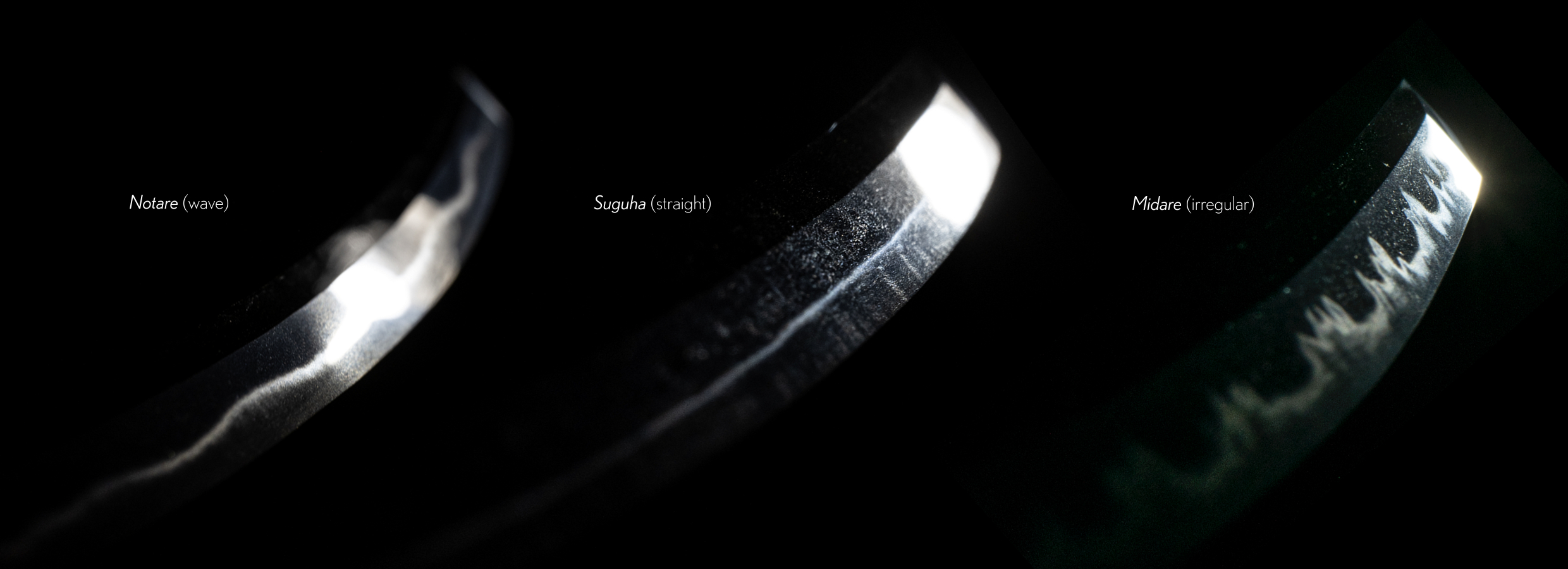
The hamon – the temper line – is the signature of the blade and the swordsmith himself. It is formed during the quenching process, where differential hardening creates a visible boundary between the hardened cutting edge and the softer body of the sword. Within this line lies a world of activity: nie (bright crystalline structures), nioi (a misty, smoky quality), kinsuji (dark golden lines) and sunagashi (brushed sand effect) that reward hours of patient observation under good light.
Broadly, hamon fall into three types: suguha (straight), notare (gentle undulating wave) and midare (irregular). Different patterns emerged at different periods, and with a little study the hamon becomes one of the most reliable indicators of a sword’s age and school. My advice: do not be too quick to judge a hamon. A perfectly executed suguha is a masterpiece of restraint, and a great deal of swordsmiths’ finest work lives inside that deceptively simple line. I have often stated that a good hamon is a consistent hamon, no matter what type it is.
Jihada (surface grain)
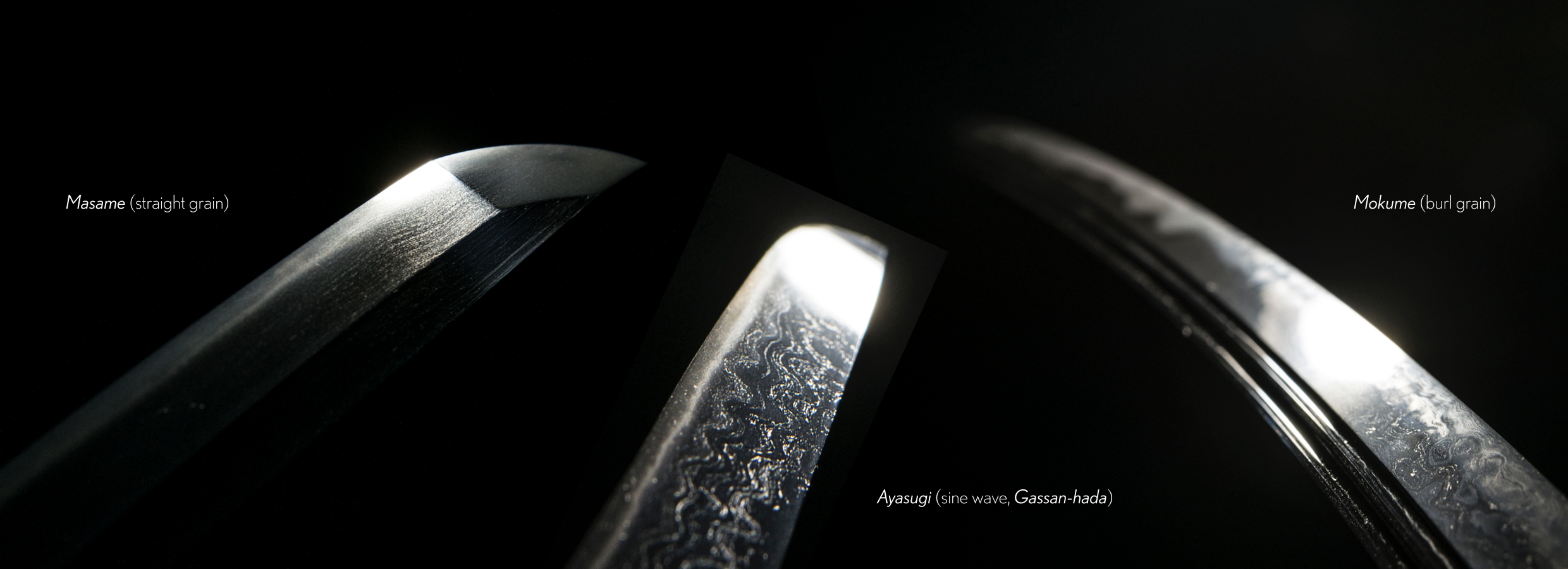
The jihada is the surface grain of the sword, produced by the folding and forging process. A well-made sword will always exhibit harmony between the jihada and the hamon – you genuinely cannot have a great hamon over a poor jihada, or the reverse. And as I stated above, consistency is key. If the foundation is right, the sword is right. Jihada types include itame (plank grain), mokume (rounded burl grain), masame (straight parallel lines, which I adore) and the beautiful ko-itame with ji-nie . There is also a unique ayasugi-hada that is synonymous with the Gassan and Naminohira traditions. I find the jihada often tells you more about the quality of a sword than almost anything else – it is where the smith’s soul lives.
Nakago (tang)
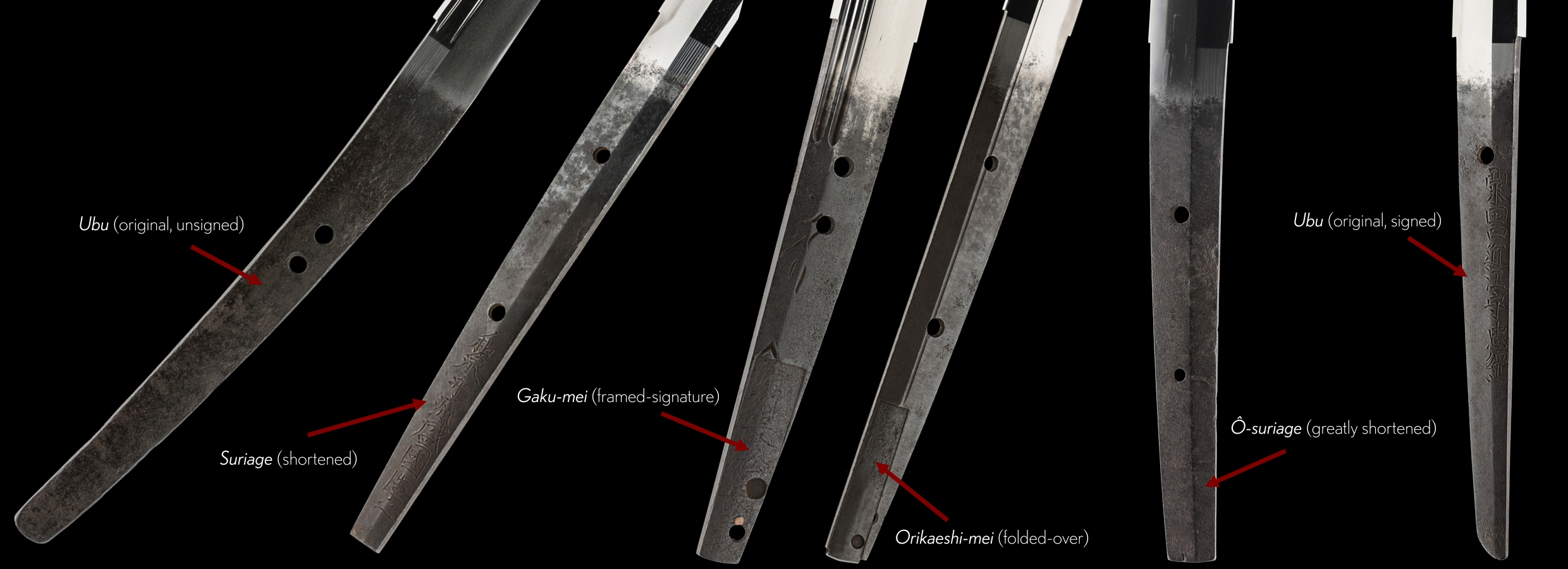
The tang of the sword, never polished, and therefore one of the most reliable guides to age. On old kôtô swords, the nakago is dark, almost black, and soft in texture – centuries of undisturbed rust – a thing of beauty! The colour lightens on shintô and later swords. Signatures, dates, titles and cutting test inscriptions may all be found on the nakago. An unsigned sword is not a lesser sword – in certain traditions, such as Yamato-den blades, a signed blade is actually the exception rather than the rule. The term ‘ubu nakago’ is a nakago in its original condition, and that’s always a good thing. If the blade has been shortened but the signature is intact, then the term ‘suriage’ is used. A greatly shortened sword whereby the signature is completely lost is referred to as ‘ô-suriage’. Very old kotô period swords are often in ô-suriage nakago.
I have noticed something over the years that has never left me. Whenever I watch an older Japanese man who truly knows swords receive a blade in hand – no matter if it is a long katana or a small tanto – he goes straight to the nakago. Not the hamon, not the jihada, not even the shape. He slides the blade from the shirasaya, turns it over, and reads the tang first. Because that is where the story is. The rust on a kôtô nakago is dark, almost black, and has a softness to it that centuries of undisturbed oxidation produce and nothing else can replicate. A later sword is lighter, harder. You can feel the difference before you even look closely. Signatures, dates, cutting test records, title inscriptions – all of it lives here, on this unpolished, unglamorous strip of steel that most beginners overlook entirely. Do not make that mistake.
Horimono (carvings)
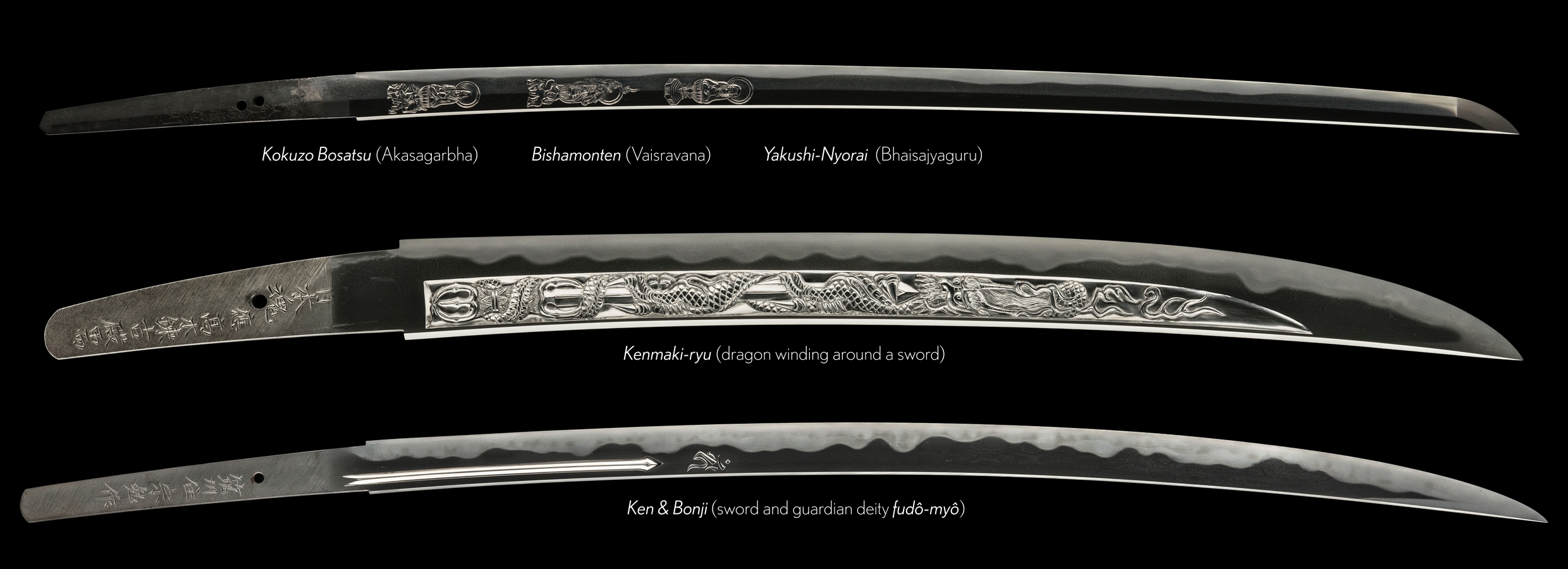
Carved grooves and pictorial engravings on the blade surface. The long hi (groove running the length of the blade) is primarily structural – it lightens the sword and improves cutting by creating an I-beam cross-section. Pictorial carvings of deities such as Fudô Myô-ô are also found, each carrying their own rich symbolism. Well-executed horimono is truly breathtaking. The amount of work that goes into such detail is just amazing.
Point 6: Sword Mountings (Koshirae)
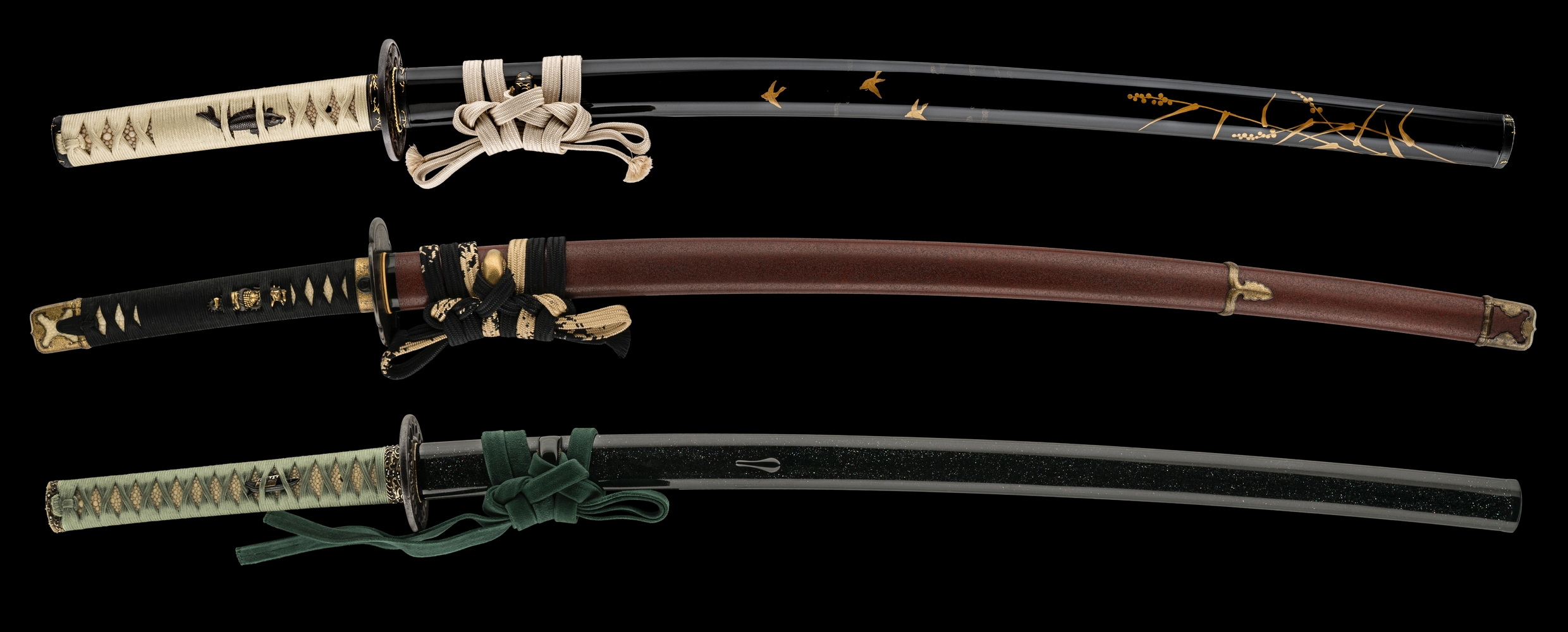
The koshirae is the full (battle) mounting of a Japanese sword. A good, handsome set of koshirae on a Japanese sword is the business. I admire koshirae that tells a story, that works as a unit. It’s important to note that a swordsmith is only (!) responsible for the sword, all other components such as the tsuba (guard), fuchi-kashira (collar and pommel), menuki (decorative grips beneath the silk binding), the lacquered saya (scabbard), is the work by separate highly-skilled artisans. A completed Japanese sword is a true team effort. And I love that.
Having said that, just because the sword has marvellous koshirae, does not make it a great sword. An excellent sword is only special because the sword itself is excellent. Seasoned collectors know that, and now you do too.
Therefore, it is not uncommon that many top-ranked Jûyô and Tokubetsu Jûyô swords are housed in shirasaya only, without a set of koshirae. The blade does the talking. I’m not sure if I coined the phrase, but I have always referred to the shirasaya as the ‘humidor’ for a Japanese sword. It is a plain magnolia wood scabbard used for long-term storage. Some clients are initially disappointed by this, but the shirasaya is the correct environment for a blade: the magnolia wood absorbs moisture and preserves the steel beautifully. Think of it as the sword’s pyjamas, and the koshirae as its formal attire.
Therefore, for swords acquired in shirasaya only, many clients have commissioned Unique Japan to build a traditional custom koshirae for them. The process can take a good year plus to complete, but wow, the results are incredible. We have built dozens and dozens of custom koshirae over the years. In fact, just recently, a Tokyo-based Japanese sword dealer informed us that Unique Japan is actually doing the most custom koshirae in all of Japan, and at the highest levels too. That felt good to hear. Have a look at just some of the koshirae projects we have completed over the years. By the way, the cost to build a custom koshirae is about $7,000 to $20,000 – largely dependent on the quality of the sword fittings and the complexity of the lacquerwork.
Point 7: Certificates of Authenticity
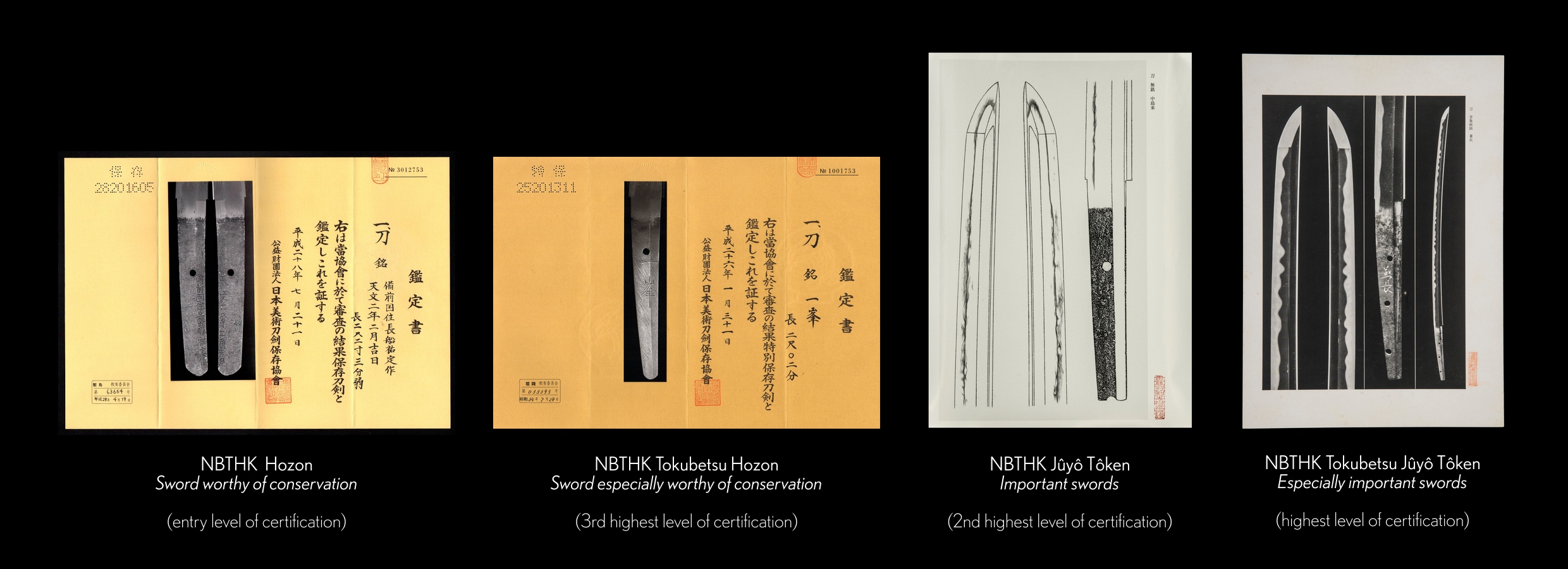
Every sword from Unique Japan is guaranteed authentic. All carry certificates from one or more of the two recognised preservation societies – the NBTHK (Nihon Bijutsu Token Hozon Kyokai, Society for the Preservation of the Japan Art Sword, often called the ‘Japanese Sword Museum’) and/or the NTHK-NPO (Nihon Token Hozon Kai). We often certify Japanese swords with the NBTHK and work with the NTHK-NPO for koshirae and tosogu (fittings). The NTHK-NPO has a quicker turnaround time.
Both societies operate tiered certification systems. For the NBTHK, these are in ascending order: Hozon, Tokubetsu Hozon, Jûyô Tôken and Tokubetsu Jûyô Tôken. A higher certification reflects greater scholarly consensus on the sword’s attribution, quality and historical significance – and this definitely affects long-term value. It is not uncommon for a sword we offer to carry multiple certificates, covering the blade itself as well as the individual fittings of the koshirae as I have mentioned above.
Unique Japan is veritably unique in the sense that we maintain a solid presence in Japan, with me helping to serve clients around the world from the UK. Thus we are well placed to submit swords for NBTHK and NTHK-NPO certification for clients around the world. And we can advise on the appropriate level to pursue, plus attend to polishing needs, new shirasaya, and other service requests. Certification brings peace of mind – but more than that, it brings a more complete story to the blade in question. And that story passes to the next generation along with the sword.
All swords from Unique Japan, by the way, are guaranteed authentic and come with a three-day inspection period upon arrival.
Next Steps
I hope this article has been helpful and perhaps even a little inspiring. If owning a genuine Japanese sword is something you are considering (as one of my clients once said, it’s been a 30-year impulse buy!), we would be honoured to assist you. Please feel free to reach out with any questions – I’m here to help and advise. I want the best for you and the sword. And after having sold several hundreds of sword to date, I have developed a decent knack at matching the right sword with the right collector.
Be sure to download our latest catalogues, view our available swords, and join the VIP Email List to receive new password-protected listings before they are released to the public.
We look forward to serving you.
Pablo Kuntz
Founder, Unique Japan