
ITEM# UJKA198 – Catalogue 24 – Sold
A Tsuguhiro ‘Tameshigiri’ Katana (越前住下坂継広)
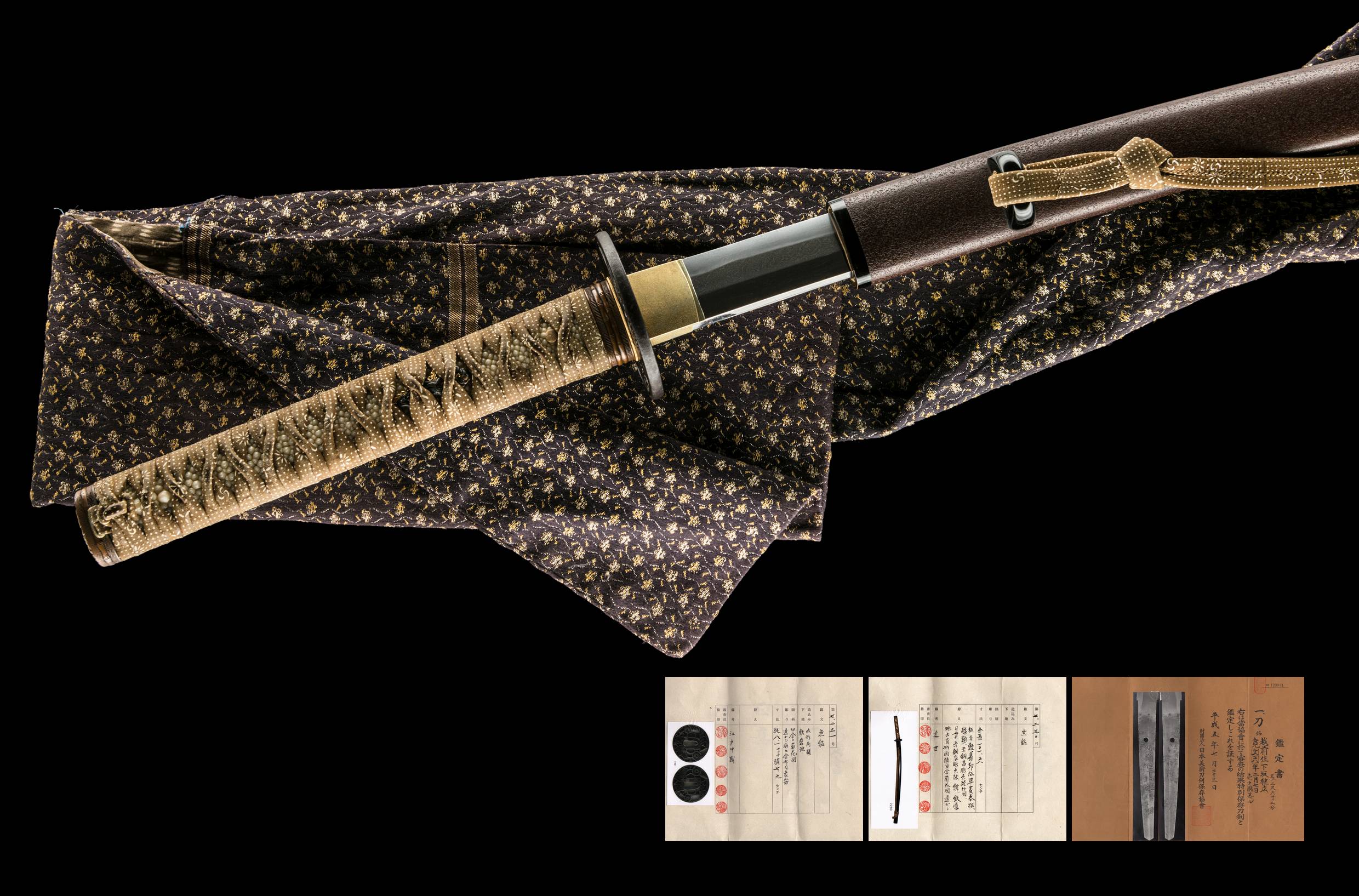
Few swords can claim a more complete biography than this remarkable katana by Shodai (1st generation) Echizen Tsuguhiro of the Yasutsugu School. Signed and dated to the 7th day of the 2nd month of Kanbun 6 – February 7th, 1666 – it also carries a tameshigiri (cutting test) inscription on the nakago recording that the blade severed the first torso (ichi no do) of a human being in a single stroke, the result noted as ochiru: the body falling away cleanly. Tsuguhiro earned the coveted Wazamono ranking, awarded to smiths whose blades demonstrated exceptional cutting performance, and this sword is proof of why.
The blade is a commanding 79.5cm in nagasa, presenting the powerful, full-bodied proportions characteristic of prime Kanbun-era work. The jihada is a tight itame with a characteristically darkish quality associated with the Echizen region, and the hamon is a clear, bright, and consistent gunome midare – an irregular, lively temper line that travels the length of the blade with confidence. The overall impression is of a sword forged with serious intent and in outstanding health for its age. NBTHK Tokubetsu Hozon certification confirms the blade’s quality and authenticity.
The accompanying koshirae is a handsome early Edo-period mounting featuring a Choshu Tomoyoshi iron tsuba in sukashi (openwork) depicting a rural village with kiku (chrysanthemum) flowers, attributed to the Okamoto School of Nagato province. The fuchi and kashira are made of suaka (refined copper) in an ajiro bamboo wickerwork geometric pattern. The tsuka is wrapped in inden (lacquered deerskin leather), a traditional material with over 400 years of history in Japanese craftsmanship. This is a samurai sword of the highest order – one of Tsuguhiro’s greatest achievements.
| Item Number | UJKA198 |
| Sword Type | Katana |
| Swordsmith | Tsuguhiro (1st generation) |
| Swordsmith (JP) | 継広 (初代) |
| Signature | Echizen Ju Shimosaka Tsuguhiro |
| Date | Kanbun 6 (1666), 2nd month, 7th day |
| School | Yasutsugu School |
| Province | Echizen |
| Period | Shintō – Early Edo period (Kanbun era: 1661-1673) |
| Nagasa | 79.5cm |
| Sori | 2.0cm |
| Moto-haba | 3.3cm |
| Weight | 955g |
| Nakago | Ubu, 21.5cm, 1 mekugi-ana |
| Jihada | Itame (wood grain pattern) |
| Hamon | Gunome midare (irregular wavy temper line) |
| Certificates | NBTHK Tokubetsu Hozon (issued Heisei 5, July 23rd, 1993); NTHK-NPO Kanteisho (tsuba); NTHK-NPO Kanteisho (koshirae) |
| Sharpness Rating | Wazamono |
| Tameshigiri (JP) | 寛文六年二月七日一之胴落心 |
| Koshirae | Early Edo-period koshirae |
| Tsuba | Choshu Tomoyoshi – polished iron, sukashi, rural village with kiku design; attributed to Okamoto School (Nagato province); NTHK-NPO Kanteisho |
| Fuchi-kashira | Suaka (refined copper), ajiro bamboo wickerwork geometric design |
| Tsuka | Wrapped in inden (lacquered deerskin leather) |
| Habaki | Kiri-filed, brass |
| Catalogue | Catalogue 24 |
| Status | Sold |
| Includes | Shirasaya, koshirae, carry bags, sword stand, maintenance kit, DVD, booklet, printed description, export permit from Japan |