
ITEM# UJTA051 – Catalogue 36 – Sold
A Shôdai Masahiro Tantô (肥前国佐賀住正広)
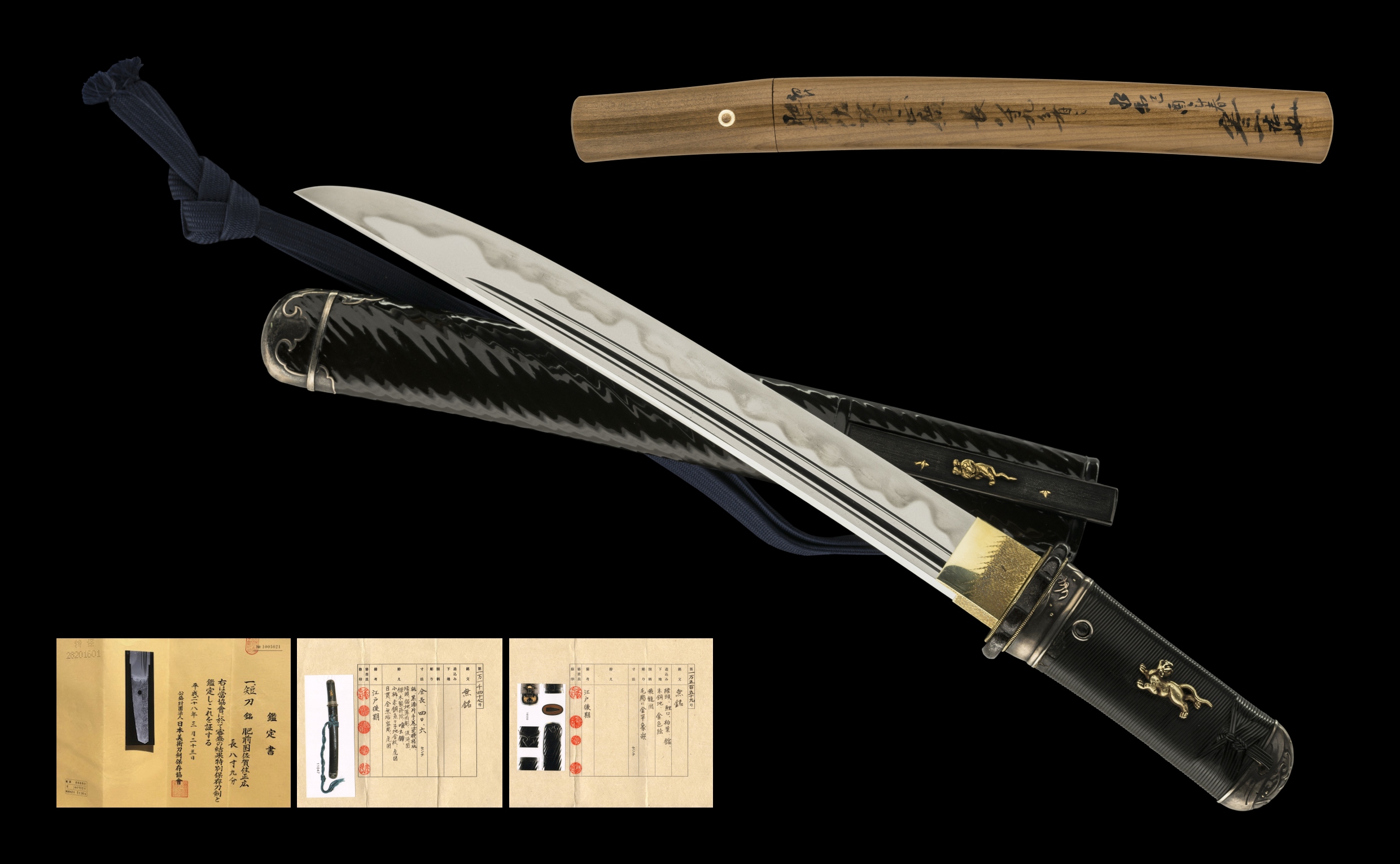
Kawachi Masahiro was born Sadenjirô in 1607 and died at only 59 in 1665. The son of Yoshinobu – himself the adopted son of the great Shodai Tadayoshi – he began his career signing as Masanaga and even stood in for his ailing master, signing works as a dai-mei. Recognising his exceptional talent, Lord Nabeshima Katsushige directed him to change his name to Masahiro, and so the lineage of Shodai Masahiro was established. His blades are ranked jo-saku by Fujishiro and rated wazamono for cutting ability – a smith who excelled in both artistry and function.
Tantô crafted during the shintô period (1600-1780) are extraordinarily rare. As the formal daishô became the prescribed dress for the samurai class, demand for tanto declined sharply – making signed examples from this era genuine collector’s pieces. This blade carries all the hallmarks of classic Hizen work: a magnificently tight konuka-hada ground forged so finely it resembles rice bran, over which blazes a gorgeous gunome-chôji-midare hamon rich in kinsuji and sunagashi. The boshi curls back steeply in a characteristic kaeri katai, and the blade carries paired grooves – a wide bo-bi and a slender companion soe-bi. The ubu nakago retains its original sujikai-yasurime file marks and kengyô butt, signed in eight characters: Hizen no Kuni Saga Ju Masahiro.
The blade is housed in its original Late Edo period tanto koshirae – a cohesive wave-themed set in shibuichi with a spiral-carved naname-kizami saya lacquered in gloss black. The matching soroi kanagu fittings are signed by metalsmith Nagamasa and bear NTHK-NPO Kanteishô certificates of authenticity. The hilt is wrapped in kujira-maki – strips of baleen from the upper jaw of a whale – a luxury material denoting high samurai status during the late Edo period. Gold tiger menuki complete the ensemble, symbolising courage and protection against misfortune. The shirasaya carries a sayagaki by the distinguished scholar Dr. Satô Kanzan, written in Shôwa 44 (1969).
| Item Number | UJTA051 |
| Sword Type | Tantô |
| Swordsmith | Masahiro (Kawachi Masahiro, first generation) |
| Swordsmith (JP) | 正広 (河内正広・初代) |
| Signature | Hizen no Kuni Saga Ju Masahiro |
| School | Hizen (Tadayoshi school) |
| Province | Hizen |
| Period | Shintô – Early Edo period (Kan’ei era: 1624-1644) |
| Nagasa | 26.9 cm |
| Sori | 0.20 cm |
| Moto-haba | 2.78 cm |
| Weight | 210 g |
| Nakago | Ubu, sujikai-yasurime, kengyô nakago-jiri, 1 mekugi-ana; 11.4 cm |
| Jihada | Ko-mokume leading to Hizen konuka-hada, thick nie-deki |
| Hamon | Gunome chôji-midare with kinsuji and sunagashi; wide nioguchi |
| Boshi | Kaeri katai (steep turn back) |
| Certificates | NBTHK Tokubetsu Hozon; NTHK-NPO Kanteishô (matching fittings and koshirae) |
| Fujishiro Rank | Jo-saku |
| Sharpness Rating | Wazamono |
| Sayagaki | Kanzan-sensei (Dr. Satô Kanzan) – Shodai Hizen Saga jû Masahiro, dated Shôwa tsuchinoto tori chûshun (Shôwa 44, mid-Spring 1969) |
| Koshirae | Kuro-ro-nuri naname-kizami saya tanto-koshirae (黒呂塗斜刻鞘短刀拵え) – Late Edo period (1780-1867); spiral-carved saya lacquered in gloss black, navy blue sageo |
| Tsuba | Mokko-shaped wood tsuba with slotted kozuka groove, lacquered with maki-e sprinkles |
| Fuchi-kashira | Shibuichi with wave carvings, signed Nagamasa (soroi kanagu); NTHK-NPO Kanteishô certified |
| Menuki | Gold tigers (tora) |
| Tsuka | Kujira-maki (baleen wrapping) |
| Habaki | Gold-wrapped habaki with diagonal file marks |
| Catalogue | Catalogue 36 |
| Status | Sold |
| Includes | Shirasaya (with Kanzan sayagaki), Edo koshirae, fabric bag, stand, kit, DVD, booklet, description |