
ITEM# UJKA509 – Catalogue 47 – Sold
A Hachidai Nagamichi Katana (奥州會津住三善長道)
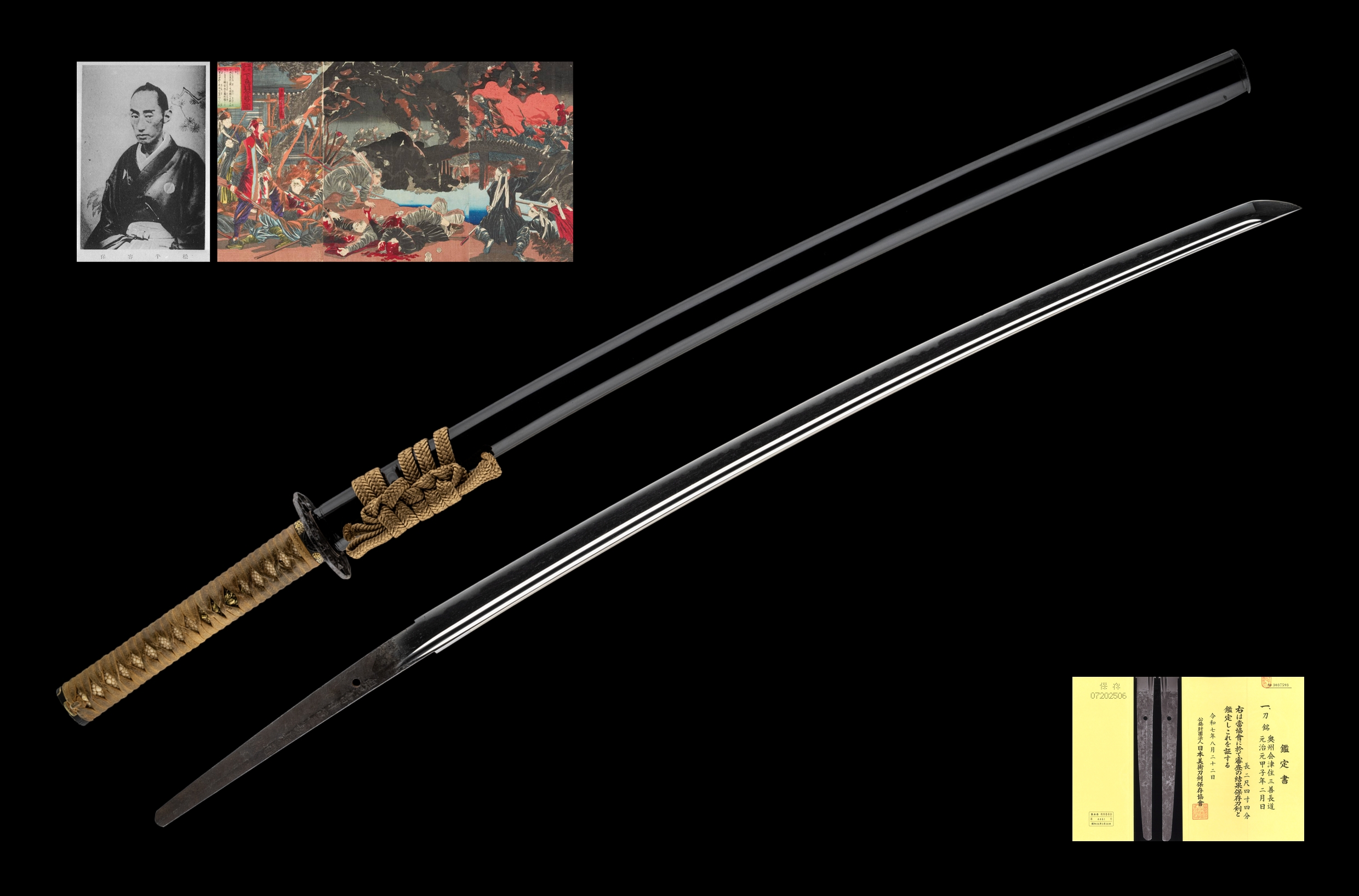
This long, very curvy katana is by the eighth-generation Miyoshi Nagamichi, a member of a prestigious lineage of swordsmiths who served the Aizu clan from the early Edo period through the Meiji era. The first-generation Nagamichi was the son of Miyoshi Masanaga, studied under the great Ôsaka Shintô master Tsuda Sukehiro, and mastered the art of cutting under the renowned sword-tester Yamano Kanjûrô Hisahide. His blades were so sharp that he was praised as the “Kotetsu of Aizu” and the “Masamune of Aizu”, earning the highest rank of saijô-ôwazamono. Inheriting that lineage, Hachidai served as official smith to the Matsudaira family of the Aizu domain and rose to the title Aizu Katana-kaji Tôryô, Head of the Aizu Swordsmiths, a testament to the trust he commanded.
The nakago carries a date inscription from the first year of the Genji era (February 1864), placing the blade at the edge of one world, just four years before the Boshin War brought the Aizu domain to its tragic end and closed the Edo period. The Ikedaya Incident and the Kinmon Rebellion had turned Kyôto into a battleground, and Hachidai worked under the patronage of Matsudaira Katamori, the Kyôto Shugoshoku, whose men patrolled its streets. This was a commission for real use. The jigane shows nagare-hada mixed with itame and chikei, and the gunome-midare hamon is enlivened by tobiyaki, kinsuji and sunagashi, a wealth of activity along the whole blade. A practical work with a unique provenance, it was used for decades by a former police officer who is now a retired iaidô master, and the scratches and natural patina record that honest service.
The Edo period koshirae carries the same weight of genuine training. The tsuka, wrapped over white samegawa, is worn smooth in the grip area, and gold dragon menuki glow through the wrap. A polished iron tsuba with sukashi openwork shows a plum tree in early spring, buds forming before the blossoms open, an emblem of resilience and quiet optimism. The shakudô nanako fuchi-kashira depicts a waterwheel beside flowers and grass at a water’s edge, a tranquil scene of the Japanese countryside. The original torokusho card, registered in Kumamoto prefecture in Shôwa 26 (1951), the very first year swords were formally registered in Japan, suggests this blade was once held by a prominent family. A mount that balances quiet beauty with honest, rugged practicality.
| Item Number | UJKA509 |
| Sword Type | Katana |
| Swordsmith | Hachidai Nagamichi (Miyoshi, 8th generation) |
| Swordsmith (JP) | 奥州會津住三善長道 |
| Signature | Ôshû Aizu-jû Miyoshi Nagamichi |
| Date | Genji 1 (February 1864) |
| School | Aizu Nagamichi |
| Province | Mutsu (Aizu) |
| Period | Shinshintô – Late Edo period (Genji era: February 1864) |
| Nagasa | 73.9cm |
| Sori | 1.8cm |
| Moto-haba | 2.82cm |
| Saki-haba | 1.93cm |
| Kissaki | 3.55cm |
| Weight | 635g |
| Nakago | Ubu, 24.0cm, katte-sagari-yasurime, ha-agari kurijiri, one mekugi-ana |
| Jihada | Nagare-hada mixed with itame-hada and chikei |
| Hamon | Gunome-midare mixed with tobiyaki, kinsuji and sunagashi |
| Certificates | NBTHK Hozon (Reiwa 7, August 22, 2025) |
| Fujishiro Rank | Chûjô-saku |
| Sharpness Rating | Saijô-ôwazamono (Nagamichi lineage) |
| Koshirae | Edo period koshirae, black-lacquered saya, shows decades of genuine use |
| Tsuba | Polished iron, sukashi plum tree design |
| Fuchi-kashira | Shakudô nanako with gold waterwheel, flowers and grass at a water’s edge |
| Menuki | Gold dragons |
| Tsuka | Worn tsuka-ito over white samegawa |
| Catalogue | Catalogue 47 |
| Status | Sold |
| Includes | Edo koshirae, original torokusho registration card (Shôwa 26, 1951), fabric bag, stand, kit, printed description |