
ITEM# UJKA506 – Sold
A Mihara Masahiro Katana (三原正広)
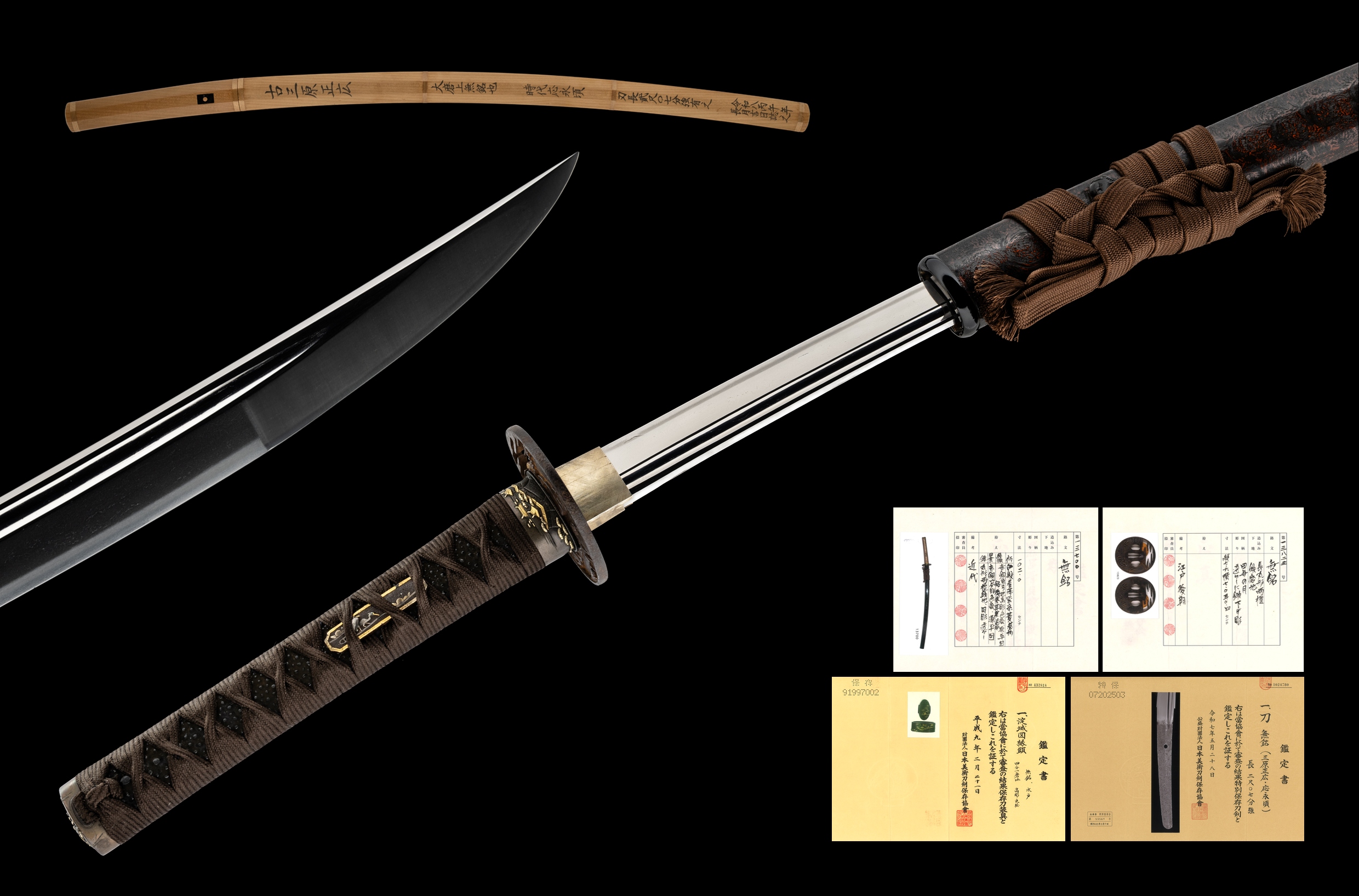
The Mihara school of Bingo province was founded by Masaie at the end of the Kamakura period. The Masahiro line followed in three recorded generations: the first around the Kenmu era (1334-1338), the second around the Jôji era (1362-1368), and the third in the Ôei era (1394-1428), to whom this katana is attributed. Bingo was known for high-quality iron, and close ties with Yamato province left a strong Yamato influence on Mihara work, with suguha as the base and a grain often mixed with masame.
This is a striking ô-suriage blade, mumei, with a nagasa of 62.8cm and a powerful 9.3cm ô-kissaki that strongly suggests a nagamaki origin from the Nanbokuchô period. Such blades were commonly shortened into katana after the Edo shogunate restricted long swords, a process known as nagamaki-naoshi, and reworked examples earned a reputation for exceptional quality. The jihada is a well-forged ko-mokume mixed with ô-hada, with sparkling ji-nie, plentiful chikei and a vibrant shirake-utsuri. The hamon is a bright, precise hoso-suguha with sections of ko-notare, tiny nezumi-ashi and subtle kuichi-gaiba, all in clean nioi-deki. The boshi turns back deeply in ko-maru. Stable hada-ware on the lower blade runs parallel to the grain and adds character to a sword some 600 years old. It carries NBTHK Tokubetsu Hozon, issued in Reiwa 7 (2025) to Mihara Masahiro, Ôei-goro. Nozomi-san, a shodô artist, inscribed the shirasaya with sayagaki and tsunagi-gaki in September 2026.
The late Edo period uchigatana-koshirae is a delight. The saya is finished in zen-like swirls of red and black lacquer, the tsuka is wrapped in dark chocolate brown ito over black-lacquered samekawa, and white heron menuki shine through the wrap. The focal point is the iron tsuba attributed to Toyonobu, 7th generation of the Okamoto school of Chôshû, carved in sukidashi-bori with a gold moon reflected in the paddies, the motif of tagoto-no-tsuki. The shibuichi fuchi-kashira by the Mito school captures Yodo Castle in deep high relief with gold inlay and holds its own NBTHK Hozon. A samurai-spirited katana with history in every detail.
| Item Number | UJKA506 |
| Sword Type | Katana |
| Attribution | Attributed to Masahiro, third generation (mumei) |
| School | Ko-Mihara |
| Province | Bingo |
| Period | Kotô – Early Muromachi period (Ôei era: 1394-1428) |
| Nagasa | 62.8 cm |
| Sori | 1.6 cm |
| Moto-haba | 2.8 cm |
| Kissaki | 9.3 cm |
| Weight | 535 g |
| Nakago | Ô-suriage, mumei, katte-sagari yasurime, 1 mekugi-ana, 17.8 cm |
| Jihada | Ko-mokume mixed with ô-hada, ji-nie, plentiful chikei, shirake-utsuri |
| Hamon | Hoso-suguha mixed with ko-notare, kuichi-gaiba, nezumi-ashi, nioi-deki |
| Boshi | Ko-maru with deep kaeri |
| Horimono | Bo-hi |
| Certificates | NBTHK Tokubetsu Hozon (sword); NBTHK Hozon (fuchi-kashira); NTHK-NPO Kanteishô (koshirae and tsuba) |
| Sayagaki | Nozomi-san (shodô artist) – inscribed in the 9th month, Reiwa 8 (September 2026), with tsunagi-gaki |
| Koshirae | Uchigatana-koshirae, late Edo period, shu-kuro urushi kawarinuri saya |
| Tsuba | Attributed to Toyonobu (豊信), 7th generation Okamoto school, Chôshû, Ansei era; polished iron, sukidashi-bori, tagoto-no-tsuki |
| Fuchi-kashira | Mito school, shibuichi with gold relief depicting Yodo Castle |
| Menuki | Tanzaku-gata, white herons |
| Tsuka | Dark chocolate brown ito, hishi-maki, over black-lacquered samekawa |
| Habaki | Silver-plated, higaki file marks |
| Status | Sold |
| Includes | Shirasaya, tsunagi, Edo koshirae, fabric bags, kit, printed description |
The PDF contains full photography, detailed blade analysis, and all certification documentation.