
ITEM# UJKA476 – Catalogue 45 – Sold
An Edo Sandai Yasutsugu Katana (葵紋 康継以南蛮鉄於武州江戸作之)
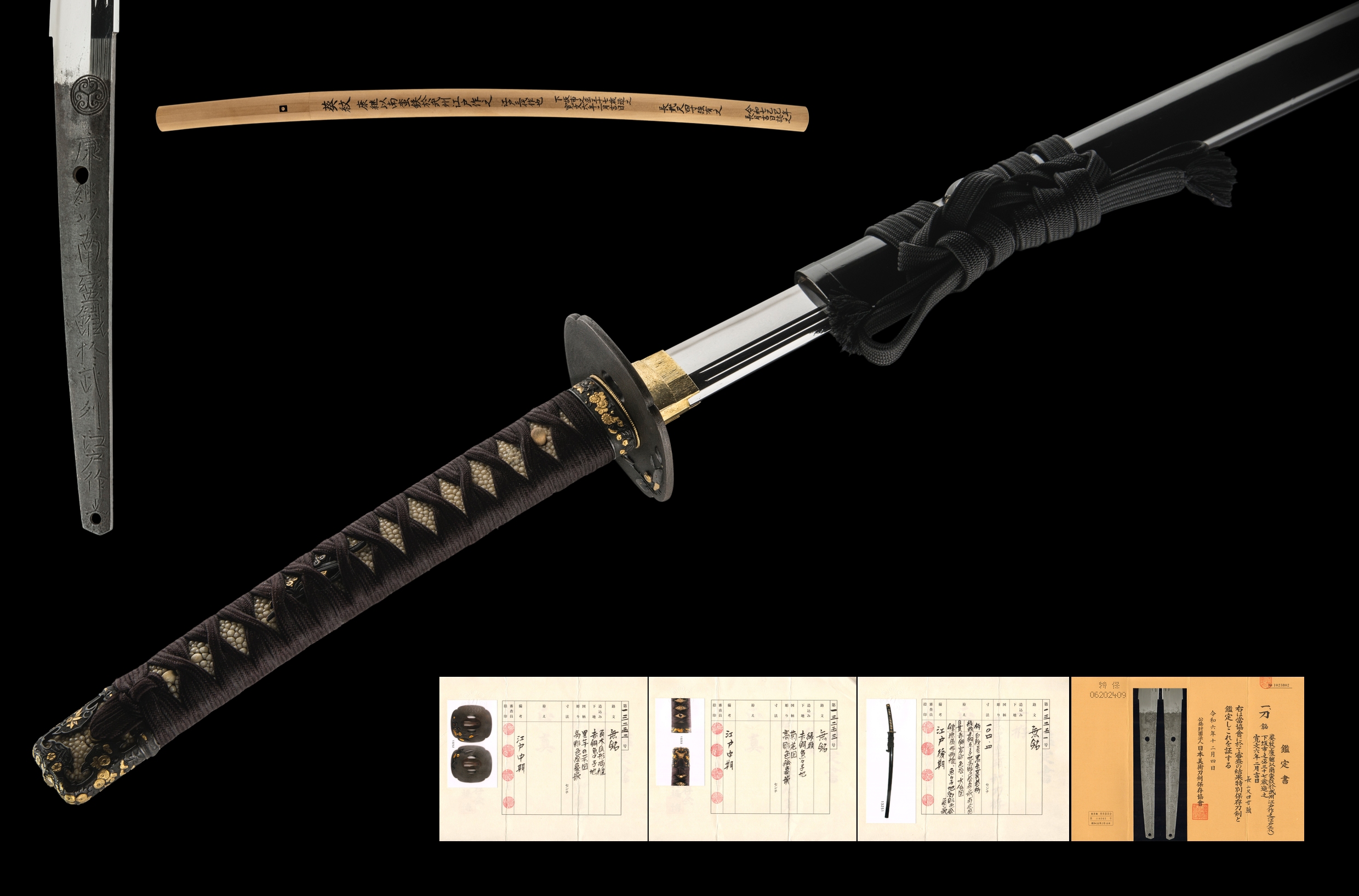
The Yasutsugu lineage stands among the most celebrated in Shintô swordsmanship. Founded by Shodai Yasutsugu – a Shimosaka school smith from Echizen who was summoned to Edo by Tokugawa Ieyasu himself – the family name became synonymous with technical precision and direct shogunal patronage. The aoi-mon (hollyhock crest) stamped at the head of the nakago is no mere ornament: it is Tokugawa authorisation, placed on works produced in official service to the ruling house. Sandai Yasutsugu, known by his secular name Shimosaka Ichinojô, carried this tradition with quiet authority through the Kanbun and Enpô eras of the mid-17th century, producing blades characterised by balanced construction, refined jihada, and an elegant restraint that distinguishes shogunal craft from provincial ambition.
This katana was forged in Edo in February 1666, when the smith was 37 years old – a prime period of production. The cutting edge measures an impressive 72.9cm, constructed in shinogi-zukuri with a graceful extended chû-kissaki and futatsu-bi (two full-length parallel grooves) that lighten the blade without sacrificing presence. The jihada is a finely packed itame with soft ko-mokume, abundant ji-nie, vivid chikei, and a gentle utsuri floating in the hiraji – precisely what one expects from Nanban-tetsu worked at its best. The hamon is a graceful suguha with understated ko-gunome and delicate ashi, shining brightly. The bôshi turns in a full ô-maru with a sweeping hakikake. A secondary hikae-mekugi-ana near the base of the nakago indicates the blade was either used for tameshigiri or forged with serious practical application firmly in mind.
The accompanying Edo-period koshirae is a beautifully preserved uchigatana mounting in glossy black kuro-ronuri lacquer, dated to the Late Edo period (1780-1868) and certified as authentic by NTHK-NPO. The tsuba is attributed to Sano Naoyoshi (佐野直好) – a late 18th-century metalsmith working in shakudô with a fine nanako ground – depicting a taro leaf in restrained high relief, a motif symbolising prosperity and Buddhist detachment. The fuchi-kashira, also NTHK-NPO certified, are attributed to Kaga Kuwamura Katsuhisa (桑村克久), a key figure in the Kuwamura-bori tradition trained in the Gotô school: worked in shakudô with nanako ground and rich zôgan depicting blooming chrysanthemums – symbols of longevity and refined Edo taste. The menuki are carved in high relief to depict suisen (narcissus), a flower associated with quiet dignity and inner strength. The tsuka retains its original white samekawa and hishi-maki cord wrapping, gently faded from black with age, adding to its considerable historical charm.
| Item Number | UJKA476 |
| Sword Type | Katana |
| Swordsmith | Edo Sandai Yasutsugu (third generation from Edo) |
| Swordsmith (JP) | 康継 (江戸三代) |
| Signature | (Aoi-mon) Yasutsugu nanban-tetsu o motte Bushû Edo ni oite kore o tsukuru (Edo Sandai) / Shimosaka Ichinojô sanjûnana-sai kore o tsukuru / Kanbun rokunen nigatsu kichijitsu |
| Date | Kanbun 6 (February 1666) |
| School | Shimosaka (Yasutsugu lineage) |
| Province | Musashi |
| Period | Shintô, Early Edo period (Kanbun era: 1661-1673) |
| Nagasa | 72.9cm (ubu) |
| Sori | 1.0cm |
| Moto-haba | 2.95cm |
| Weight | 685g |
| Nakago | Ubu, katte-sagari-yasurime, 2 mekugi-ana (hikae-mekugi-ana present) |
| Jihada | Ko-mokume and itame with ji-nie, chikei, and soft utsuri |
| Hamon | Suguha with ko-gunome and delicate ashi |
| Boshi | Ô-maru with hakikake |
| Certificates | NBTHK Tokubetsu Hozon; NTHK-NPO Kanteishô (koshirae, fuchi-kashira, and tsuba certified as Authentic) |
| Fujishiro Rank | Jô-saku |
| Sayagaki | Unattributed (author not identified in catalogue) — records mei, generation, age at forging, and blade length; dated Reiwa 7 (September 2025) |
| Koshirae | Edo-period uchigatana-koshirae (kuro-ronuri saya, lacquered in glossy black), Late Edo period (1780-1868); NTHK-NPO Kanteishô |
| Tsuba | Attributed to Sano Naoyoshi (佐野直好) — shakudô with nanako texture, taro leaf motif in high relief; NTHK-NPO Kanteishô |
| Fuchi-kashira | Attributed to Kaga Kuwamura Katsuhisa (桑村克久) — shakudô with nanako ground, chrysanthemum motif in high-relief zôgan; NTHK-NPO Kanteishô |
| Menuki | Suisen (narcissus) in high-relief carving |
| Tsuka | White samekawa with hishi-maki wrapping in aged tsuka-ito (originally black, gently faded) |
| Habaki | Gold habaki with copper base |
| Video | Watch Pablo’s video presentation on YouTube |
| Catalogue | Catalogue 45 |
| Status | Sold |
| Includes | Shirasaya (with sayagaki), Edo-koshirae, fabric bags, stand, kit, printed description |
The PDF contains full photography, detailed blade analysis, and all certification documentation.