
ITEM# UJKA442 – Catalogue 42 – Sold
A Yasuuji Katana (波平安氏)
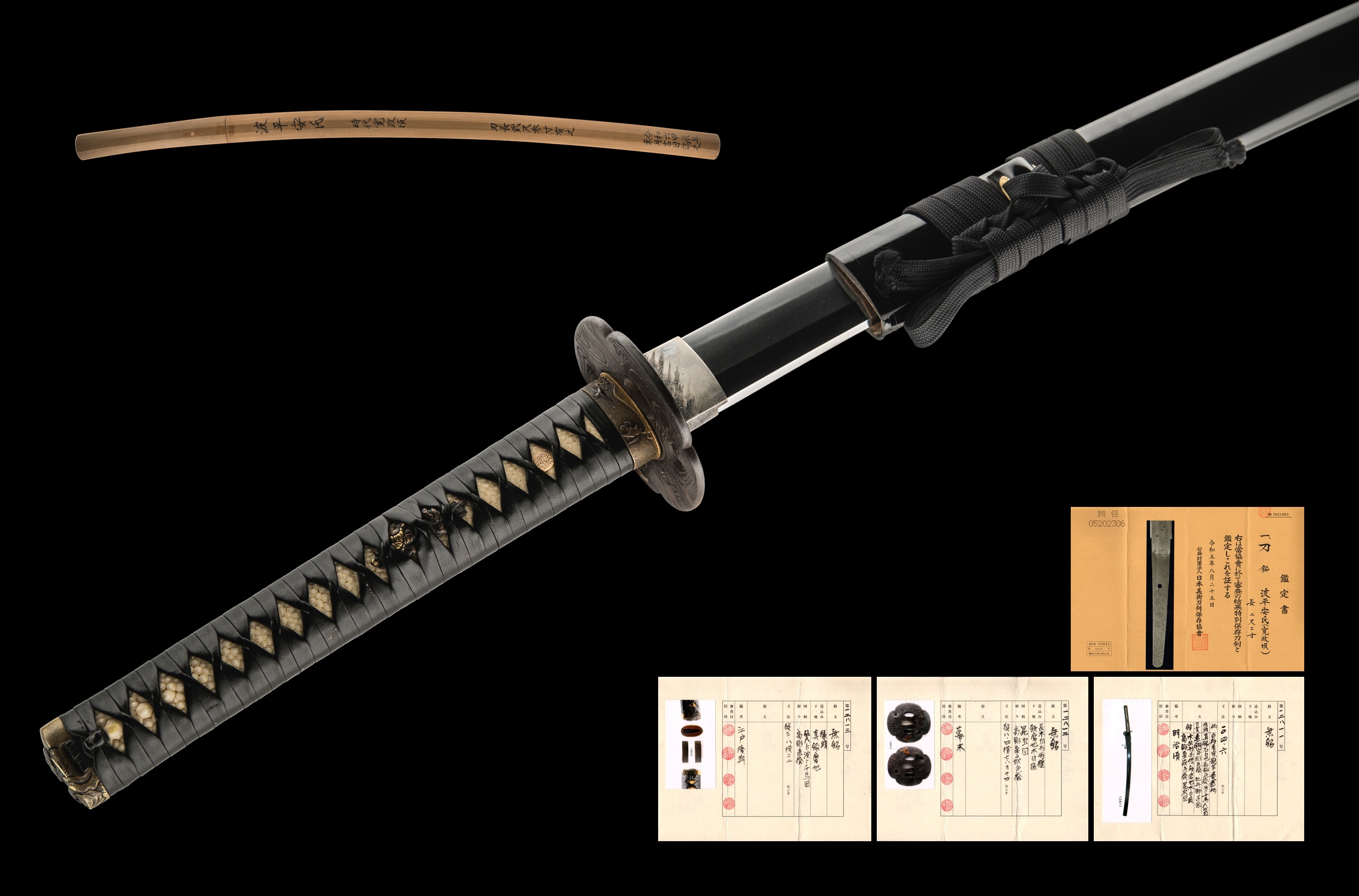
The Naminohira school stands apart as one of Japan’s longest unbroken swordmaking traditions, tracing its roots to Satsuma province in Kyûshû since 987 AD. Founded by smiths who migrated from Yamato province – present-day Nara – the school maintained its fierce loyalty to Yamato-den characteristics right through to the end of the Edo period in 1868. That heritage is written clearly into every aspect of this blade.
This formidable shinshintô katana is the work of Yasuuji, the early smithing name of Yasuyuki, who counted himself the 60th generation of the Naminohira line. Born Hashiguchi Kannojô and son of the 59th-generation Yasutsune, Yasuuji forged this blade during the Kansei era (1789-1801) before adopting the name Yasuyuki in 1801. He died in the Bunka era on May 10, 1808, aged 66. The steel is densely forged in ko-itame and masame-hada with a brilliant suguha-hamon in sparkling nie-deki, the ashi shooting outward like solar flares. The nakago carries the distinctive higaki yasurime – criss-cross file marks named after a cypress-wood fence – an unmistakeable Yamato hallmark.
The sword comes housed in an elegant Meiji-period uchigatana-koshirae lacquered in glossy black, with exceptional fittings throughout. The tsuba, a collaborative work between a tôshô and kinkô, depicts insects crawling across a highly realistic woodgrain surface in polished iron with gold highlights – authenticated by NTHK-NPO Kanteishô. The polished brass fuchi-kashira, attributed to Nara Tsuneshige, contrast a contemplative hermit on the kashira with jubilant birds soaring over waves on the fuchi – a tribute to the school’s very name, Naminohira: calm seas. The original torokusho registration card, serial number 6822, dates to 1952, one of the earliest swords formally registered in Japan, suggesting prior ownership by a prominent family.
| Item Number | UJKA442 |
| Sword Type | Katana |
| Swordsmith | Naminohira Yasuuji (60th Naminohira generation) |
| Swordsmith (JP) | 波平安氏(六十代) |
| Signature | Naminohira Yasuuji |
| School | Naminohira |
| Province | Satsuma |
| Period | Shinshintô – Kansei era (1789~1801) |
| Nagasa | 69.7cm |
| Sori | 1.50cm |
| Moto-haba | 3.14cm |
| Weight | 875g |
| Nakago | Ubu (original, unaltered); higaki-yasurime (criss-cross file marks) |
| Jihada | Densely-forged ko-itame and masame-hada with ji-nie |
| Hamon | Thick suguha in nie-deki with flaring ashi |
| Boshi | Komaru-bôshi |
| Certificates | NBTHK Tokubetsu Hozon; NTHK-NPO Kanteishô (koshirae, fuchi-kashira and tsuba certified as Authentic) |
| Fujishiro Rank | Chû-saku |
| Sayagaki | Nozomi-san (shodô artist) — inscribed on a lucky day in the eighth month, Reiwa 6 (August 2024) |
| Koshirae | Meiji-period uchigatana-koshirae (kuro-ronuri saya lacquered in glossy black) |
| Tsuba | Polished iron with woodgrain texture and gold-inlaid insects; attributed to collaborative tôshô and kinkô work; late Edo period (1853~1868); NTHK-NPO Kanteishô |
| Fuchi-kashira | Polished brass; attributed to Nara Tsuneshige; late Edo period (1780~1868); hermit on kashira, birds over waves on fuchi; NTHK-NPO Kanteishô |
| Menuki | Shisa lions and peonies; copper with gold accents |
| Tsuka | Black leather wrap (tightly wrapped) |
| Habaki | Silver habaki with diagonal rain file marks |
| Catalogue | Catalogue 42 |
| Status | Sold |
| Includes | Shirasaya, Meiji-period koshirae, fabric bags, stand, kit, printed description |