
ITEM# UJKA387 – Catalogue 36 – Sold
A Mizuta Kunishige Katana (備中国水田住国重)
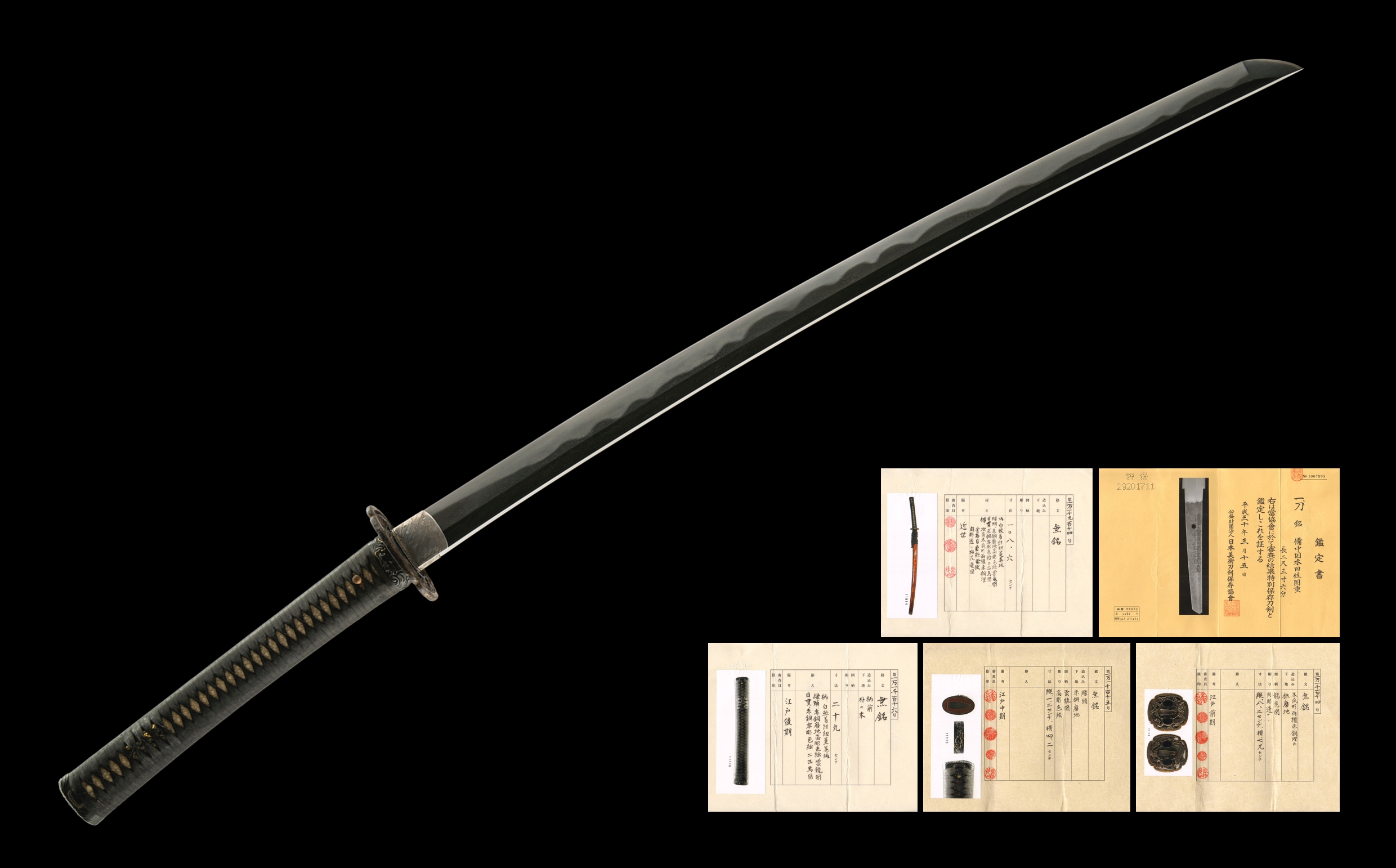
The Mizuta school traces its lineage to the descendants of Ko-Aoe Tametsugu, a group of smiths who settled in Mizuta village in Bitchû province during the Kyoroku era (1528-1532). Known in that early period as Ko-Mizuta, the school underwent a profound transformation in the Shintô period, abandoning its earlier Sue-Bizen and Sue-Mihara influences in favour of a dramatic Sôshû-inspired style – visible nie crystals, surging gunome-midare hamon, and abundant hataraki including sunagashi and kinsuji. The most celebrated smith of this later school was Ôtsuki Yogoro Kunishige, known as the 5th generation Ôyogo Kunishige, whose early death left his son Katsubei under the care of a younger brother, the swordsmith Ichizô.
This wide, muscular katana is the work of Katsubei, the 6th generation and final working smith of the Ôtsuki branch of the Mizuta school. The signed nakago reads Bitchû no Kuni Mizuta jû Kunishige, and the blade is everything that signature promises. The gritty mokume-hada jihada is interlaced with dark pools of chikei, while the aggressive hamon surges in waves of $1 with rivers of kinsuji boiling through – a cauldron of what can only be called Mizuta Sôshû hataraki. The ubu-nakago retains a lovely even patina, confirming the blade has aged well without alteration.
The sword is accompanied by an Edo-period koshirae of exceptional quality. The tsuba is a polished iron multi-lobed guard attributed to the Jôshû Kyô-Shôami school, depicting a tiger and dragon in relief with gold nunome inlay, and certified by NTHK-NPO Kanteishô. The shakudô fuchi-kashira, depicting a cloud dragon (Unryû) on the kashira and dragon motifs on the fuchi, are attributed to Shôami Denshichi of Akita province, circa the middle Edo period – also NTHK-NPO certified. The long tsuka is wrapped in black linen hishimaki style over samekawa, with a pair of horses as menuki. The sword comes complete with a silver habakiwith diagonal file marks and a shirasaya protective scabbard. Notably, this is one of the very first swords formally registered in Japan – the original torokusho carries serial number 2283, registered in Yamagata prefecture (formerly Dewa province) in May 1951.
| Item Number | UJKA387 |
| Sword Type | Katana |
| Swordsmith | Kunishige (6th generation, Ôtsuki branch, Mizuta school) |
| Swordsmith (JP) | 国重 (六代・大月派) |
| Signature | Bitchû no Kuni Mizuta jû Kunishige |
| School | Mizuta |
| Province | Bitchû |
| Period | Shintô – Early Edo period (Kanbun era: 1661-1673) |
| Nagasa | 71.5cm |
| Sori | 1.21cm |
| Moto-haba | 3.37cm |
| Weight | 845g |
| Nakago | Ubu (original, unaltered); sujikai-yasurime (diagonal file marks); length 18.9cm; 1 mekugi-ana |
| Jihada | Gritty mokume-hada with pronounced chikei |
| Hamon | Surging gunome-midare with sunagashi and plentiful kinsuji |
| Boshi | Ko-maru |
| Certificates | NBTHK Tokubetsu Hozon (issued Heisei 30, March 15, 2018); NTHK-NPO Kanteishô x3 (tsuba, fuchi-kashira & tsuka designated as Authentic) |
| Fujishiro Rank | Chû-jôsaku |
| Sharpness Rating | Wazamono |
| Koshirae | Edo-period koshirae |
| Tsuba | Polished iron, multi-lobed; dragon and tiger motif with gold nunome inlay; attributed to Jôshû Kyô-Shôami school, early Edo period (circa 1600-1700); NTHK-NPO Kanteishô certified |
| Fuchi-kashira | Shakudô; dragon motif (fuchi) and Unryû cloud dragon (kashira) with gold inlay; attributed to Shôami Denshichi, Akita province, middle Edo period (circa 1700-1780); NTHK-NPO Kanteishô certified |
| Menuki | Pair of horses; gilt |
| Tsuka | Long tsuka; black nuno (linen) hishimaki-style wrapping over samekawa (ray skin); NTHK-NPO Kanteishô certified |
| Habaki | Silver, with diagonal file marks |
| Catalogue | Catalogue 36 |
| Status | Sold |
| Includes | Shirasaya, Edo koshirae, fabric bags, stand, kit, booklet, description, original torokusho (registration card, 1951) |