
ITEM# UJKA386 – Catalogue 36 – Sold
An Etchû Kiyomitsu Katana (越中清光)
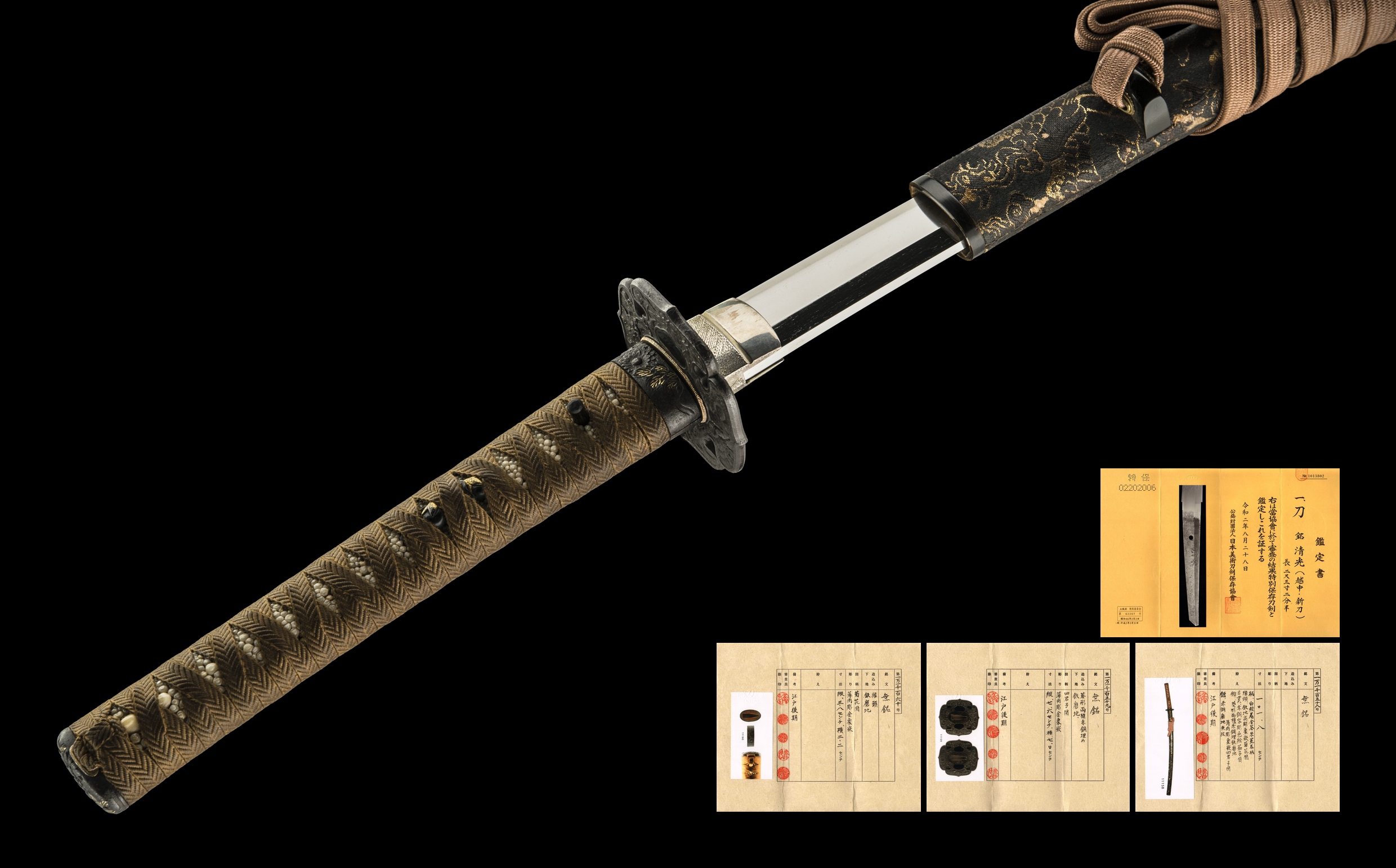
Kiyomitsu was the son of Koshirô Shigekiyo and was given the name Gorôzaemon, with some sources listing his first name as Yaroku. He worked during the Kanbun to Enpô eras (c. 1661-1681) and lived in Etchû province – modern-day Toyama prefecture, a picturesque coastal city on Japan’s main island, Honshû. His blades carry a lovely darkish jigane characteristic of swords forged along the Sea of Japan coast, and the rounded burl grain of the mokume-hada stands out with particular clarity towards the base of the blade. He signed this sword as Kashû jû Kiyomitsu – a resident of Kashû (Kaga) province – suggesting he produced many swords for elite samurai of the neighbouring and wealthy Kaga domain. The bottom of the nakago is shaped in the distinctive Kashû-nakago-jiri style, a short flat area moving into an acute angle that pays tribute to this important provincial relationship.
The blade itself is a model of Shintô-period refinement. The chû-suguha hamon runs bright and even from base to point, its kuichigaiba – the area where the nioguchi overlaps for a noticeable distance along the upper third – marking this as a sword forged firmly within the Yamato tradition. Dark lines of chikei are woven beautifully into the expertly forged mokume-hada, lending the steel a depth and movement rarely seen at this price point. Kiyomitsu is aptly ranked jô-saku and wazamono, a superior swordsmith with a strong reputation for producing extra-sharp blades.
The late Edo uchigatana-koshirae is wrapped in a brocade saya depicting the mythical phoenix (hôô) – a symbol of the Japanese imperial household representing fire, the sun, justice, obedience and fidelity. The shikunshi (‘four gentlemen’) motifs of orchid, bamboo, chrysanthemum and plum blossom on the NTHK-NPO certified tsuba, attributed to the third generation Sunagawa Masayoshi, resonate with Confucian and Zen ideals of purity and perseverance. The fuchi-kashira, attributed to Kikukawa Chôbei of Edo, continues the chrysanthemum theme with gold-inlaid detail of considerable refinement. The menuki are cast as nasu (eggplant), a classic Japanese good-luck motif. This is a Shintô-period samurai sword with a wise, old soul.
| Item Number | UJKA386 |
| Sword Type | Katana |
| Swordsmith | Etchû Kiyomitsu |
| Swordsmith (JP) | 越中清光 |
| Signature | Kiyomitsu |
| Province | Etchû (Toyama) |
| Period | Shintô – Early Edo period (Kanbun to Enpô era: 1661-1681) |
| Nagasa | 70.5cm (ubu) |
| Sori | 1.3cm |
| Moto-haba | 2.98cm |
| Weight | 655g |
| Nakago | Ubu-nakago (original, unaltered tang), kiri-yasurime (horizontal file marks), Kashû-nakago-jiri |
| Jihada | Well-forged mokume-hada with pronounced chikei within a darkish jigane |
| Hamon | Bright and consistent chû-suguha with kuichigaiba and ko-ashi |
| Boshi | Ko-maru |
| Certificates | NBTHK Tokubetsu Hozon (blade); NTHK-NPO Kanteishô (tsuba, fuchi-kashira & koshirae) |
| Fujishiro Rank | Jô-saku |
| Sharpness Rating | Wazamono |
| Koshirae | Late Edo uchigatana-koshirae (hôô mon nishiki-zutsumi saya) – brocade saya with phoenix pattern, c. 1780-1867 |
| Tsuba | Tachi-style polished iron, shikunshi (four gentlemen) motif with gold dot inlay and shakudô-filled hitsu-ana; attributed to Sunagawa Masayoshi III, Edo; NTHK-NPO certified |
| Fuchi-kashira | Kiku (chrysanthemum) motif with gold inlay, attributed to Kikukawa Chôbei, Edo; NTHK-NPO certified |
| Menuki | Nasu (eggplant) motif |
| Habaki | Silver habaki with diagonal file marks |
| Catalogue | Catalogue 36 |
| Status | Sold |
| Includes | Shirasaya, Edo koshirae, fabric bags, stand, kit, booklet, description |