
ITEM# UJKA298 – Catalogue 29 – Sold
A Yamato Shizu Katana (大和志津)
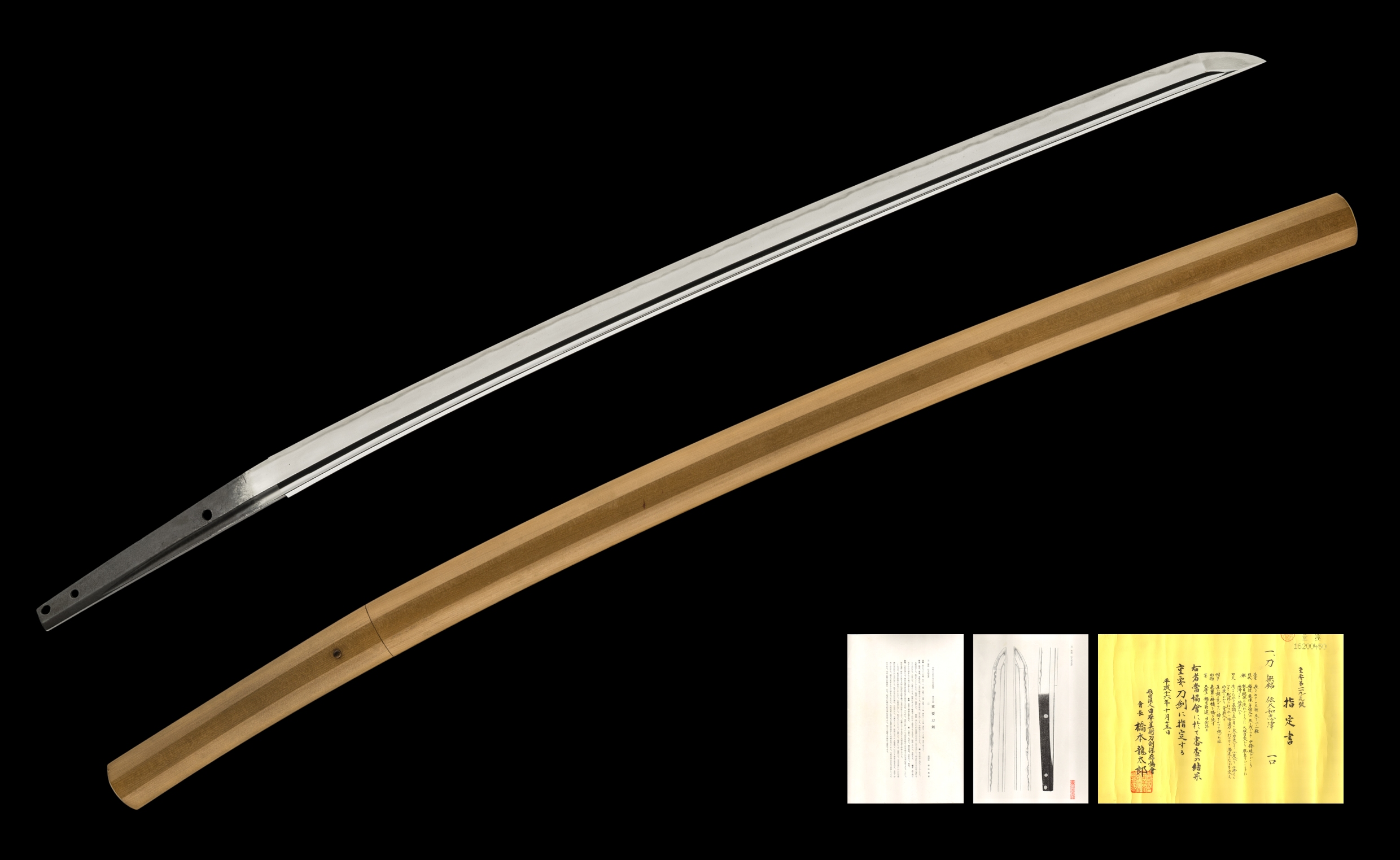
Kaneuji stands apart among the ten disciples of Masamune. Trained first under Kanenaga of the Tegai school in Yamato province, he inherited the ‘Kane’ character before moving to Kamakura to study under the greatest swordsmith in Japanese history. Of all Masamune’s students, Kaneuji is considered to have come closest to replicating the master’s style. When he eventually settled in the town of Shizu in Mino province, his fusion of Sôshû and Yamato traditions was so distinctive that he became regarded as the founder of the Mino tradition – the fifth of the great Kotô schools. Swords attributed to his period working in Yamato, before his time in Shizu, carry the classification Yamato Shizu; the name is also applied to the school he left behind in Yamato, which continued faithfully into the late Nanbokuchô period.
This long and vibrant katana epitomises the work of Kaneuji and his students in Yamato province. The structure is muscular and commanding – thick kasane (spine), a high shinogi (ridge), and plenty of niku (meat) that speaks emphatically to the Yamato tradition and the late Kamakura period. The jihada showcases a magnificent blend of the brilliant Tegai school and the energy of the Sôshû tradition. Vivid spirals of o-itame burl grain jump out of the blade, the surface taking on a waviness in places – nagare-hada – and throughout, beautiful dark channels of chikei weave through steel that shines with ji-nie. Full-length bo-higrooves run on both sides, tapering with kaki-nagashi into the tang.
The hamon is a showcase in hataraki. A shallow, flowing notare-chô is mixed with gunome, pointed togariba, and tight semi-circular ko-gunome – the togari being a key Mino characteristic traceable directly to Kaneuji. Across the blade appear kinsuji, sunagashi, half-moon uchinoke (deeply Tegai in character), gorgeous yubashiri that cluster like droplets of water, and kuichigai-ba – the classic Yamato trait where the hamon overlaps to form parallel lines. The boshi is hakikake, sweeping and vigorous, finishing in yakitsume. The NBTHK described this katana as a masterwork of the Yamato Shizu school. Seven centuries on, it is not difficult to see why.
| Item Number | UJKA298 |
| Sword Type | Katana |
| Attribution | Yamato Shizu (Den Yamato-Shizu, o-suriage mumei) |
| School | Yamato Shizu (Kaneuji school) |
| Province | Yamato |
| Period | Kotô – Late Kamakura (circa 1319-1330) |
| Nagasa | 72.05cm |
| Sori | 1.1cm |
| Moto-haba | 2.9cm |
| Weight | 700g |
| Nakago | O-suriage, kirijiri, sujikai-yasurime, three mekugi-ana, mumei |
| Jihada | Pronounced itame and nagare-hada with o-itame, ji-nie and chikei |
| Hamon | Ko-nie-laden shallow notare-chô mixed with gunome, togariba, ko-gunome, ko-ashi, hotsure, kuichigai-ba, uchinoke, yubashiri, sunagashi and kinsuji |
| Boshi | Sugu-chô with hakikake, yakitsume |
| Horimono | Full-length bo-hi on both sides with kaki-nagashi into the tang |
| Habaki | Ni-ju habaki (double habaki) |
| Certificates | NBTHK Juyo Token (50th session, October 15, 2004) |
| Catalogue | Catalogue 29 |
| Status | Sold |
| Includes | Shirasaya, fabric bag, stand, kit, DVD, booklet, printed description |