
ITEM# UJKA273 – Catalogue 31 – Sold
A Shodai Yoshimichi Katana (丹波守吉道)
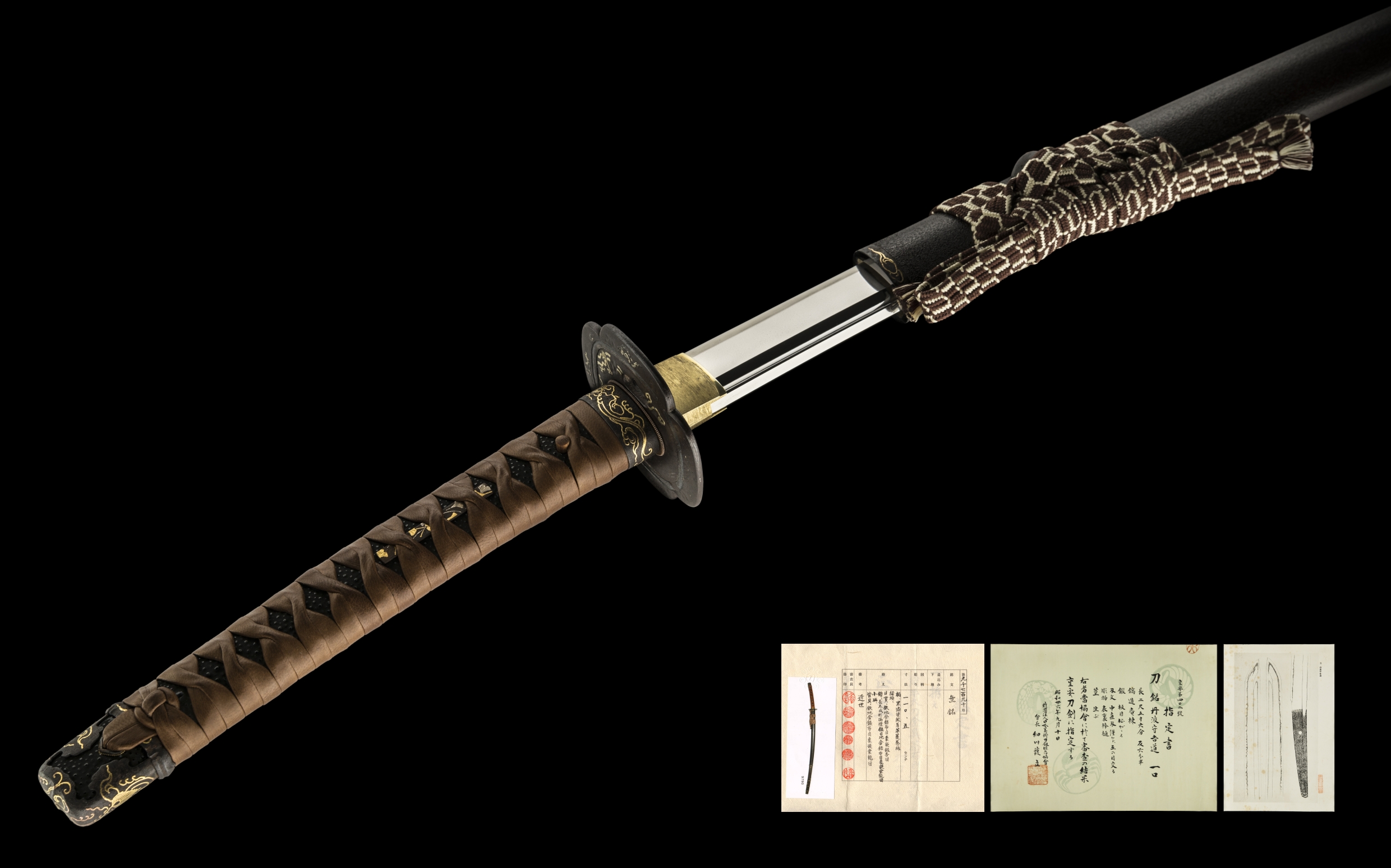
Shodai Yoshimichi is among the most celebrated smiths of the early Shintô period. The third son of Seki Kanemichi, he relocated to Seidonin in Kyoto with his father and brothers in February of 1593, and received the Tanba no Kami title on December 7th, 1595. His line endured for eleven generations in Kyoto and is known collectively as Kyo-Tanba 京丹波 – a branch of the Mishina school whose name became synonymous with the extraordinary sudare-ba hamon, a rippling temper line resembling a bamboo curtain that shodai pioneered.
This katana stands apart for two significant reasons. Yoshimichi predominantly crafted wakizashi and tanto – katana of this length, measuring 77.5cm, are exceptionally rare from his hand. More striking still is the hamon: a deep, rich chû-suguha worked in fine ko-nie, an interpretation so far removed from the sudare-ba he is famous for that the NBTHK Juyo White Paper noted its rarity explicitly, describing the suguha as showing abundance of ko-nie with the ha based on the Mino tradition and elements of Yamato influence. No collector expecting the bamboo curtain would recognise this blade as his work on first glance.
The blade is dressed in a beautiful custom sô-handachi koshirae built expressly for the piece in Japan, mounting a complete set of certified Higo fittings from the Mid-Edo period (early 1700s). The motif of rain dragons in gold inlay runs consistently through the tsuba, fuchi-kashira, and menuki, providing a unified and commanding presentation befitting the quality of the blade. The sword was designated NBTHK Juyo Token in the 7th session (1961) and carries a sayagaki by Honma Junji (Kunzan), written in the eighth lunar month of the Year of the Ox (1961).
| Item Number | UJKA273 |
| Sword Type | Katana |
| Swordsmith | Shodai Yoshimichi (Tanba no Kami Yoshimichi) |
| Swordsmith (JP) | 丹波守吉道 |
| Signature | Tanba no Kami Yoshimichi |
| School | Kyo-Tanba (Mishina school) |
| Province | Yamashiro (Kyoto) |
| Period | Shintô – Early Edo period (circa Keichô era: 1596-1615) |
| Nagasa | 77.5cm |
| Sori | 1.9cm |
| Moto-haba | 3.2cm |
| Weight | 910g |
| Nakago | Ubu (original, uncut tang), kengyô-jiri (sword-shaped butt end), sujikai-yasurime (diagonal file marks) |
| Jihada | Itame with masame, ji-nie and chikei |
| Hamon | Chû-suguha in ko-nie-deki with a wide nioiguchi mixed with gunome and ashi |
| Boshi | Midare-komi with ko-maru-kaeri, hakikake, and tobiyaki on the omote side |
| Certificates | NBTHK Juyo Token (7th session, 1961) |
| Fujishiro Rank | Jo-saku |
| Sayagaki | Honma Junji (Kunzan) – Tanba no Kami Yoshimichi, shodai, dated eighth lunar month, Year of the Ox (1961) |
| Koshirae | Sô-handachi koshirae with Higo fittings (certified NTHK-NPO); cha-ishime-ji-nuri saya in brown stone-surface finish; certified by NTHK-NPO |
| Tsuba | Polished iron, Higo tradition (later Jingo School), rain dragons in gold inlay; NTHK-NPO Kanteisho certificate, Late Edo period (1780-1867) |
| Fuchi-kashira | Higo school, rain dragon motif in gold inlay, Mid-Edo period (early 1700s) |
| Menuki | Long rectangular handachi-style menuki, rain dragon motif, matching Higo set |
| Tsuka | Wrapped in deer skin (鹿革), diamond lozenge pattern |
| Habaki | Gold-washed with unique horn trim and horizontal file marks |
| Catalogue | Catalogue 31 |
| Status | Sold |
| Includes | Shirasaya, sô-handachi koshirae, NBTHK Juyo Token certificate (7th session), NTHK-NPO koshirae certificate, sayagaki by Honma Junji |