
ITEM# UJKA233 – Sold
A Yamato Shizu Katana (大和志津)
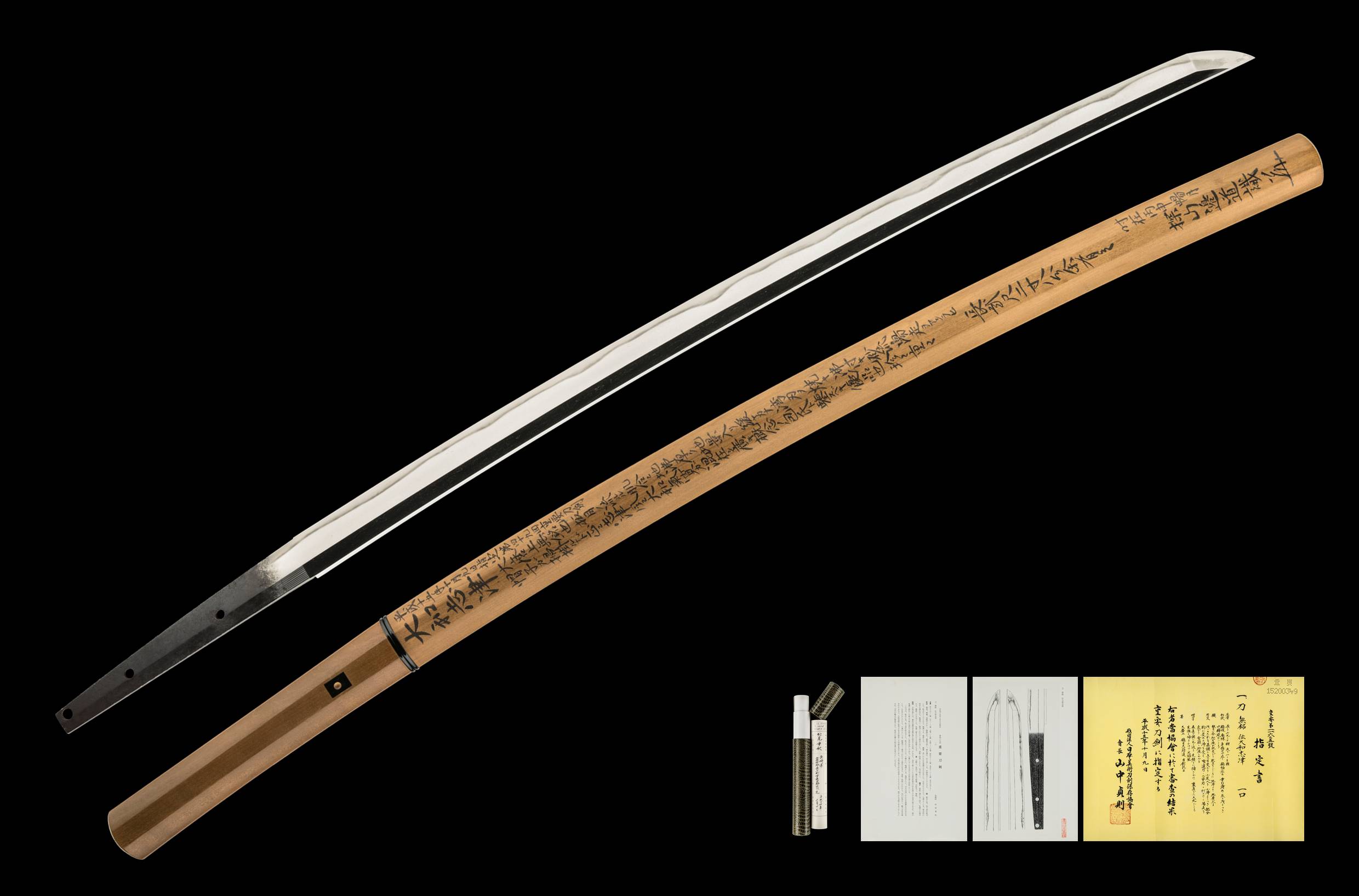
Kaneuji (兼氏) is counted among the Masamune Juttetsu – the Ten Students of Masamune – and is widely regarded as the one who most closely captured his master’s spirit in steel. His path to that position was itself extraordinary: he trained first under Kanenaga of the Tegai school in Yamato province, inheriting the character “Kane” from him, then journeyed to Kamakura to study under Masamune himself. This double foundation – Yamato tradition on one side, Sôshû mastery on the other – produced a synthesis unlike anything else in the kotô canon. Works made during his time in Yamato, before his eventual move to the town of Shizu in Mino, are designated Yamato Shizu; these blades retain the structural signature of the Yamato schools while already showing the Sôshû influence that would come to define him. He would go on to become the founder of the Mino tradition – the fifth and last of the great kotô schools.
This blade is a textbook example of what Tanobe Michihiro calls “a true mix of Shizu and Yamato features.” The sugata is wide and substantial, with a high shinogi, thin kasane, shallow sori, and an extending chû-kissaki – carrying the authority of a sword made in an age of war. The kitae is an itame mixed with mokume and partly nagare, with ji-nie and chikei moving through the grain; the close photography reveals the marvelous burl surface that is one of the most immediately recognisable hallmarks of the school. The hamon runs on a shallow notare base, animated throughout with gunome, many ko-ashi, ko-nie, kuichigai-ba, nijû-ba, uchi-noke, yubashiri, kinsuji, and sunagashi, with a bright nioiguchi. The bôshi features strong hakikake on both sides, the ura tending to kaen – vigorous and alive to the very tip. Both ji and ha are in fine condition.
Tanobe Michihiro (Tanzan-sensei) inscribed the shirasaya in November 2016, confirming the Yamato Shizu attribution and declaring plainly that the blade “should be called Kaneuji – rare and important.” Few endorsements in the world of Japanese swords carry more weight. The blade also holds the 67th NBTHK Polishing Award, presented for the exceptional polishing work carried out by Hirai Takamori – recognition that the blade has been brought to the finest possible state of presentation.
| Item Number | UJKA233 |
| Sword Type | Katana |
| Attribution | Yamato Shizu, attributed to Kaneuji (ô-suriage mumei) |
| School | Yamato Shizu (Kaneuji) |
| Province | Yamato |
| Period | Kotô – Late Kamakura period (circa 1319) |
| Nagasa | 69.1 cm |
| Sori | 1.3 cm |
| Moto-haba | 2.9 cm |
| Weight | 680 g |
| Nakago | Ô-suriage, kirijiri, osujikai yasurime, three mekugi-ana, mumei |
| Jihada | Itame mixed with mokume and partly nagare; ji-nie; chikei |
| Hamon | Shallow notare base with gunome; many ko-ashi; ko-nie with some coarser nie; kuichigai-ba, nijû-ba, uchi-noke, yubashiri, kinsuji, sunagashi; bright nioiguchi |
| Bôshi | Omote: straight with round kaeri and hakikake; ura: straight with large round kaeri, strong hakikake, tending to kaen |
| Certificates | NBTHK Jûyô Tôken (49th session, October 9, 2003) NBTHK 67th Polishing Award – Hirai Takamori |
| Sayagaki | Tanobe Michihiro (Tanzan-sensei) — Yamato Shizu, attributed to Kaneuji, ô-suriage mumei; “rare and important, should be called Kaneuji”; November 2016 (Heisei 28, year of the fire monkey) |
| Status | Sold |