
ITEM# UJKA156 – Catalogue 22 – Sold
A Sukekuni Katana (備前守源祐国)
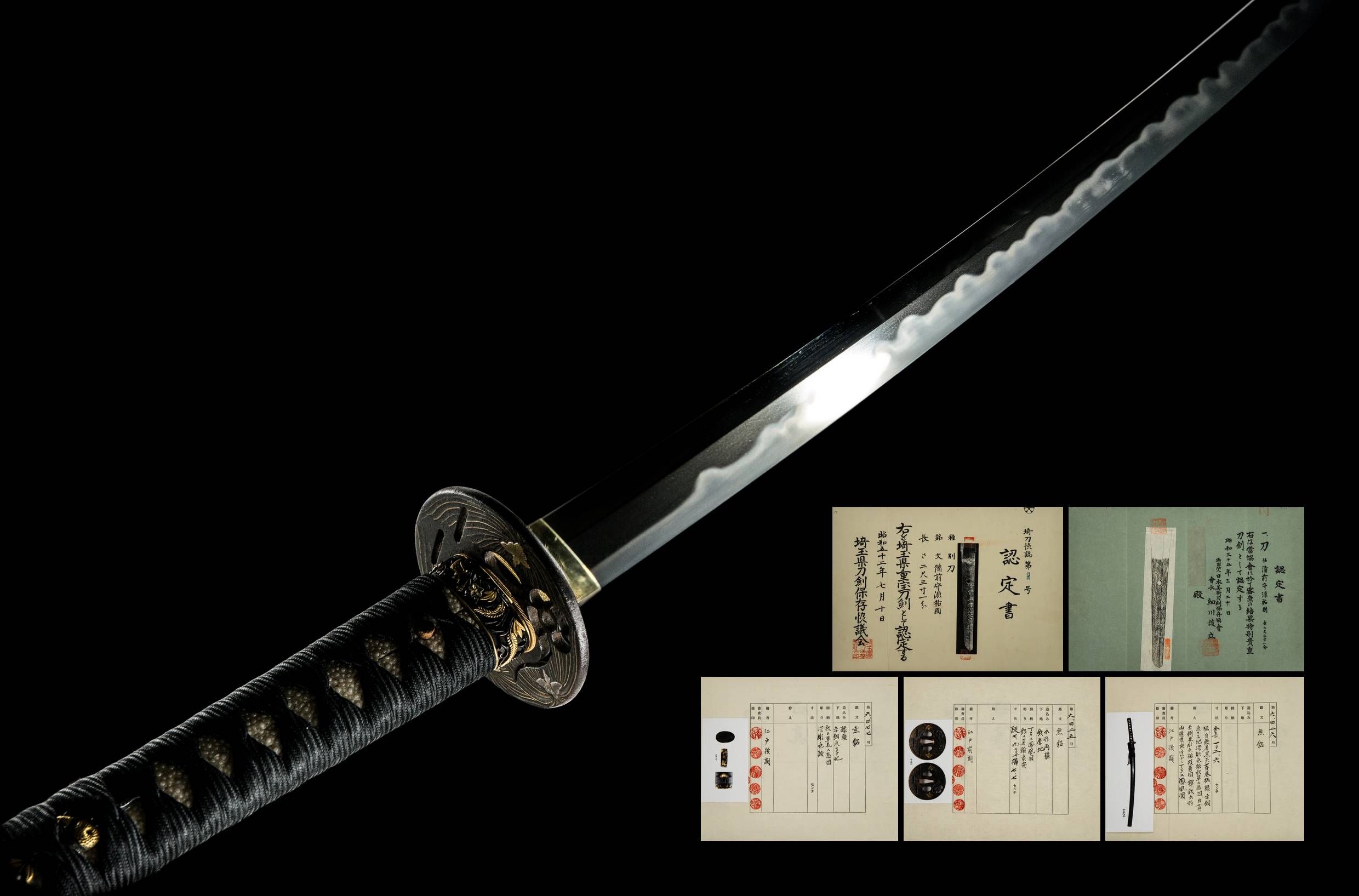
The Osaka Ishido School carries the Bizen tradition forward into the Edo period, tracing its lineage through smiths like Katsumitsu, Munemitsu and Yoshitsugu. First generation Yasuhiro, second son of Tameyasu, trained the maker of this exceptional katana – Bizen no Kami Minamoto Sukekuni – who worked from Settsu province, modern-day Osaka. The school’s name derives from its proximity to the Ishido temple in the Gamo district, and its reputation rests on an unwavering commitment to Bizen-style workmanship carried into the vibrant Kanbun era.
Formally ranked Chujo-saku, this josun katana may well represent Sukekuni’s finest hour. The surging dai-gunome midare hamon is packed with sunagashi and kinsuji – brushed streaks and shining threads of steel activity reminiscent of the great Toranba chief Sukehiro. The well-forged ko-itame tsumu jihada provides a disciplined foundation that only sharpens the drama of the temper line. This is a joyous, spirited sword; the kind that lifts the room when it is drawn.
The koshirae is of the highest Edo-period order. A magnificent early Edo tsuba attributed to the Kyo Shoami School presents the houhou (phoenix) in polished iron with bright inlays of silver and brass – imperial symbolism rendered with extraordinary craft. The fuchi-kashira depicting autumn plants, birds and flowers in gold and shibuichi is certified by NTHK-NPO Kanteisho, as are the tsuba fittings separately. Imperial chrysanthemum menuki complete a mounting of rare coherence. Six certificates of authenticity accompany the sword in total, including the coveted NTHK-NPO Yushusaku and a rare Juyo Token issued by Saitama Prefecture in 1977. The blade has been freshly polished to a very high standard.
| Item Number | UJKA156 |
| Sword Type | Katana |
| Swordsmith | Bizen no Kami Minamoto Sukekuni |
| Swordsmith (JP) | 備前守源祐国 |
| Signature | Bizen no Kami Minamoto Sukekuni |
| School | Osaka Ishido |
| Province | Settsu (Osaka) |
| Period | Shintô – Early Edo period (Kanbun era: 1661-1673) |
| Nagasa | 69.6cm |
| Sori | 1.7cm |
| Moto-haba | 3.1cm |
| Weight | 725g |
| Nakago | 18.3cm, 1 mekugi-ana |
| Jihada | Ko-itame tsumu |
| Hamon | Yakidashi, dai-gunome midare, ashi, kinsen, sunagashi |
| Certificates | NBTHK Tokubetsu Kicho (Showa 35, 1960); NTHK-NPO Yushusaku; Saitama Prefecture Juyo Token; NTHK-NPO Kanteisho (sword fittings); NTHK-NPO Kanteisho (tsuba); NTHK-NPO Kanteisho (fuchi-kashira) |
| Fujishiro Rank | Chujo-saku |
| Koshirae | Edo-period koshirae |
| Tsuba | Early Edo period, attributed to Kyo Shoami School; polished iron with silver and brass inlay; phoenix (houhou) with 4-leaf clover design |
| Fuchi-kashira | Mino school; autumn plants, flowers and birds in gold and shibuichi; NTHK-NPO Kanteisho certified |
| Menuki | Imperial chrysanthemum (kiku) |
| Habaki | Yujo-habaki (gold on copper base) |
| Catalogue | Catalogue 22 |
| Status | Sold |
| Includes | Shirasaya, koshirae, sword fabric bags, sword stand, maintenance kit |