
ITEM# UJKA466 – Catalogue 47 – Sold
A Ko-Kongôbyôe Katana (古金剛兵衛)
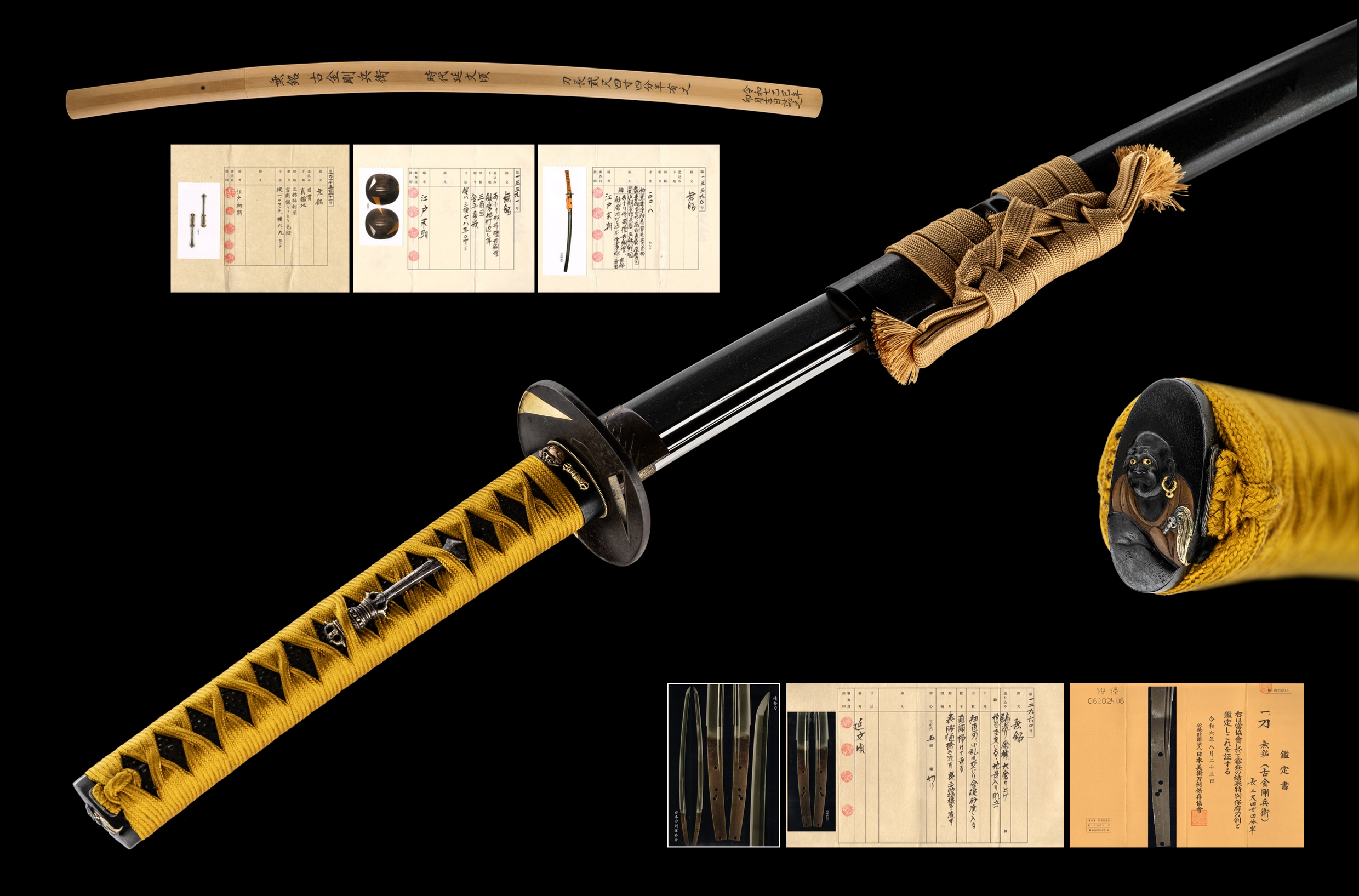
This Nambokuchô powerhouse of a katana is certified by the NBTHK as Tokubetsu Hozon to the Ko-Kongôbyôe school of Chikuzen province. The NTHK-NPO went further, awarding its highest honour of Yûshûsaku and attributing the blade to the smith Moritaka. The school is believed to descend from a yamabushi (mountain ascetic) named Morikuni, who forged swords near Mt. Hôman, a site associated with esoteric Buddhism. His son Moritaka carried the tradition forward, and later generations continued to use the name. The Kongôbyôe smiths were respected for harmonising technical skill with spiritual discipline, embodying the ethos of warrior-monks.
Measuring 74.1cm and weighing 940g, the blade is a fine example of Nambokuchô construction. Jihada lovers will appreciate the standing-out itame of large grain, interspersed with mokume, ji-nie and lively chikei, all visible even within the hardened area. The hamon is a hoso-suguha base with ko-midare, enhanced by kinsuji and sunagashi, and the boshi sweeps with hakikake. A koshi-hi and futasuji-hi (twin grooves) add to the commanding presence. The ô-suriage nakago carries five mekugi-ana, evidence of five separate shortenings as successive owners remounted the sword for practical use. A long and active life in service is part of its appeal.
The uchigatana koshirae, dating to the late Edo period, features an aogai mother-of-pearl lacquered saya, gold-coloured tsuka-ito and sageo, and a hishi-maki wrapped tsuka over black-lacquered samegawa. Buddhist motifs recall the school’s mountain origins: the menuki depict a vajra-hilted ken associated with Fudô Myôô, the fuchi signed Toshihisa shows a sanko-zuka, goko-rei and mokugyo, and the kashira portrays Daruma. The iron tsuba by Itô Katsumi is inlaid with gold triangles representing the Threefold Awakening of Buddhism. The shirasaya carries a sayagaki by Nozomi-san. Feel the energy!
| Item Number | UJKA466 |
| Sword Type | Katana |
| Attribution | Ko-Kongôbyôe, attributed to Moritaka (mumei) |
| School | Ko-Kongôbyôe |
| Province | Chikuzen |
| Period | Chû-Kotô – Nambokuchô (Enbun era: 1356-1361) |
| Nagasa | 74.1cm |
| Sori | 1.3cm |
| Moto-haba | 3.17cm |
| Weight | 940g |
| Nakago | Ô-suriage, 21.8cm, five mekugi-ana, kiri-yasurime |
| Jihada | Well-forged standing-out itame mixed with mokume, ji-nie and plentiful chikei |
| Hamon | Bright hoso-suguha with ko-midare, kinsuji and sunagashi |
| Boshi | Hakikake (sweeping) |
| Certificates | NBTHK Tokubetsu Hozon (Reiwa 6, August 23, 2024); NTHK-NPO Yûshûsaku (Reiwa 6, December 15, 2024); NTHK-NPO Kanteishô for koshirae, menuki and tsuba |
| Sayagaki | Nozomi-san (shodo artist) – inscribed in the 4th month, Reiwa 7 (April 2025) |
| Koshirae | Uchigatana koshirae with aogai-mijin-nuri saya, gold-coloured tsuka-ito and sageo, late Edo period (1780-1868) |
| Tsuba | Iron with gold-inlaid triangles, by Itô Katsumi, late Edo period |
| Fuchi-kashira | Fuchi signed Toshihisa with vajra motifs; kashira depicting Daruma |
| Menuki | Vajra-hilted ken (sanko-ken) associated with Fudô Myôô |
| Tsuka | Hishi-maki in gold-coloured braid over black-lacquered samegawa |
| Habaki | Copper habaki with rainfall file marks |
| Catalogue | Catalogue 47 |
| Status | Sold |
| Includes | Shirasaya, Daruma koshirae, fabric bags, stand, kit, printed description |