
ITEM# UJKA471 – Sold
A Chôgi Katana (備州長船長義)
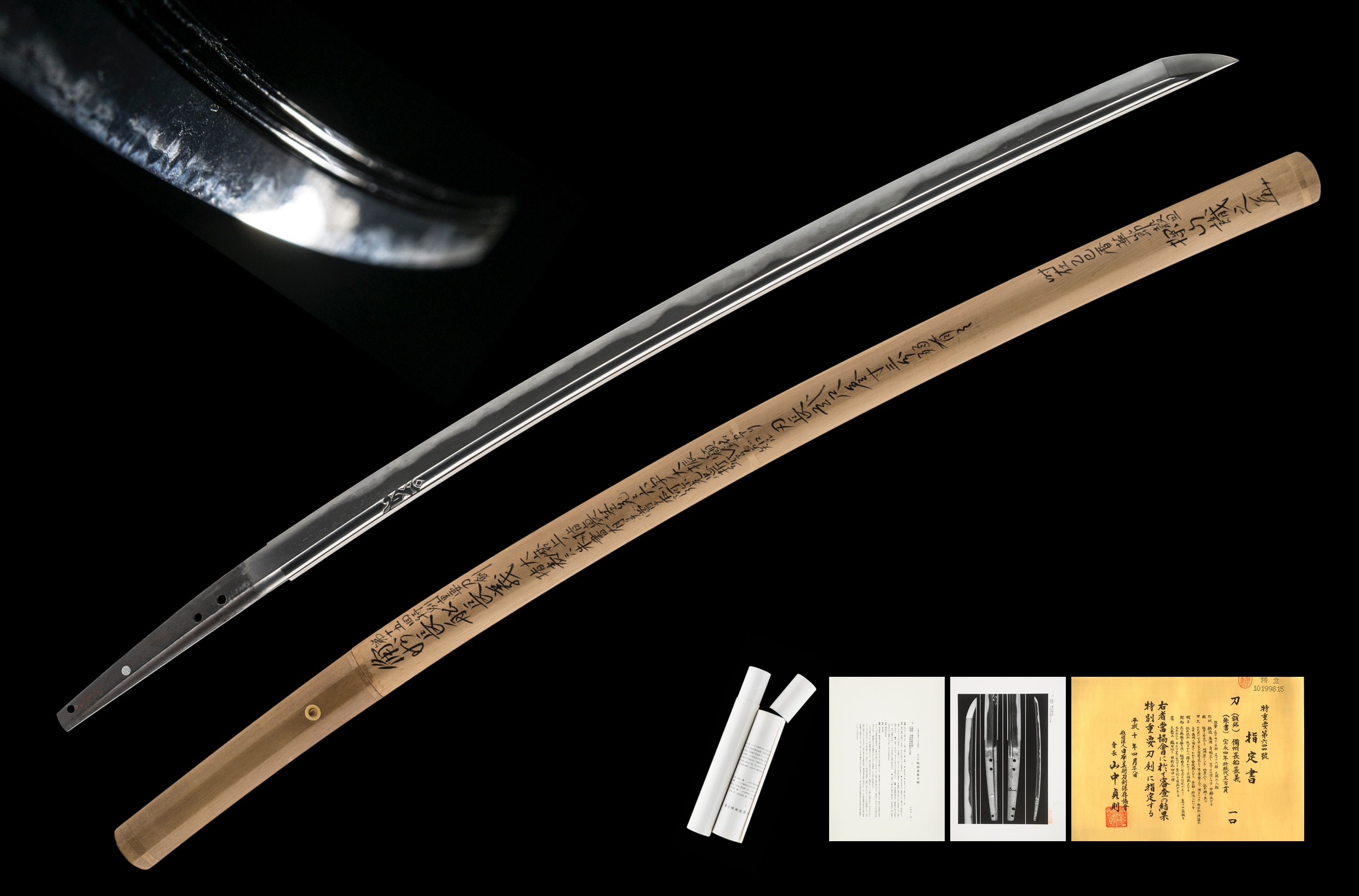
Osafune Chôgi (長船長義) was one of the most distinctive and celebrated swordsmiths of the mid-14th century. Working in Bizen province during a period of conflict and stylistic innovation, he emerged as a central figure of the Sôden-Bizen tradition – a hybrid style blending the elegance of Bizen-den with the bold, expressive intensity of Sôshû-den. A son of Osafune Mitsunaga, he descended from a lineage distinct from mainline Osafune smiths like Nagamitsu or Kagemitsu, and is traditionally counted among the Masamune Jittetsu, the Ten Great Disciples of Masamune – a mark of the lasting esteem his work commands. Contemporary comparison pairs him with Kanemitsu: if Kanemitsu is likened to a graceful plum blossom, Chôgi is cherry blossoms in full bloom – an apt metaphor for his vivid hamon and fierce spirit.
This katana captures the essence of Chôgi’s dynamic style. The jihada shows flowing itame mixed with mokume and abundant chikei, enhanced by thick ji-nie and a midare-utsuri. The hamon is a vigorous nie-laden notare mixed with chôji and gunome, filled with ashi, yô, and lively nie. In places the nie breaks apart in brilliant bursts of nie-kuzure. Yubashiri and tobiyaki rise along the upper sections in a flamboyant hitatsura-like manner, while bold kinsuji and sunagashi dance across the steel. The bôshi sweeps vigorously to kaen. The blade carries a bôhi with accompanying futatsuji-hi on both sides, and a Buddhist bonji carving on the body with traces continuing into the nakago, alongside a suken.
The sword is ô-suriage (greatly shortened) but its original signature survives as a gakumei – the original section of the tang bearing the inscription has been carved out and inlaid into the current nakago, a technique reflecting deep respect for Chôgi’s name. On the reverse, a shugaki (red lacquer inscription) records an origami appraisal by Hon’ami Kôchû (本阿弥光忠, 1654-1725), dated Hôei 4 (1707) and valued at 500 kan – direct evidence of the sword’s prestige during the early Edo period. The blade holds a Shizuoka Prefecture bunkazai (Cultural Property) designation from 1956 and was among the very first swords formally registered in Japan in 1951, with provenance pointing to a prominent daimyô family. The shirasaya carries a Tanobe Michihiro sayagaki dated spring 2025.
| Item Number | UJKA471 |
| Sword Type | Katana |
| Swordsmith | Chôgi (first generation) |
| Swordsmith (JP) | 長義 |
| Signature | Bishû Osafune Chôgi (備州長船長義) – preserved as gakumei (framed inscription inlaid into shortened tang) |
| School | Osafune school, Bizen province (Sôden-Bizen tradition) |
| Province | Bizen |
| Period | Kotô – Nanbokuchô period (Jôji era: 1362-1368) |
| Nagasa | 70.5 cm |
| Sori | 1.6 cm |
| Moto-haba | 2.8 cm |
| Weight | 705 g |
| Nakago | Ô-suriage; kiri-yasurime; gakumei on ura (original signature inlaid as framed inscription); shugaki (red lacquer) on omote recording Hon’ami Kôchû origami valuation; four mekugi-ana (one plugged) |
| Jihada | Itame mixed with mokume, plenty of ji-nie, chikei, and midare-utsuri |
| Hamon | Nie-laden notare mixed with chôji, gunome, many ashi and yô; thick nie; nie-kuzure; yubashiri and tobiyaki tending to hitatsura in upper sections; kinsuji and sunagashi throughout |
| Boshi | Midare-komi with abundant hakikake tending vigorously to kaen |
| Certificates | NBTHK Tokubetsu Jûyô Tôken (15th session, April 28, 1998); Shizuoka Prefecture Bunkazai (Cultural Property) designation, October 17, 1956 |
| Sayagaki | Tanobe Michihiro – Bishû Osafune Chôgi, ô-suriage, blade length approx. 70.5 cm, dated Reiwa kinoto-mi kasetsu (spring 2025) + monogram |
| Habaki | Gold ni-ju habaki with copper ground |
| Status | Sold |
| Includes | Shirasaya with Tanobe sayagaki, fabric bags, sword stand, maintenance kit, printed description |