
ITEM# UJKA351 – Sold
A Ko-Aoe Katana (古青江)
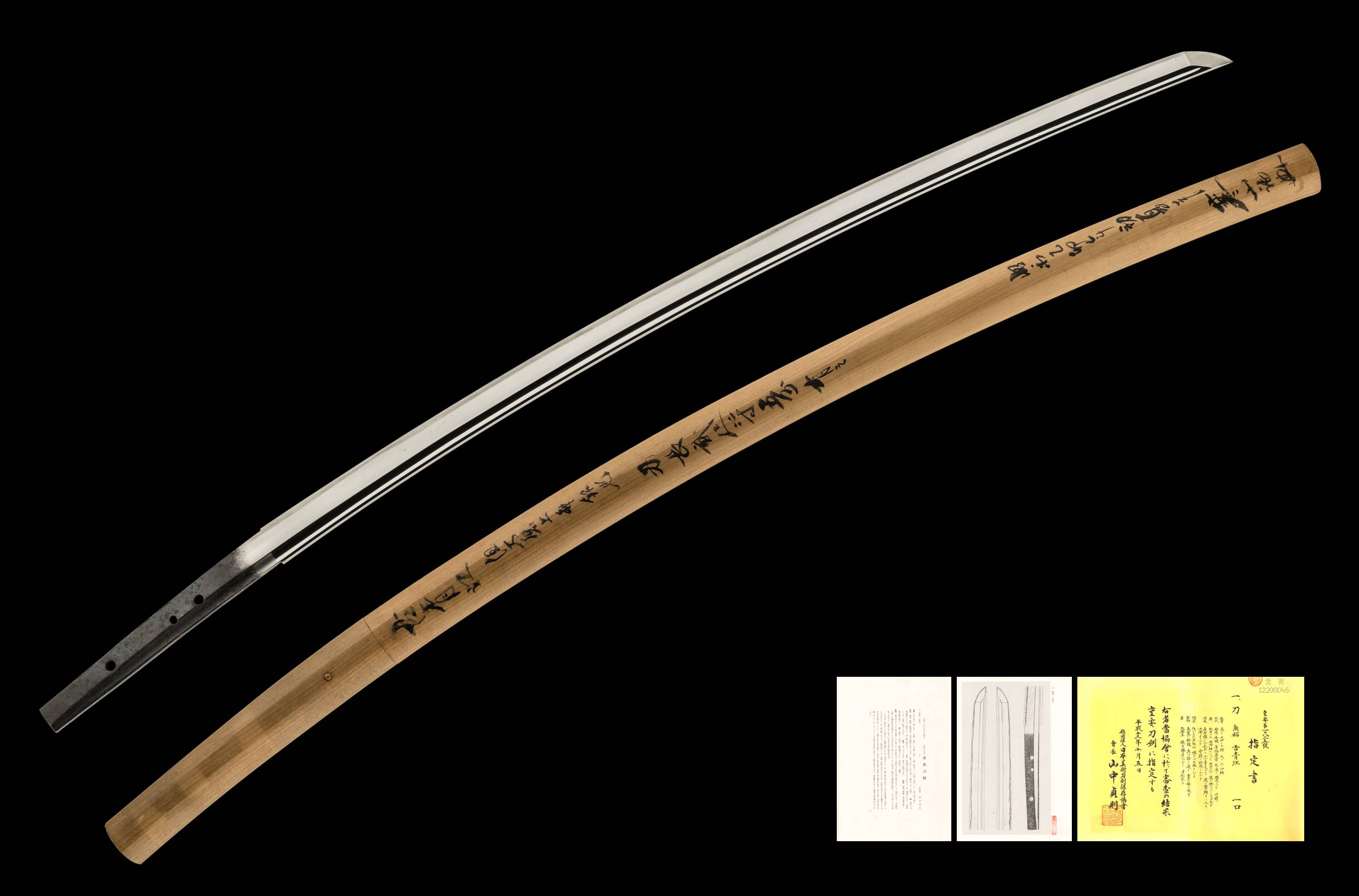
The Ko-Aoe school flourished in Bitchu province from the end of the Heian period through the mid-Kamakura period, working in the areas of Koi and Masu in a region long celebrated for its iron production. Their blades are classified apart from their Bizen neighbours: similar in workmanship to Ko-Bizen, but with a slightly more austere character – plainer, more restrained, and possessed of a quiet authority that collectors have prized for centuries. This katana, designated 46th NBTHK Juyo Token, is a textbook example of that tradition at its finest.
The blade is deeply koshi-zori in shape, with a narrow mihaba and chu-kissaki that date it conservatively to the early 1200s – a shape consistent with the transition from the late Heian to the early Kamakura period, as confirmed by the Juyo Token certificate. The jihada is a dense itame with fine ji-nie, chikei, and a faint but present utsuri. The hamon is a ko-nie-laden suguha-cho mixed with ko-midare, ko-choji, and many ashi and yo, with kinsuji and sunagashi threading through – restrained but technically accomplished, with beautiful clusters of nie known as yo visible inside the hamon. The boshi is an undulating notare-komi that runs out in yakitsume fashion, and the bo-hi (groove) runs through on the omote as kaki-toshi and ends into the nakago as kaki-nagashi on the ura side.
The blade is o-suriage (greatly shortened), its original length lost to time, with three mekugi-ana marking the passage through successive generations of ownership. The sword comes with its original torokusho (registration card) dated Showa 26 (1951) – the very first year swords were formally registered in Japan, with a serial number of just 1140, suggesting this blade was once held by a prominent daimyo family. The sayagaki is by Sato Kanzan, one of the great connoisseurs of 20th-century Japanese sword scholarship, inscribed in 1975.
| Item Number | UJKA351 |
| Sword Type | Katana (shortened from tachi) |
| Attribution | Ko-Aoe (mumei) |
| School | Ko-Aoe |
| Province | Bitchu |
| Period | Koto – End of Heian to Early Kamakura period (late 1100s to early 1200s) |
| Nagasa | 74.2 cm |
| Sori | 2.6 cm |
| Moto-haba | 2.88 cm |
| Weight | 790 g |
| Nakago | O-suriage mumei, 19.0 cm, 3 mekugi-ana, katte-sagari yasurime |
| Jihada | Dense itame with fine ji-nie, chikei, and faint utsuri |
| Hamon | Ko-nie-laden suguha-cho mixed with ko-midare, ko-choji, many ashi and yo; kinsuji and sunagashi |
| Boshi | Undulating notare-komi, running out in yakitsume fashion |
| Certificates | NBTHK Juyo Token (46th session) |
| Sayagaki | Sato Kanzan – Ko-Aoe, greatly shortened and unsigned, blade length 74.2cm, dated Showa kinoto-usagidoshi (1975) |
| Status | Sold |
| Includes | NBTHK Juyo Token certificate (46th session, in protective tube); Juyo Token white paper (oshigata); original torokusho (registration card, Showa 26/1951); shirasaya with sayagaki by Sato Kanzan; wooden Juyo tag |