
ITEM# UJKA391 – Catalogue 37 – Sold
A Kanetaka Katana (豊後守藤原金高)
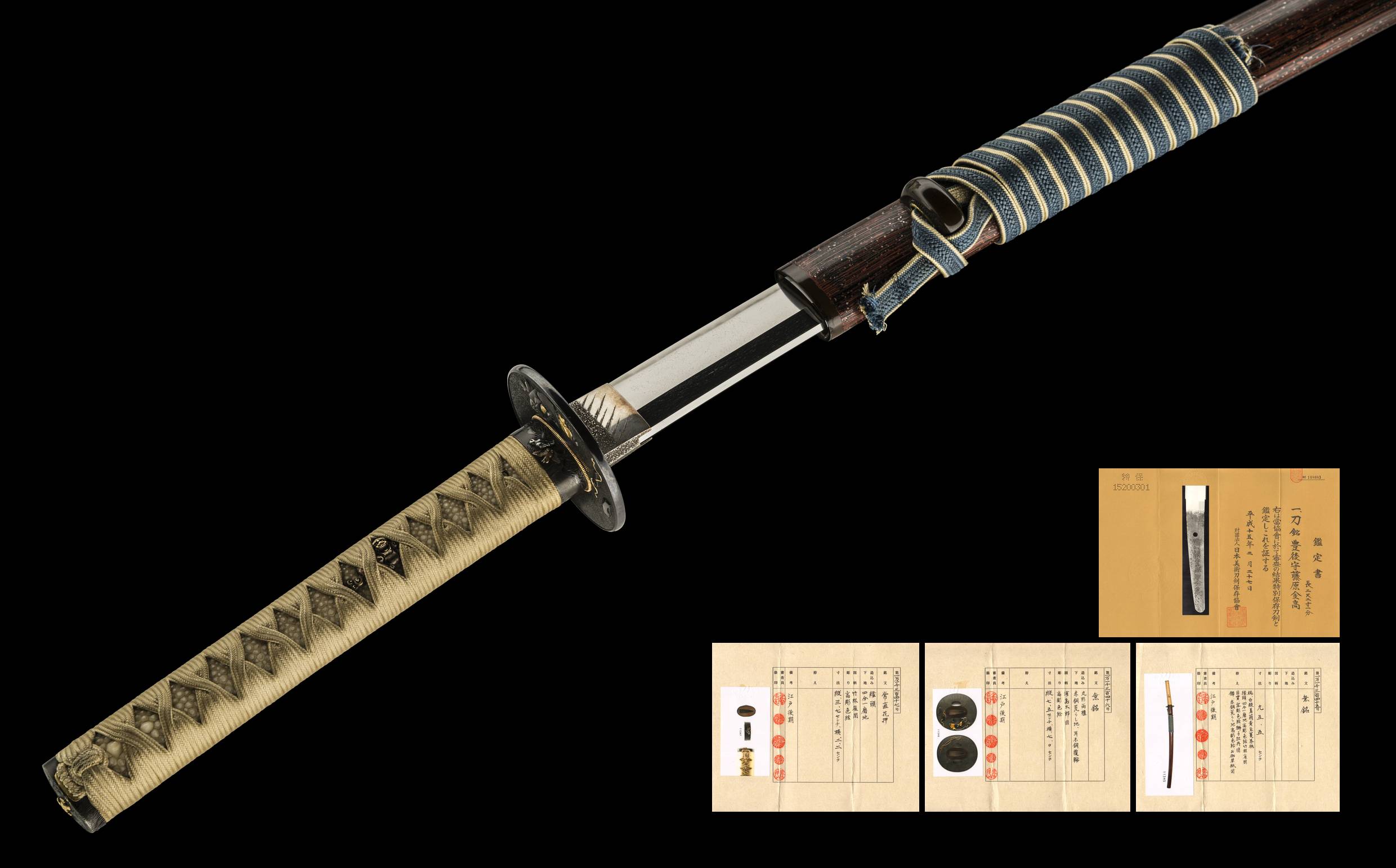
The Kanetaka line traces its origins to Bungo no Kami Fujiwara Kanetaka, who worked in Mino province (modern-day Gifu prefecture) during the Bunroku era (1592-1596). This katana was forged during the Kan’ei era (1624-1644) by the first of his four sons, each of whom signed with the same title and name. The shodai (first generation) is the most prized of the line, and this blade carries every attribute that distinguishes his work: a generous mihaba, an elongated chû-kissaki, and a lively jihada of itame mixed with mokume and nagare, rich with ji-nie. The hamon is a spirited ko-gunome-midare with togari accents – pointed peaks that cut through the temper line with real energy. Fujishiro rated Kanetaka chû-jôsaku, above average, and this blade justifies that assessment fully.
Accompanying the sword is a superb set of late Edo period koshirae in the uchigatana style. The saya is finished in a rare shuguro-kawari-nuri lacquer – a woodgrain-style technique in red and black with scattered aoi-gai (mother-of-pearl) accents, employing a craft largely lost in the modern era. The tsuba, attributable to the Nomura school of Awa province, is fashioned from shakudô (~95% copper, 5% gold) with a sandy nanako finish and depicts the final scene of the fairy tale of Urashima Tarô; the reverse carries his fishing rod. It holds an NTHK-NPO Kanteishô certificate. The signed fuchi-kashira by Tsunenao captures sparrows in a bamboo grove – an auspicious subject symbolising joy and good fortune – and is likewise certified by the NTHK-NPO. The ivory-coloured tsuka-ito braid is clean and tight, with menuki depicting a shisa lion and peony.
The blade is preserved in a shirasaya fitted with a silver habakibearing diagonal file marks, and is accompanied by a Japanese torokushô (registration card) No. 12825, registered in Akita Prefecture on 18th June, Shôwa 46 (1971).
| Item Number | UJKA391 |
| Sword Type | Katana |
| Swordsmith | Bungo no Kami Kanetaka |
| Swordsmith (JP) | 豊後守金高 |
| Signature | Bungo no Kami Fujiwara Kanetaka |
| School | Mino |
| Province | Mino |
| Period | Shintô – Early Edo period (Kan’ei era: 1624-1644) |
| Nagasa | 67.4cm |
| Sori | 1.00cm |
| Moto-haba | 2.99cm |
| Weight | 760g |
| Nakago | Ubu, sujikai-yasurime, 1 mekugi-ana |
| Jihada | Itame mixed with mokume and nagare, ji-nie |
| Hamon | Ko-gunome-midare with togari |
| Certificates | NBTHK Tokubetsu Hozon; 3 x NTHK-NPO |
| Fujishiro Rank | Chû-jôsaku |
| Koshirae | Shuguro-kawari-nuri uchigatana-koshirae, Late Edo period (1780-1867) |
| Tsuba | Shakudô, Nomura school (Awa province) – Urashima Tarô design; NTHK-NPO Kanteishô |
| Fuchi-kashira | Signed Tsunenao – sparrows in bamboo grove; NTHK-NPO Kanteishô |
| Menuki | Shisa lion and peony |
| Habaki | Silver, diagonal file marks |
| Catalogue | Catalogue 37 |
| Status | Sold |
| Includes | Shirasaya, koshirae with koshirae bag, NBTHK Tokubetsu Hozon certificate, 3 x NTHK-NPO certificates, torokushô |