
ITEM# UJWA154 – Catalogue 18 – Sold
A Kanekuni Wakizashi (摂津住包国)
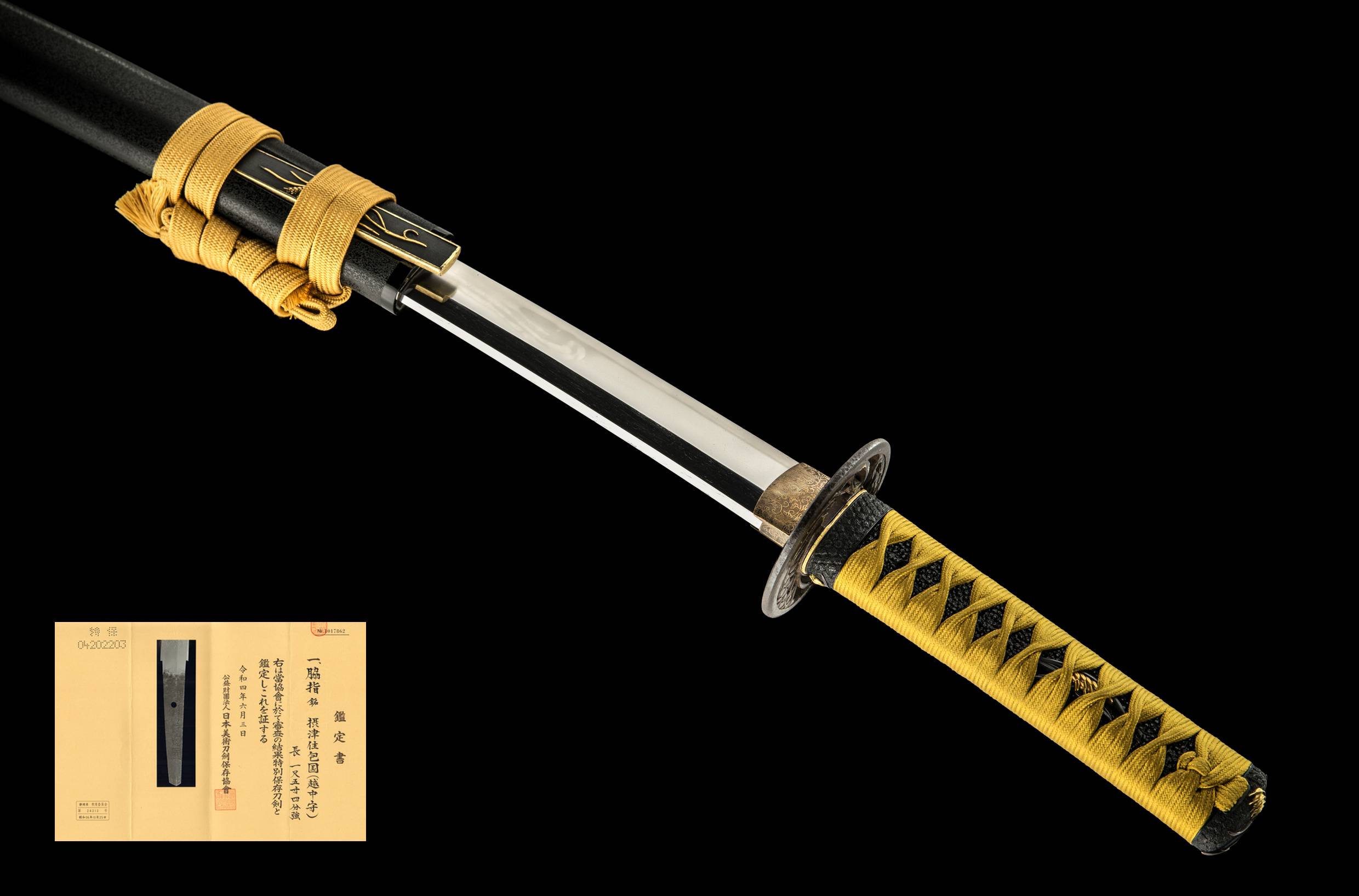
Kanekuni was born in Japan’s ancient capital of Yamato (Nara) and moved to Settsu (Osaka) to study under one of the Edo period’s great masters, Tanba no Kami Yoshimichi. There he fully absorbed the Mishina School’s most celebrated innovation: the sudare-ba hamon – a temperline whose surging, sweeping lines closely resemble the visual effect of a hanging bamboo curtain. This wakizashi is one of the finest expressions of that hamon type, executed with the confidence and precision of a smith who had completely mastered the technique.
The name on the nakago is not merely signed but chiselled with the sensitivity of a calligraphy brush – an act of artistic expression that takes great skill and patience. Collectors who study nakago work will immediately recognise the quality of this inscription. The blade itself is tightly structured, with a clean ko-itame jihada and a full ubu-nakago in original condition.
This wakizashi was registered in Showa 26 (1951) as a Daimyo-toroku – one of the very first swords formally entered into Japan’s postwar registration system, adding a layer of documented history that few comparable blades possess. A superbly crafted sword that would shine even further with a custom koshirae made to match its quality.
| Item Number | UJWA154 |
| Sword Type | Wakizashi |
| Swordsmith | Kanekuni |
| Swordsmith (JP) | 摂津住包国 |
| Signature | Settsu ju Kanekuni |
| School | Mishina School |
| Province | Settsu (Osaka prefecture) |
| Period | Early Edo – Enpo era (1673-1681) |
| Nagasa | 46.7cm |
| Sori | 1.1cm |
| Moto-haba | 3.2cm |
| Nakago | Ubu-nakago, yamagatashiri, katte sagari yasuri, kakumune |
| Jihada | Tight ko-itame |
| Hamon | Sugu yakidashi, sudare-ba (bamboo blinds of the Mishina School) |
| Certificates | NTHK-NPO Kanteisho (sword designated as Important by the Society for the Preservation of the Japanese Sword) |
| Catalogue | Catalogue 18 |
| Status | Sold |
| Includes | Shirasaya, carry bag, sword stand, maintenance kit, DVD, printed care guide, exportation paperwork |