
ITEM# UJWA214 – Catalogue 28 – Sold
A Shodai Kanewaka Wakizashi (賀州住兼若)
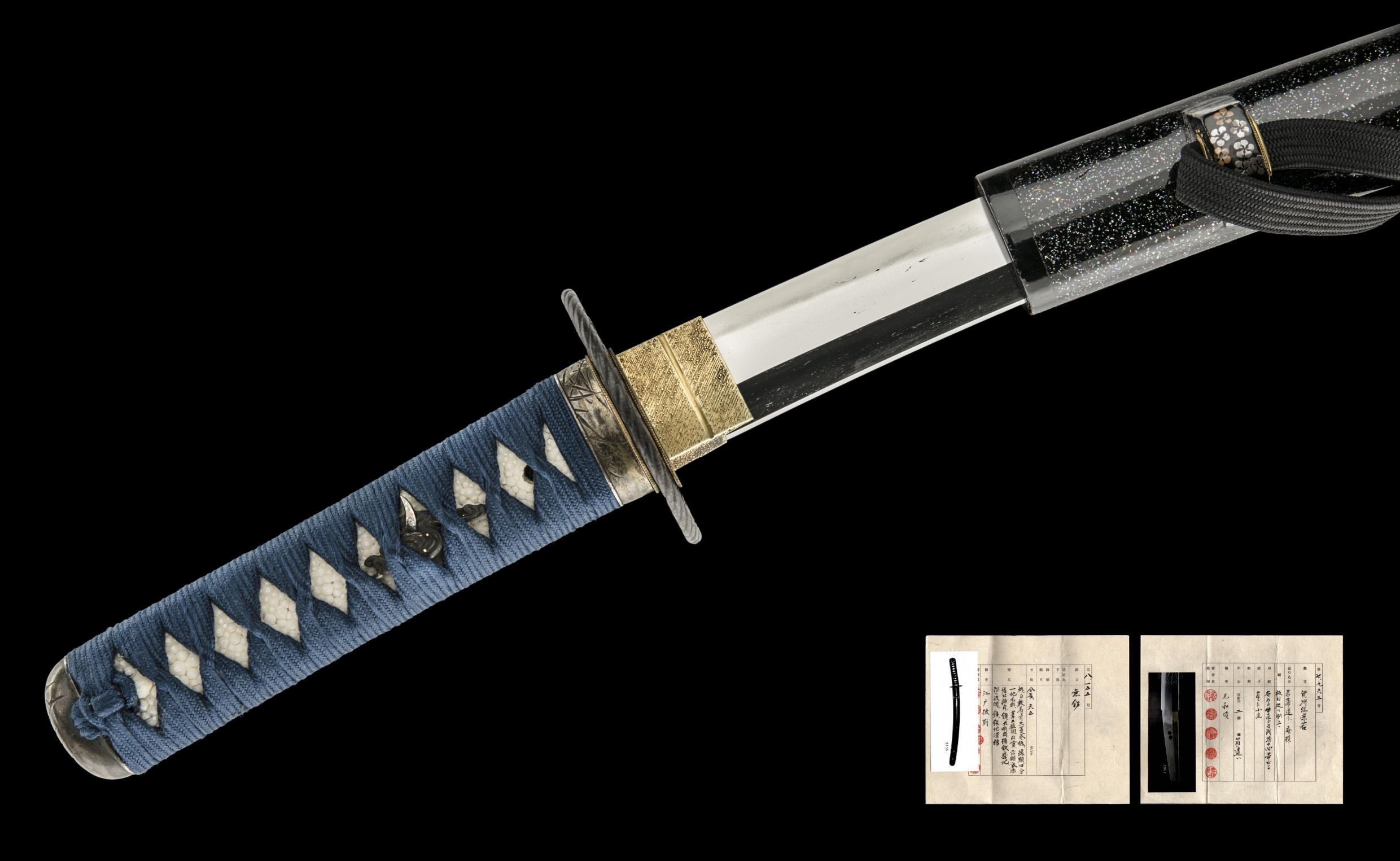
Shodai Kanewaka was one of the most celebrated smiths to emerge from Kaga province during the early Shintô period, and his reputation extended well beyond the local domain. So great was his skill that contemporaries bestowed on him the title Kaga-Masamune, invoking the greatest name in the history of Japanese swordmaking. The famous saying of the time captures his standing perfectly: samurai who wished to own one of his blades would have to spend so much money they’d even have to sell their daughters. This wakizashi, certified to the first generation by the NTHK-NPO, is a fine example of why that reputation endures.
The blade is forged in shobu-zukuri, the iris-leaf form, whose elegant taper and gently swelling curvature gave it both a refined appearance and exceptional cutting geometry. The jihada is a flowing combination of wavy itame and straight-grain masame, and the hamon is rich with activity – a deep, bright suguha base with rolling notare, thick sunagashi, flashing kinsuji, and scattered yo and ko-ashi. At the tip, the bôshi curls sharply back into the spine, producing a striking mune-yaki that runs the length of the blade. The nakago is ubu, original length, with two mekugi-ana – the second added by a later owner to fit a new tsuka, not a sign of shortening.
The Edo period koshirae is a thoughtfully conceived ensemble built around the Zen-inspired tale of the monkey reaching for the reflection of the moon. The menuki depict the monkey in its famous pose; the fuchi, in shibuichi, is rendered as intertwining tree branches and signed by metalsmith Ikkin with his kaou; the kashira shows geese flying in tandem. The tsuka is wrapped in blue silk to evoke water, and the black lacquered saya is inlaid with aoi-gai – crushed, lacquered mother-of-pearl that glitters like stars in a night sky. The iron tsuba carries a nautical scene of anchor and rolling waves framed by a rope-twist rim. The koshirae has been dated and certified to the late Edo period (early 1800s).
| Item Number | UJWA214 |
| Sword Type | Wakizashi |
| Swordsmith | Shodai Kanewaka (first generation) |
| Swordsmith (JP) | 賀州住兼若 |
| Signature | Kashu Ju Kanewaka |
| School | Kaga |
| Province | Kaga |
| Period | Shintô – Early Edo period (Genna era: 1615-1624) |
| Nagasa | 34.2cm |
| Sori | 1.1cm |
| Moto-haba | 3.0cm |
| Weight | 420g |
| Nakago | Ubu (original length), 12.3cm, two mekugi-ana |
| Jihada | Wavy itame with masame |
| Hamon | Deep suguha with notare, thick sunagashi, kinsuji, yo and ko-ashi |
| Boshi | Tight return with mune-yaki extending the length of the blade |
| Certificates | NTHK-NPO Kanteisho (sword and koshirae) |
| Fujishiro Rank | Jojo-saku |
| Sharpness Rating | Ryo-Wazamono |
| Koshirae | Edo period wakizashi koshirae, dated and certified to late Edo (early 1800s); black aoi-gai lacquer saya with handachi fittings; blue silk tsuka-ito; monkey-and-moon theme throughout |
| Tsuba | Polished iron, round; anchor amid rolling waves with rope-twist rim |
| Fuchi-kashira | Shibuichi; fuchi with tree-branch design, signed Ikkin with kaou; kashira with geese flying in tandem |
| Menuki | Monkey reaching for the moon |
| Tsuka | Blue silk ito over white same, monkey-and-moon theme |
| Habaki | So Yujo yasuri-habaki (brass with rain pattern) |
| Catalogue | Catalogue 28 |
| Status | Sold |
| Includes | Shirasaya, Edo koshirae, fabric bags, stand, maintenance kit, DVD, booklet, description |