
ITEM# UJKA171 – Catalogue 31 – Sold
A Hôshô Katana (保昌)
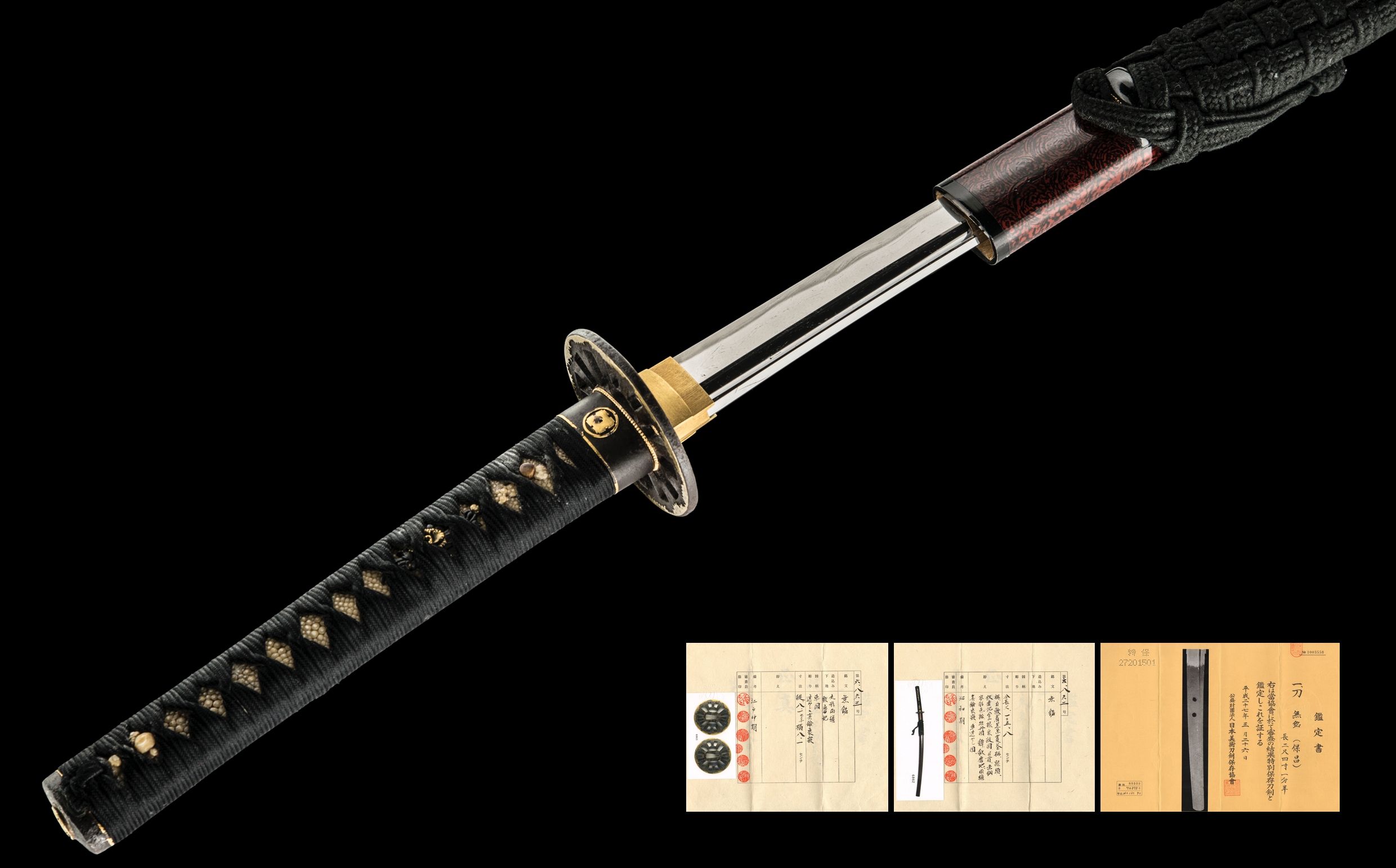
Of the five major schools of the Yamato tradition, the Hôshô school occupies a singular position – the only school to forge exclusively in the straight-grain pattern known as masame-hada. Active from the middle-late Kamakura period (circa 1280) through to around 1333, its finest blades are among the most coveted of all Yamato work, prized for the meditative intensity of their steel and the restrained power of their suguha hamon. Notable smiths include Sadamune, Sadayoshi, and Sadatsugu.
This katana is an exceptional example of the school at its peak. The jihada is pure masame-hada worked in nie-deki, the straight-grain layers flowing with river-like clarity from base to tip, punctuated by gorgeous dark lines of chikei in the body of the steel. The hamon is a bright suguha with a wide nioiguchi, enriched with nijuba, kuichigai-ba, and abundant kinsuji and sunagashi woven through the forging structure. The boshi is a beautifully executed hakikake. The blade also carries a full-length bo-higroove, and was polished by Sasaki-sensei in 2016 – one of Japan’s most respected sword polishers.
Impressively, the nakago of this 700-year-old katana is ubu – it has retained its original unaltered shape since the day it was made. Yamato swords were traditionally left unsigned, as the great Buddhist temples that commissioned them had no need for a smith’s name on blades forged for institutional use. The uchigatana koshirae that accompanies the blade is a striking piece in its own right, lacquered in swirling pools of red and black (kuro to aka kawari-nuri) with botan peony menuki, an Izutsu kamon fuchi-kashira in polished iron with gold inlay, and a magnificent Heianjo school kuruma (cart wheel) tsuba in openwork iron with brass inlay, authenticated by NTHK-NPO Kanteisho and dated circa 1700-1780.
| Item Number | UJKA171 |
| Sword Type | Katana |
| Attribution | Hôshô School (mumei) |
| School | Hôshô |
| Province | Yamato (present-day Nara prefecture) |
| Period | Kotô – Late Kamakura (circa 1300-1333) |
| Nagasa | 73.2cm |
| Sori | 1.4cm |
| Moto-haba | 3.03cm |
| Weight | 750g |
| Nakago | Ubu, mumei, 23.7cm, 2 mekugi-ana |
| Jihada | Pure masame-hada in nie-deki with chikei |
| Hamon | Bright suguha, wide nioiguchi with nijuba, kuichigai-ba, kinsuji and sunagashi |
| Boshi | Hakikake (brushed) |
| Certificates | NBTHK Tokubetsu Hozon; NTHK-NPO Kanteisho (koshirae and tsuba) |
| Sayagaki | Tanobe Michihiro — Yamato no Kuni, Hôshô, ubu-nakago mumei, dated Jizai hino-tori taigetsu (January 2017) |
| Koshirae | Uchigatana koshirae, kuro to aka kawari-nuri (black and red swirling lacquer), Showa period (1926-1989) |
| Tsuba | Heianjo school zogan kuruma tsuba, openwork iron with brass inlay, circa 1700-1780. NTHK-NPO Kanteisho certified. |
| Fuchi-kashira | Polished iron with gold Izutsu kamon (family crest) |
| Menuki | Botan (peony) theme |
| Habaki | Gold ni-ju habaki with perpendicular file marks |
| Catalogue | Catalogue 31 |
| Status | Sold |
| Includes | Shirasaya, koshirae, bags, stand, kit, DVD, booklet, printed description |