
ITEM# UJWA242 – Catalogue 35 – Sold
A Kaneyasu Ô-Wakizashi (陸奥守包保)
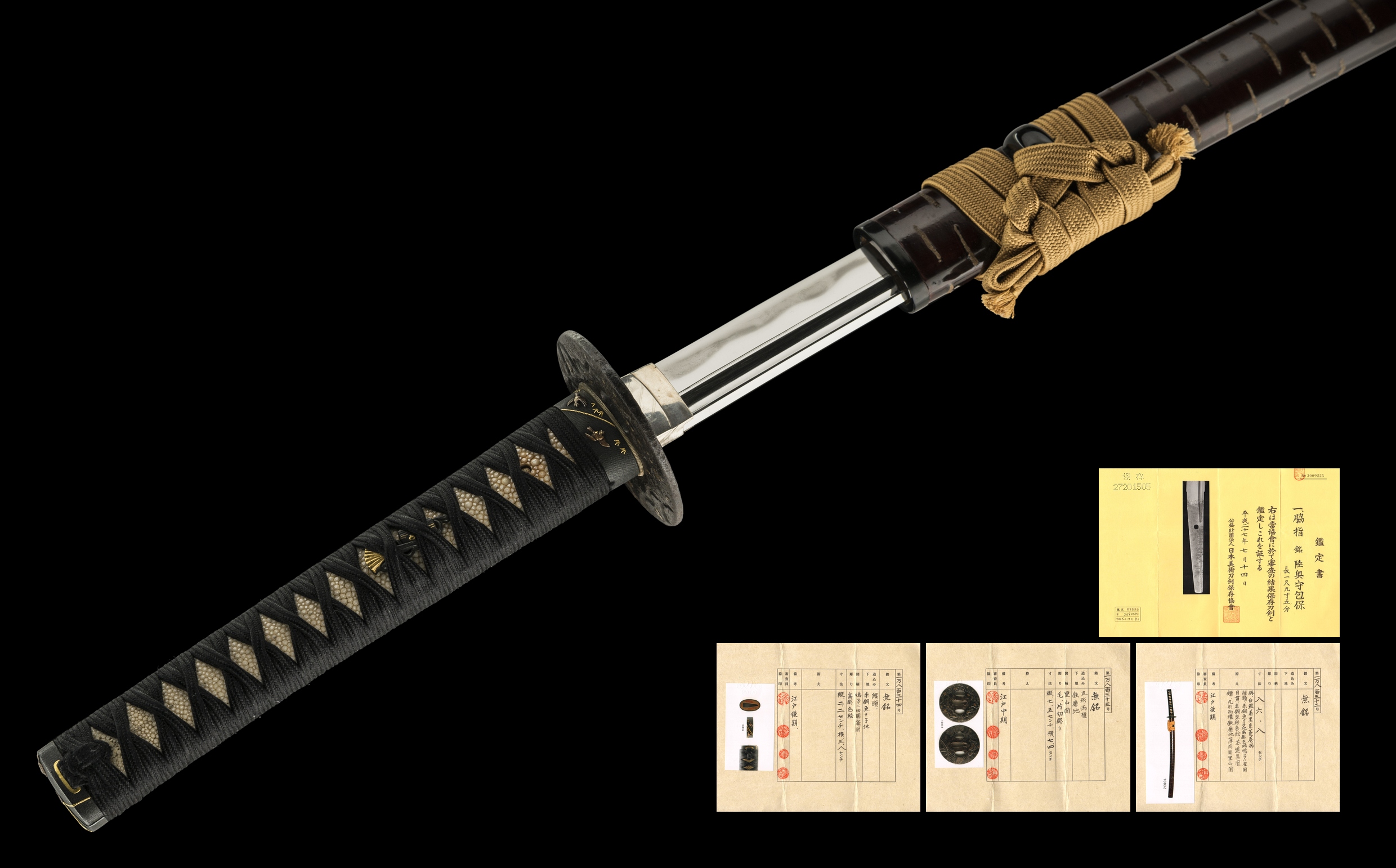
Shodai Mutsu no Kami Kaneyasu is one of the more characterful smiths of the early Edo period – a left-handed craftsman who chiselled his mei in mirror image, earning the nickname Hidari-Mutsu (‘lefty’ Kaneyasu). He first trained in the Yamato-Tegai tradition before relocating from Yamato (Nara) to Ôsaka in Settsu province, and it is that older Yamato quality that gives his blades a presence beyond their years. Dated signatures confirm activity from the 6th year of Kan’ei (1629) through the 2nd year of Jôô (1653), placing this ô-wakizashi squarely in the heart of his productive years.
The blade carries a rolling gunome-midare hamon alive with brushed streams of sunagashi and flowing kinsuji – a combination that brings to mind the wave patterns of Sukehiro’s celebrated tôran-midare. Fine ko-ashi and sharply peaked tôgari punctuate the activity throughout. The jihada is a mixture of mokume and masame with scattered chikei, and some hada-ware openings can be observed – a feature that, far from diminishing the sword, lends it an honest antiquity consistent with its Yamato heritage. The nakago is ubu with gyaku-sujikai-yasurime, and a bo-hiwith kaki-nagashi runs on both omote and ura.
The Edo koshirae follows a deeply considered nature theme. The saya is lacquered in a rich brown finish imitating the bark of a sakura tree – a quietly brilliant piece of craft. The iron tsuba, attributed to the Kugimoto School of Hizen province and NTHK-NPO certified, depicts the concept of satoyama – the harmonious relationship between villages and the mountains that sustain them. Menuki on the black-wrapped tsuka feature utensils of the Japanese tea ceremony, while the fuchi-kashira portray sparrows and naruko clappers in a scene drawn from the Yosakoi Festival tradition of Kochi. A sword with a complete and cohesive story.
| Item Number | UJWA242 |
| Sword Type | Ô-wakizashi |
| Swordsmith | Mutsu no Kami Kaneyasu |
| Swordsmith (JP) | 陸奥守包保 |
| Signature | Mutsu no Kami Kaneyasu |
| School | Yamato-Tegai (origins); Settsu province |
| Province | Settsu (Ôsaka) |
| Period | Shintô – Early Edo period (Shôhô era: 1644-1648) |
| Nagasa | 59.1 cm |
| Sori | 0.50 cm |
| Moto-haba | 2.64 cm |
| Weight | 430 g |
| Nakago | Ubu; gyaku-sujikai-yasurime; 15.3 cm; 1 mekugi-ana |
| Jihada | Mokume-hada and masame-hada with chikei; some hada-ware present |
| Hamon | Gunome-midare with kinsuji, ko-ashi, sunagashi and tôgari |
| Certificates | NBTHK Hozon (sword); NTHK-NPO Kanteisho (koshirae, tsuba and fuchi-kashira) |
| Fujishiro Rank | Jô-saku |
| Sharpness Rating | Ryô-wazamono |
| Koshirae | Edo uchigatana-koshirae; cha sakuragi-fû kawarinuri saya (brown lacquer, cherry-bark texture); Late Edo period (1780-1867); NTHK-NPO Kanteisho certified |
| Tsuba | Polished iron; satoyama design; attributed to Kugimoto School, Hizen province; NTHK-NPO Kanteisho certified |
| Fuchi-kashira | Sparrows and naruko (wooden clappers); NTHK-NPO Kanteisho certified; Late Edo period (1780-1867) |
| Menuki | Japanese tea ceremony utensils in shakudô and gilt |
| Tsuka | Black ito over white same; diamond lozenge wrap |
| Habaki | Silver-wrapped copper |
| Catalogue | Catalogue 35 |
| Status | Sold |
| Includes | Shirasaya, Edo koshirae, stand, kit, DVD, booklet, printed description |