
ITEM# UJKA336 – Catalogue 35 – Sold
A Kashû Kiyomitsu Katana (清光)
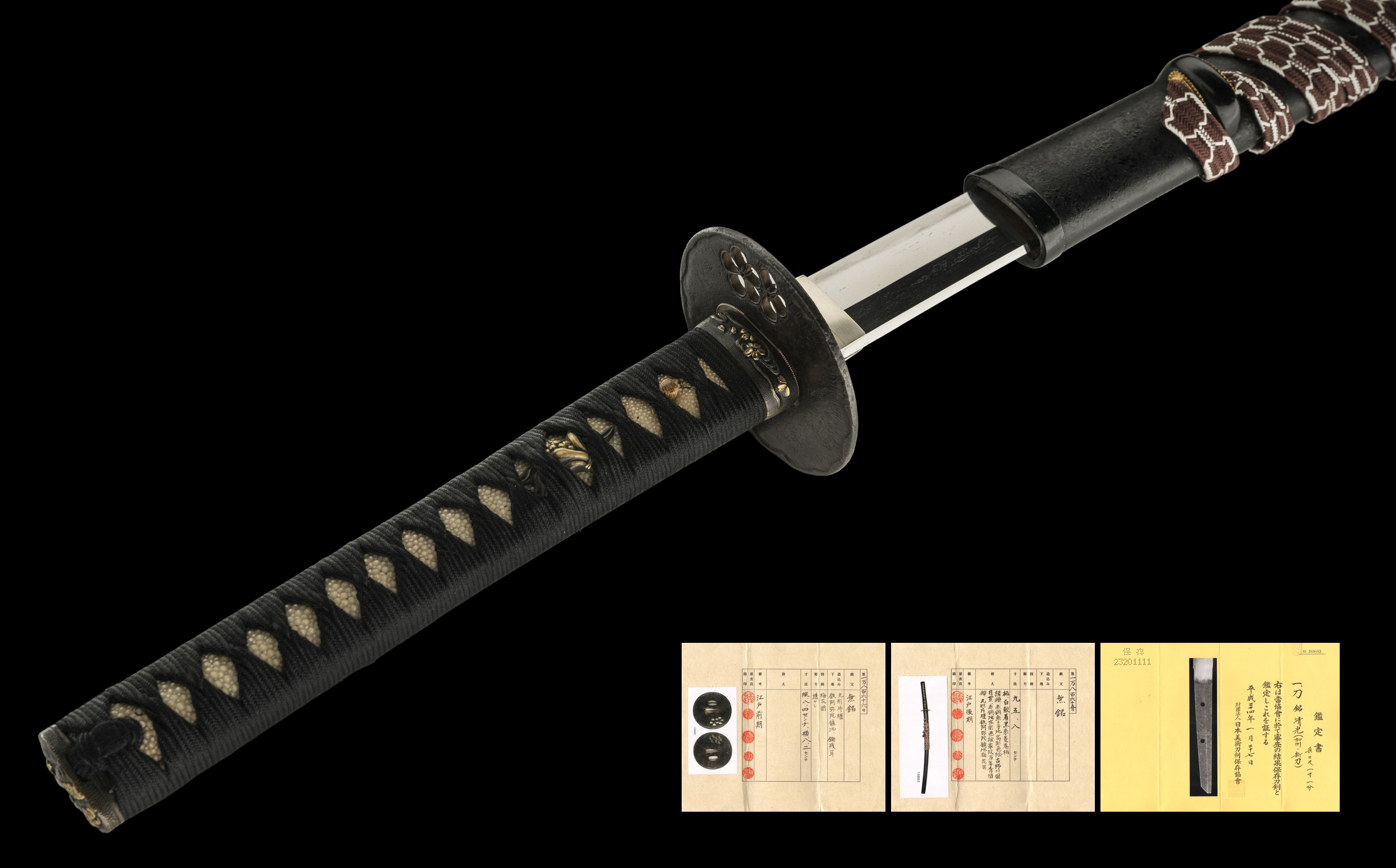
Born in Kaga province with the personal name Chôzaemon, later changed to Jirôkurô, the swordsmith Kiyomitsu worked during the Jôô era (circa 1652-1655). He signed his blades with the full form Kashû-jû Harima no Daijô Fujiwara Kiyomitsu, or simply Kiyomitsu as we find on this katana. The word Kashû is an alternative reading of Kaga, a province renowned as one of the wealthiest domains in Edo-period Japan.
Despite being a Shintô-period blade, this katana carries a distinctly older soul. The clear suguha hamon in ko-nie deki, running over a standing itame and nagare-hada with lively chikei, gives the steel a warmth more reminiscent of Kotô workmanship. The Yamato-esque kuichigaiba – where the nioguchi overlaps for a noticeable distance along the temper line – is a refined and unusual feature that elevates this blade well above the ordinary. The characteristic Kashû-nakago-jiri (iriyama-gata), with its short flat area dropping into an acute angle, marks the tang as proudly from Kaga.
The sword is accompanied by a full set of uchigatana-koshirae from the Late Edo period (1780-1867), lacquered black in the kuro-ishime-ji-nuri style with a stone-surface texture suggesting natural elements. The fittings carry a unified nature theme: the iron tsuba, attributed to the Hôan school and certified by NTHK-NPO, is pierced with ume (plum blossom) motifs and finished with amida-yasuri file marks radiating from the centre. The fuchi depicts floating sakura petals along the Yoshino river, while the kashira bears a gold-highlighted kiji (peacock) among peonies – a symbol of compassion associated with the deity Kannon. The menuki are rendered as omoto (Rohdea japonica) plants, wrapped over with black silk.
| Item Number | UJKA336 |
| Sword Type | Katana |
| Swordsmith | Kiyomitsu |
| Swordsmith (JP) | 清光 |
| Signature | Kiyomitsu (2-character signature, ubu nakago) |
| Province | Kashû (Kaga) |
| Period | Shintô – Early Edo period (Jôô era: 1652-1655) |
| Nagasa | 63.9 cm |
| Sori | 0.90 cm |
| Moto-haba | 2.97 cm |
| Weight | 620 g |
| Nakago | Ubu, kiri-yasurime, kashû-nakago-jiri (iriyama-gata), 2 mekugi-ana |
| Jihada | Itame and nagare-hada with chikei |
| Hamon | Clear suguha in ko-nie deki with kuichigaiba |
| Certificates | NBTHK Tokubetsu Hozon; NTHK-NPO Kanteisho (koshirae, tsuba, fuchi-kashira) |
| Koshirae | Uchigatana-koshirae, kuro-ishime-ji-nuri saya, Late Edo period (1780-1867) |
| Tsuba | Iron, ume (plum blossom) pierced design with amida-yasuri, attributed to Hôan school, Early Edo period (1600-1700); NTHK-NPO Kanteisho |
| Fuchi-kashira | Sakura petals on Yoshino river (fuchi); peacock (kiji) among peonies (kashira); gold highlights; NTHK-NPO Kanteisho |
| Menuki | Omoto (Rohdea japonica) plants, wrapped over with black silk |
| Habaki | Silver, mixed file marks |
| Catalogue | Catalogue 35 |
| Status | Sold |
| Includes | Shirasaya, koshirae, stand, kit, DVD, booklet, printed description |