
ITEM# UJKA332 – Catalogue 35 – Sold
An Ômiya Morikage Katana (備前国大宮盛景)
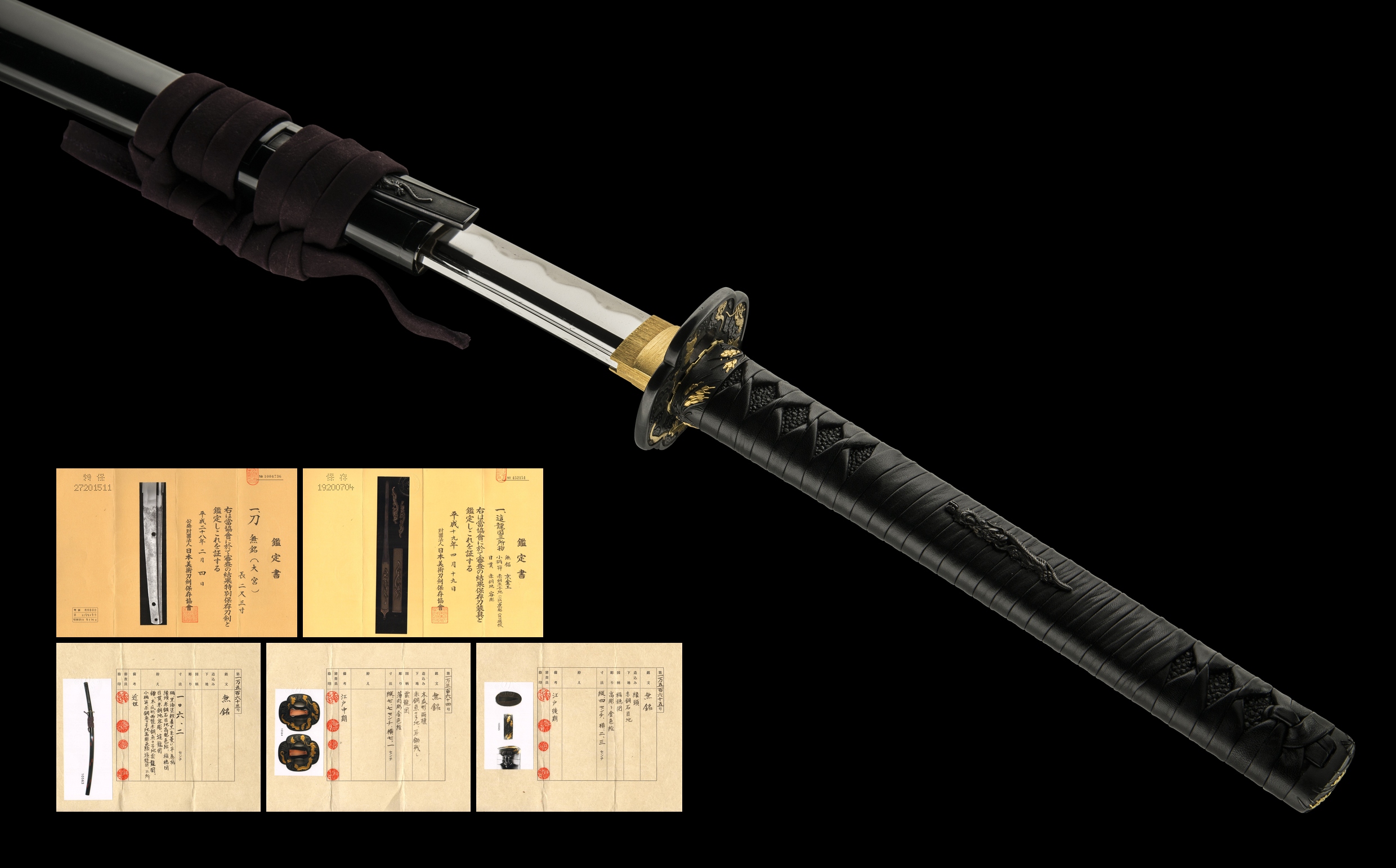
Swordsmith Kunimori is regarded as the founder of the Bizen Ômiya School, active circa 1260 during the mid-Kamakura period. The majority of swords we find today from this school are unsigned and attributed either to a specific smith or simply to the Ômiya tradition. Morikage, Morishige and Morokage are among the most prominent smiths of the lineage. The NBTHK has attributed this katana to the Ômiya school, while the sayagaki by the late Hon’ami Nisshu – former Living National Treasure – went a step further and attributed the blade directly to Ômiya Morikage, who worked during the warring Nambokuchô period in the Enbun era (1356~1361). His swords have reached Jûyô status as well as the prestigious designations of Jûyô Bunkazai and Jûyô Bijitsuhin.
This powerhouse katana reflects its near 700-year-old origins with authority. It is wide and thick with a full-length bô-hi(groove) running through the nakago in a style called kaki-ôtoshi, and an imposing ô-kissaki measuring 4.3cm that would have meant business on the battlefield. The jihada is a well-forged mix of nagare-hada, itame and mokume with glinting ji-nie and dark swirling chikei throughout. The hamon is a rhythmic koshibiraki that flows symmetrically down the steel, with a faint midare-utsuri drifting above it in classic Bizen tradition. The nakago is ô-suriage – greatly shortened, the original signature lost – but cleanly executed and gently filed.
An outstanding custom koshirae was commissioned for the sword, built around a precious 3-piece matching set of menuki, kôgai and kozuka in a crawling dragon theme, attributed to the Kyô-Kinkô school of Edo-period metal smiths working in Kyôto. The three pieces are intricately carved from shakudô and carry their own NBTHK Tokubetsu Hozon certification. The multi-lobed shakudo-nanako tsuba depicts a cloud dragon in raised gold and dates to the middle-Edo period, circa 1700~1780, with NTHK-NPO Kanteisho authentication. The fuchi-kashira features ears of rice in gold, also authenticated by NTHK-NPO Kanteisho. The saya is lacquered in glossy black with blurred red accents – kuro-ro ni aka bokashi-nuri. Morikage is ranked by Fujishiro as jô-saku (superior smith) and rated ryô-wazamono for the enviably sharp reputation his blades enjoyed.
| Item Number | UJKA332 |
| Sword Type | Katana |
| Attribution | Attributed to Ômiya Morikage (o-suriage mumei) |
| School | Bizen Ômiya |
| Province | Bizen |
| Period | Kotô – Nambokuchô period (Enbun era: 1356~1361) |
| Nagasa | 69.7cm |
| Sori | 2.1cm |
| Moto-haba | 3.16cm |
| Weight | 740g |
| Nakago | Ô-suriage mumei, 19.9cm, 3 mekugi-ana, bô-hi kaki-ôtoshi |
| Jihada | Itame and nagare-hada with mokume, ji-nie, chikei and light midare-utsuri |
| Hamon | Koshibiraki with gentle valleys, ji-nie |
| Boshi | Ô-kissaki, 4.3cm |
| Certificates | NBTHK Tokubetsu Hozon (katana); NBTHK Tokubetsu Hozon (matching set of kôgai, kôzuka & menuki); NTHK-NPO Kanteisho (koshirae, tsuba, fuchi-kashira) |
| Fujishiro Rank | Jô-saku |
| Sharpness Rating | Ryô-wazamono |
| Sayagaki | Hon’ami Nisshu (former Living National Treasure) – attributed to Bizen no Kuni Ômiya Morikage, ô-suriage mumei, Enbun era, dated Shôwa 56 (1981), September, Year of the Rooster, with kaô |
| Koshirae | Kuro-ro ni aka bokashi-nuri uchigatana-koshirae, modern period |
| Tsuba | Multi-lobed shakudo-nanako tsuba with cloud dragon in gold; attributed to a craftsman specialising in tachi fittings; middle-Edo period, circa 1700~1780; NTHK-NPO Kanteisho |
| Fuchi-kashira | Shakudô with gold ears of rice; NTHK-NPO Kanteisho |
| Menuki | Crawling dragon in shakudô; Kyô-Kinkô school; part of matching 3-piece set with NBTHK Tokubetsu Hozon |
| Habaki | Gold niju-habaki |
| Catalogue | Catalogue 35 |
| Status | Sold |
| Includes | Shirasaya with Hon’ami Nisshu sayagaki, dragon koshirae, stand, kit, DVD, booklet, printed description |