
ITEM# UJWA126 – Catalogue 37 – Sold
A Sukesada Wakizashi (備州長船祐定作)
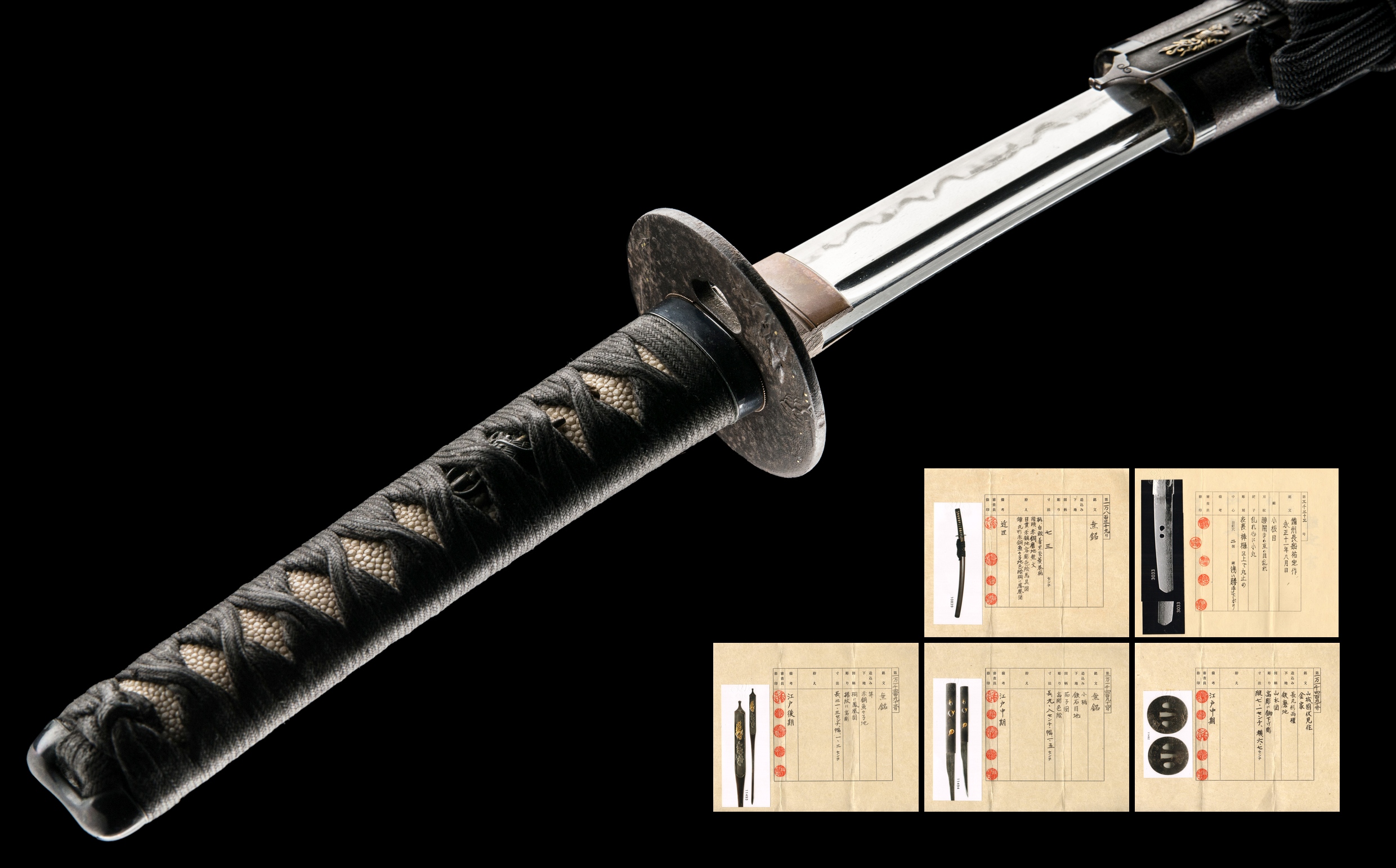
Signed and dated to August 1514 – the 11th year of the Eishô era – this compact wakizashi by Bishû Osafune Sukesada was forged during the late Muromachi period, one of the most turbulent chapters in Japanese history. With continuous warfare driving insatiable demand, the Osafune smiths of Bizen province produced blades in extraordinary numbers, yet the finest among them, signed and dated, remain a testament to genuine craft. The Sukesada name spans over sixty generations and carries all the qualities a warrior of the era would demand: reliable steel, a proven temper, and a shape built for action.
Although technically a wakizashi at 51.1cm, this blade reads as a shortened combat sword – the proportions are those of a katate-uchi (one-handed fighting sword), designed for a warrior who wanted something more manoeuvrable than the standard 63cm uchigatana of the day. A long bo-higroove runs the full length of the blade with deep saki-sori, pronounced curvature towards the tip, both hallmarks of the Sue-Bizen tradition. The hamon is a lively koshibiraki gunome midare with sweeping sunagashi and visible nie crystals – the koshi areas widening into valleys between the gunome peaks in a pattern inseparable from the Bizen school. The jihada is a tight ko-itame, even and well-formed. The ubu nakago retains its original unaltered shape with katte-sagari-yasurime file marks.
The sword is housed in a beautifully preserved set of koshirae lacquered in chocolate brown ishime (stone-surface) lacquer – a technique synonymous with the Edo period. The signed iron tsuba is the work of Fushimi Kanie from Yamashiro province (Kyôto), depicting a classic landscape scene and certified NTHK-NPO Kanteisho to the mid-Edo period. The kozuka pocket knife carries a kurikara (dragon swallowing a sword) design, while auspicious nasu (eggplant) menuki adorn the tsuka. The kôgai hair pick is attributed to Umetada Narikazu and decorated with a rising phoenix and kiri-mon (paulownia) in shakudô, also certified NTHK-NPO Kanteisho. A complete and characterful presentation in every sense.
| Item Number | UJWA126 |
| Sword Type | Wakizashi |
| Swordsmith | Bishû Osafune Sukesada |
| Swordsmith (JP) | 備州長船祐定 |
| Signature | Bishû Osafune Sukesada saku |
| Date | Eishô 11 (1514), eighth month |
| School | Sue-Bizen (Osafune) |
| Province | Bishû (Bizen) |
| Period | Sue-Kotô · Late Muromachi (Eishô era: August 1514) |
| Nagasa | 51.1 cm |
| Sori | 1.50 cm |
| Moto-haba | 2.72 cm |
| Weight | 440 g |
| Nakago | Ubu, katte-sagari-yasurime, 2 mekugi-ana, 13.1 cm |
| Jihada | Ko-itame hada |
| Hamon | Koshibiraki gunome midare with sunagashi |
| Koshirae | Cha-ishime-ji-nuri saya wakizashi-koshirae (茶石目地塗鞘脇指拵え) – chocolate brown stone-surface lacquer saya, modern period |
| Tsuba | Iron, landscape scene, signed Fushimi Kanie (金家), Yamashiro province – NTHK-NPO Kanteisho (mid-Edo, circa 1700-1780) |
| Menuki | Nasu (eggplant) motif |
| Habaki | Copper with diagonal file marks |
| Certificates | NTHK Kanteisho (sword, tsuba, kôgai, kozuka, koshirae designated as Authentic) |
| Catalogue | Catalogue 37 |
| Status | Sold |
| Includes | Shirasaya, koshirae, bags, stand, kit, booklet, printed description |