
ITEM# UJKA455 – Catalogue 43 – Sold
A Kenchô Katana (長船兼長)
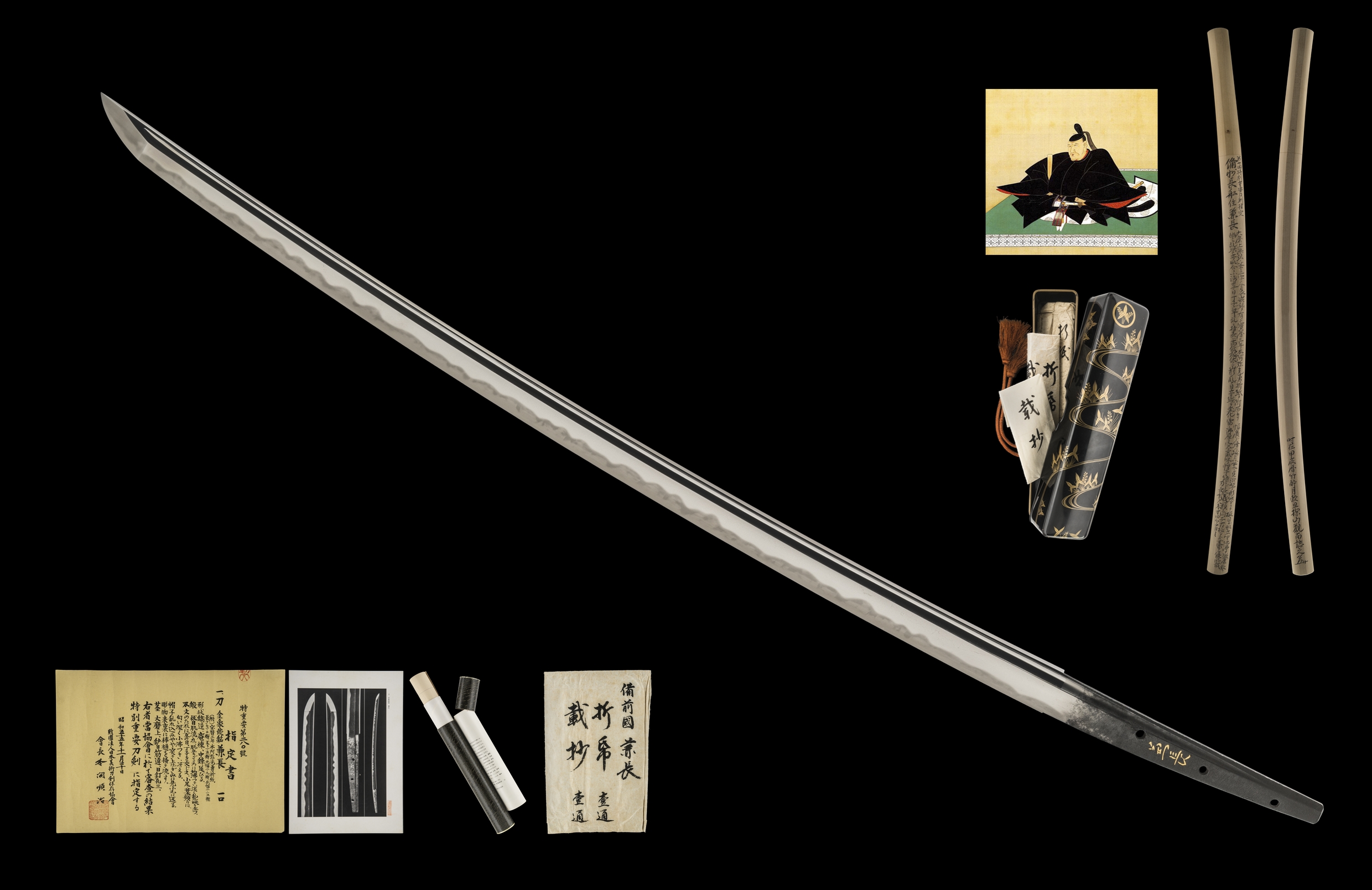
This exceptional katana is attributed to Kenchô – also read Kanenaga – the celebrated first-generation smith of Bizen Osafune and a direct student of Chôgi. The blade was originally forged as an ôdachi of more than 90cm during the turbulent Nambokuchô period, circa 1362 to 1368, and later shortened to its current length by successive generations of samurai for practical everyday wear. The nakago bears a two-character gold-inlaid kinzôgan-mei “兼長” (Kanenaga) inscribed by Hon’ami Kôyû in 1753 – authentication of the highest order from the official sword appraisers to the shogunate.
Kenchô’s work sits at the fascinating intersection of two great traditions. Rooted firmly in the Bizen school, his blades are simultaneously enriched by the energy and vitality of the Sôshû tradition – a combination known as Sôden Bizen, and one of the most coveted styles in all of nihontô. This katana exemplifies that blend superbly. The jihada is a standing-out itame with gorgeous nagare-hada streaming along the blade, fine ji-nie sparkling throughout, and a faint midare-utsuri lending the characteristic Bizen atmosphere. The hamon is a wide, beaming notare in ko-nie-deki, enriched with gunome, chôji, and larger midare elements, many ko-ashi and yô, and sunagashi – a composition of extraordinary variety and beauty.
The provenance of this blade is nothing short of remarkable. In the third year of Hôreki (1753), Hon’ami Kôyû issued an origami evaluating the blade at 15 gold coins. That same year, the ninth shôgun Tokugawa Ieshige personally presented this katana as a gift to Lord Asano Munetsune upon his succession as head of the Asano clan – a fact confirmed by sword researcher Markus Sesko through reference to the Tokugawa Jikki chronicles. The original torokusho registration card bears serial number 15469, placing it among the very first swords formally registered in Japan in 1951, almost certainly from a prominent former daimyô family collection. The NBTHK recognised its exceptional quality at the 7th Tokubetsu Jûyô shinsa in 1980. Tanobe Michihiro added his sayagaki to the shirasaya in September 2024, confirming the attribution. A sword of this calibre – bearing shogunal provenance, origami from the foremost Hon’ami appraiser of his era, and Tokubetsu Jûyô certification – belongs among the finest holdings any serious collection could aspire to.
| Item Number | UJKA455 |
| Sword Type | Katana |
| Attribution | Bizen Osafune Kenchô (also read Kanenaga, first generation) – ô-suriage mumei with kinzôgan-mei by Hon’ami Kôyû |
| School | Sôden Bizen / Chôgi group |
| Province | Bizen |
| Period | Kôtô – Nambokuchô period (Jôji era: 1362-1368) |
| Nagasa | 71.0cm (ô-suriage) |
| Sori | 1.5cm |
| Moto-haba | 2.96cm |
| Weight | 770g |
| Nakago | Ô-suriage, sujikai-yasurime, three mekugi-ana, kaki-nagashi horimono on both sides, kinzôgan-mei on sashi-omote |
| Jihada | Standing-out itame mixed with nagare, fine ji-nie, faint midare-utsuri |
| Hamon | Wavy notare in ko-nie-deki, wide clear nioiguchi, mixed with gunome, chôji, larger midare, many ko-ashi and yô, sunagashi |
| Boshi | Midare-komi, late starting ko-maru-kaeri |
| Certificates | NBTHK Tokubetsu Jûyô Token (Certificate No. 280, 7th shinsa, November 20, 1980) |
| Fujishiro Rank | Jô-saku |
| Sharpness Rating | Ô-Wazamono |
| Sayagaki | Tanobe Michihiro – Bishû Osafune-jû Kenchô, dated a lucky day in September, Year of the Dragon (2024) |
| Habaki | Gold habaki with file marks |
| Catalogue | Catalogue 43 |
| Status | Sold |
| Includes | Shirasaya with sayagaki, fabric bag, stand, maintenance kit, printed description, Hon’ami Kôyû origami (1753), formal gift certification origami (1753), and antique lacquered box with Fukushima daimyô kamon |