
ITEM# UJWA258 – Catalogue 45 – Sold
A Shodai Nobutaka Wakizashi (伯耆守信高)
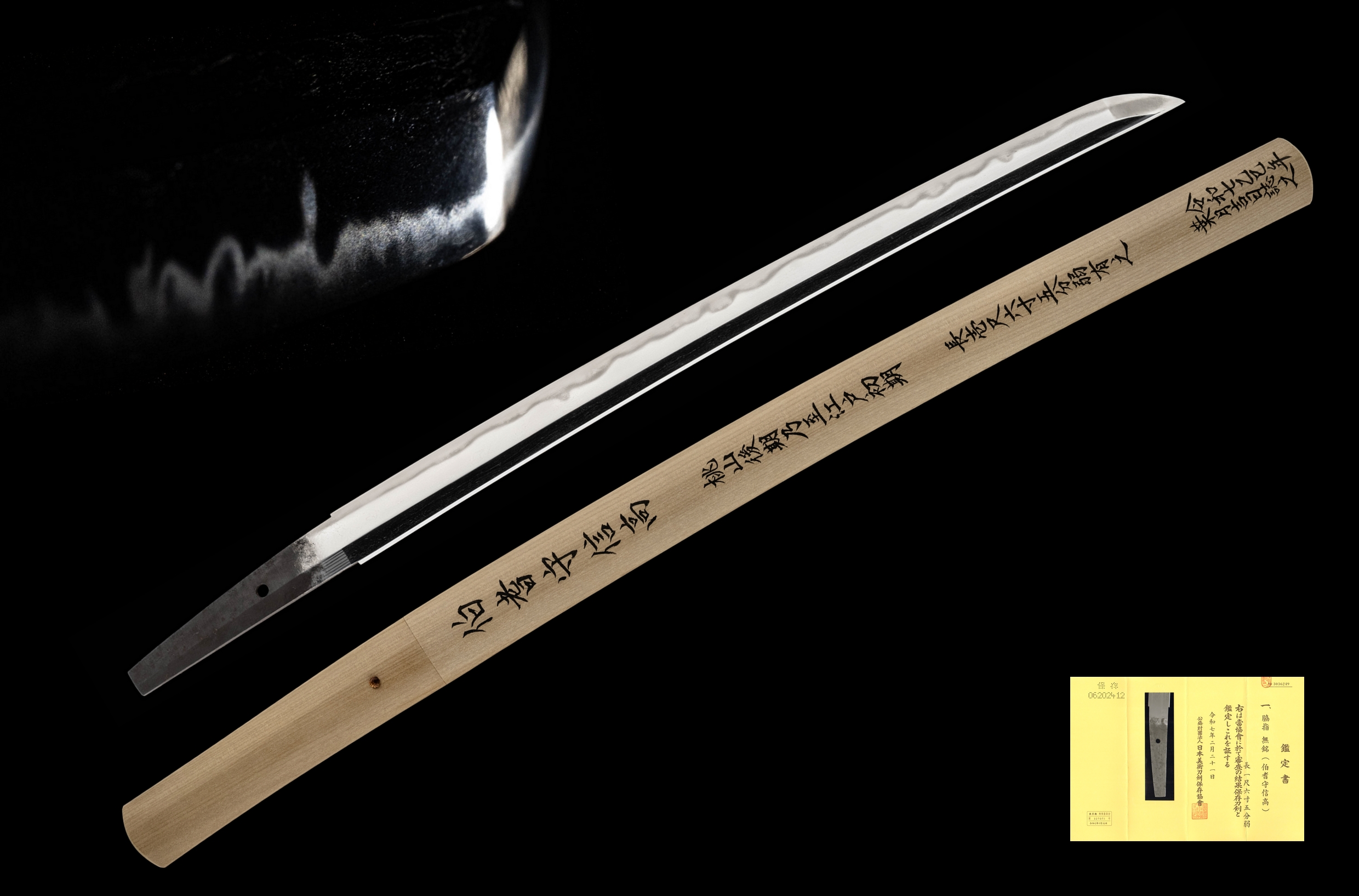
Hôki no Kami Nobutaka (伯耆守信高) was one of the most important swordsmiths in early Edo period Owari, counted among the celebrated Owari San-saku – the Three Great Smiths of Owari – alongside Masatsune (政常) and Ujifusa (氏房). Originally trained in the Mino-den, Nobutaka relocated to Owari in the early 17th century and took up official service as a goyô kaji (clan swordsmith) for the Owari Tokugawa family – one of the three great branches (Gosanke) of the Tokugawa clan. In 1610, coinciding with the completion of Nagoya Castle, he established himself in the city’s Kaji-machi (blacksmith quarter) under Tokugawa Yoshinao, first lord of the Owari domain and ninth son of Tokugawa Ieyasu. This patronage placed Nobutaka at the very centre of arms production for one of Japan’s most powerful ruling families, and blades from the first generation are accordingly rare and highly sought.
This wakizashi has travelled a remarkable road. Acquired in the UK in 2023 in rough condition, it was shipped to Japan where it received a full professional polish, a new habaki, and a fresh shirasaya – the latter inscribed with sayagaki by calligraphy artist Nozomi-san. The blade is now certified NBTHK Hozon to the first generation, shodai Nobutaka. The nakago is ô-suriage – a significant shortening undertaken at some point by a former owner to convert what was likely a full-length sword into a more practical wakizashi for paired use. As a consequence, the original signature was lost; the NBTHK attribution to shodai rests on a careful assessment of the blade’s characteristics and the absence of any generational notation on the Hozon certificate. This sword is the companion piece to ujka418 Nidai Nobutaka, and a collector’s discount will be offered to whoever wishes to keep the pair together.
The blade repays close study. The jihada is a lively mix of itame, mokume, and nagare-hada laden with ji-nie and plentiful chikei – the steel given life by a mass of fine martensite crystals threading through the ground. The hamon is a vivid $1 rising in rhythmic crests reminiscent of freshly fallen snow, enriched with kinsuji, sunagashi, and isolated tobiyaki islands in robust nie-deki. The yahazu-ba – forked, dovetail-shaped elements within the midare – add further visual drama. At the tip, the bôshi transitions through hakikake into a wild kaen form that leaps like a flame. A custom silver habakiwith wave-pattern file marks, echoing the rhythm of the hamon itself, completes the presentation.
| Item Number | UJWA258 |
| Sword Type | Wakizashi |
| Attribution | Attributed to Hôki no Kami Nobutaka, Shodai (mumei) |
| School | Owari |
| Province | Owari |
| Period | Shintô – Momoyama period (Keichô era: 1596–1615) |
| Nagasa | 50.0cm (ô-suriage) |
| Sori | 0.6cm |
| Moto-haba | 3.03cm |
| Weight | 480g |
| Nakago | Ô-suriage, kiri-jiri, kiri-yasurime, 1 mekugi-ana |
| Jihada | Well-forged itame, mokume and nagare-hada with ji-nie, and plentiful chikei |
| Hamon | Gunome-midare with kinsuji, sunagashi, and tobiyaki in nie-deki |
| Boshi | Hakikake, wild kaen |
| Certificates | NBTHK Hozon |
| Fujishiro Rank | Jô-saku |
| Sayagaki | Nozomi-san (shodo artist) — inscribed in the 8th month, Reiwa 7 (August 2025) |
| Habaki | Silver, wave pattern file marks |
| Catalogue | Catalogue 45 |
| Status | Sold |
| Includes | Shirasaya, fabric bag, stand, kit, printed description |