
ITEM# UJWA262 – Catalogue 45 – Sold
A Sanemori Wakizashi (畠田真守)
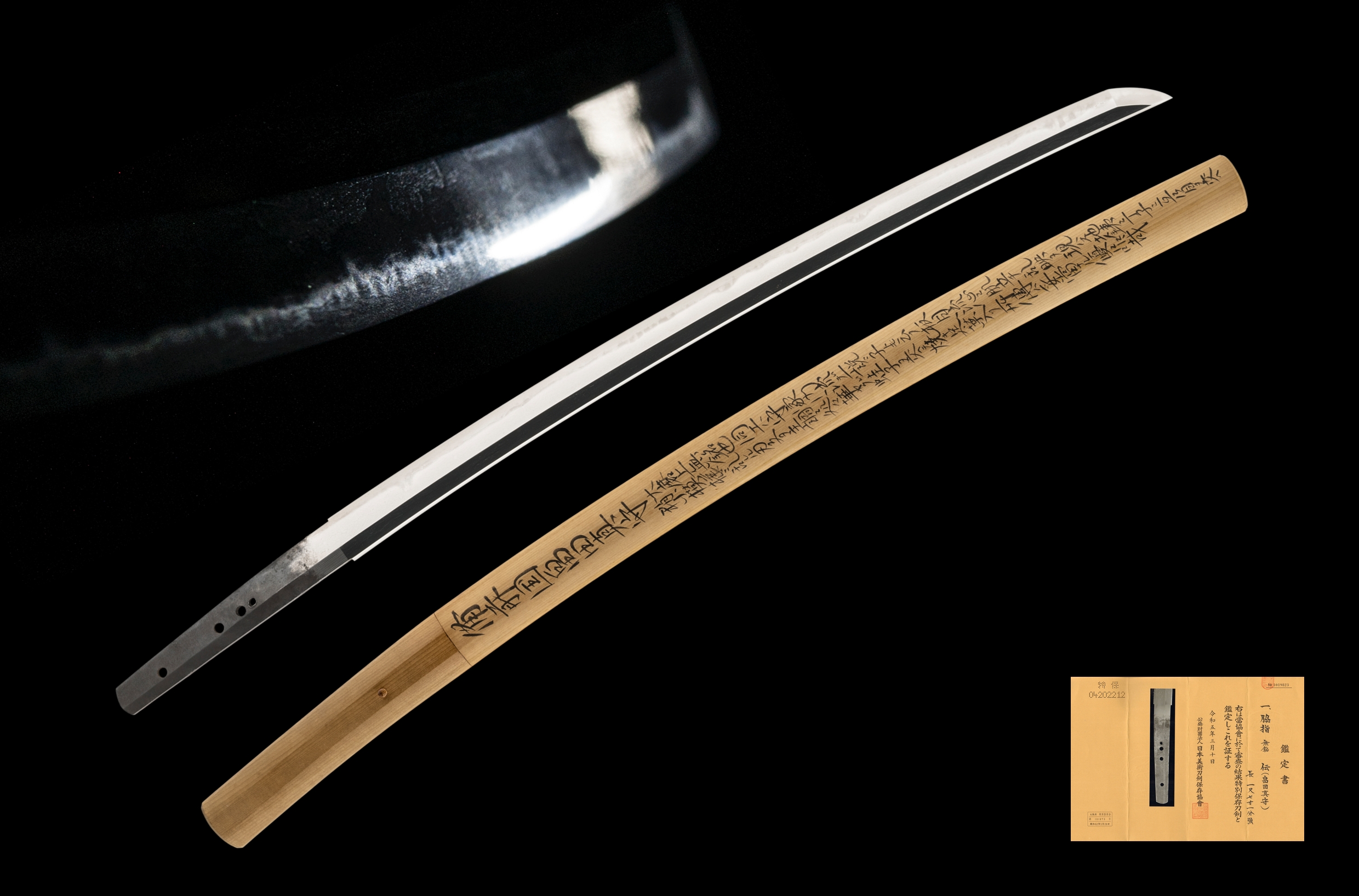
Hatakeda Sanemori (畠田真守) stands as the second most prominent figure of the Hatakeda school – a jôjô-saku (highly superior) smith working at the peak of mid-Kamakura sword culture, circa 1275. The school takes its name from Hatakeda village, east of Osafune in Bizen Province, a region blessed with exceptional tamahagane and water that would define an entire tradition of blade-making. Sanemori is understood to be the son or student of Moriie, founder of the school and a smith who likely descended from the flamboyant Ichimonji line. That lineage shows clearly in Sanemori’s work – he inherited the bold chôji sensibility and refined it into something slightly more restrained, balancing drama with discipline. He often signed with the title Sama no Jô (左馬允), a mark of genuine noble rank. Five of his swords have reached the NBTHK’s top Tokubetsu Jûyô certification, with further examples designated as Jûyô Bijutsuhin and Jûyô Bunkazai – a record that leaves no doubt about where he stands in the canon.
This o-suriage wakizashi carries everything that defines Sanemori’s best work. The jihada is a stunning itame-mokume-hada, swirling and active, saturated with ji-nie and an abundance of chikei that catches the light like veins of silver threaded through dark stone. The hamon is gunome-chôji-midare with the school’s signature kawazu-ko-chôji – those distinctive tadpole-shaped clove elements with long narrow stems and rounded heads that serve as the Hatakeda fingerprint within the Bizen tradition. Kinsuji weaves energetically through the temper line, yô and sunagashi animate the interior, and beautiful midare-utsuri rises through the ji. The kissaki carries parallel lines of kinsuji through visible mokume-hada – deep kotô character in every millimetre. The nakago is well-preserved with a healthy patina, kurijiri shape, neat horizontal kiri-yasuri, and four mekugi-ana that speak to a long history of successive mountings. The gold habaki with rainfall file marks adds a fitting note of quality to the overall presentation.
The NBTHK Tokubetsu Hozon certificate was issued in March 2023 (Reiwa 5), confirming this blade as Especially Worthy of Preservation and attributing it to Hatakeda Sanemori. For a sword forged roughly 750 years ago, its condition and vitality under light are genuinely remarkable. It comes in shirasaya and presents an obvious candidate for sayagaki by Tanobe-sensei – Unique Japan can arrange that service. A custom koshirae is equally worth considering for a blade of this standing. Either way, this is a serious Kamakura period acquisition at a level of smith that rarely appears on the open market.
| Item number | UJWA262 |
| Sword type | Wakizashi (o-suriage) |
| Swordsmith | Hatakeda Sanemori (shodai) – mumei (unsigned) |
| Swordsmith (JP) | 畠田真守 |
| School | Hatakeda |
| Province | Bizen |
| Period | Kotô – middle Kamakura period (Bun’ei era: 1264–1275) |
| Nagasa | 51.9cm |
| Sori | 1.2cm |
| Moto-haba | 2.67cm |
| Saki-haba | 1.83cm |
| Kissaki | 2.89cm |
| Moto-kasane | 5.7mm |
| Saki-kasane | 4.5mm |
| Weight | 500g |
| Nakago | 15.0cm; kurijiri; kiri-yasuri (horizontal file marks); 4 mekugi-ana (unfilled) |
| Jihada | Itame-mokume-hada with ji-nie and an abundance of chikei |
| Hamon | Gunome-chôji-midare with kawazu-ko-chôji, kinsuji, yô and sunagashi |
| Utsuri | Midare-utsuri |
| Habaki | Gold habaki with rainfall file marks |
| Certificate | NBTHK Tokubetsu Hozon (sword Especially Worthy of Preservation) – issued Reiwa 5 (2023), March 10 |
| Fujishiro rank | Jôjô-saku (highly superior swordsmith) |
| Catalogue | Catalogue 45 |
| Sale status | Sold |
| Included | Shirasaya, fabric bag, stand, kit, printed description |