
ITEM# UJDI015 – Catalogue 45 – Sold
A Sukesada Father & Son Daishô (横山上野大掾藤原祐定 / 長船七兵衛尉祐定)
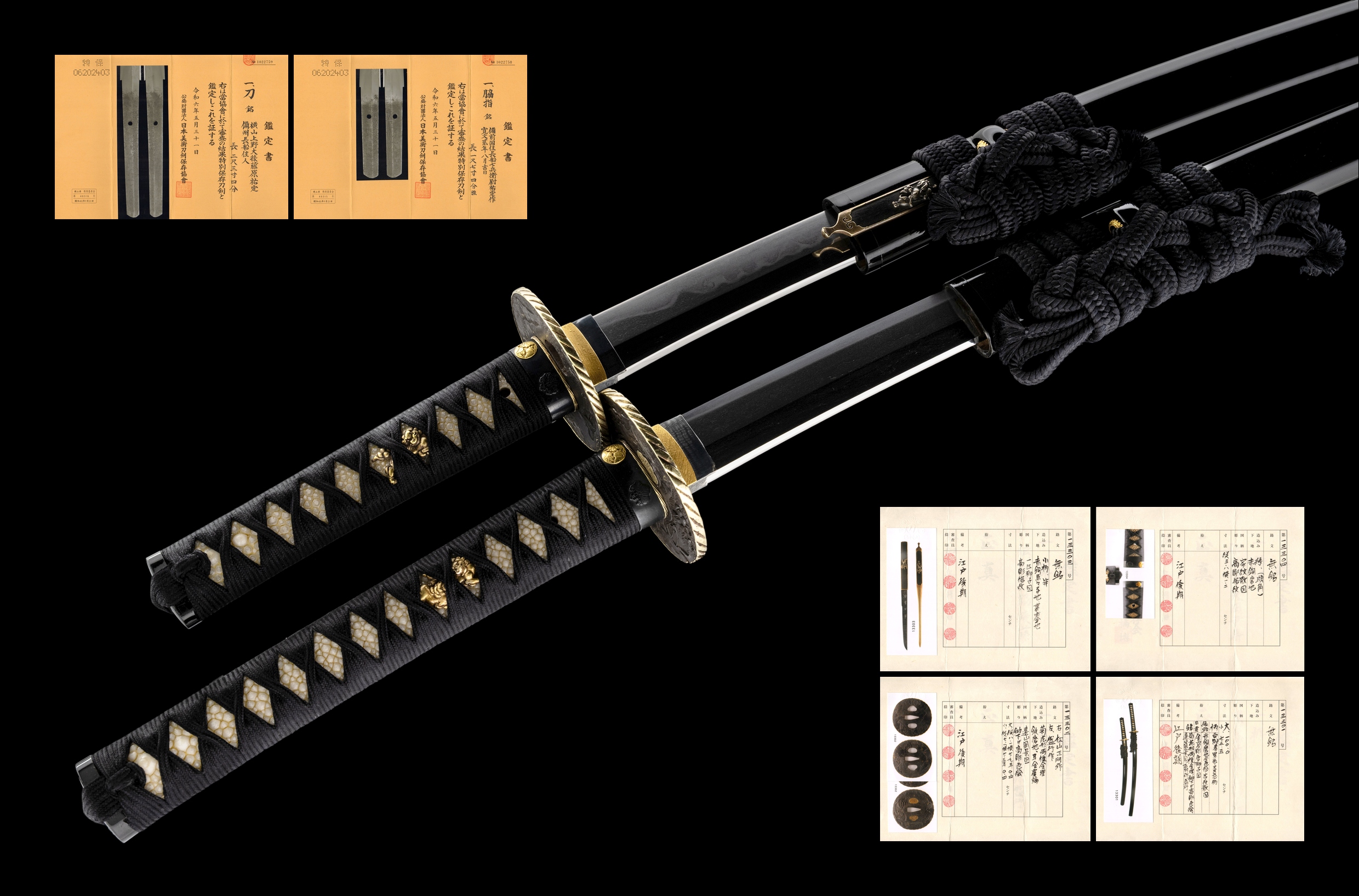
This exceptional daishô unites two generations of the distinguished Sukesada family of Osafune, Bizen Province – the katana by the son, Yokoyama Kôzuke Daijô Fujiwara Sukesada (6th generation), paired with the wakizashi by his father, Osafune Shichibei no jô Sukesada (5th generation). Both stood as leading figures within the Bizen tradition during the Edo period, and to encounter them together as a matched pair – father and son – is a genuinely rare privilege. The son, born in 1633, emerged as the foremost Bizen smith of his generation and was granted the honorary title “Kôzuke Daijô” in Kanbun 4 (1664) by Ikeda Mitsumasa, lord of the Okayama domain. The father, born in 1577, lived ninety-eight years and worked from around 1616, bridging the final Sue-Bizen style with the emerging Shintô era.
The two blades present a vivid stylistic contrast that perfectly reflects each smith’s character. The katana by Kôzuke Daijô is a masterful study in restraint – magnificent itame-hada with flowing chikei and subtle bô-utsuri, finished in a brilliant, even suguha hamon in fine ko-nie. The wakizashi by Shichibei no jô is its dynamic counterpoint: vigorous itame-hada with flamboyant gunome-chôji-midare rich in yô, kinsuji, sunagashi, togari, jûka-chôji, and the distinctive kani no tsume (crab claw) valleys that define the Osafune Sukesada school. Both nakago are ubu with katte-sagari-yasurime file marks. Both received fresh NBTHK Tokubetsu Hozon certification in May 2024.
The accompanying late-Edo daishô-uchigatana-koshirae is lacquered in formal glossy black (kuro-roiro-nuri), radiating dignity and commanding presence appropriate for castle ceremony attendance. The signed tsuba set, by Matsuyama Shôami Moriyuki of the Iyo Shôami tradition, features iron with a humble mountain village scene in high relief and gilt fukurin – certified authentic by NTHK-NPO. The shakudô fuchi, attributed to Ôoka Inju of the Hamano school lineage, is decorated with the noble kiri (paulownia) crest – a symbol of high honour – complemented by a solid black horn kashira. The gold shishi (lion) menuki, attributed to the Gotô school, depict a pair of lions on the dai and a single lion on the shô, each executed with exceptional carving panache. Near-matching nijû-habaki in shakudô and gold complete a mounting of exceptional coherence and quality.
| Item number | ujdi015 |
| Sword type | Daishô (katana & wakizashi) |
| Swordsmith (katana) | Yokoyama Kôzuke Daijô Fujiwara Sukesada (6th generation, Bizen-Osafune) – son |
| Swordsmith (JP) | 横山上野大掾藤原祐定・備州長船住人 |
| Swordsmith (wakizashi) | Bizen no kuni jû Osafune Shichibei no jô Sukesada (5th generation, Bizen-Osafune) – father |
| Swordsmith (JP) | 備前国住長船七兵衛尉祐定作・寛文貮年八月吉日 |
| School | Bizen-Osafune (Yokoyama Sukesada lineage) |
| Province | Bizen |
| Period (katana) | Shintô, early Edo – Kan’ei era (1624–1644) |
| Period (wakizashi) | Shintô, early Edo – Kanbun era, August 1662 (dated) |
| Nagasa (katana) | 70.9cm (ubu) |
| Nagasa (wakizashi) | 52.8cm (ubu) |
| Sori (katana) | 1.3cm |
| Sori (wakizashi) | 1.2cm |
| Moto-haba (katana) | 3.03cm |
| Moto-haba (wakizashi) | 3.01cm |
| Weight (katana) | 785g |
| Weight (wakizashi) | 635g |
| Nakago (katana) | 20.3cm, ubu, katte-sagari-yasurime, mekugi-ana 1, kuirjiri |
| Nakago (wakizashi) | 13.5cm, ubu, katte-sagari-yasurime, mekugi-ana 1, kuirjiri |
| Jihada | Tightly forged itame-hada and mokume-hada with ji-nie and plentiful chikei |
| Hamon (katana) | Suguha, ko-nie, bô-utsuri, chikei |
| Hamon (wakizashi) | Gunome-chôji-midare, yô, kinsuji, sunagashi, togari, jûka-chôji, kani no tsume |
| Bôshi (katana) | Ko-maru kaeri (turnback) omote / hakikake ura |
| Bôshi (wakizashi) | Mokume with nagare, kaen-bôshi-like omote / hakikake ura |
| Certificate 1 | NBTHK Tokubetsu Hozon – katana (#1022759, Reiwa 6, May 2024) |
| Certificate 2 | NBTHK Tokubetsu Hozon – wakizashi (#1022758, Reiwa 6, May 2024) |
| Certificates 3–6 | NTHK-NPO Kanteishô (koshirae, fuchi-kashira, kogai/kozuka, tsuba – all certified Authentic) |
| Fujishiro rank | Jô-saku (son / katana) & Chûjô-saku (father / wakizashi) |
| Sharpness rating | Wazamonô (father) |
| Koshirae | Kuro-roiro-nuri saya, daishô-uchigatana-koshirae, late Edo (1780–1868) |
| Tsuba | Matsuyama Shôami Moriyuki – iron, mountain village scene, high relief, gilt fukurin (signed, both pieces) |
| Fuchi | Attributed to Ôoka Inju – shakudô, kiri (paulownia) crest motif, Hamano school lineage |
| Kashira | Black horn |
| Menuki | Shishi (lion) motifs, attributed to Gotô school – solid gold (dai: pair of lions / shô: single lion) |
| Tsuka | White samekawa, hishimaki, black ito |
| Habaki | Near-matching nijû-habaki – shakudô and gold base (both swords) |
| Catalogue | Catalogue 45 |
| Status | Sold |
| Included | Shirasaya (both swords), Edo daishô-koshirae, fabric bags (matching mountain village theme), stand, kit, printed description |