
ITEM# UJWA191 – Catalogue 24 – Sold
A Tanba Yoshimichi Wakizashi (丹波守吉道)
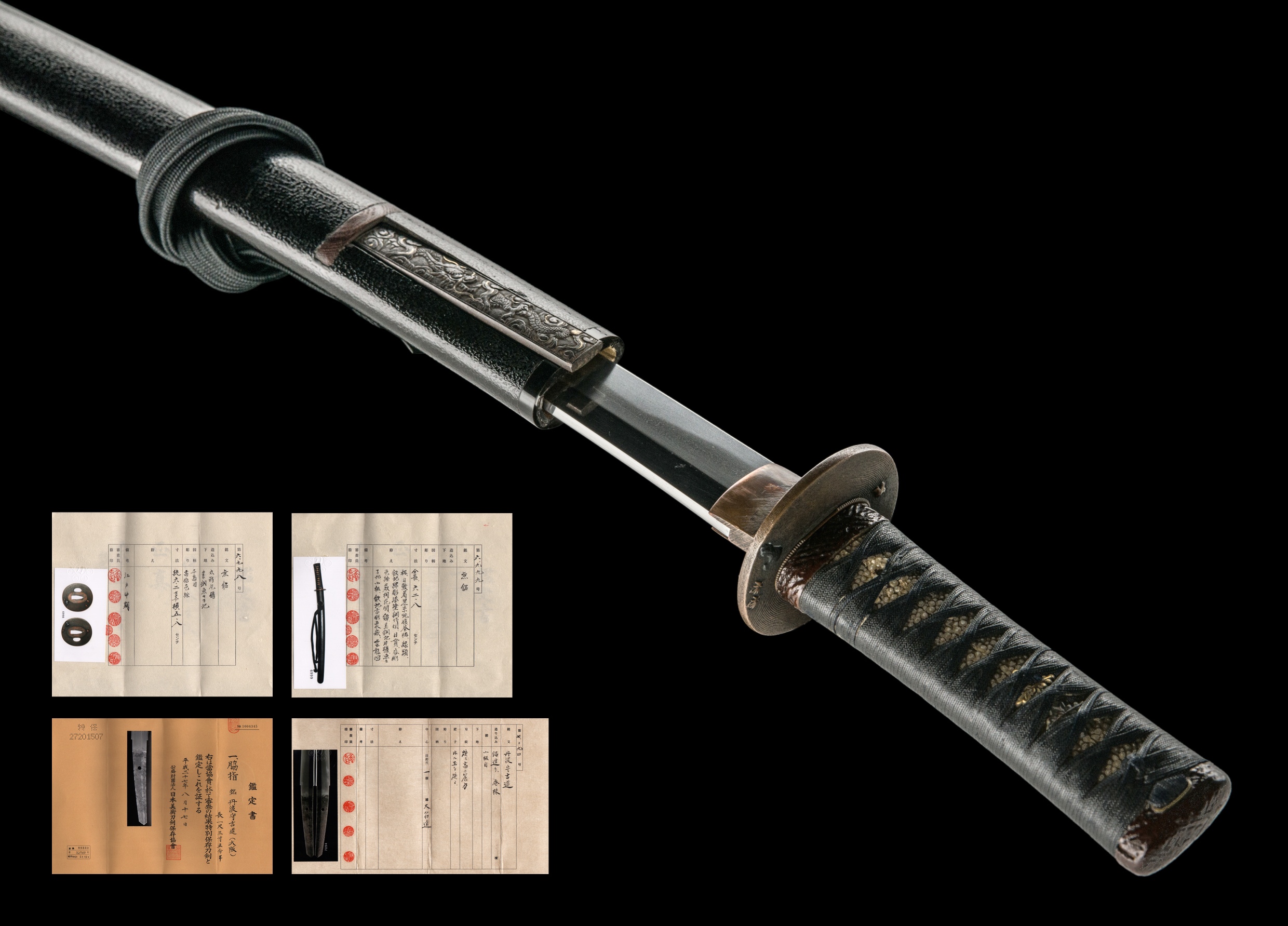
The sudare-ba is one of the most distinctive hamon in all of Japanese swordsmithing – a rolling, multi-layered temper line said to resemble the slats of a bamboo curtain. It was pioneered by the first-generation Tanba no Kami Yoshimichi in early 17th-century Kyoto and faithfully continued by the family across several generations. This elegant wakizashi is the work of the third-generation Yoshimichi, who worked from Settsu province (modern-day Osaka) and is ranked Chujo-saku – above average – by Fujishiro. The blade has been polished in traditional sashikomi, a more natural finish that uses special tsuya stones to bring the hamon’s activity to life. Under the right light, the sudare-ba gleams with a playful, almost hypnotic energy.
Yoshimichi has left a personal flourish at the kissaki: circular spots of tobiyaki appear on both sides of the tip, representing the sun and moon – a meditation on the cyclical balance of the universe that lies at the heart of Samurai culture. The blade carries both NBTHK Tokubetsu Hozon and NTHK-NPO Yushusaku (Highly Excellent) certification, placing it firmly among the finest examples of this tradition in private hands.
The sword retains a refined and complete matching koshirae from the Edo period – assembled more than 150 years ago and preserved in wonderful condition throughout. The tsuba, a suaka (pure copper) example decorated with flying plover birds among clouds, has been attributed to the Nara School and holds NTHK-NPO Kanteisho certification to the mid-Edo period (1700s). The menuki carry a variation of the kiri-mon, the imperial paulownia crest famously associated with the Toyotomi clan of Osaka. A kozuka (utility knife) with a dragon design fits neatly into the lacquered saya. This is a sword frozen beautifully in time since the Edo period.
| Item Number | UJWA191 |
| Sword Type | Wakizashi |
| Swordsmith | Tanba no Kami Yoshimichi (3rd generation, Osaka branch) |
| Swordsmith (JP) | 丹波守吉道(三代・大阪) |
| Signature | Tanba no Kami Yoshimichi (Osaka) |
| School | Yoshimichi |
| Province | Settsu (Osaka) |
| Period | Shintô – Early Edo period (Genroku era: 1688-1704) |
| Nagasa | 41.1cm |
| Sori | 0.6cm |
| Moto-haba | 2.8cm |
| Weight | 335g |
| Nakago | Ubu, o-sujikai file marks |
| Jihada | Itame (wood grain), well forged (nereru) |
| Hamon | Yakidaka sudare-ba (bamboo blind pattern) in sashikomi polish |
| Fujishiro Rank | Chujo-saku |
| Certificates | NBTHK Tokubetsu Hozon; NTHK-NPO Yushusaku; NTHK-NPO Kanteisho (tsuba and koshirae) |
| Koshirae | Matching Edo-period uchigatana koshirae in excellent condition |
| Tsuba | Suaka (pure copper) tsuba, flying plover birds among clouds; Nara School, mid-Edo period; NTHK-NPO Kanteisho |
| Fuchi-kashira | Iron, lacquered in urushi with ajiro (bamboo wickerwork) criss-cross design |
| Menuki | Kiri-mon (paulownia crest) variation, Toyotomi association |
| Catalogue | Catalogue 24 |
| Status | Sold |
| Includes | Edo-period koshirae, carry bags, sword stand, maintenance kit, DVD, booklet, printed description, export permit from Japan |