
ITEM# UJTA055 – Catalogue 38 – Sold
A Tsuguyoshi Tantô (備中国住次吉)
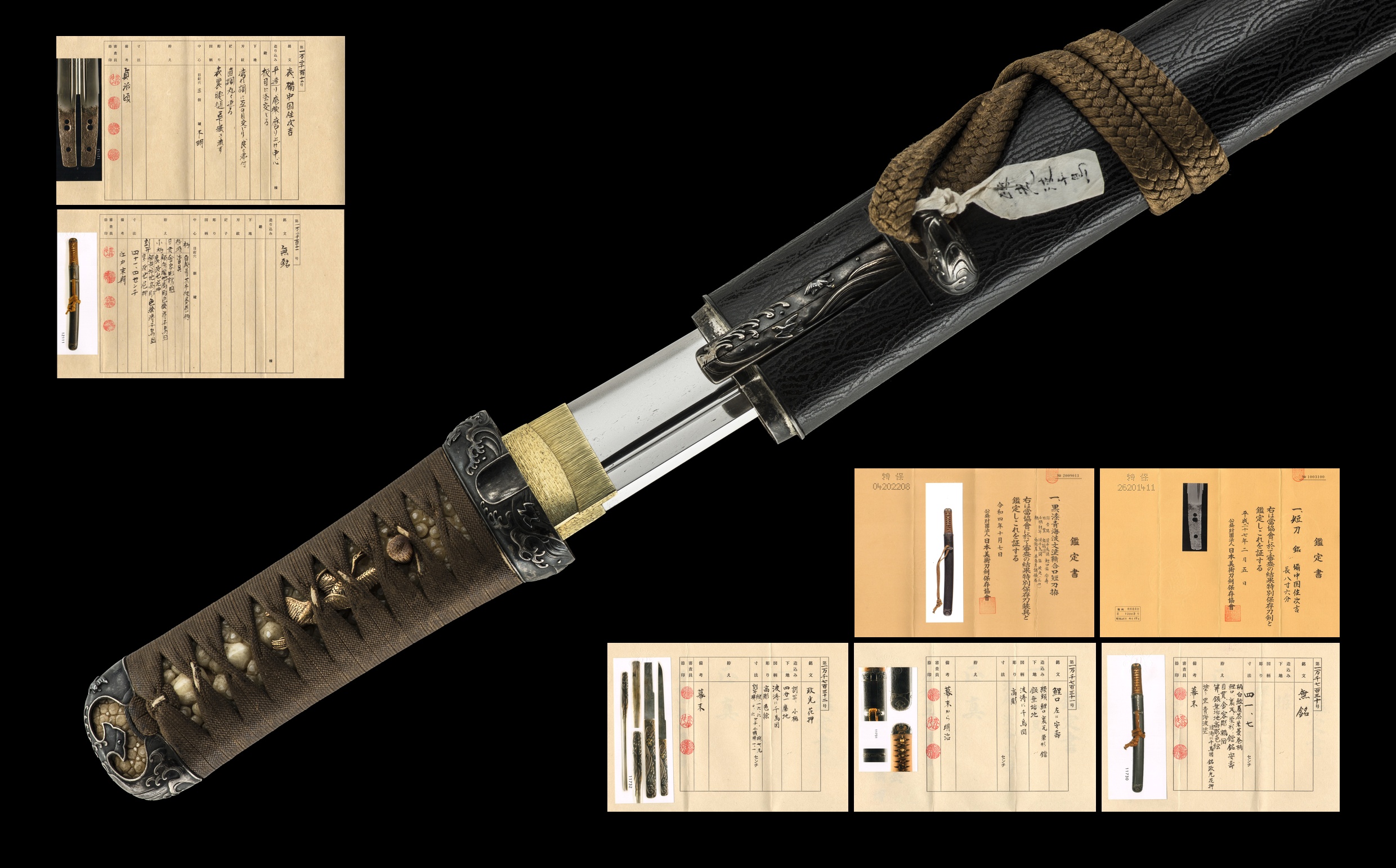
Fourth generation Tsuguyoshi is considered the finest swordsmith of the Chû-Aoe school, a tradition that ran from the mid-Kamakura period (~1240) to the close of the Nambokuchô (~1393). His given name was Genjirô and he received the honorary title Sakon Shôgen. A sayagaki by the celebrated scholar Kanzan-sensei (Satô Kan’ichi), written in the summer of Shôwa kinoe-tora (1974), confirms the attribution to this smith and dates the blade to around the Karyaku era (1326-1329). That a scholar of Kanzan’s standing felt compelled to put brush to wood speaks clearly to the quality of what lies inside.
The blade is forged in a beautifully worked mix of itame and mokume-hada with the dark ‘catfish-skin’ spots of namazu-hada swimming in the steel – a trait that is the hallmark of the Aoe school and endlessly rewarding under a good light. Ji-nie glistens across the surface and chikei abounds. The hamon is a snow-white suguha-chô with fine ko-ashi and sunagashi, glistening like freshly fallen snow. The blade carries an uchi-zori and koshi-bi on both sides running kaki-nagashi through the nakago, with a near-original ubu tang retaining three mekugi-ana.
The tanto is housed in a spectacular late Edo aikuchi-koshirae from the Bakumatsu period (1853-1868), with a complete matching set of silver fittings in a rolling wave theme crafted by master metalsmith Efu Shibuya Anjû of Edo. His signature appears on the koiguchi. The kôgai and kozuka are signed by Masamitsu and form a certified matched set. Menuki depict flying cranes in gold, symbols of longevity and fidelity. The koshirae holds NBTHK Tokubetsu Hozon alongside NTHK Kanteisho for the fittings – every element of this ensemble has been formally examined and confirmed. Tsuguyoshi is ranked both jôjô-saku (highly superior) and ô-wazamono for excellent cutting ability. Handle with appropriate respect.
| Item Number | UJTA055 |
| Sword Type | Tantô |
| Swordsmith | Tsuguyoshi (4th generation) |
| Swordsmith (JP) | 次吉 (四代) |
| Signature | Bitchû no Kuni jû Tsuguyoshi |
| School | Chû-Aoe |
| Province | Bitchû (Okayama) |
| Period | Kotô – Late Kamakura to Nambokuchô (Karyaku era: 1326~1329) |
| Nagasa | 26.2cm |
| Sori | 0.0cm (uchi-zori) |
| Moto-haba | 2.33cm |
| Weight | 125g |
| Nakago | Near ubu (near-original unaltered tang), 8.5cm, 3 mekugi-ana |
| Jihada | Itame and mokume-hada with namazu-hada, ji-nie, plentiful chikei |
| Hamon | Snow-white suguha-chô with ko-ashi and sunagashi |
| Horimono | Koshi-bi on both sides running kaki-nagashi through the nakago |
| Certificates | NBTHK Tokubetsu Hozon (sword & koshirae) · NTHK Yushûsakû (sword & koshirae) · NTHK Kanteisho (soroi kanagu, kôgai/kozuka, koshirae) |
| Fujishiro Rank | Jôjô-saku (highly superior swordsmith) |
| Sharpness Rating | Ô-wazamono (excellent cutting ability) |
| Sayagaki | Kanzan-sensei (Satô Kan’ichi) — Bitchû no Kuni jû Tsuguyoshi, 4th generation, Karyaku era (~1326-1329), dated Shôwa kinoe-tora (1974) |
| Koshirae | Edo Bakumatsu aikuchi-koshirae (1853~1868) – black lacquer wave saya, matching silver fittings by Anjû |
| Fuchi-kashira | Silver, rolling wave theme, signed Anjû (Efu Shibuya Anjû, Edo) |
| Menuki | Flying cranes (tsuru) in gold |
| Tsuka | White same, mototsumami-maki style with brown braids |
| Habaki | Gold-wrapped niju-habaki |
| Catalogue | Catalogue 38 |
| Status | Sold |
| Includes | Shirasaya (with Kanzan sayagaki), Edo aikuchi koshirae, fabric bags, stand, kit, booklet, description |